
One-Sentence Thesis
Human Surrender is not a film about "failure," but about evacuating the illusion of wholeness. It does not show a particular person admitting defeat. It shows how people today entrust themselves to response, love, language, memory, performance, and order-and how, when each of these supports fails in turn, they finally acknowledge that no one can live by endlessly maintaining the appearance of being whole. "Surrender" here does not mean bowing to life. It means no longer pledging allegiance to a false wholeness.
1. What the Film Truly Captures Is Not Surrender, but the Inability to Keep Performing
The title Human Surrender is easy to misunderstand. It naturally suggests a posture: world-weariness, "lying flat," a philosophy for losers, or some way of gilding powerlessness.
But once you have watched the entire film, you discover
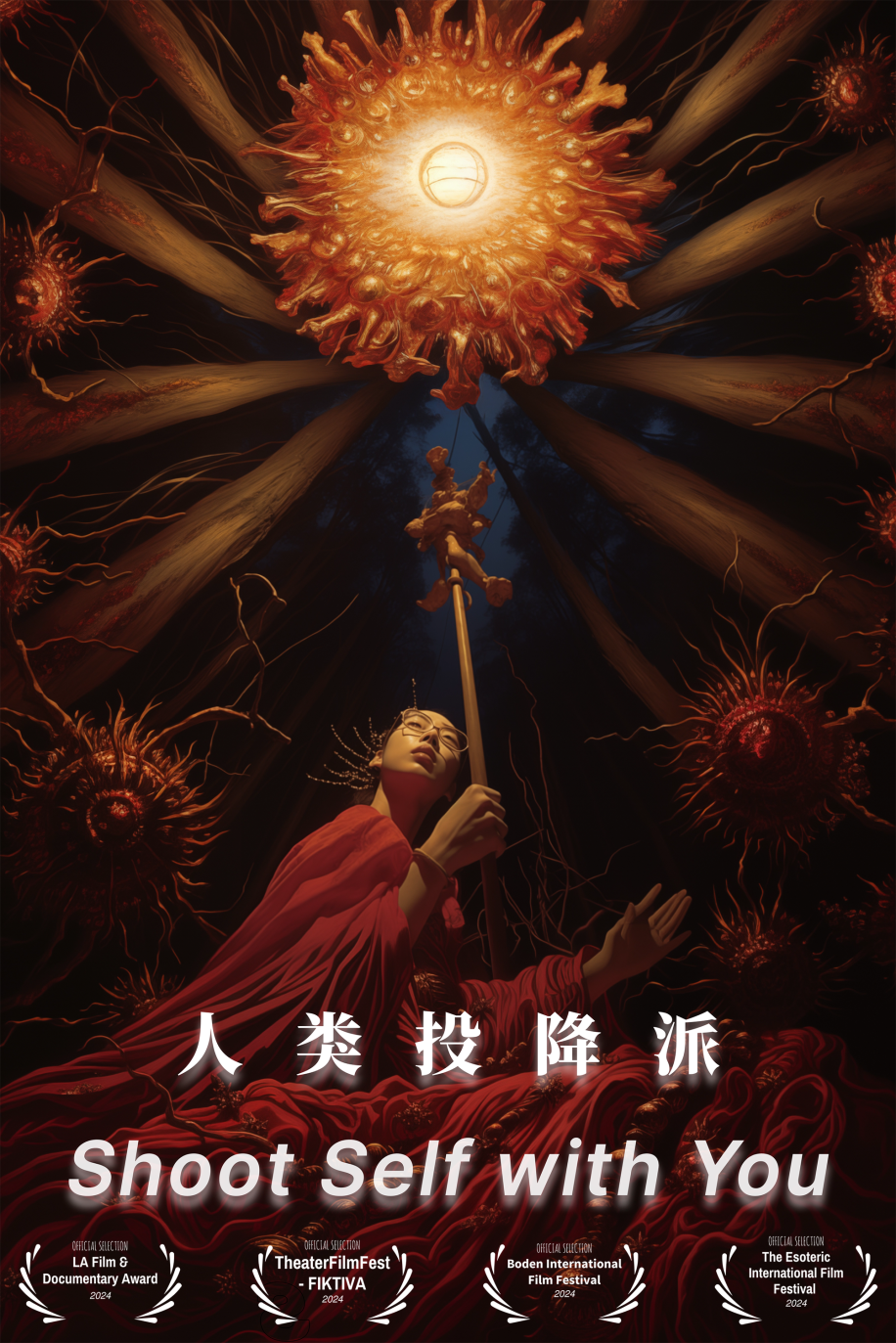
that it is crueler, and more honest, than any of those readings.
It is not about "choosing to give up" at all
but about how a person gradually loses the ability to keep performing as whole, coherent, and in control
. In other words, there is no prior decision-"I am going to surrender"-that the characters then carry out. Instead
a person is first driven into a position where response begins to fail, intimacy begins to fail, language begins to fail, memory begins to fail, and organization begins to fail. What is finally called "surrender" is simply the admission that the old myth can no longer be sustained.
This is where the film makes its sharpest judgment
People are not brought down by failure. They are brought down by the performance of "having to prove that they have not failed."
Surrender, then, is never laziness or retreat in this film. It is a belated lucidity: I finally admit that I never truly possessed the wholeness I was promised.
2. Its Most Ruthless Insight: To Live Is, Fundamentally, to Depend on Response
The true depth of Human Surrender lies not only in love, existential crisis, or experimental form. It lies in the film's grasp of a more basic and more disturbing fact
A human being is not naturally stable. We need the responses of others to confirm that we are still here.
This may sound like a commonplace of relationship theory. In this film, however, it is not common sense but the engine of disaster.
Once you admit it, many other things begin to collapse
You are not someone who can remain standing by yourself alone
You need to be seen, held, acknowledged, and confirmed
The moment response hesitates, distorts, or fails to arrive, your sense of existing begins to loosen with it
What makes the film frightening is not that its characters suffer some external event, but that the entire mechanism of response remains unstable.
You speak, and the other person cannot receive you.
You draw close, and intimacy cannot hold you.
You explain, and language grows lighter and lighter.
You remember, and memory cannot rescue the present.
You call for help, and a larger order merely takes over the scene without ever understanding you.
The film therefore captures not the dramatic question of "what happened," but a process closer to reality than any single event
How a person, in a world without stable response, gradually loses the ability to place themselves anywhere.
It is not that they do not know how the world works. They no longer know where to put their body, where their words should land, whose gaze to meet, or to whom a plea for help should be addressed. In the end, even "how I am to remain present in this scene" is no longer theirs to decide. Rules, positions, spectatorship, and order take over.
3. Love Here Is Not Salvation, but a Failed Experiment in Finding a Place for the Self

"What I want is love."
It is, of course, one of the film's most conspicuous lines. But to read it only as a declaration of the film's theme of love would be far too slight.
In Human Surrender, love is not the romantic center. It is a vessel subjected to a brutal test. For a time, the characters believe
Intimacy can confirm them
An embrace can give them somewhere to rest
By being seen, they can see themselves again
A connection between two people can resist the instability of the entire world
The film does not crudely deny this desire. Its greater cruelty lies in allowing that connection to happen, briefly.
The closeness is real. The touch is real. The desire is real. For a moment, the response is real as well.
But that is precisely the problem: all of it is real, and still it is not enough.
The film is not telling you that "love does not exist." It is telling you
Love exists, but it cannot reliably bear your expectation that existence should be whole.
This is crueler than saying there is no love at all. If it never happened, you could dismiss it as fantasy. Human Surrender shows that intimacy can indeed occur, and that a brief connection can indeed be made
yet it still cannot accomplish the larger task of placing a person securely and whole within the world.
Love here is not an ending, but a failed experiment in placement. The more the characters seek confirmation through another person, the more they expose a deeper fact
No one else can wholly give you a place in which to be yourself.
This is not a mockery of love. It is the dismantling of the myth of love.
4. "I Cannot See Myself in Your Eyes"-What Collapses Is Not the Relationship, but Intersubjectivity
One of the film's most devastating lines is neither "go die" nor "kill me," but
"I cannot see myself in your eyes."
The line carries such weight because it breaks through not one level, but three.
First, it is plainly an accusation within love: you no longer see me, and you can no longer reflect me back to myself.
Second, it is a fracture at the level of existence. For in this film
"being seen" is never merely a romantic demand; it is a condition of existence. The inability to see oneself is not simply a failed relationship, but a breakdown in the subject's mechanism of self-confirmation.
Third, it is also the viewing ethics of the entire film. The audience imagines that it can see the characters clearly, yet the film repeatedly removes that safe position. You do not stand whole above an incomplete person. Through rhythm, silence, rupture, defocus, and reorganization, the film makes you lose your own stable point of view.
What the line ultimately addresses, then, is not only the relation between two people, but the fundamental condition of the film
Human suffering comes not only from losing love, but from losing an other in whom one can still see oneself reflected.
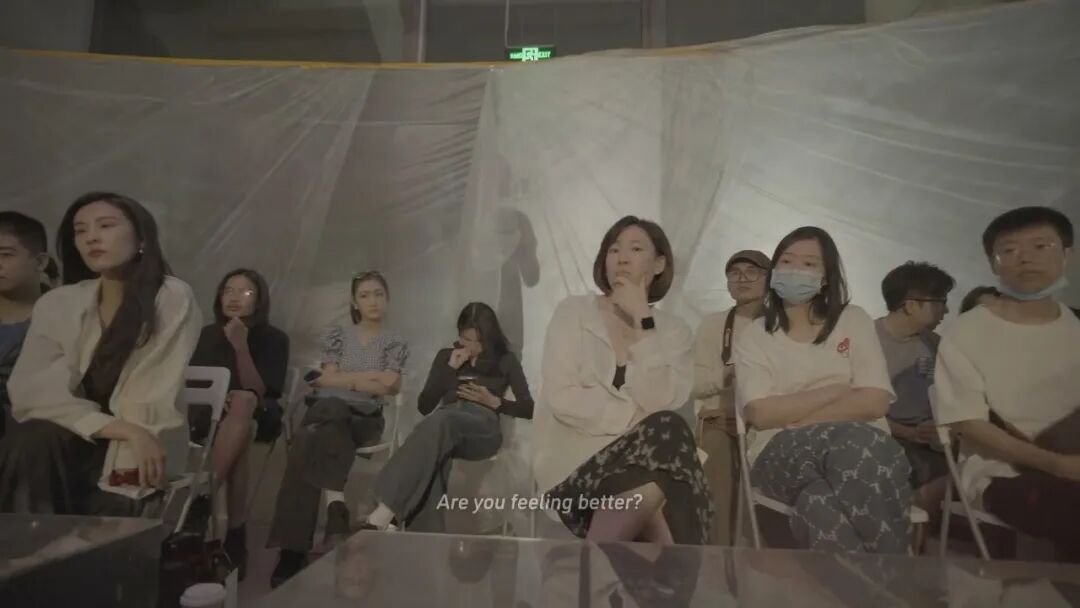
Here "surrender" begins to acquire its properly philosophical meaning
It is not surrender to a particular object, but surrender of the illusion that "I must be able to obtain complete confirmation through someone else."
5. Not the Death of Language, but Its Ebb
Many introductory readings treat Human Surrender as a film about "the breakdown of language." A more precise formulation would be
The film does not show language dying. It shows language receding.
Language does not suddenly disappear. Step by step, it loses the capacities it once possessed.
At first, it still performs familiar functions: explaining, soothing, negotiating, repairing, bringing feelings into alignment.
Then it begins to thin out. One can speak, but speaking does nothing; one can express oneself, but expression does not establish a connection; one can name a feeling, but cannot make that feeling receivable.
Later, language retreats into a more private register. Only partial truths remain, scattered disclosures of the self, fragmentary fear and honesty.
Finally, it withdraws to the boundary. It no longer bears the narrative, repairs what has broken, or holds the subject in place. It leaves only reverberations, images, trailing sounds, and breath.
This is why the film's most moving moments are never the ones that sound like theory. They are the closest, most ordinary, least dignified moments.
"Can you hold me?"
"Yes, but it's a little hot."
"Are you afraid?"
"Yes."
These sentences contain no rhetorical grandeur, but they carry a truth so exposed it is almost embarrassing. They no longer try to make themselves sound complete or elevate pain into something noble. Within the most limited language, they reveal a basic fact
Only when language stops defending dignity can it approach what is real.
6. The Film's Greatest Power Lies Not in Its Themes, but in How It Organizes Pressure
One can, of course, discuss Human Surrender through love, existence, collapse, creative anxiety, authenticity, or the politics of the body. But to stop at themes is to miss what the film does most powerfully as cinema.
Its real strength
lies not in "representing" pressure, but in organizing it.
It does not rely chiefly on a handful of heavy lines or on a climax that rises in a straight line. It relies on an entire, ongoing mechanism of
"loss of organization-reorganization-residual pressure"
placing the audience in a condition of sustained pressure, unable to withdraw and unable to bring understanding to a clean conclusion
.
It holds time back and stores pressure in silence
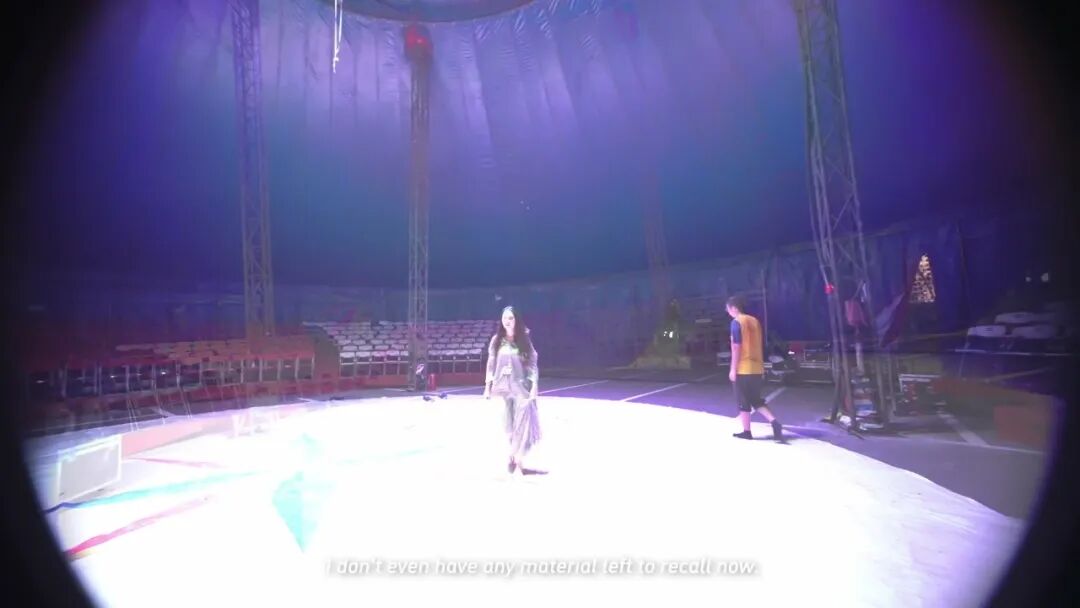
it fractures dialogue, makes it hesitate and retreat, stripping language of its reparative power
it lets relations lose contact at the moment they are about to connect
it continually resets the live site through blackouts, commands, rules, and blocking
it pushes private instability outward and rewrites it as a regime of spectatorship and position
and by the end, even after language has almost withdrawn, pressure persists through trailing waves, residual sounds, and the sonic field of action.
The film's true high-pressure form is therefore not a single peak, but a basin in which pressure keeps changing channels.
The moment you think you have identified the problem, the film changes medium and continues to press: instability in relations gives way to instability in looking, which gives way to organizational instability, which gives way to rule-bound takeover. At last, even the possibility of "making things clear" is withdrawn, but the pressure does not end.
This is why the film stays with you.
It does not let you complete the act of viewing by "understanding the story." It makes you experience cinema by being trapped within its structure.
7. "Do You Dare Look at Something Real?"-The Film's Cruelest Question Is Addressed to the Audience
The one line in Human Surrender that must not be passed over lightly is
"Do you dare look at something real?"
Its force lies in driving the problem directly from the characters toward the audience.
For "something real" is never a simple declaration of authenticity here. It is not merely a claim that "I am not acting," nor is it truth in the sense of factual verification. It is an exposure that no beautiful form can fully absorb
A truth carrying fear
A truth carrying shame
A truth stripped of dignity
A truth carrying dependency, collapse, loss of control, delusion, and incompleteness
The truth that "I am not as whole as I make myself appear"
The film's harshest challenge is not whether it has captured the real, but what it asks its audience
Do you really want to see reality, or only a "safe reality" that has been processed, tamed, and sheltered by aesthetics?
Human Surrender is unwilling to grant much
safe distance
. It does more than ask you to understand its characters. It keeps removing the conditions that make viewing comfortable. Rhythm no longer accommodates you; silence takes over the space; language no longer offers a clear handhold; structure no longer serves lucid interpretation. It becomes increasingly difficult to occupy a stable position from which to pass tidy judgments on the people in the film.
This is the film's ethical force
It does not let you stand in a position of wholeness and comment on someone else's incompleteness.
8. Four Directors: Not Mystification, but the Collapse of Modern Authority in Plain View
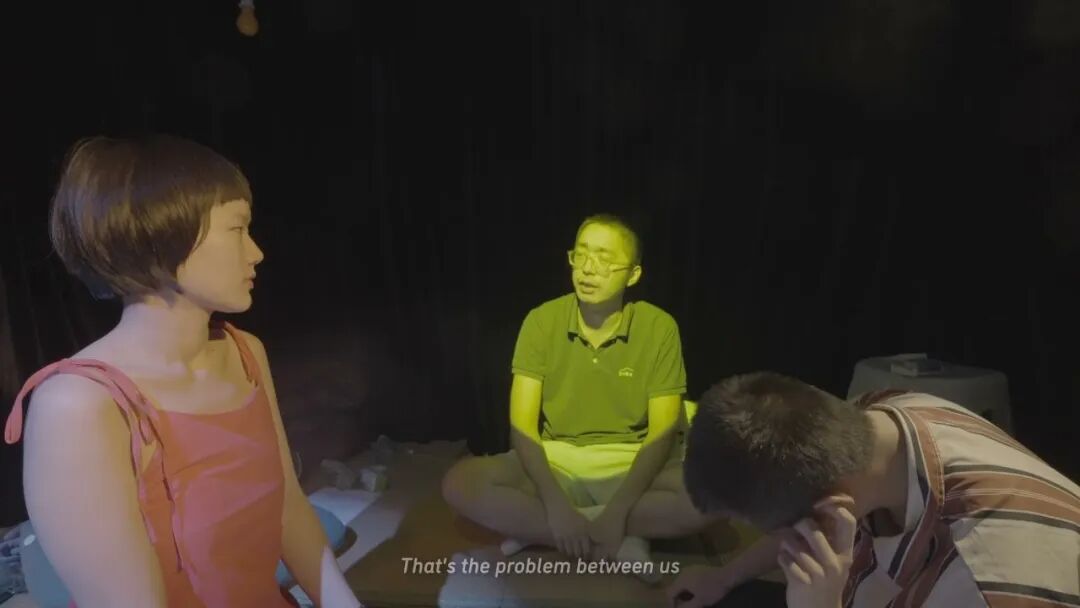
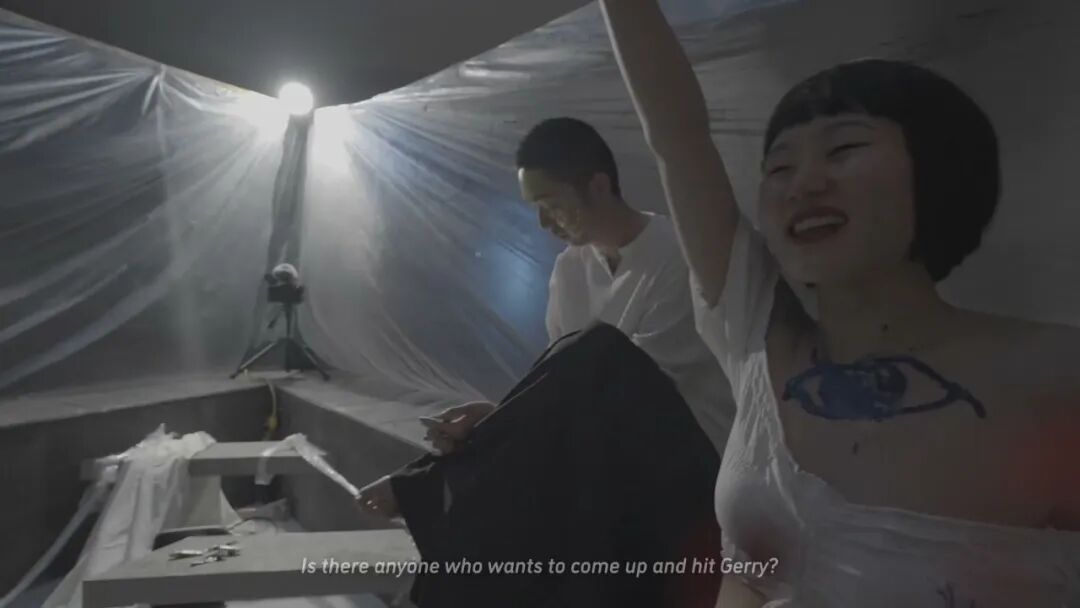
"We have four directors on the floor" sounds, on the surface, like a piece of metacinematic absurdity. Its real power, however, lies in how precisely it names a contemporary reality
No single authority can any longer organize the live site with stability.
Who has the right to define what is real?
Who has the right to call a stop?
Who has the right to correct how another person speaks, stands, or is seen?
Who has the right to name a role, assign a position, and reorganize meaning?
Human Surrender offers no answer. It presents a situation at once more real and more unsettling
Power has not disappeared. It has fragmented, migrated to the boundaries, become procedural, and begun passing continually between different functional positions.
This is why the film's effective power so often resides not at the center, but at the boundary.
The most conspicuous person is not necessarily the most dominant. Real power often belongs to those who can manage distance, reset the rules, and rename the scene.
What "four directors" indicates, then, is not an excess of creators, but this
The power to organize no longer belongs to a stable subject. It continually moves between positions.
This is profoundly contemporary, and profoundly cruel, because it means
You can no longer expect a whole authority to gather chaos for you, sort truth from falsehood, and assign meaning. You can only acknowledge that the live site will lose its organization, that someone else will take it over, and that takeover is not the same as understanding.
9. From the Failure of Intimacy to the Takeover of Public Order: This Film Does Not Believe a Higher Order Will Save You
When private relations collapse, many films allow a larger system to catch them: law, institutions, the collective, history, truth.
Human Surrender possesses no such optimism.
It suggests instead that when private relations, intimate labor, and negotiation through language have all failed, what takes you over may not be salvation. It may be nothing more than public order.
Public order does not come to understand you. It comes to
Take over the scene
Reassign positions
Decide who may speak, who must withdraw, who is to be seen, and who is to disappear
Rewrite a private impasse as a problem that can be implemented, managed, and deployed
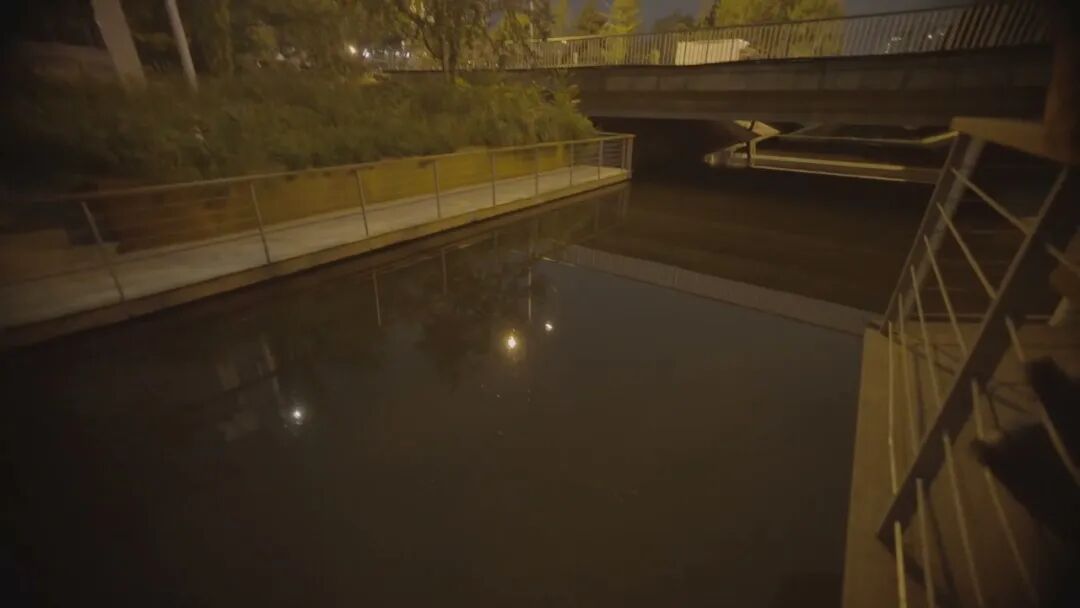
The increasingly explicit fields of organization, rules, spectatorship, and directives in the second half do not simply mean that "the scene gets bigger." They carry out a truly brutal shift of gears
Private instability is taken up by a larger live site and reassembled into a new regime of spectatorship.
The film tells you, with extraordinary honesty
Order can take over, but it will not understand; it can manage, but it will not repair; it can assign a position, but it will not restore what has broken to wholeness.
This gives surrender a second meaning within the film
It means relinquishing not only private illusions, but also the belief that "some higher order will always arrive to finish things for me."
10. "Kill Me" and "I'll Help You Make a Call": The Most Extreme Request Meets the Most Ordinary Response
One of the most astonishing contrasts in the film's final movement is, of course
"Kill me."
"I'll help you make a call."
The exchange is terrifying not only because one side is extreme and the other banal, but because it captures with extraordinary precision a violence utterly familiar to modern society
The deepest existential plea receives only the most standardized procedural takeover.
"Kill me" need not mean literal destruction alone. It is more like a deeper plea: remove me from this condition; remove me from this state of being watched, organized, and consumed. I no longer have the capacity to keep myself present.
"I'll help you make a call" is not comfort. It is something more modern than cruelty: a procedural response, a standardized handoff, an institutional idiom that never enters the pain itself.
It does not understand, bear, or empathize. Its sole responsibility is to send the problem into the next procedure.
Here lies one of Human Surrender's most astonishing accuracies: what produces despair is not always violence itself, but the way an extreme call for help meets only an ordinary process.
11. "From a Certain Day On, I Cut Off Feeling": Not an Absence of Emotion, but the Removal of the Organ of Feeling
The heaviest statement at the film's end concerns neither love nor truth and falsehood, but feeling itself
"From a certain day on, I cut off feeling."
To interpret this merely as "numbness" would be too shallow. It does not mean that I temporarily ceased to feel. It means that the organ capable of carrying feeling has itself been removed.
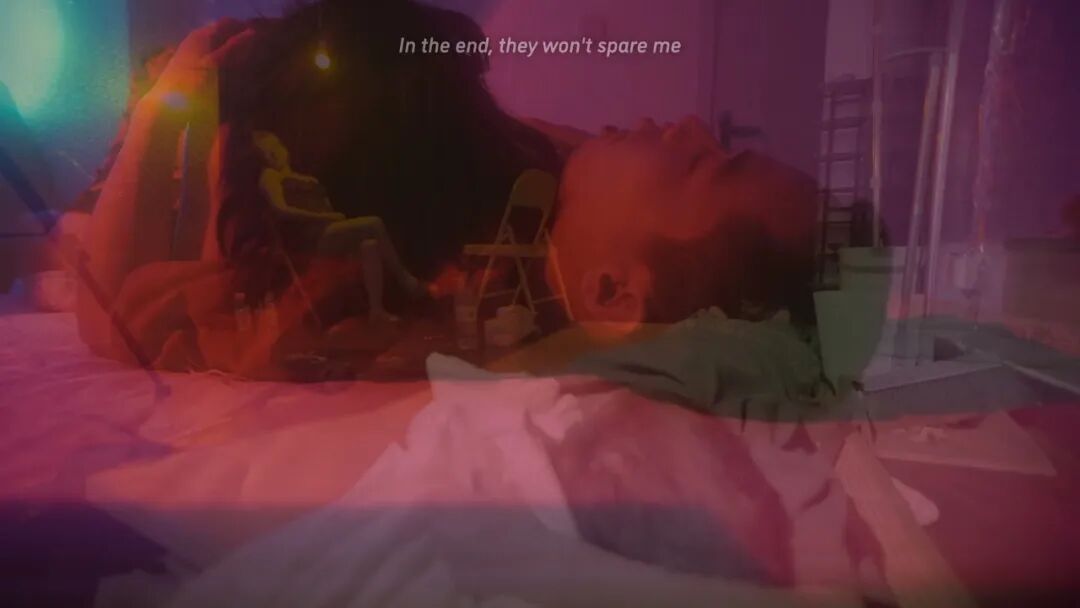
This belongs to the same line as the earlier image of "cutting myself away." The film does not treat numbness as a natural decline, but as an extreme strategy for survival
When systems of response, relation, language, memory, and organization have all failed, a person may be able to go on living only by cutting away certain capacities for feeling.
This is devastating, yet the film does not reduce it to pathology. It asks us to recognize that such a severing may be a belated act of self-protection.
Surrender now takes on a third meaning
It is not that I no longer want to feel. It is that unless I cut off certain feelings, I cannot continue to live in this world at all.
What the film finally leaves behind, then, is not only sorrow, but a colder lucidity: perhaps real change never means becoming stronger. Perhaps it means finally admitting that one can no longer remain strong in the old way.
12. The Ending Is Not Emptiness, but Aftershock
Many viewers would call such an ending open, suspended, or nihilistic. A more precise word for the ending of Human Surrender is not emptiness, but
aftershock.
The film offers no closure in the traditional sense. It gives you no definite answer, complete repair, reconciliation, or portable lesson. It does something else, something more mature
It compresses all the pressure accumulated before into a trailing wave that cannot immediately dissipate, and leaves it inside the audience.
This is why what matters at the end is not "which line of dialogue remains," but a more structural fact
Language can leave the stage, but the live site does not.
Fewer and fewer words can be brought into alignment; new dialogue almost ceases. Yet the sound field does not return to zero. The reverberations of movement, the drag of rhythm, and residual spatial pressure continue. What you carry away is not a conclusion, but pressure that has not been processed to completion.
The film does not "end because it cannot make itself clear." It continues working upon you precisely because it cannot be made clear.
A truly profound work does not persuade you. It changes you.
13. The Film's Most Precious Quality Is Not Its Sharpness, but Its Honesty
Finally, it must be said that the most precious quality of Human Surrender may not be how wild, daring, extreme, or deep it is.
It is how honest the film is.
It honestly captures several things we ordinarily work hardest to conceal
1. Human beings are not as whole as they imagine.
2. Intimacy does not automatically repair existence.
3. Language cannot always bear understanding.
4. Order often takes over rather than saves.
5. Real change often begins when we admit that we can no longer hold ourselves up.
This is not cheap despair, counterfeit profundity, or obscurity masquerading as complexity. It is an intensely condensed account of the contemporary human condition.
We live in an age governed by efficiency, control, victory, expression, polish, and perpetual operability. Almost every system pressures us to prove that we are whole, stable, and indefinitely organizable.
Human Surrender stands before this age and asks a genuinely piercing question
What if human beings were never like that?
What if our starting point were not wholeness, but vulnerability?
What if maturity meant not learning to remain forever in control, but learning to stop pretending that we are in control when control has been lost?
This is why the film matters. It does not belong only to the people onscreen. It belongs to everyone who has known exhaustion in relationships, work, art, self-demand, or social order.
Final Conclusion
The deepest achievement of Human Surrender lies not in telling the story of a loser, but in filming the contemporary condition as a mechanism of continually displaced pressure. People need response and yet never receive it with stability. They try to place themselves through love, language, memory, performance, and order, but these vessels fail one after another. What is finally called surrender is not defeat, but the release of the compulsion to win, to be whole, to be confirmed, and to be understood. It is an acknowledgment that no one can fully control relation, meaning, or the self-and only then does something real appear for the first time.
This is not a film that teaches people to give up. It is a film that compels them to relinquish illusion. It does not show how a person admits defeat, but how, before disappearing altogether, a person loses the ability to place themselves within the world. That is why what remains is not emptiness, but aftershock: an aftershock of vulnerability, finitude, honesty, and the refusal to go on performing.
To become part of Human Surrender is not to betray life. It is to stop pledging allegiance to false wholeness.
About the Author | Hermes
An independent dramaturg and writer on visual culture, Hermes has long moved along the boundary between contemporary theater and independent moving image. Her cross-disciplinary criticism focuses on spatial power, the psychoanalysis of subjectivity, and the existential condition of modern life. She places no faith in the grand narratives of any public order. Instead, she works through gaps between media to dismantle the false performances through which contemporary people maintain an appearance of "wholeness." Her writing is austere and controlled. It refuses cheap consolation and seeks only to leave an honest cross-section of an age of excessive performance.