P4 Theater and You · Shoot Self with You
How Words Betray People: The Original Language Structure of Human Surrender
Some films do not grow out of stories.
They seem instead to seep out of several recurring clusters of words. Words appear first, and only then do events slowly take shape; words go bad first, and only then do the characters begin to sink; words change sides first, and only then do relations reveal the fractures that were there all along.
Human Surrender is one such film.
It certainly contains relations, performance, a director, an audience, games, doors, and lines that seem weighty enough, sharp enough, and detachable enough to circulate on their own. But the deeper one looks, the clearer it becomes that what truly drives the film may not be plot in the usual sense, but a more hidden movement of language.
A handful of utterly ordinary words are picked up again and again in the film, handed out, passed from hand to hand, worn down, and misused, until they no longer mean what they once did.
"What should we do?" begins as an expression of concern, then becomes a way of throwing responsibility back.
"Must" begins as an irresistible need to draw close, then becomes an order.
"Can" begins as self-support, then becomes permission to harm.
"Look" begins as encounter, confirmation, the last fine thread in an intimate relation; later it becomes the audience, the scene, public exposure, and a production demand.
"Director," "actor," and "male lead" begin as the vocabulary of creation; later they become slots into which a person is placed, named, and replaced.
"Game" begins as a possible way out, then becomes an alternative operating system for reality.
"Beginning" and "ending" are no longer reliable either.
They recur, yet cannot give the narrative stable boundaries. What remains at the end is not a conclusion but a door, a road, an opening one must cross without knowing where it will lead.
The true darkness of Human Surrender, then, is not that its characters finally have nothing left to say.
Quite the opposite: there is always too much speech.
So many explanations, questions, reassurances, corrections, jokes, orders, rules, and judgments; so many sentences that still seem to keep the live site running.
But these words gradually stop speaking for people.
They turn toward the live site, toward rules, toward watching, toward roles, toward thresholds.
The words remain, but people slowly disappear from within them.
Perhaps this is the real sound of blood flowing in Human Surrender: not silence, but language still surging; not aphasia, but language changing sides.
I. From "Why did you come?" to "Then what should we do?": presence is interrogated, responsibility is returned
Very early, the film gives us a line
Why did you come?
The line is so light that it could almost slip by as ordinary small talk.
But it is not "What happened to you?"
"What happened to you?" still means that I am willing to pause beside your condition, to acknowledge that something has happened to you, and to admit that we have not yet named it together. The question still carries a little hesitation, a small gesture of leaning toward you.
"Why did you come?" is different.
It does not ask about a condition. It asks about an arrival.
The first question is not: What happened to you?
It is: Why are you here?
A threshold descends very early. Before a person can open their mouth to explain themselves, they have already been placed somewhere that requires them to account for their position. Your appearance is not accepted as a matter of course; your arrival must first be questioned, confirmed, and judged.
From the outset, then, Human Surrender is not about a person who gradually encounters difficulty. It is about how someone enters the live site and immediately finds themselves in an unstable position.
The person has not yet been understood, yet their arrival already demands an explanation.
This is the film's first hidden door.
Later, "What should we do?" keeps returning like a tide.
Someone says, "I don't know what I should do." The subject has finally admitted that they have lost the ability to organize action. Yet the live site immediately throws the question back, again and again: "Then what should we do?" "Then what do you want to do?"
By this point, "What should we do?" no longer seeks an answer. It has become an idling machine, ricocheting around the site like a ball with no exit. Everyone asks how the situation should be handled, yet no one truly enters the thing that cannot be handled.
The opening "Why did you come?" and the later "Then what should we do?" thus form a more hidden chain
First, arrival is interrogated.
Then, the predicament is handed back.
A person must first explain why they came, then explain what they intend to do.
This is also the precise shape of many modern predicaments.
It is not that people are never asked.
They are asked too much.
Again and again, a person is asked: Why did you come here? What are you going to do? How are you going to manage yourself?
Yet they are rarely allowed to remain in an earlier, softer place that is harder to put into words
I still do not know what has happened to me.
One of the cruelest things about Human Surrender is how early it films this logic. Before a person can become someone to be understood-before they are even allowed to be stably present-they have already become someone required to explain their appearance and manage their predicament.
The "surrender" in this film is therefore never a sudden collapse.
It is more like what happens after someone has long been asked, "Why did you come?" and "Then what should we do?"
They finally discover that they can neither justify their arrival nor continue supplying the world with a plan for handling things.
II. "I must see you": presence before understanding
After "Why did you come?" another cluster of words quickly appears
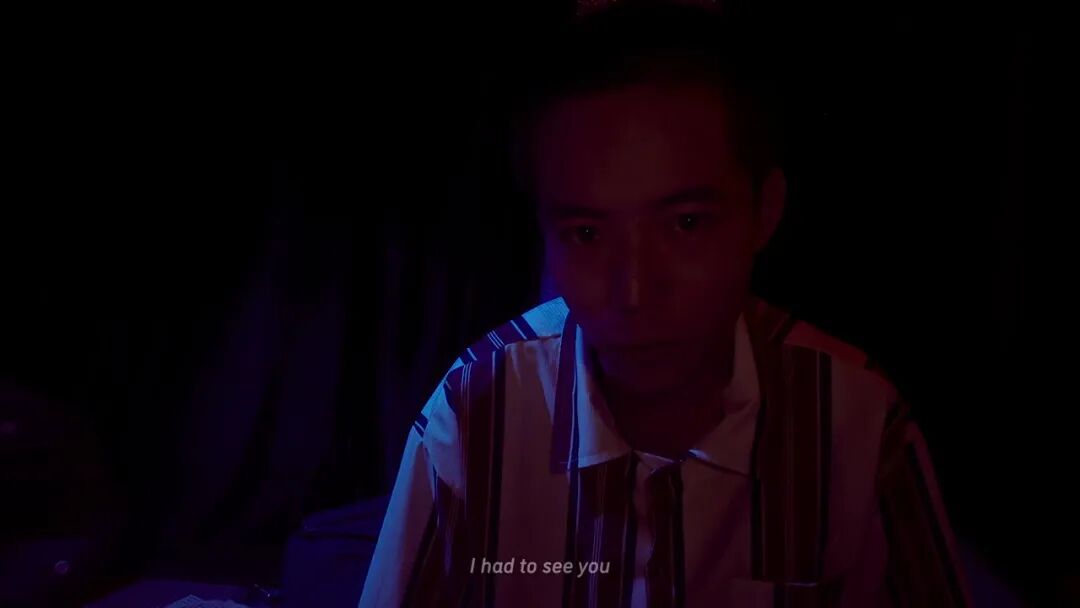
I must see you.
It hardly sounds like a line of love.
It is not "I miss you," or "I love you," or even "Can you understand me?"
It lies deeper than that.
It says: I must appear before you.
"Seeing" here is not a social act but a confirmation of existence. A person must bring their body before another person, occupy the same space, and make the other person's gaze enter into relation with their body before they can feel that the world may not erase them completely.
This is one of Human Surrender's crucial original-language trajectories
Before language comes the anxiety of being present.
A person does not begin by wanting to explain everything clearly.
First, they simply must be there.
If I cannot see you, everything I say is too far away; if I cannot make you see me, my expression is like a signal sent into deep space; if I cannot place my body before you, I cannot know whether I am still entitled to an answer.
In this film, then, the body grows anxious before language does.
The body needs to draw close, to appear, to press against another, to pull back, to be held, to confirm that it still inhabits a shared space. Language arrives later like a patch, always half a beat behind, wearily saying only after the body has already reached the boundary: I must see you.
This "must" is not willfulness.
It is a person's fear of falling out of the relation.
The problem is that "I must see you" cannot guarantee an actual arrival.
Meeting is not understanding.
Sharing a room is not the same as being together.
Eyes meeting eyes does not mean that one person can truly return to themselves through the eyes of another.
The film therefore moves quickly to the next layer: the person has finally met the other, yet still has not been seen.
III. Eyes, glasses, audience: how seeing becomes a system
The sharpest line in Human Surrender is surely this
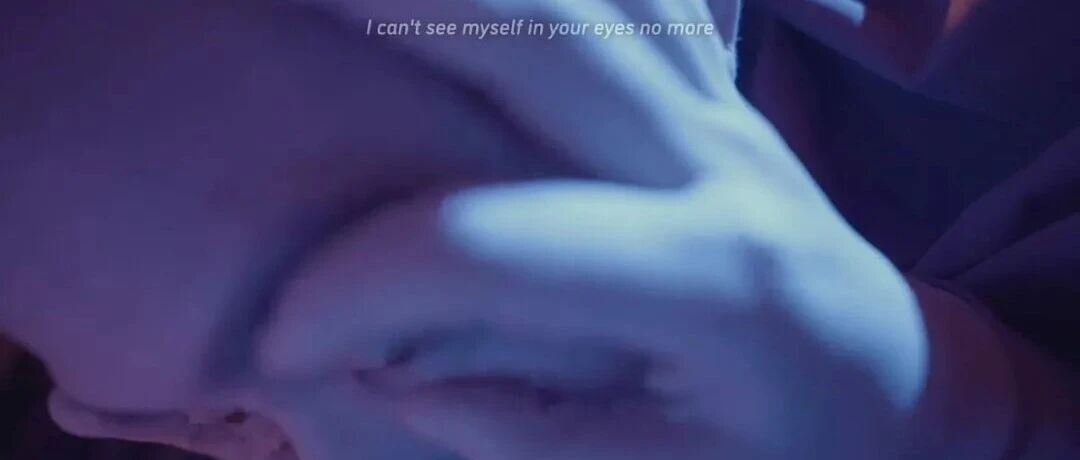
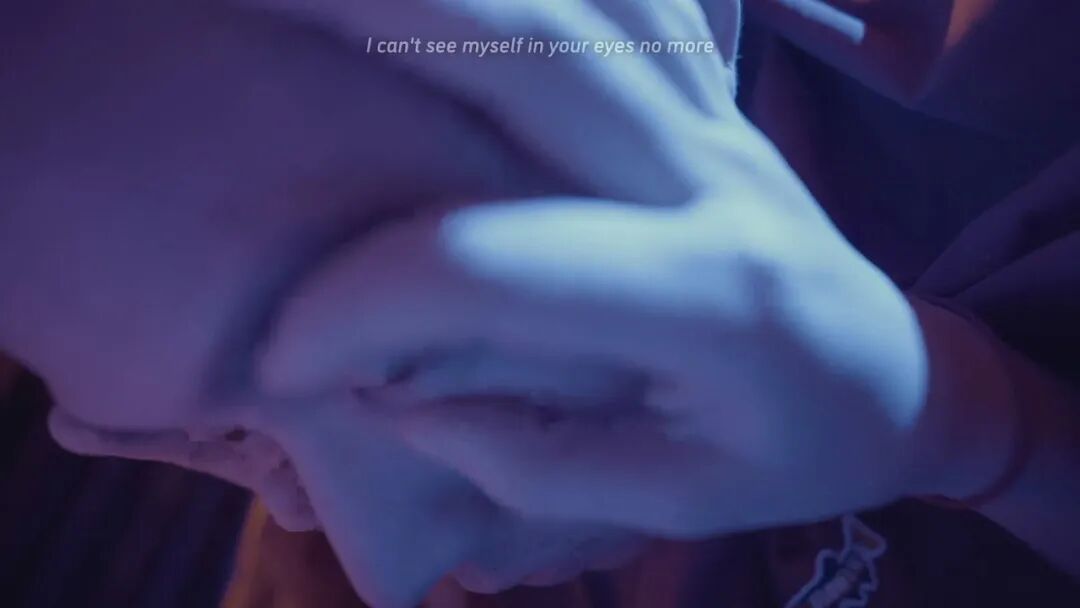
I cannot see myself in your eyes either.
The line hurts because it compresses love, the mirror image, and the confirmation of existence into one place.
When a person looks into another person's eyes, they are not primarily seeking information. They are trying to confirm that they still exist, somehow, in the other. Eyes are mirrors, but also passageways. They let a person believe that they are not floating alone outside the world.
But the line says: "I cannot see myself in your eyes either."
The problem is not that you failed to look at me. Your looking can no longer return me to myself.
This goes deeper than "You don't love me."
A lack of love at least acknowledges that a relation exists, even if love is absent from it. But "I cannot see myself in your eyes" means that the circuit through which the world was confirmed has broken.
This is not rejection.
It is a failure of reflection.
Later, the film continues to interrogate "seeing"
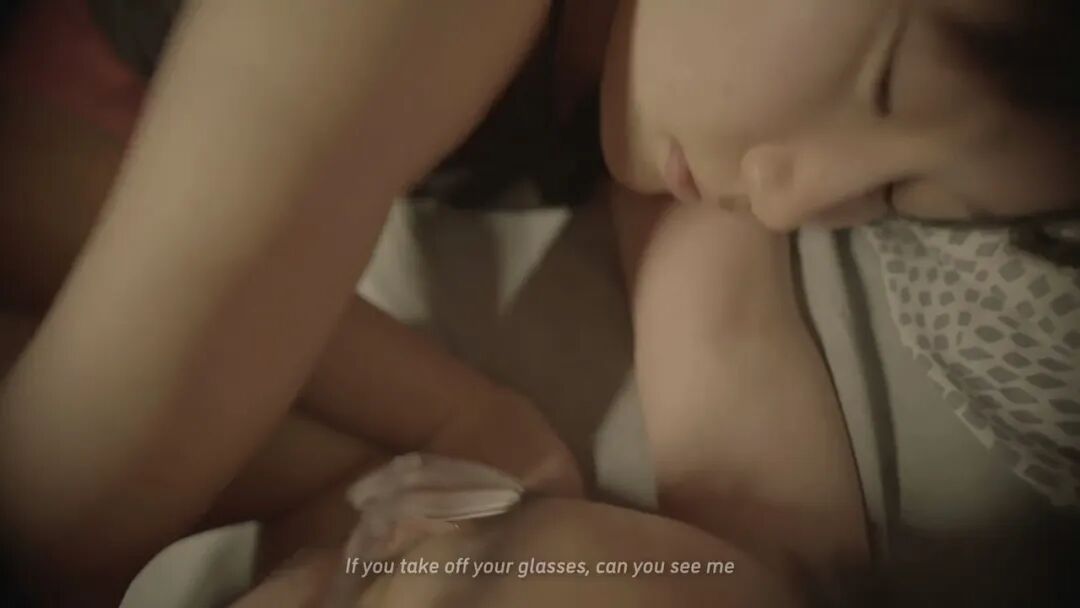
Can you see if you take off your glasses?
Look again.
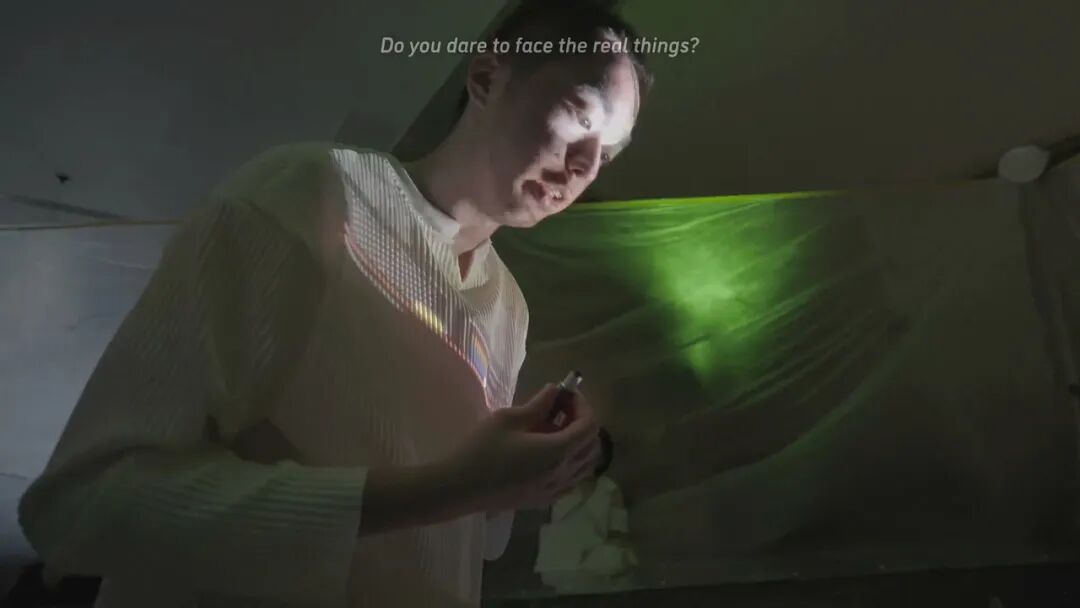
Do you dare look at something real?
I do.
I don't dare look at anything.
Eyes are no longer merely organs of intimacy, nor are glasses merely props. Together they form a set of conditions for looking: Can you truly not see, or do you not dare to look? Do you see me, or only the version of me you can bear? Can you still see once the visual aid is removed? You promise that you dare to look-but which part of reality do you actually dare to face?
At this point, "seeing" has shifted from an emotional question to an epistemic one.
The world is not merely without love.
The world itself begins to lose focus.
Colder still, in the film's second half, looking no longer remains between two people.
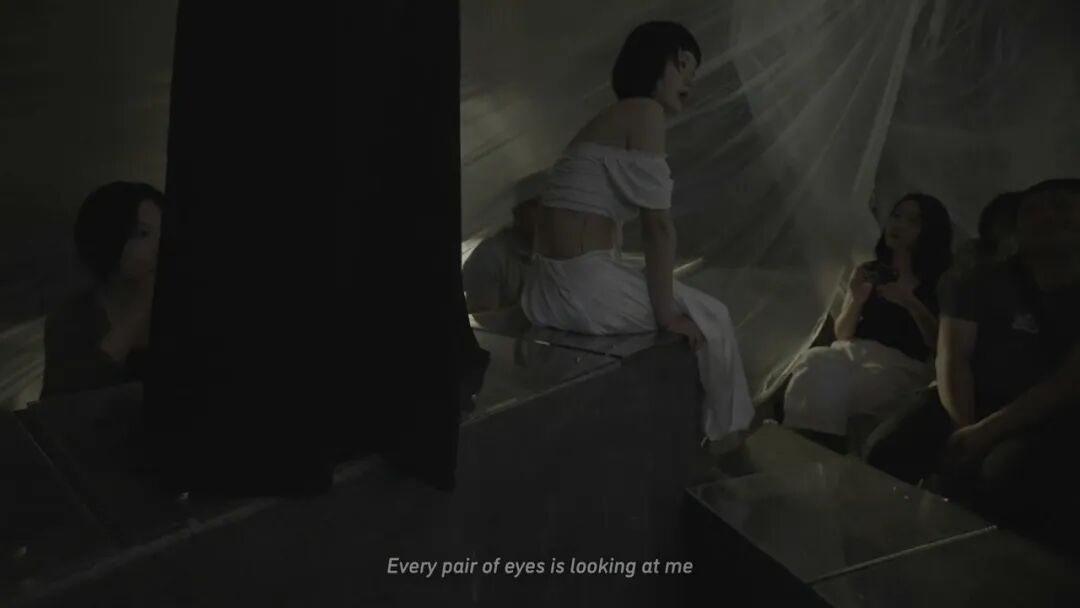
Every pair of eyes is watching me.
If you sit there in a daze, what is everyone supposed to watch?
Then what is the audience supposed to watch?
"Looking" slips from the mirror of intimacy into a public system of spectatorship.
At first, someone says, "I must see you," hoping to be seen by one particular person. Later, they discover that many eyes are watching. Later still, those eyes cease to be mere witnesses and begin demanding content.
"If you sit there in a daze, what is everyone supposed to watch?" The line is almost a fine blade.
What is a daze?
A daze is the smallest possible withdrawal a person can make.
It is not resistance, refusal, or collapse, only a brief emptying out. It is the mind's way of retreating a fraction from the live site, the last gray zone left when a person has not yet managed to organize language but does not want to fall apart completely.
But even this gray zone is confiscated.
Because everyone is watching.
Because the audience needs something to watch.
Because even your blankness must become material for viewing.
"Looking" thus completes a terrifying migration in Human Surrender
From "I want to see you," to "I cannot see myself in your eyes," to "What is everyone supposed to watch?"
The person who sought confirmation becomes the person forced to produce their own watchability.
This is how watching becomes a system.
The system need not be vicious. It can even feel natural and gentle, like an ordinary part of keeping the live site moving.
But in the end, it deprives a person of their own blankness.
IV. "I can": how a person proves they are still usable
The film's middle section repeatedly returns to "I can."
I can.
I can be like this.
I can go over there.
I can.
On the surface, these lines declare ability. In practice, they sound more like incantations for survival.
They do not say, "I truly have the situation under control." They say, "Please believe that I have not stopped functioning completely."
I can cooperate.
I can move.
I can get over there.
I can continue.
I can maintain whatever form the live site requires of me.
"I can" is painful here because it does not express freedom; it expresses the need to prove oneself. A person must repeatedly prove that they are still usable, can still be assigned, can still fill a position, and have not become an obstacle to the live site.
This forms a hidden thread with the earlier "I must see you."
"I must see you" means: I am afraid of disappearing from the relation, so I must be present.
"I can" means: I have arrived, but I must still prove that I have not dragged the scene down.
One is existential anxiety.
The other is functional anxiety.
The former asks: Do I still exist for you?
The latter asks: Can this live site still use me?
This is how people in the film gradually slip from being "someone loved" to being "someone usable."
As "can" continues its descent, it reaches a colder layer.
Am I allowed to hit?
So I can just beat someone up, right?
The same word, "can," first barely props a person up; later it becomes a request for the live site's authorization to harm.
The word has not changed.
But the word has changed sides.
This is the darkest movement of language in Human Surrender: language does not suddenly turn bad; along the track of a single word, it quietly slides from self-maintenance into institutional permission.
"I can" still carries human warmth.
"Am I allowed to hit?" contains nothing but the coldness of rules.
V. Director, actor, male lead: how a person is reduced to a position
The film's second half is saturated with production vocabulary: director, actor, role, male lead, replacement.
It is easy to read these terms as a meta-cinematic structure: film speaks about film, performance reveals itself as performance, and directing reveals itself as directing.
But to read them only as meta-cinema would be too slight.
What these words really do is rewrite someone who exists within a relation as a position within the scene.
It is not as if the actors' performance alone will do.
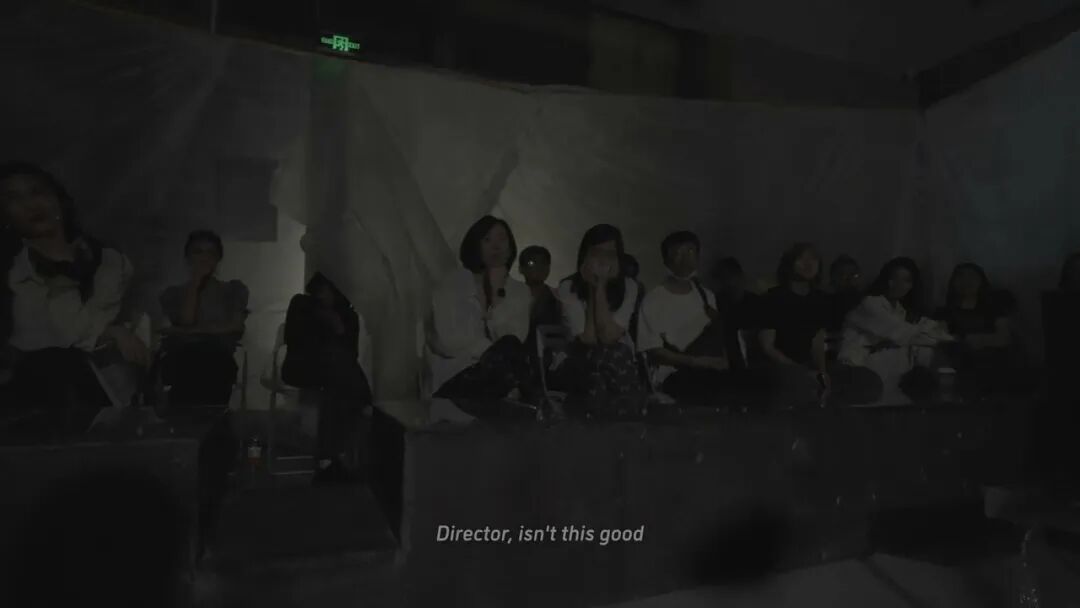
Director, doesn't this look good?
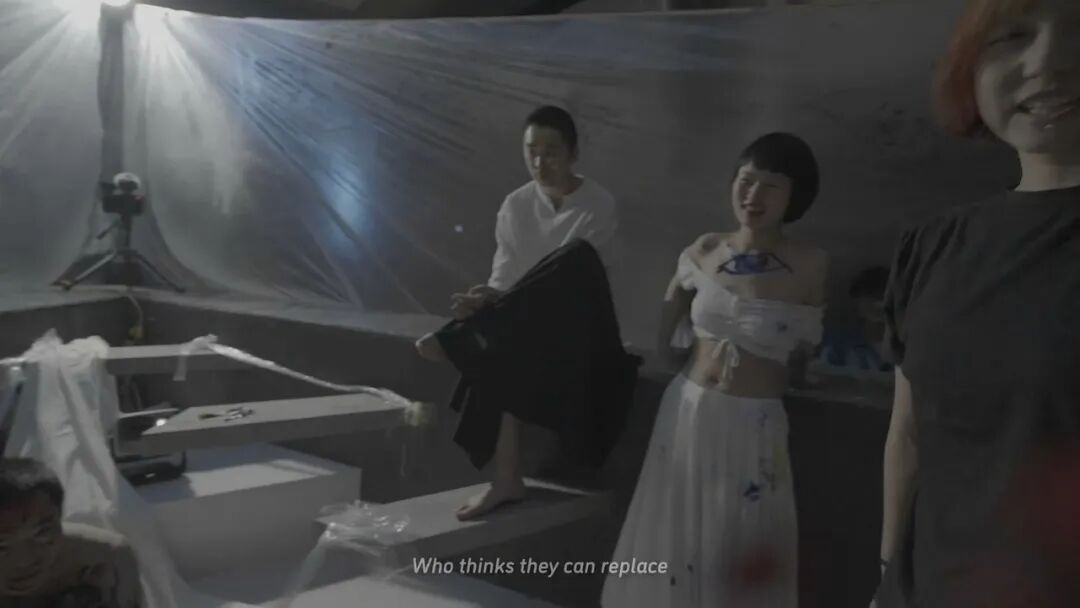
Who thinks they can take over?
This male actor's position.
I am the director. He is the male lead.
You are the real male lead.
We have four directors onstage.
What is most frightening here is not the number of "directors," nor the repeated naming of the "male lead," but the moment when positions begin to outweigh people.
Who can take this male actor's place?
This may be the most important structural line in the film's second half.
It shows that what is under discussion is no longer a particular person but a particular position. A person is present not because they are irreplaceable, but because they temporarily occupy a slot that can be filled by someone else, evaluated, and reassigned.
This is the slot.
From this point on, a person is no longer, first of all, themselves.
They are an actor, the male lead, an object seen by the director, a function required by a particular sequence, a position that can replace another or be replaced.
This cuts deeper than ordinary power-based oppression.
Ordinary oppression still recognizes you as a person being oppressed. Reducing someone to a position turns them into a deployable resource.
You suffer, but your suffering must serve the scene; you fall silent, but your silence must become part of what is watched; you sit in a daze, but even your daze prompts the question "What is everyone supposed to watch?"; you collapse, but your collapse may still be folded into the organization of how the next act begins.
The second half of Human Surrender does not simply descend into chaos.
It enters a more efficient order.
This order does not need to understand people.
It only needs to assign them positions.
VI. "Let's play a game": rules take over the relationship
"Let's play a game."
By the time this line appears, the film is no longer merely an argument within an intimate relation.
The game is like a floor suddenly laid down. Everything that previously could not be clarified, held, or given a place is finally converted into an executable mechanism.
You grab.
I grab.
Who stands in the middle.
Who is allowed to hit.
Who replaces whom.
Who enters which act.
Who is blindfolded.
Who is watched by everyone.
What makes the game frightening is not that it renders things absurd, but that it makes them operative again.
Understanding fails, empathy fails, reassurance fails, explanation fails, and the body begins to refuse cooperation, yet the live site must continue. The game therefore appears. It gives an irresolvable relation an operable shell.
This is a distinctly modern form of cruelty.
Modern systems do not necessarily deny suffering outright. They are often more intelligent than that: they convert pain into procedure, chaos into a stage of the process, and collapse into an object of observation; they place a person in a position, then keep moving.
In the film, the game serves precisely as this alternative operating system.
It does not resolve pain.
It takes over pain.
This also explains why the more rules the second half acquires, the colder it feels. The clearer the rules, the less the person is understood. The more efficiently the live site runs, the more the subject seems to have been left behind by the operation itself.
An impasse does not mean there is no road.
Sometimes there are precisely too many roads, too many processes, too many arrangements, too many executable options-and not one of them leads to the person.
VII. "Kill me": when a plea for help is corrected as a factual proposition
Of all the film's heavy lines, "Kill me" is surely the most jarring.
But I increasingly believe that what deserves our attention is not the line itself, but the answer that follows
No one wants to kill you.
This answer is not necessarily cruel.
It may even be intended to soothe, driven by an instinct to correct an extreme formulation. It seems to say: Don't think that way. No one wants to hurt you. Things are not as you describe them.
But it answers on entirely the wrong layer.
"Kill me" is not merely a literal request here, nor a proposition awaiting a fact-check. It is more like an extreme language of withdrawal: I can no longer go on existing in this way; please remove me from this live site.
"No one wants to kill you" pulls the line back onto the factual layer.
This is where the deepest rupture occurs.
A person pushes language to its limit because ordinary language can no longer carry their predicament. Yet the live site still answers them in ordinary language, as though correcting an inaccurate statement.
This is a paradigmatic moment in which language betrays people.
It is not that no one answers.
Someone does answer, but the answer lands on the wrong layer.
This is more frightening than silence.
Silence at least admits that no response is possible. An answer delivered on the wrong layer creates the false impression that the cry has been received: it appears to respond, while actually stuffing the plea for help back into manageable language.
Here lies the most modern cruelty of Human Surrender: extreme pain is not ignored completely; it is corrected, translated, put through a process, and rationalized.
And then the pain remains, still inside the live site.
VIII. Disgust, loss of feeling, urine on the toilet floor: the body preserves the last truth
If this essay stopped at language, looking, directors, and games, it would become too beautiful.
But Human Surrender refuses to make itself beautiful.
Something from below is always surfacing
I cannot feel it.
I cannot feel anything.
It really is utterly disgusting.
It is just so disgusting.
Someone has peed on the floor here by the toilet.
These are not elevated words.
They even damage the respectability of what passes for film analysis.
That is precisely why they matter so much.
They show that when language, love, looking, rules, and positions all try to organize a person, the body retains a capacity to provide counter-evidence.
The body loses sensation.
The body feels disgust.
The body leaks.
In the least dignified manner, in a way rhetoric cannot tame, the body proves that the live site has not co-opted it completely.
"Disgust" is not an ordinary emotion.
It is the body's judgment on the live site.
"I cannot feel anything" is not indifference.
It is a power outage in the sensory system.
Nor is "Someone has peed on the floor here by the toilet" a scrap that can be skimmed past. It is like a reminder erupting suddenly from underground: no matter how the live site deploys, names, and watches people, or places them inside roles and rules, the body will ultimately ruin that tidiness with an embarrassing fact.
This is also where Human Surrender has the most flesh and blood.
It is not a film of pure ideas.
Its ideas are always dirtied by the body.
That dirt is precisely what makes the film more real.
A person in extremis is never a pure subject. People do not only say, "I am in pain," "I need love," or "I cannot be seen." They also sweat, feel hot, feel afraid, urinate, and grow nauseated. After every beautiful form of language has failed, they use the body to tell a final sliver of truth that has not yet been disciplined.
IX. Beginning, ending, door: narrative offers no destination, only a passage
Human Surrender keeps unsettling beginnings and endings.

Or perhaps it was wrong from the start.
I have begun.
So which act are we starting now?
Sit where it all began.
So is all of this over?
All you need to do is cross that road.
Run toward the door.
These lines create another temporality within the film.
It is not linear time.
It does not proceed from beginning to middle, climax, and ending.
It is a live-site time that is continually restarted, named, deferred, and wound back.
It was wrong from the start.
Then it begins again.
Near the end, someone sits again where it all began.
When someone finally asks, "Is all of this over?" the film offers no true ending. It offers a door, a road, and crossing.
A door usually signifies an exit.
But here
the door is more like the final frame.
The film has repeatedly shown that leaving a space is not the same as leaving a structure; leaving a scene is not the same as escaping the regime of spectatorship; withdrawing from a relation is not the same as withdrawing from obligations of response, the allocation of positions, and language's betrayal.
"Crossing" is therefore not a victory.
It is merely an act that must occur.
This is the threshold narrative.
An ordinary narrative tells you how events end.
A threshold narrative tells you only this: you have been pushed to the point you must cross.
It makes no promise about what lies beyond.
The ending of Human Surrender refuses to fade because the film does not frame the door as an exit. It frames the door as the shape of a pressure that continues.
X. The migration chain of words: from request to threshold
Connect these clues and a chain deeper than plot comes into view.
First come the questions
What will you do? Then what should we do? Then what do you want to do?
They throw the subject back into self-management.
Next come the modal statements
I must see you. I can. Am I allowed to hit?
They turn need into maintenance, then maintenance into permission.
Then come the statements of looking
Eyes. Glasses. Seeing. Audience. Sitting in a daze.
They turn someone in a relation into material for viewing.
Next come the statements of position
Actor. Director. Male lead. Replacement.
They turn people from characters into functional slots.
Next come the rules
Game. Grab. Hit. Kill.
They turn conflict into operations.
Next come the bodily statements
I cannot feel anything. Disgust. Toilet. Urine.
They allow the body to resist being completely symbolized.
Finally come the threshold statements
Beginning. Ending. Door. Crossing.
They rewrite the story from a conclusion into a passage.
This is the original language structure of Human Surrender.
The film does not begin with a complete story and then use dialogue to express its theme.
The words themselves move through the film, mutate, change hands, and grow cold. Characters are carried along by those words, renamed by them, cast out of intimate relations, delivered into a system of spectatorship, and then delivered again into role positions, game rules, and thresholds.
What the film truly captures, then, may not be the failure of language.
Rather, it may be that language succeeds too well.
Language succeeds too well at converting a person's pain into problems, responsibilities, rules, positions, processes, and content for viewing.
That is the most frightening thing.
If language failed completely, a person might still be able to fall silent.
But language does not fail here. It keeps working. It is simply no longer working on behalf of the person.
XI. The words remain; the person is no longer inside them
From here, looking back at the name Human Surrender, we see that it is no longer merely a posture.
Surrender does not mean having nothing left to say.
Nor is surrender simply bowing one's head after being crushed by pain.
Surrender may occur at another, more hidden moment
You discover that all the words remain, but they no longer hold your place.
You say, "What should we do?" and the world demands a plan from you.
You say, "I must see you," but meeting cannot deliver arrival.
You say, "I can," but in fact you are proving that you remain usable.
You say, "Look," and in the end you yourself become material to be watched.
You say, "director," "actor," and "male lead," and the person slips into a position.
You say, "game," and the rules take over your pain.
You say, "Kill me," and the live site corrects your literal wording.
You say, "disgust," and only then does the body pass judgment on your behalf.
You ask, "Is it over?" and the film gives you only a door.
This is how words betray people.
They do not suddenly become lies.
They remain correct, clear, and usable. Everyone may even continue to use them in earnest. They have simply changed sides.
They stand with the live site, with the rules, with the audience, with roles and positions, with the threshold.
People are still speaking.
But speech has begun to push people out.
The deepest undercurrent in Human Surrender, then, is not that someone finally falls silent, but that someone is washed away in a flood of language.
They do not lack words.
They have lost their place inside the words.
Perhaps this is the moment of true surrender
When you discover that you can still speak, yet speaking can no longer return you to other people, to relations, to the body, or to the world.
When you discover that language is still clamorous, the live site still runs, the audience still watches, the rules still hold, and the door is still there.
And you are no longer inside any of it.
About the Author | Xiang Ye
A writer. After several early years in nonfiction reporting, Xiang Ye decided that major events contained too many lies and turned instead to capturing everyday "slips of the tongue," "dazes," and "words that fail to convey what one means." With no orthodox training in theater or film, Xiang Ye writes entirely from intuition and embodied experience.
Xiang Ye often joins online writing workshops that last only a few days-not in pursuit of publication, but simply to observe how people use words in self-defense under pressure. After wandering through Georgia for a while last spring, they returned with a persistent fascination with "how people become unable to stay put in a space." They care less about grand concepts than about the look on someone's face when they urgently need to urinate but cannot find a toilet, or the awkward way people rub their hands during a dead silence.
Related Articles
No Longer Loyal to Wholeness: A Final Long-Form Review of Human Surrender
Reconstructing Theatre and Psychoanalysis: Théâtre et Psychanalyse
From Symbol to Event: The Thought and Influence of Erika Fischer-Lichte
The Grammar of Events: Actor-Generated Topology (AGT) and the Birth of the Postmodern Subject, Part I
P4 Theory | The Third Subject of Analysis: A Comprehensive Exploration of Thomas Ogden's Theory of "The Analytic Third"
The Development of Group Theory from a Psychoanalytic Perspective: The Theoretical Practice and Historical Lineage of Deleuze and Guattari
P4 Theater: A Ten-Year Archive (Partial)
To Watch the Film, Add the Captain