FIELD NOTE
Yun Jianhui, location photography and multi-machine holders in "Human Surrender"
MANIFESTO SIGNAL
This is not a behind-the-scenes look or a biography of the photographer. It's a manuscript found on the screening room floor: about how a camera sprouts arms, legs, a name, and a debt.
A well-trained photographer is often asked to look like he doesn't exist.
Don't block the light, don't enter the picture, don't disturb the actors, and don't remind the audience: It turns out that this world did not grow by itself. Someone lifted the machine, someone squatted down, someone stepped on it firmly, someone got close to it, and someone didn't say stop.
The most cruel thing about "Human Surrender" is that it does not allow photographers to enjoy this kind of professional invisibility.
In this movie, the cameraman is not the one standing behind. Yun Jianhui will be rotated out of the camera, suddenly seen in the first-person drift, forced to the bed in an intimate scene, called by Jiarui's name through the camera, hit by performance materials, and re-entered into the file by subtitles at the end of the film.
This is not a sideshow.
This is the method.
MANIFESTO SIGNAL
Article 1 of the manuscript
Anyone who claims they are just taking notes should first check to see if their soles, sleeves and name are included in the painting.
EVIDENCE PLATE
After the title sequence rotates, the photographer is turned to the camera. This scene is not a behind-the-scenes Easter egg, but the first announcement in the entire movie that the photographer is also in the relationship.
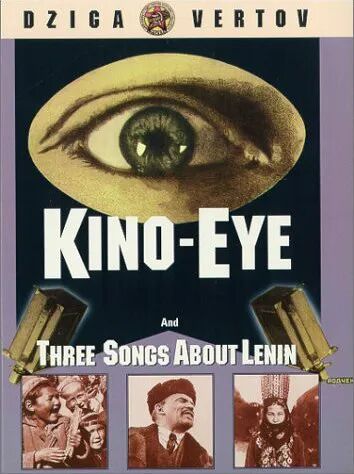
In the history of film, the camera is often said to be an eye. Vertov's "movie eye" allows machines to see the world invisible to human eyes; Dogme95 wants to drive movies back to hand-held, real scenes, natural light, and synchronized sound; Cinema Verité and Cinema Veritas keep asking: Is the camera a bystander or an intervention?
These questions are important. But they are not enough to explain "Human Surrender".
Because the real question raised by this movie is not "can the camera see reality", nor is it "whether the rough picture is more real". It's more troublesome to ask
When a camera enters a relationship, can the person holding the camera still pretend to be innocent?
This is where "location photography" really comes down. The position is not left, right, high, or low on the camera table. The position is: who stood where for this shot, who was forced to speak by this angle, who was exposed by this distance, and who entered the responsibility for picking up the machine.
In P4's long-term practice, "position" has never been a static noun. Location creates relationships. Wherever you stand, you begin to have relationships with others; when you pick up something, you begin to bear the consequences of that thing. "Human Surrender" pushes this matter to photography: the camera is not a tool to record relationships, the camera itself is the generator of relationships.
EVIDENCE PLATE
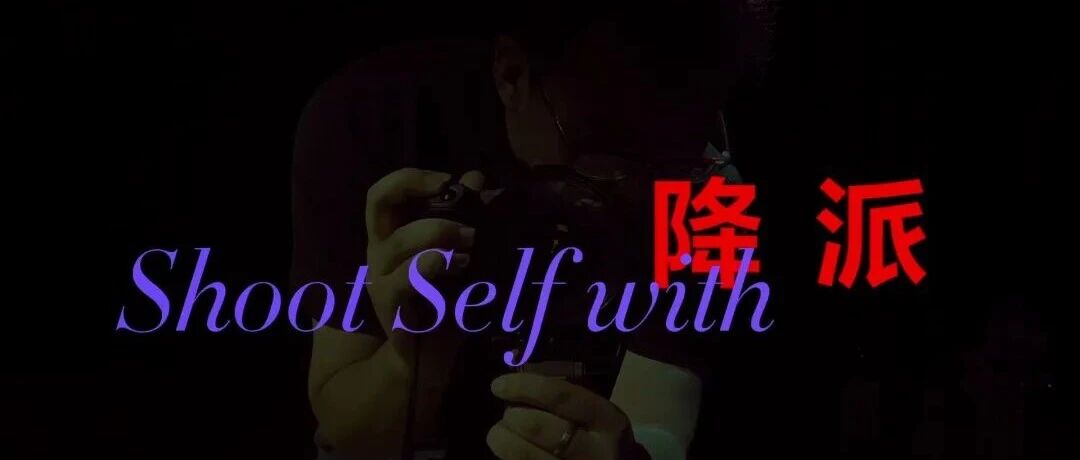
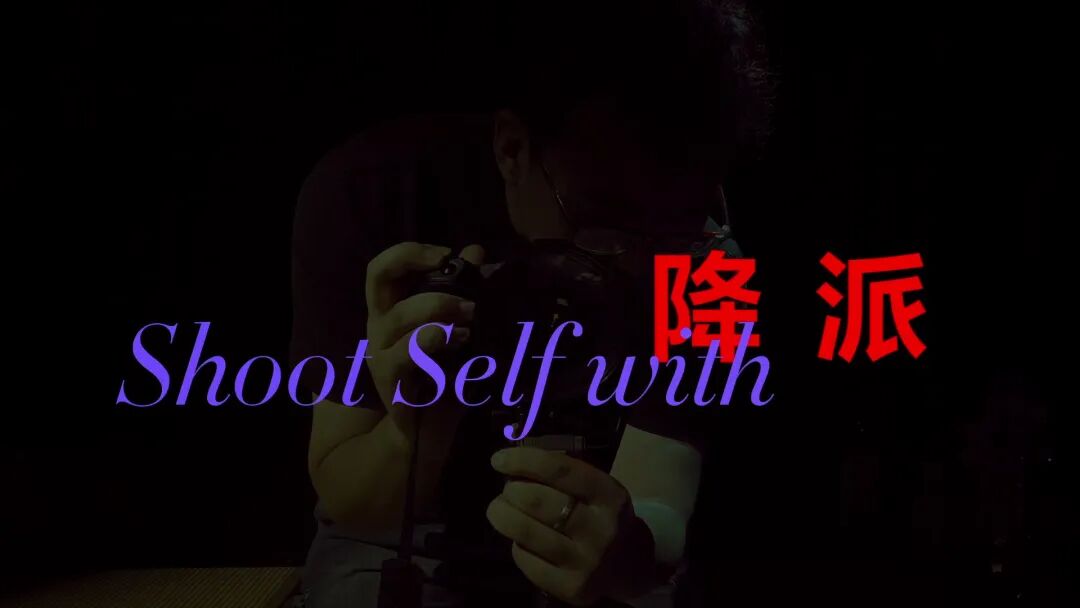
Shoot self with you is not a decorative English title. It is made into action at the beginning of the film: shoot yourself and be photographed with you.
FIELD NOTE
It's not a movie eye, it's a relationship eye
Vertov believed that machine eyes could save the world from the illusions of drama and literature. The camera sees faster, closer, and more strangely. It is like a new organ that opens up the world for humans.
"Human Surrender" never treats the camera as transparent glass. But it's less pure than "Movie Eye."
The camera here is not a higher eye. It is more like an eye that is in debt once it is opened. It sees others and exposes itself; it gets close to others and changes them; it preserves the scene and pushes the photographer to be the person responsible for the scene.
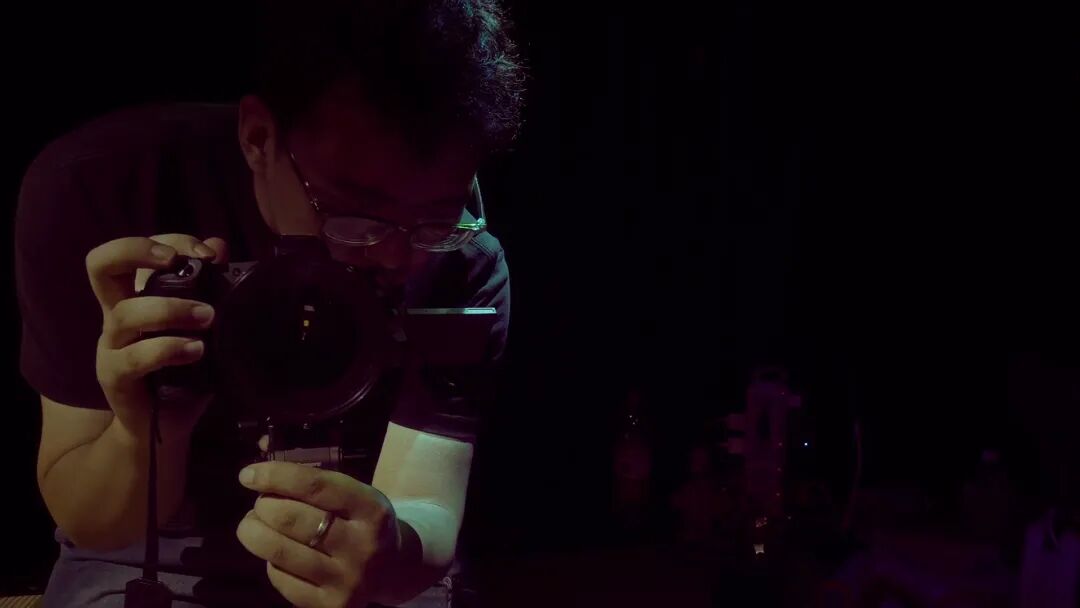
Therefore, the development of Yun Jianhui's opening credits is not as simple as "we saw the photographer".
To be more precise, it is the film that brings the usually hidden labor position of the photographer to the audience for the first time. At that moment, the shot ceased to be a natural phenomenon. It has hands, a body, a name, and a location that will be recalled repeatedly in subsequent stories.
This position is not a seat of power. On the contrary, it is a dangerous position.
Because from this moment on, the photographer can no longer say: I just shoot.
MANIFESTO SIGNAL
Movie Eye said: Let me watch.
The Guanxi Eye says: After you see it, don't even think about escaping unscathed.
FIELD NOTE
First person is not ownership
The most fascinating thing about Human Surrender is that it makes the "first-person perspective" unreliable.
Often we speak of POV as if it were simple: now the camera becomes someone's eyes. But "Human Surrender" doesn't let this rule stand. The camera drifts, gets closer, evacuates, turns to an empty field, and is interrupted by the sound of a door lock
The rehearsal process for subtitles and "Act 4" was brought back to the scene.
You think this is Zi Chou watching, but Zi Chou may come back into the picture the next second. You think the photographer is outside the frame, but the next second Yun Jianhui may be caught in the first person again. You thought the camera belonged to someone
The next moment it's like a temporary organ being pushed around by relationships.
EVIDENCE PLATE
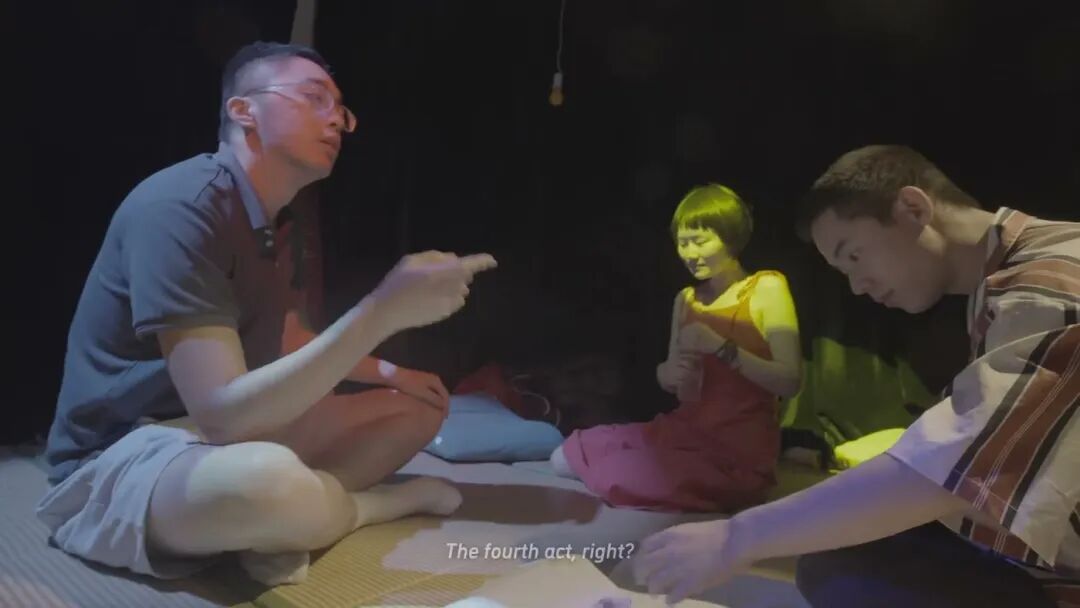
Turns, lamps, stools, curtains and ground props appear simultaneously: private words are not cut away, but interrupted by door locks/systems/empty devices.
EVIDENCE PLATE
"It's the fourth act, isn't it?" The unstable perspective was taken back into the rehearsal process. Here Zi Chou's first person perspective switches back to the position of the photographer.
This is critical.
The first person in "Human Surrender" is not a person's sovereignty, but a kind of temporary possession. Anyone can pick up a camera, and anyone can be held by a camera.
When analyzing the film's visual anchor tracking, I actually learned this rule from the film: Don't let lines and subjective feelings determine who is present first, but go back to the body, space, action continuity, and lens interruption. In other words, the truth of photography is not "who I feel is watching", but "how this position is created step by step in the picture."
This is more rigorous and unsettling than ordinary perspective analysis.
Because once viewed this way, photography is no longer an aesthetic style, but a method of evidence.
MANIFESTO SIGNAL
Article 2 of the manuscript
The first person is not a title deed. It is just a pass that the camera is temporarily lent to a certain body and may be withdrawn by the relationship at any time.
FIELD NOTE
Photographers are not eyes, they are hands, feet and breath
Later, the intimate segment on the bed dragged the word "photography" out of theory and back to the body.
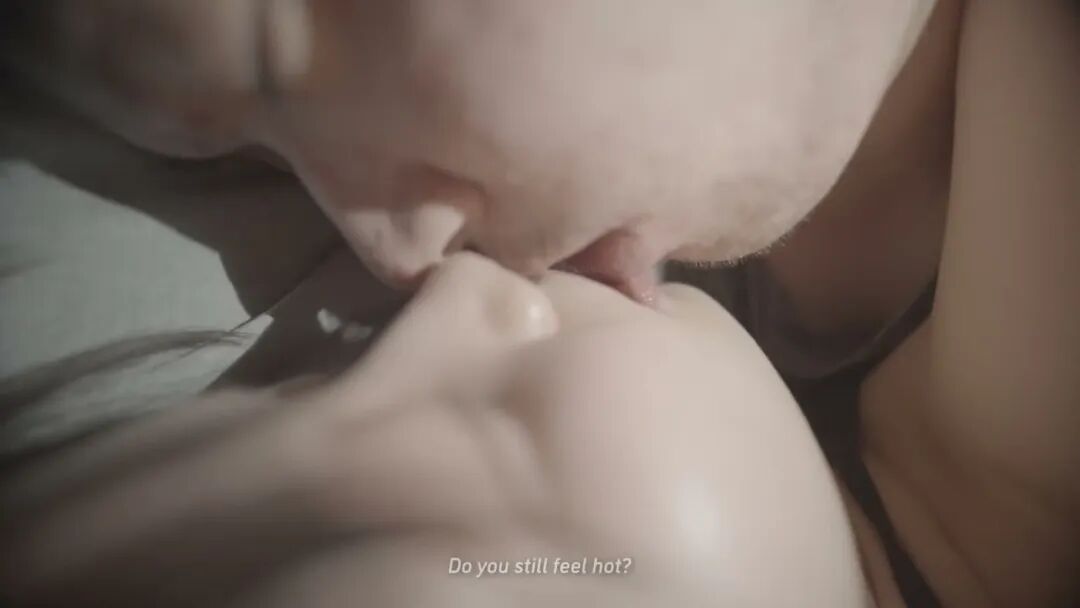
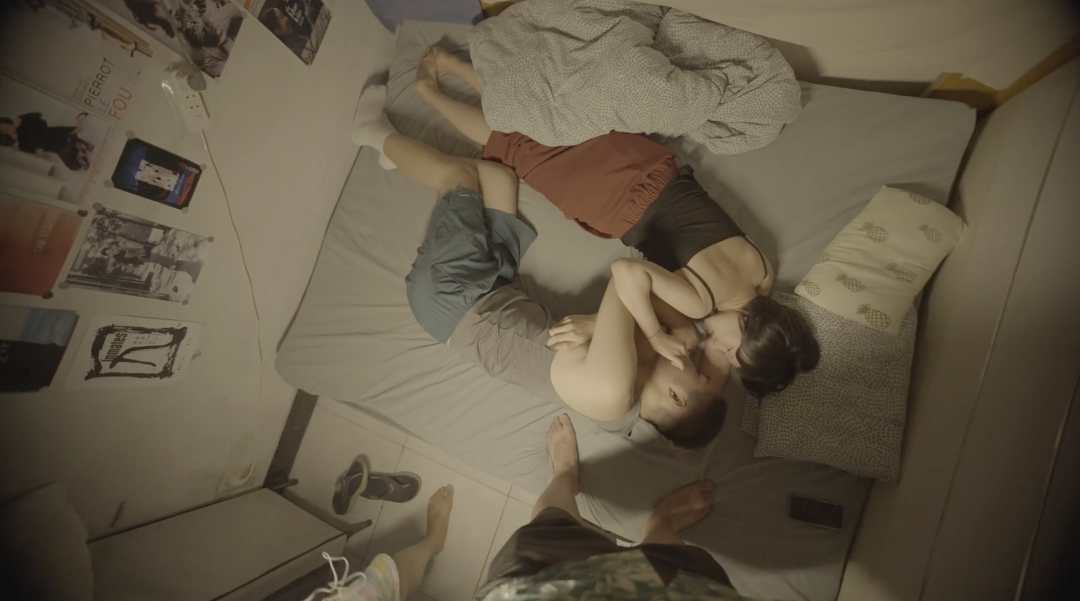
Amen and Zichou were very close. The camera is also very close, so close that only the face, lips, nose bridge, skin and the edge of the bed are left in the frame. We can also see an even sharper detail in later shots: Yun Jianhui's foot stepped directly on
Shot of them hugging each other on Amon's bed, yes
On the bed, including his feet.
Photography is not a weightless eye.
Photography has legs.
EVIDENCE PLATE
01:07:42. The extremely close-up of the intimate part on the bed can already illustrate that the photographic distance is pressed to the inside of the body."
Once it is said that photography has legs, many beautiful words become invalid.
"Gaze" is too light. "Audio-visual language" is too light. "Presentation of intimacy" is also too light. What is really happening is this: a person with a camera must find a position next to or on the bed, must allow his or her body to bear weight, must be close to someone else's breath, must continue to work where intimacy is most easily violated.
Dogme95 said that handheld, real-location, and natural light can drag movies away from industrial illusions and back to the scene. But "Human Surrender" is not about holding hands to prove reality. It's more like saying: Holding something is not automatically true, it just makes it harder to hide from responsibility.
Hands will shake. The feet will step in. Breathing exposes distance. The shoulders should bear weight. The camera remains open.
An extreme close-up is not a "shot choice", it is a body putting itself into an uncomfortable position.
This is photographic body craft.
FIELD NOTE
Say "thank you" and call out the person behind the camera
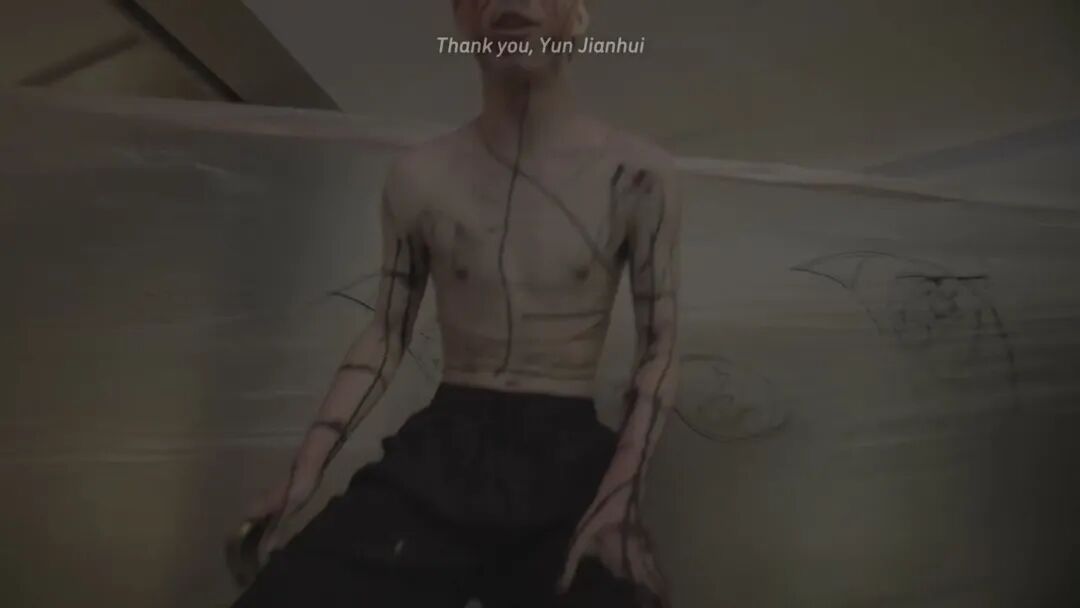
There is a very small, but very deadly line in the fourth part.
Jia Rui, A Meng, and Zichou are playing a three-word game. Suddenly, Jia Rui said to the camera
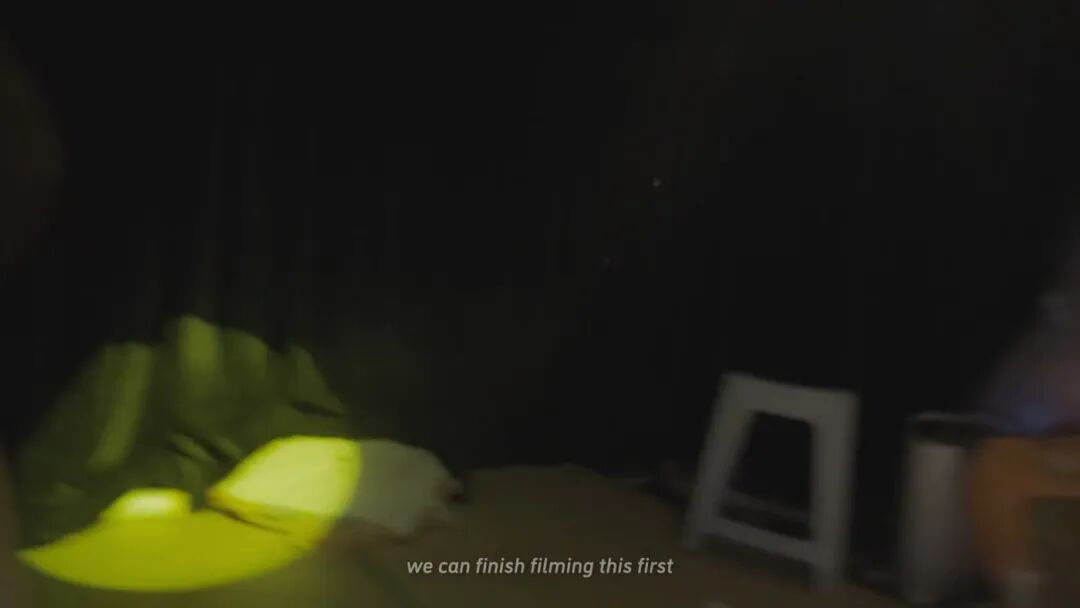
Thank you, Yun Jianhui.
EVIDENCE PLATE
"Thank you, Yun Jianhui"
This sentence is not polite.
It's a roll call.
Normal movies would cut this kind of stuff out. The photographer is the technical department, the credits, the hand behind the camera that should not be realized. But "Human Surrender" just kept this sentence. Then the person behind the camera suddenly has a name, and the camera suddenly has an addressee.
The best thing about "Thank you, Yun Jianhui" is that it does not turn Yun Jianhui into an unsung hero who is warmly thanked. It takes place in a scene where performances, games, body marks, audiences, plastics, paints, rules and failures are mixed together.
So this "thank you" is more like a call
You are here too.
You can't just be a technical position either.
You too have been called by name by this public observation machine.
Cinema Veritas have long acknowledged that photography changes the people photographed. "Human Surrender" goes one step further: the person being photographed will also change the position of the photographer. The character is not just captured by the camera; the character speaks to the person behind the camera, drawing him into the relationship.
At this time, the photographer is no longer a question of "who takes better photos".
He became the third witness in the relationship.
MANIFESTO SIGNAL
Article 3 of the manuscript
When a character speaks to the person behind the camera, the movie is no longer just inside and outside the frame. It has one more named battlefield.
FIELD NOTE
Photography is only opaque when it is hit by paint
EVIDENCE PLATE
Jia Rui threw the paint on Yun Jianhui's body. Yun Jianhui's left arm suddenly entered the painting, grabbed it in the air, and then put it back.
I feel like this detail says more about the cinematography of this film than even many full scenes.
Because photographers are not just called upon by words, they are also struck by materials.
The paint doesn't just fall on the actor's body, it becomes a shape, a symbol, and a trace of performance. It will fling itself at the person holding the camera. The person holding the camera will have reflex actions, reaching out, grabbing it, and taking his hand back. Once that arm enters the frame, the transparency of the camera is completely broken.
You can no longer say there is a clean observer here.
The observer also has paint on him.
This is where "Human Surrender" is more radical than many "real movies." It does not rely on rough images to create a sense of reality, nor does it rely on low cost to create a sense of honesty. It turns reality into something that contaminates the photographer.
Reality is not camera objective.
The truth is that the photographer was also claimed on the spot.
FIELD NOTE
The last camera is called subtitles
By the end of the film, things took another turn.
The film overlays over-the-air footage, numbers, rosters, characters, the p4 logo and remnants of the scene. The subtitles here are more than just "credits." It's more like the last camera. The previous optical photography captures the body, action, and failure; the end credits capture names, sorting, and archiving.
EVIDENCE PLATE
The end of the movie. Photography Yun Jianhui Enter the ending text system. The photographer is not only named on site, but also re-written on the archival level.
In ordinary movies, the ending is the finishing touch after the end. The ending of "Human Surrender" is not. It's still shooting.
It shoots with words.
It returns those relationships that were too messy, too close, too dirty, and too difficult to classify to names.
Photography Yun Jianhui
It is not a simple signature, but a re-development of the photographer's position on the archive level. At the same time, Yun Jianhui and the four actors were filmed in the fixed camera position. Precisely because there is no closure, we can better see the evidence discipline forced by this film: the photographer is not a fixed role, anyone can become this role.
There's a bigger problem here.
When we review "Human Surrender" with images, accidental leaks, subtitles, and cast lists, we're not actually filling it in outside of the movie. We are continuing to follow the film's own method.
This is a film that inherently doesn't believe that the truth can be accomplished in one viewing. It allows relationships to happen first, failures to remain, people to be misidentified, silent bodies to be missed first, and then to be renamed at the end of the film, and then to review and continue questioning.
So "title camera" is not a metaphor. It's really doing what photography does: assigning who is visible, who is named, who is archived, who is to be retrieved.
FIELD NOTE
The more important Yun Jianhui is, the less he can write the film as one person's photography
At this point, the boundaries must be made clear again.
Yun Jianhui is very important, but "Human Surrender" is not "a movie made by Yun Jianhui alone."
On the contrary, the more important Yun Jianhui is, the more it shows that this film cannot return to the theory of a single photographer. Because his role is not to monopolize photography, but to highlight the "photographer's position" that is usually hidden.
There is more than one person holding a camera in the entire film. He Fa can take pictures, Zichou can take pictures, and Jia Rui can also take pictures. There are also fixed camera positions, and end credits, as well as subsequent screenshots, cast lists, character lines, and record file write-backs. The right to see is transferred between different bodies, different devices, and different evidence systems.
EVIDENCE PLATE
We see more names in the photography positions at the end
This is not about erasing the photographer.
This is what allows photographers to really get specific.
If you just say "this is a distributed installation", it is easy to abstract away the real photography work. It seems that the camera will drift by itself, the position of the camera will be lowered by itself, the long lens will persist by itself, and the intimate scene will be photographed into an extremely close-up.
If we just say "This is Yun Jianhui's photography", the entire film's complex camera ownership, first-person drift, character holding the camera, fixed camera position and subtitle archiving will be reduced to one person's signature.
The thoughts on "Human Surrender" are here
It not only allows us to see the body of the specific photographer, but also lets us know that photography rights are never private to one person.
Yun Jianhui is the anchor point, not the end point.
FIELD NOTE
Location photography, it's six moves
Therefore, "location photography" can no longer be written as a beautiful concept. It has at least six actions
METHOD LEDGER
Develop: The photographer, camera holder, and viewing device are exposed from the transparent part.
Changing hands: The camera, perspective, and viewing rights are transferred between different bodies.
Seizure: The long shot does not repair the scene for failure, silence, embarrassment and dislocation.
Elevation: beds, overhead shots, white light, projections push intimacy to a position where it can be inspected.
Lowering: Low camera position, ground, plastic, and reflection drag the body into the material layer.
Archives: Ending Credits, Names, Characters and Review Take over for final viewing.
In these six actions, photography is not about "what to capture" but "where to place the relationship." What's even more terrible is: every placement will in turn change the person holding the camera.
This is why the photographer in "Human Surrender" must surrender.
He is not surrendering to someone.
He surrendered to the relationship, to the scene, to the evidence, and to the fact that he could not stand outside.
In the end, what was really captured in this movie was not just Amon, Zichou, Jiarui, Ricky, and O, nor just performances, intimacy, failures, and the credits.
It captured something even more difficult to photograph
How can one never stand completely behind after picking up a camera.
Written by: Ivan Bittov
Film eye branch, relationship forensics school
scammer
accidentally entered a 46-year-old pub in 29 years. He is not himself
At most he is a beggar.
I used to brag that machines can see the world.
My name is Ivan Bittov. Not only will the machine be blind, but it will also be blocked by the world, collect debts, and even have to pay traffic fees.
Related articles
Intimacy does not belong to two people | "Human Surrender"
"Human Surrender": a "masterpiece" of on-site divination
How words betray people - the original language structure of "Human Surrender"
No longer loyal to integrity - long review of the final draft of "Human Surrender"
Reconstructing "Theatre and psychoanalysis" Théâtre et Psychanalyse
From symbol to event: academic thought and influence on Erika Fischer-Lichte
"The Grammar of Events: Actor-Generated Topology (AGT) and the Birth of the Postmodern Subject" (Part 1)
p4 Theory | The Third Subject of Analysis: A Comprehensive Exploration of Thomas Ogden's "Third Presence" Theory
The development of group theory from the perspective of psychoanalysis: The theoretical practice and historical context of Deleuze and Guattari
P4 Theater, ten years of archival records (part)
Want to see Human Surrender plus captain