Intimacy Does Not Belong to Two People
Shen Bailu Reads Human Surrender
Author's Note.
Shen Bailu is a woman film critic. She is in no hurry to pronounce judgment on a film. She prefers to look slowly: to see how light falls across a face, how the question "Are you there?" turns cold, how a kiss does not remain within the kiss but is carried onward by subtitles, spectators, closing credits, and later memory.
The first half opens like an old drawer pulled out little by little: love, hands, the moon, eyes, debt, O's silence. Each is taken out in turn, until we discover that they all belong to the same secret.

Some films finish telling a story. Others resemble a person tidying a room at night. The light is dim, and everything is still there: a bed, a wall, a few lines of dialogue left lying about, a hand that reaches out and then draws back. You think she is looking for something lost. Only later do you understand that she is looking for the shape the missing thing left behind.
Human Surrender is that kind of film.
On the surface, it is fierce. Someone speaks of love; someone kisses; someone falls to the floor; someone remains silent; someone is watched by an audience. But to treat these scenes as a string of provocations would be to sell the film cheaply. Its true chill lies not in how much intimacy it records, but in its refusal to let intimacy belong neatly to two people.
One person tells another, "I love you," and the camera is present. One person asks, "Are you there?" and the subtitles are present. One person kisses, and debt is present. One person falls silent, and an empty seat is present. Someone is asked whether they still feel hot, and all of society's fear is present. By Part Four, the audience itself has taken a seat inside the relation. The closing credits are harsher still: they gather the entanglements of living people into character names, as though stitching labels onto a disordered dream.
The film's real question, then, is not "Did they love each other?" but this: once intimacy has happened, no one can preserve it alone.
A hidden line runs through the film. Love is spoken and immediately caught by the camera. Bodies draw close and immediately expose that experience cannot be shared. Eyes fail to confirm the self, and water and kisses begin to keep accounts. Ricky and Jiarui's kiss does not arrive at love but at "repayment." O's silence pushes relation toward witnessing. Amon's questions about temperature push witnessing toward bodily diagnosis. These private exchanges are then moved into public space, and the closing credits finally gather everything into names.
This is not a plot summary. It is the film's path of fate.
The Moment Love Appears, It Is Already No Longer Pure
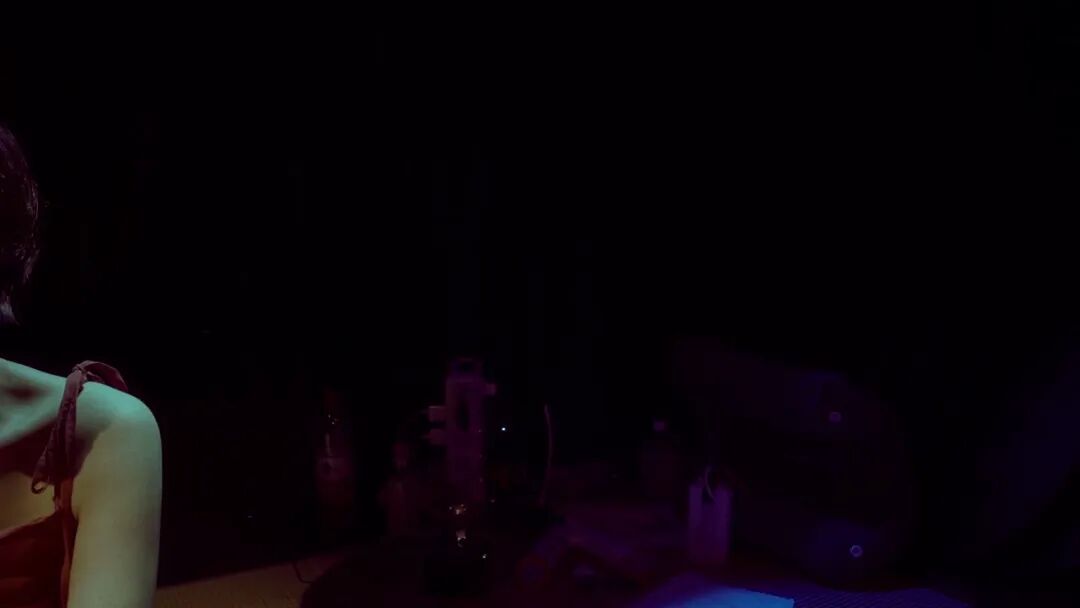
00:01:20. There is red light in the darkness, and the embarrassment of being seen. From the beginning, love is given no chance to be alone.
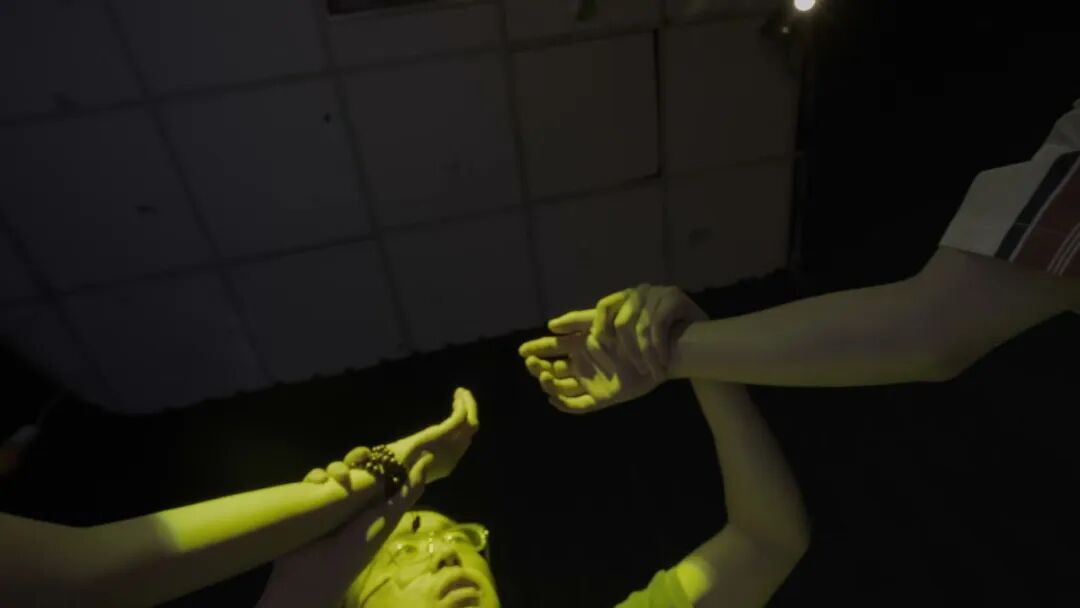
00:06:28. Several hands resemble wires joined in haste. They light up for a moment, only to reveal that current cannot live in anyone's place.
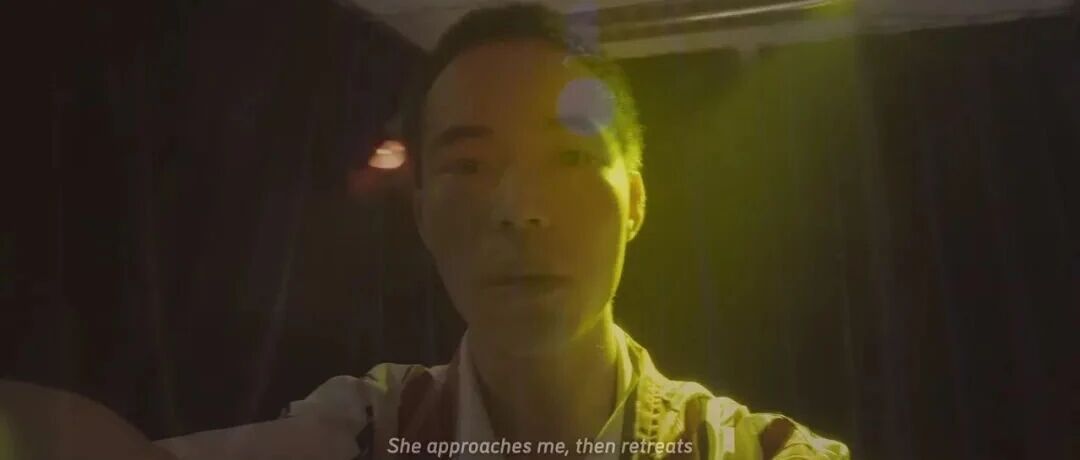
Love at the beginning of the film is not beautiful. It does not appear in a clean and fitting room made for confession, but in darkness, red light, and a gaze that is almost intrusive. The moment love begins to speak, someone else hears it; a machine takes it in; an uneasy light shines upon it.
This resembles Human Surrender's first judgment on intimacy
No one ever falls in love in a vacuum. There is always a third thing between two people. It may be a camera, a line of subtitles, a rehearsal room, or everything that everyone will say afterward.
Those early hands matter especially. Wrists, the backs of hands, an upturned face: under yellow-green light they form a temporary circuit. It resembles comfort, but also an experiment. People try to connect their bodies, yet connection is not understanding. Someone says, "You won't understand." The sentence is a fine needle puncturing the warmth.
Every more violent scene that follows already echoes here. The contact is real, and so is the failure to understand. Love is real, and so is the impossibility of possessing it alone.
Amon Is First Not a Person, but a Position Awaiting an Answer
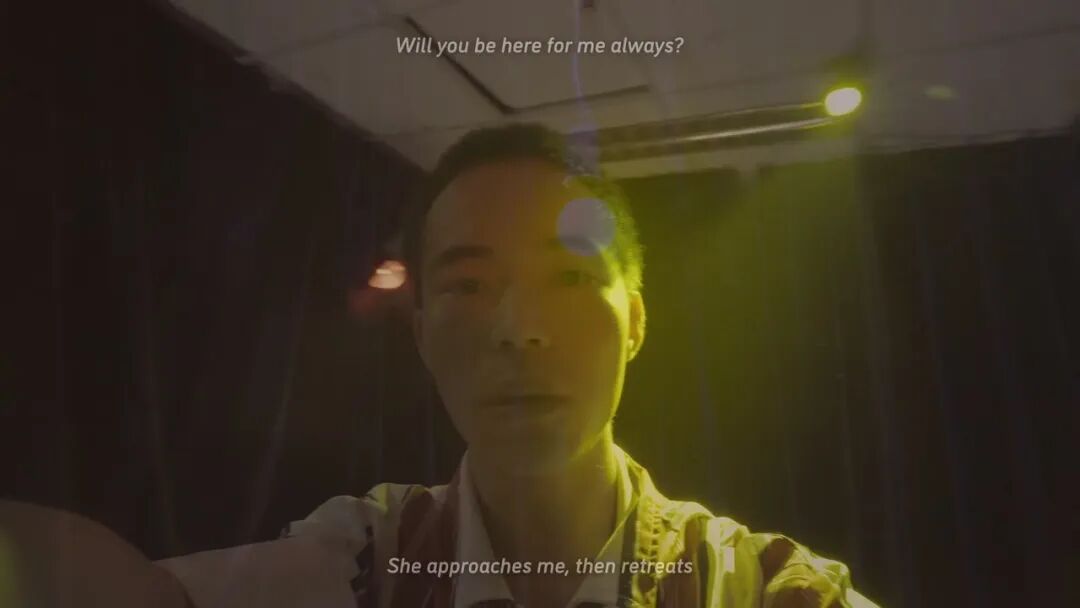
00:28:05. "Are you there?" is not sweet. It resembles a night inspection: a check that the other person is still present, and that the speaker has not yet fallen away.
00:32:20. Eyes should return a person to themselves. The film turns them into an empty well.
If we look at Amon only by counting appearances, we will miss her. She is not always at the center of the image; at times she is not in the image at all. Yet the film is continually preparing her position.
The position is simple, and arduous: someone must answer, "I'm here."
"Are you there?" sounds like a tender phrase between lovers. In this film, it resembles a confirmation signal repeatedly issued by a system.
It is not asking for romance, but for existence. Are you still there? Might you suddenly disappear? When I speak, will I find myself alone in the room?
Later, the eyes fail. A character says that they cannot see themselves in the other person's eyes. In an ordinary romance, the line might become a poem of heartbreak. In Human Surrender, it reads more like a diagnostic report.
The eyes are no longer reliable. Seeing cannot guarantee recognition; a gaze cannot guarantee the return of the self.
The film therefore needs another form of confirmation. Not the eyes, but the body. Not "Do you love me?" but "Do you feel hot?" "Are you still afraid?" "Can you continue?"
Amon gradually appears through this breach. She is not a passive object of love, but the person who takes the relation's temperature. She asks; she receives; she allows others to speak the parts of themselves that have not yet collapsed. Her tenderness is not light. It is more like a thermometer: the closer it comes to the body, the more clearly it knows that the illness has not passed.
Ricky and Jiarui: The First Kiss Already Comes with a Ledger
00:37:48. Water, a fish tank, touch, a kiss-none of it finally arrives at romance. It arrives at "thank you" and "repayment."
00:43:55. O stands there without speaking. The empty seats are there too, bearing no witness. The film abruptly becomes the failure of a proof.
Ricky and Jiarui's kiss is the film's first intimate scene to drive two people so close that nowhere remains to retreat. Yet the film does not present the kiss as a victory.
Water precedes it. Water is always dangerous: like memory, like debt, like a kindness no one can properly explain. The fish tank, swimming, falling from the boat, helping, saying thank you-these elements prepare the way. When the lips finally meet, the audience realizes that intimacy does not necessarily lead to love. It may also lead to an accounting.
"Repayment" is a cold word. It removes the kiss from warmth and places it in a ledger. Who owes whom? Who once saved whom? Who has repaid what with their body? Who has the right to say it was nothing but a debt being settled? The film answers none of these questions. It lets only the dampness of water vapor and nearness of skin linger.
Soon O appears in the circus tent. She has no voice. Because she is voiceless, she has easily been overlooked, as though anyone who does not speak in a scene does not count as present. But this film does not count people that way.
Zichou speaks of proof, memory, and being the only one who can prove it. O is there; the empty auditorium is there. One person has a voice, another has a body, and a row of seats occupies a position without providing witnesses. The relation no longer asks "Who loves whom?" It asks, "Who can prove that this happened?"
This is why recovering
O
matters. She makes us realize that many forms of intimacy in Human Surrender do not enter through dialogue. They appear through position, distance, and silence-through someone whom no one else hears, yet whom the image still preserves.
From O to Amon: The Film's Most Secret Cut
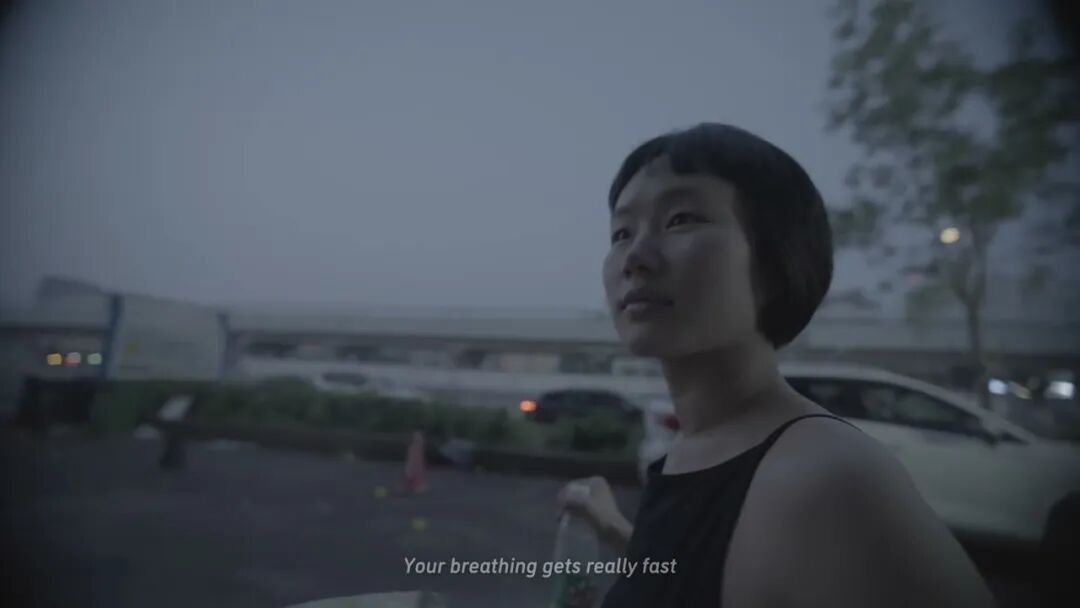
00:45:58. After O's silence, the film cuts to Amon's breathing and exhaustion. Proof has failed; the body takes over.
01:07:50. This kiss does not shut the world outside. It brings death, friends, society, and everything else to the bedside.
I almost believe that the entire film has a tiny key hidden in the cut from O to Amon.
Inside the circus tent, the problem is proof. Did this happen? Who saw it? Who can testify? O's silence prevents the question from reaching completion.
The empty seats offer no help. They simply remain there, like a row of indifferent teeth.
The image then cuts outside and to Amon's body. Her breathing is fast, her heartbeat is fast: you are tired. Suddenly the question changes. It no longer asks, "Who can prove it?" but "Can you still bear this now?"
This is no ordinary transition. It is a transfer of the relational mechanism. O is the silent endpoint of witnessing; Amon is the one who asks about the body's condition. The two cannot be merged into a single person or blurred into some generalized feminine symbol. Each occupies a different position, yet together they move the film from "Did it happen?" to "Can it continue?"
Zichou and Amon's kiss lies deep within this line.
The scene takes place in Amon's home, where the walls are covered with film posters. We cannot treat this only as an event within the film, because I did consult the film's production history, which makes the moment more complex: it is also a real experience of intimacy taken in by the camera. It was here that Zichou gave a first kiss. The film did not fabricate a kiss afterward; it kept the awkwardness, heat, breath, and questions of a first time within the image.
Yet this kiss still does not remain within the kiss. What follows is not silence, but more precise language.
Do you still feel hot?
A little warm.
Not that kind of feverish heat.
Are you still afraid? Death, intimate relationships, friends, society-everything.
The warmth here is not a term of endearment. It is more like a number on a temperature chart. Nor is fear a coy gesture. Its objects are listed one by one, as if a cupboard were opened at night and contained no clothes, only the world. Death, friends, society, everything: all of it crowds around a single bed.
Intimacy, it turns out, does not keep the world outside. It reduces the world to the space between two people's breaths.
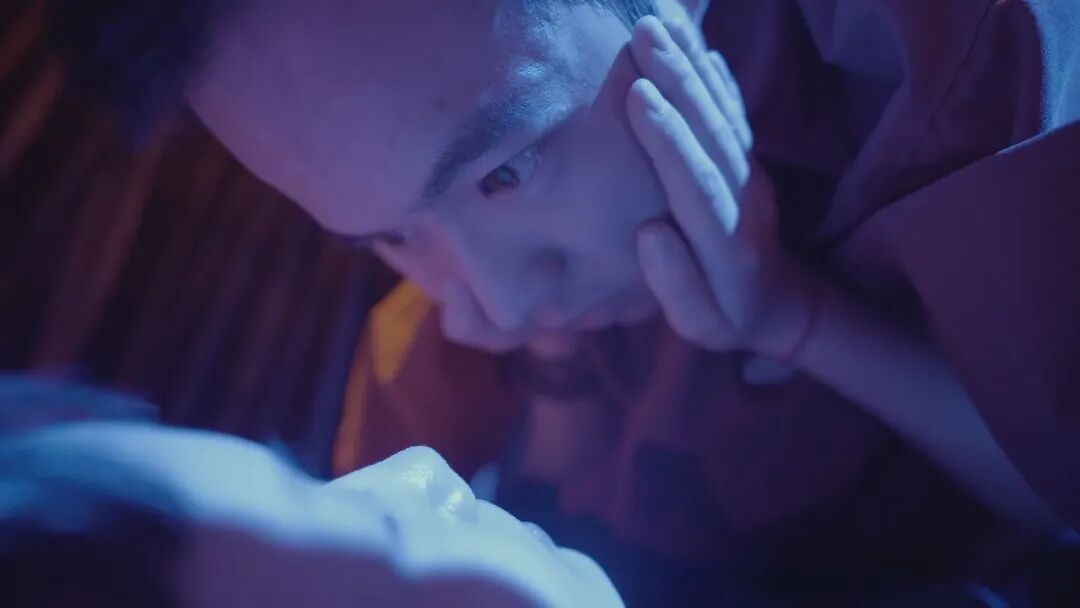
Amon's significance now becomes clear. She is more than "the person who is loved." She makes it possible for the relation to keep speaking. She asks about temperature, receives fear, and keeps the live site from collapsing. She is a person, but also an interface. Her care is not a soft background; it is among the film's most arduous forms of labor.
Part Four: Private Relations Finally Take Their Seats in the Auditorium
The second half does not leave intimacy behind. It simply moves the private confirmations, temperature-taking, gazes, and debts of the earlier sections into a brighter, colder public space from which escape is more difficult.
Many viewers feel that Part Four abruptly changes the film's shape, shifting from private relations toward public performance, installation, the live site, and the audience. But this is not a departure. Part Four does not leave the earlier intimacy behind; it makes that intimacy public.
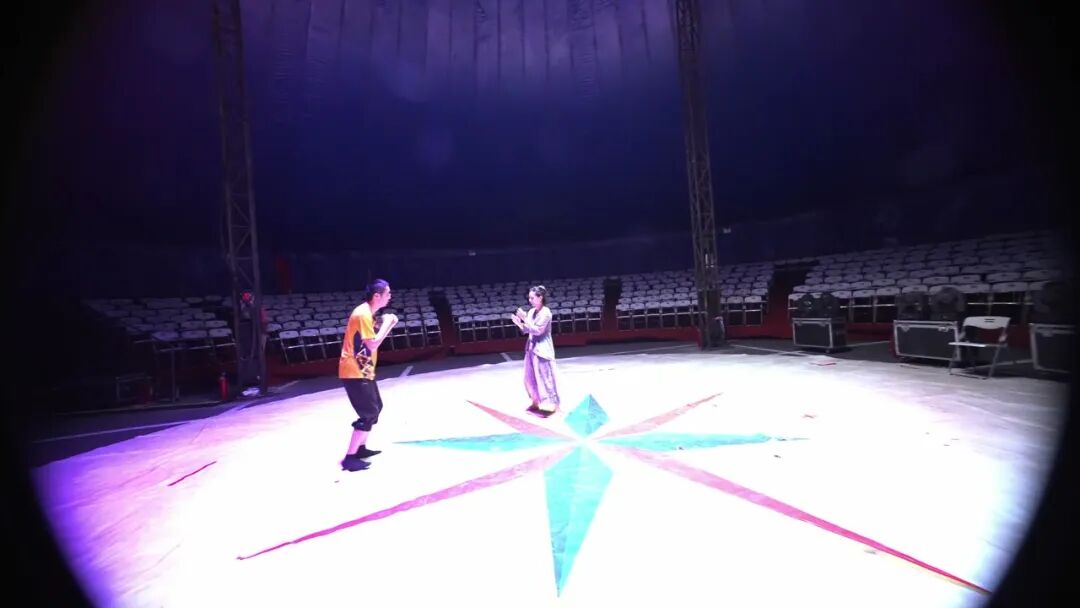
01:22:10. The floor resembles a low mirror; plastic sheeting resembles an opaque skin. The audience is not a background but part of the apparatus.
01:35:10. Eyes are painted onto the body. Seeing is no longer only an organ's function; it becomes a mark for public reading.
The reflective floor, plastic, low camera position, and seated audience turn the space into a machine. To enter it is not merely to perform, but to be processed. Questions once exchanged between two people now acquire listeners, witnesses, and judges.
"Are you there?" becomes "Say something."
"Do you still feel hot?" becomes "Can you keep going?"
"Who can prove it?" becomes "Let everyone see."
"I cannot see myself in your eyes" becomes eyes painted on the body.
This last transformation is especially powerful. Eyes are supposed to grow on a face, to look at others and allow oneself to be seen. In Part Four, however, eyes are painted onto the body's surface. They no longer see; they are there to be seen. The body becomes a sheet of paper, read by the audience, the light, the plastic, and the lens.
Amon, too, is drawn into this machine. Earlier she asked about temperature at the bedside and made it possible for the relation to keep speaking. Here the position of care becomes public. At times she is the one who soothes; at times, the one being watched; at times, a living body not yet fixed by a name within the process. Care is not always a gentle zone of safety. It too can become a position that is consumed.
The Closing Credits Are Not an Ending, but the Last Calling of Names
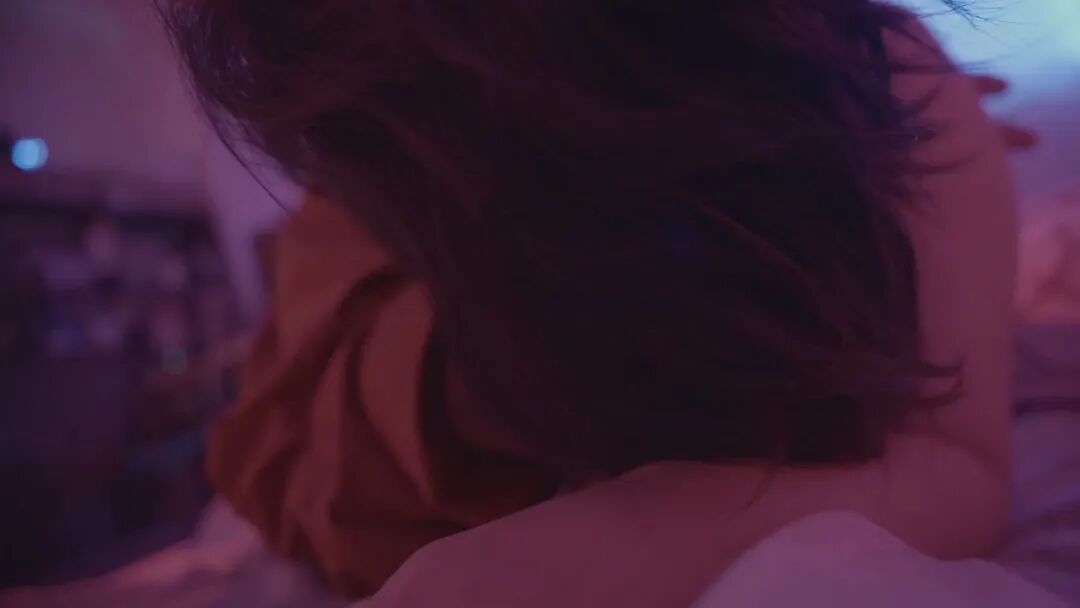
02:00:40. The audience is seated there. The questions of private relations have finally become an obligation to speak in public.
02:33:20. The closing credits cover the image. Names resemble fine needles, pinning down the disorder people have lived through one piece at a time.
As Part Four continues, it increasingly resembles an archive without walls. People are called into visibility, required to speak, required to acknowledge, required to continue. Yet even after "the end" is spoken, the live site does not truly end. Relations fear this most: the dispersal has been announced, but the body remains where it was.
The closing credits in Human Surrender are therefore not an appendix. They are the final scene.
The image behind them is blurred; the onscreen text in front is clear. Streets, night, crowds, and signs appear like reality shining through glass. The text, however, is stable. Line by line, it classifies people again.
Amon is written as Character A (Amon).
O is written as Character O, named only after a delay.
Ricky, Jiarui, Zichou, and the others are returned to the order of a list. At last the film seems to gather those kisses, silences, proofs, temperatures, fears, and public gazes together. Yet this gathering is not gentle. It resembles a calm hand placing everything scattered beside the bed, inside the tent, and across the stage into a bag.
Can a name preserve a person? Not necessarily. A name can prove only that the person was once called.
Sometimes that is already the cruelest and most merciful thing cinema can do.
Intimacy Does Not Belong to Two People
Human Surrender is not saying that "people cannot love." That would be too slight. It shows that once people truly draw close, their relation leaves the two of them and enters a larger system of preservation.
It enters the camera. It enters subtitles. It enters other people's eyes. It enters O's silence. It enters Amon's questions. It enters the debt Ricky and Jiarui cannot settle in words. It enters the auditorium in Part Four. It enters the closing credits. And it enters the criticism through which we see it again today.
This is the film's true surrender. It is not surrender to another person, to the director, or to a machine. It is surrender to a simpler and more embarrassing fact: we can never fully possess the relations that happen to us.
When love happens, we think it belongs to us. Only much later do we learn that it also belongs to the person who saw it, the person who said nothing, the machine that filmed it, the line of subtitles that wrote it incorrectly and was later corrected, the list of closing credits, and someone who opens it again on a later night.
The film is not nihilistic, then. It is simply calm to the point of seeming almost inhuman.
It preserves a kiss and the question that follows it. It preserves a hand and the experience that the hand cannot transmit. It preserves O's silence and Amon's temperature. It preserves the eyes painted on a body and the names that arrive belatedly in the closing credits.
Intimacy does not belong to two people.
Intimacy happened, and the entire world began to bear witness for it.
Related Articles
Human Surrender: An Oracular Work of Live-Site Divination
How Words Betray People: The Original Language Structure of Human Surrender
No Longer Loyal to Wholeness: A Final Long-Form Review of Human Surrender
Reconstructing Theatre and Psychoanalysis: Théâtre et Psychanalyse
From Symbol to Event: The Thought and Influence of Erika Fischer-Lichte
The Grammar of Events: Actor-Generated Topology (AGT) and the Birth of the Postmodern Subject, Part I
P4 Theory | The Third Subject of Analysis: A Comprehensive Exploration of Thomas Ogden's Theory of "The Analytic Third"
The Development of Group Theory from a Psychoanalytic Perspective: The Theoretical Practice and Historical Lineage of Deleuze and Guattari
P4 Theater: A Ten-Year Archive (Partial)
To Watch Human Surrender, Add the Captain