
General remarks
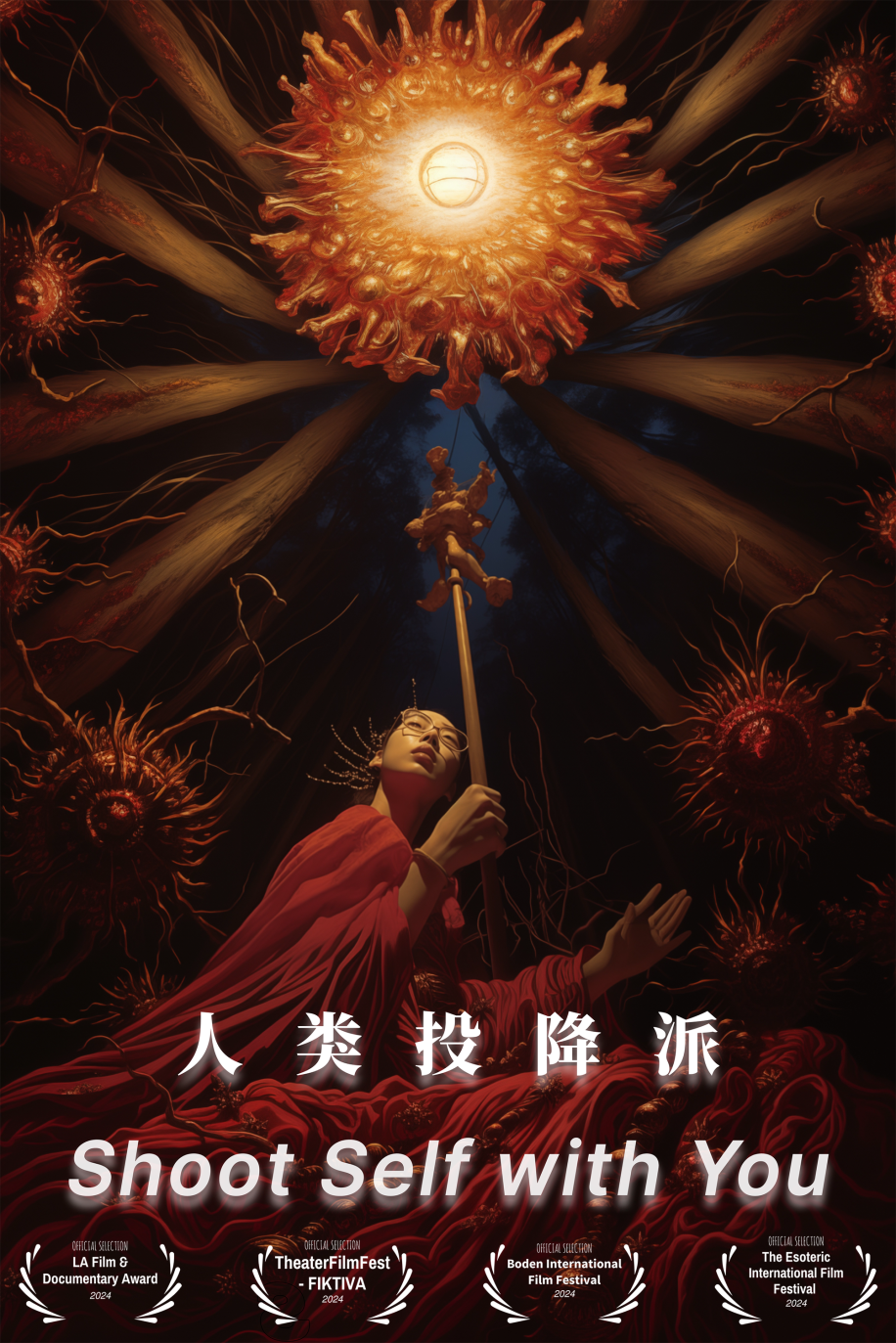
Human Surrender is not a film about "failure", but a film about "evacuation hallucinations". It is not about how one loses, it is about how the present generation places itself in response, love, language, memory, performance and order, and how, after each and every one of these support has failed, it finally admits that human beings cannot live on their continued integrity. The so-called "surrender" is not a surrender to life, but rather a cessation of allegiance to false integrity.
1. The film is actually not about surrender, but about being unable to continue.
The title of Human Surrender is easily misleading. It will naturally be understood as a gesture: an apocalyptic, restless, a failure philosophy, or some kind of platitude of powerlessness.
But watching the whole film you'll find
It is far more cruel and honest than these understandings.
It's not about giving up.
It's how a man loses his ability to continue acting complete, comprehensible and manageable.
I don't know. In other words, it doesn't have the choice of "I'm going to surrender" and then the characters are going to do it; instead
It was the person who was forced into a position - the reaction began to fail, the intimacy began to fail, the language began to fail, the memory began to lapse, the organization began to lapse - and finally, the old myth was called "surrender", just to admit that the old myth could not last.
The film's sharpest judgement is here
People are not down on failure, but on performances that "must keep themselves out of failure".
So surrender is never lazy in this film, nor is it retreating. It is a wake-up call: I finally admit that I never really had that promised integrity.
2. Its strongest insight: people live and are inherently dependent on responses
The real depth of Human Surrender is not only in love, crisis or experimental forms, but in capturing a more fundamental and disturbing fact
Man is not a natural and stable existence. People must be able to confirm that they are still there.
That sounds like relationship learning, but in this film it's not common sense, it's the engine of disaster.
Because to admit that, many things will collapse
You're not the one who can stand on your own.
You need to be seen, captured, recognized, confirmed.
Once you respond to hesitation, distortion and frustration, your sense of presence will be relaxed.
So the scariest thing about this film is not that the person has suffered an external incident, but that the response mechanism has continued to be unstable.
You're talking to each other.
You're close, close enough.
You explain, the language is getting lighter.
You remember, memory can't bring back now.
You ask for help, a greater order will take over the scene and will not really understand you.
So the film was not a dramatic "what happened," but a process closer to reality than an event
How a person loses a little bit of his or her capacity in a world without a stable response.
Not how the world works, but where it should be, where it should be, where it should be, to whom it should be looked, to whom it should be asked; in the end, even "how I should stay on this scene" is no longer up to me, but is taken over by rules, places, eyes and order.
Love here is not salvation. It's a failed experiment.

"What I want is love."
Of course, it's one of the most prominent sentences of the film. But it's too light to understand it as a theme of love.
In Human Surrender, love is not a romantic centre, but a severely tested container. The character once believed
It can be confirmed by intimacy.
You can get it by hugging.
By being seen, you can see yourself again.
By connecting two people, we can resist the world's instability.
The film does not harshly deny that desire. It is even worse: it allows this connection to happen briefly.
It's true. Touches are true. The desire is true. One moment the response was true.
But the problem is here: they are all true, but they are not enough.
In other words, it's not about "love doesn't exist," but about
Love exists, but it cannot stabilize your expectations of integrity.
This is more cruel than "no love at all". Because if it never happened, you could say it was a fantasy; but Human Surrender filmed that intimacy could have happened and that a brief connection could have happened.
It is only that it is still unable to accomplish that larger task - to put a person down in his or her entirety.
So love is not the end, but a failed experiment. The more people want to identify themselves through each other, the more they reveal that fact
No one can set you up completely.
This is not a mockery of love, but of the myth of love.
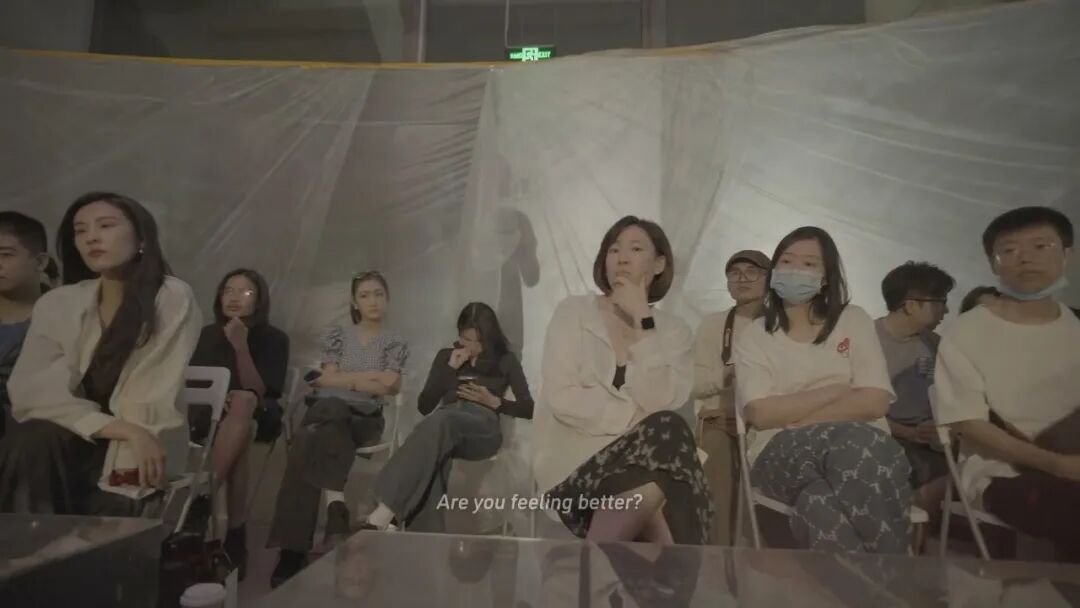
"I can't see myself in your eyes" - what really collapsed was not relationships, but inter-subjectism.
One of the toughest words in the whole picture is not "dead," or "kill me," but
"I can't see myself in your eyes."
This sentence is heavy because it cuts through not one layer, but three.
First, it is certainly a complaint at the level of love. You can't see me anymore, and you can't take me out.
The second layer, it is a fragmentation of the existential layer. In this film, it's not the same.
"Seen" is never just a romantic claim, but a condition. To be invisible is not just an emotional failure, but a failure of the mechanism of confirmation by the subject.
On the third floor, it's even an ethical viewing of the whole movie. The viewers thought they were seeing the person, but the film kept withdrawing from this safe position. You're not looking at an incomplete person in complete position, but instead, the film loses you a steady view of the nodes through rhythm, silence, fracture, loss of focus, reorganization.
So what this really points to is not just the relationship between two people, but the fundamental situation of the whole film
Human suffering is not just the loss of love, but the loss of one of those who can see themselves.
And that's where the "surrender" really began to have a philosophical meaning
It does not surrender to a particular object, but to the illusion that "I must be able to obtain full confirmation through someone else".
5. Language decline, not death.
If much of the first reading of the film is to be seen as a "speeching" film, then more precisely
It is not the death of a language, but the decline of a language.
Language is not suddenly disappearing; it is a step-by-step loss of its original capabilities.
Initially, it was also performing familiar functions: interpretation, appeasement, consultation, restoration, alignment.
And then it began to get thinner: it can say, but it doesn't work; it can express, but it can't really connect; it can say what it feels, but it can't make what it feels.
Later, it retreats to a more private level: there is only local truth, there is only sporadic self-discussion, there is only fragmentation of fear and honesty.
Finally, it retreats to the border: it ceases to be responsible for narratives, repairs and the holding of the subject, leaving only the remnant, images, tails and breaths.
That is why the film is the most moving, never the moment of theory, but the moment of the most intimate, daily and degrading.
"Can you hold me?"
"Yes, but a little hot."
"Are you afraid?"
"Yes."
There is no great rhetoric in these sentences, but there is an almost embarrassing truth. Because they are no longer trying to be round, no more trying to be superior to pain, but only in the most limited language, exposing one of the most fundamental facts
Once the language is no longer decent, it will be close to reality.
The strongest part of the film is not the theme, but the pressure it "assembles".
If we talk about " Human Surrender ", we can talk about love, existence, collapse, creative anxiety, authenticity, physical politics. But if you stop here, you'll miss it as the best place in the movie.
This film is really strong.
Instead of "showing" the pressure, it's organizing it.
It does not rely primarily on words or on a linear orgasm. It's based on a set of constants.
"Loss of Organization - Reconstruction - End of Residual Pressure"
and mechanisms
Put the audience in a situation of constant pressure, inability to quit, inability to successfully complete understanding.
。
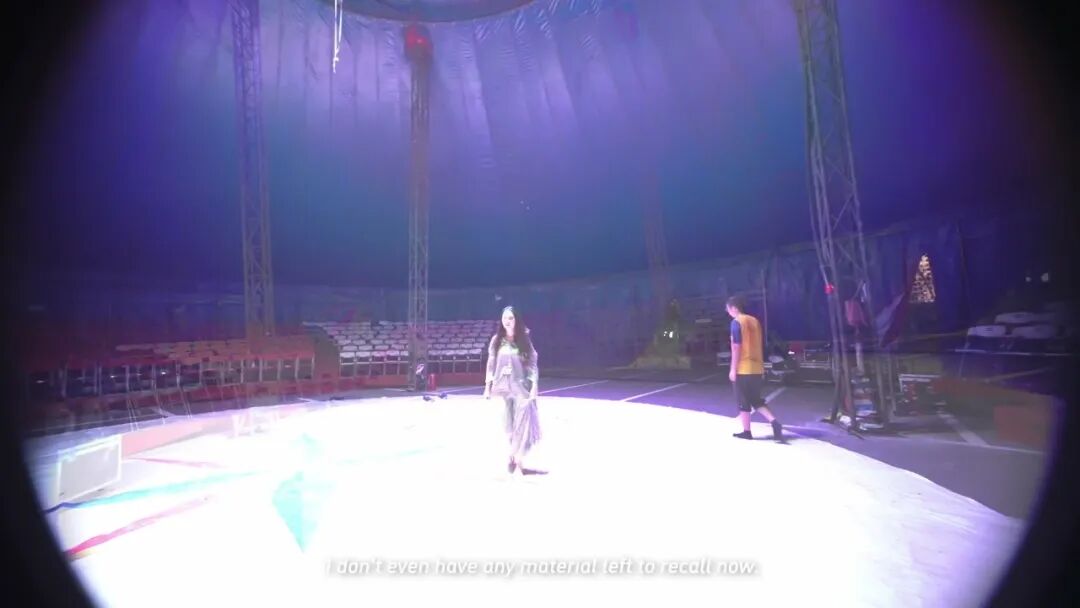
It stalls time and is pressured in silence
It allows white fractures, hesitations, retreats and the inability to repair the language
It leaves the relationship unconnected as soon as it becomes available
It continuously resets the site through blackfields, commands, rules, and movements
It introduces private instability into a viewing and location system
At the end of the day, even the language had almost receded, and the pressure was still on the tail, the sound and the sound of action.
So the real high pressure pattern of this film is not a single orgasm, but a pressure basin that keeps changing.
When you thought you recognized the problem, the film immediately changed the medium to pressure: after the relationship was unstable, after the sight was unstable, after the organization was unstable, after the rules were taken over, and after the "clear" itself was removed, the pressure did not end.
That's why it has the back.
It doesn't allow you to do it with "read the story" and it forces you to go through movies with "structure trapped."
"Do you dare to look at something real?" - This film's harshest question, actually for the audience.
The last sentence in "Human Surrender" is
"Can you look at something real?"
The strength of this sentence is that it pushes the problem directly from the person to the audience.
Because what is real here is never a simple statement of truth. It's not as simple as "I'm not acting," nor is it true in the sense of fact. It's more like a exposure that can't be absorbed in a beautiful form
With fear.
With shame.
With the disgraceful truth.
With the truth of dependence, collapse, loss of control, delusions and disability.
The real thing with "I'm not as complete as I am."
So the toughest part of this film is not whether it's real, but it asks the audience
Do you really want to see reality, or do you just want to see a sort of "safe truth" that has been handled, tamed, protected by aesthetics?
Human Surrender doesn't like this.
Safe distance
I don't know. It's not just asking you to understand the characters, it's constantly removing the conditions that make you comfortable to watch. The rhythm is no longer compatible, the silence is beginning to take hold, the language is no longer clear and the structure no longer serves a clear interpretation. It's getting harder and harder for you to stand in a stable position and make neat judgements about the people in the film.
This is its ethical strength
It doesn't leave you in full position to comment on the incomplete character.
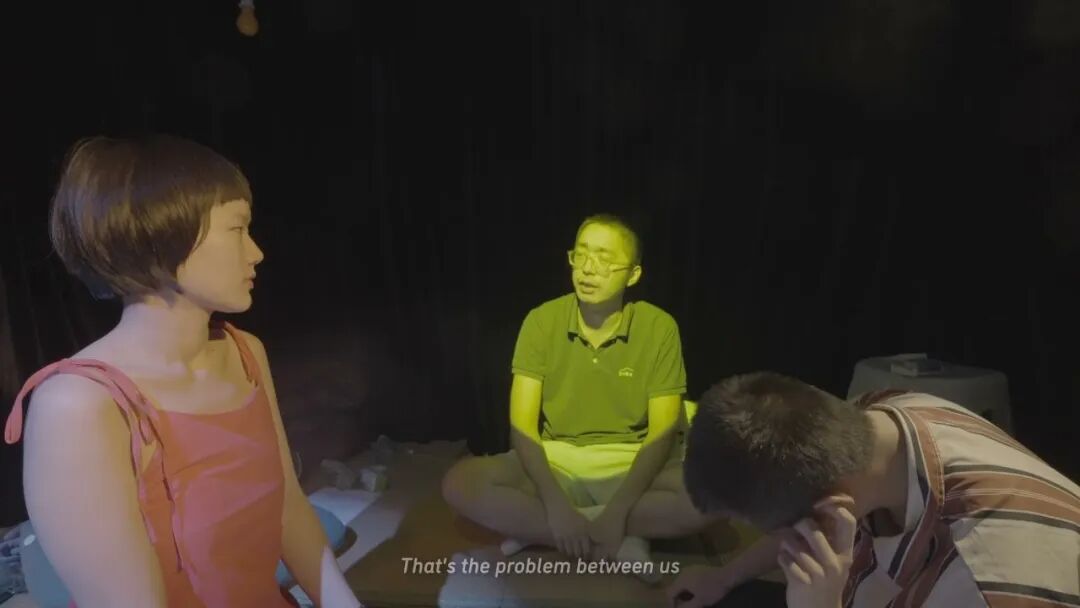
8. Four directors: instead of making mistakes, the collapse of modern authority
The phrase "We have four directors in the room", which looks like the charade of a dollar movie, but the real thing about it is that it contains a contemporary reality
A single authority can no longer stabilize the organization.
Who has the right to define reality?
Who has the right to stop?
Who has the right to correct what others say, how to stand and how to be seen?
Who has the right to name the role, assign the place, and reorganize the meaning?
"Human Surrender" is not an answer, but a more real and disturbing situation
Power does not disappear; it is just fragmented, borderlined, proceduralized and constantly changing hands between functional positions.
That is why the real power in the film is often not at the centre, but at the border.
The most visible are not necessarily the most powerful; those who are truly powerful are often those who can move distance, reset rules and rename the scene.
So what the four directors really point at is not too many creators, but
The right to organize no longer belongs to a stable subject, but is constantly shifting between different positions.
This is very contemporary and very cruel. Because it means
You can no longer count on a full authority to bring chaos, organization and meaning to you. You can only admit that there's a loss of organization on the ground and that the organization will be taken over by someone, and that taking over does not mean understanding.
From close failure to public order: This film doesn't believe that higher order will save you.
Many films, when private relationships collapse, allow a larger system to go down: laws, institutions, collectives, history, truth.
Human Surrender has no such optimism.
It's more like saying, "When personal relations, intimate labor, language negotiation have failed, taking over from you is not necessarily saving, it's probably just public order."
But public order is not to understand you. It came to do
Take over the scene.
Relocation.
Who can say, who should go, who should be seen and who should disappear.
Recast private hardship as an enforceable, manageable and manageable problem
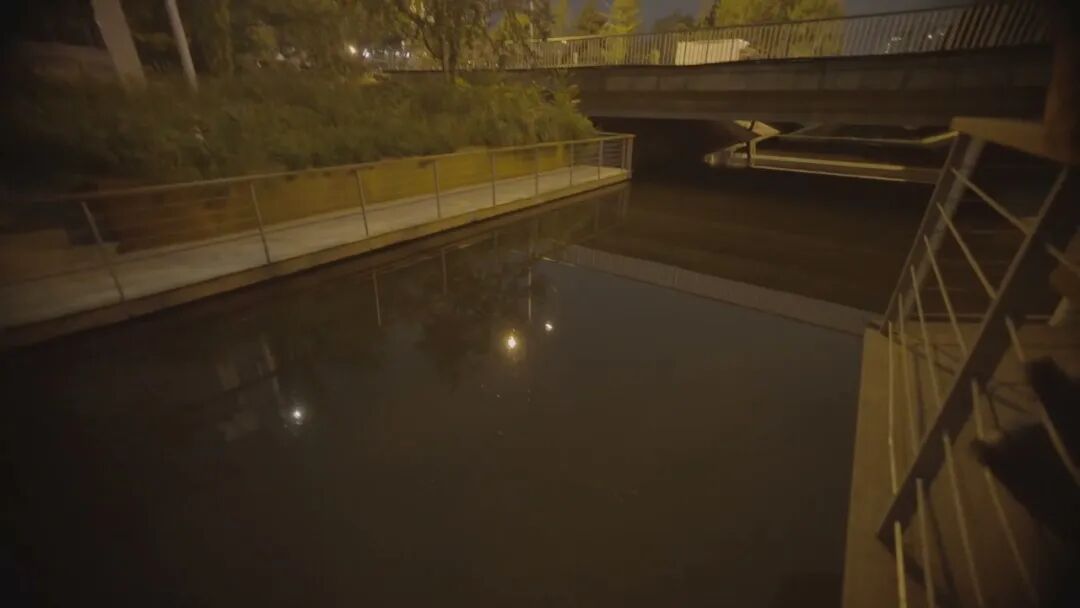
So the increasingly clear organization, the rules, the viewing, and the commanding grounds in the second half of the film are not simply "the scene is getting bigger", but are completing a truly cruel shift
Private instability was taken away from larger sites and reassembled into a new viewing system.
And this film tells you very honestly
Order can take over, but it cannot be understood; it can be managed, but it will not be repaired; it can be located, but it will not restore the breakdown to its fullness.
This gives the film a second meaning
It's not just a drop in private illusions, it's a drop in "there's always a higher order to finish me off".
"Kill me" and "I'll call you": the most extreme request, the most mediocre response.
One of the most striking contrasts in the post-session period, of course
"Kill me."
"I'll call you."
This is a terrible set of sentences, not just because it is extreme and mediocrity, but because it captures with extreme precision one of the most familiar violence in modern society
The deepest presence requests are taken over by the most standard procedures.
"Kill me" is not necessarily literally destruction, but more like a deeper request: To remove me from this situation and to remove me from this state of being watched, organized and consumed, I am no longer in a position to remain present.
And "I'll make you a call" is not a comfort. It is a more modern thing than cold: a processual response, a standardized handover, a institutional language that does not enter pain at all.
It does not understand, does not bear, does not share a common sense, and it is responsible only for sending the issue to the next procedure.
This is one of the most amazing accuracys of Human Surrender: What is truly desperate is not always violence per se, but rather extreme demand for help in a mediocre process.
"I cut off the feeling from one day on": not without emotion, but with an organ removed.
The last and most important thing in the film is not about love, nor about truth, but about feeling itself
"I cut off the feeling one day."
It would be too shallow to interpret this phrase only as "insensitive". It's not saying that I don't feel it for a while, but saying that the organ that carries it is itself removed.
This is a line to the idea of "cutting yourself off". In other words, the film is not a natural failure, but an extreme survival strategy
When response systems fail, relationship systems fail, language systems fail, memory systems fail, organizational systems fail, and people may only be able to remove certain sensor functions in order to remain alive.
Of course it's tragic, but the film doesn't make it pure pathology. It makes you realize that this cut-off may well be a late self-protection.
So, "surrender" is the third point
It is not that I do not want to feel anymore, but that I cannot continue to live in this world without cutting off certain feelings.
So the last thing left behind was not just grief, but a colder awakening: maybe real change never gets stronger, but finally admits that it can no longer be strong in the old way.
12. The end is not nothing, but an aftershock.
Many would call it an open, suspensed, non-existent ending. But the more accurate version of Human Surrender is not nothing but
Aftershock.
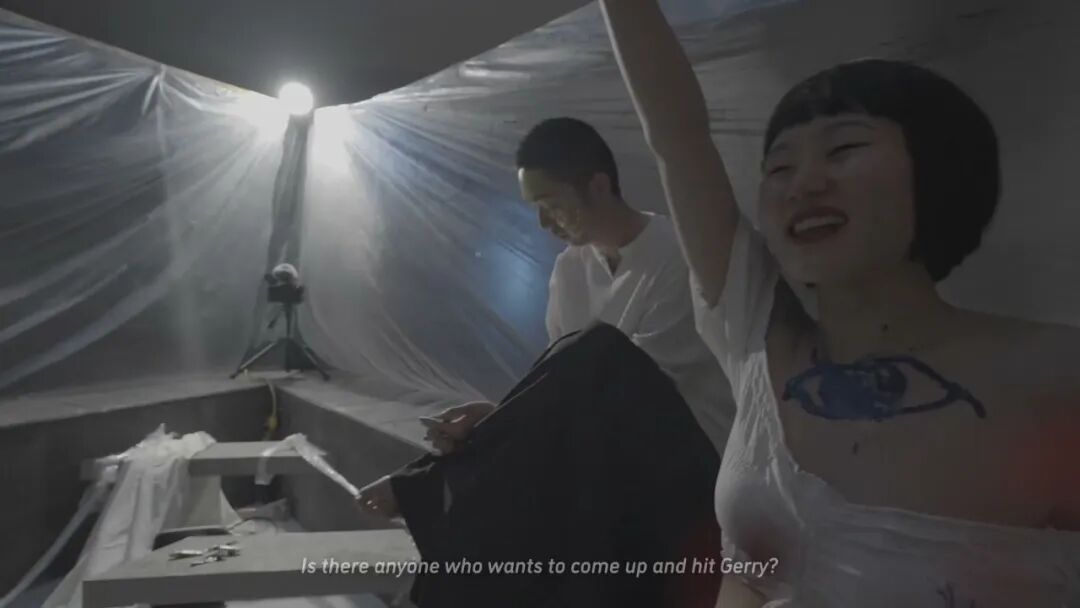
It didn't complete the traditional sense of closure. It does not give you clear answers, it does not give you complete repair, it does not give you reconciliation, and it does not give you a lesson that can be taken away. It does another more mature thing
Compress all the pressures that had been accumulated before into a tail that could not be removed immediately and remain on the audience.
That's why the end is really important, not the words that remain, but a more structural fact
Language can leave, but it does not.
There are fewer words available for alignment, new pairs are almost stopped, but the acoustic field is not zero, and the resonance of action, the drag of rhythm, and the residual pressure of space continue. And what you took away from the film was not a conclusion, but a pressure that had not been dealt with.
So it's not "end because it's unclear" but "just because it's unclear, it's the movie that keeps working on you."
Real deep work, not convincing you, but changing you.
13. The most precious of this film is not sharp, but honest.
Finally, it must be said that the most precious quality of Human Surrender is not necessarily just how crazy, courageous, extreme and deep it is.
It's very honest.
It honestly recorded a few of the things we used to hide most
1. Man is not as complete as he imagined.
2. Intimacy does not automatically repair existence.
Language is not always understood.
4. Order has often been taken over, not saved.
5. Real change often begins by acknowledging that it is no longer viable.
It is not a cheap loss, it is not a hypocrisy, it is not a complex one. It is a high degree of condensation of the real situation of the present generation.
We live in an era of efficiency, control, victory, expression, fulfilment and sustainable operational domination, and almost all systems are forcing people to prove that they are complete, stable and sustainable.
And Human Surrender stood in front of this era and asked a really sharp question
What if people aren't like that?
What if the starting point is not complete, but rather fragile?
What if maturity is not learned to control forever, but rather to stop pretending control in the runaway?
That's why it matters. Because it's not just the people in the film. It belongs to everyone who has been exhausted in relations, work, creativity, self-claiming and social order.
Final conclusions
The deepest part of Human Surrender is not that it tells the story of a loser, but that it portrays the survival of the present generation as a mechanism of constant pressure: people have to be responded to without a steady response; people try to emplace themselves through love, language, memory, performance and order, but these containers fail one by one; and, finally, "surrender" is not a refusal, but rather a commitment to "must win, must be complete, must be recognized, must be understood", to acknowledge that one cannot fully control relationships, meanings and self, and then to emerge for the first time.
It is not a film that teaches people to give up, but a film that compels people to put down their illusions. It is not about how one loses, but how one loses its ability to put himself in the world before it disappears completely. That is why it ends not with nothing, but with aftershocks: an aftershock about vulnerability, limitations, honesty and the absence of further performances.
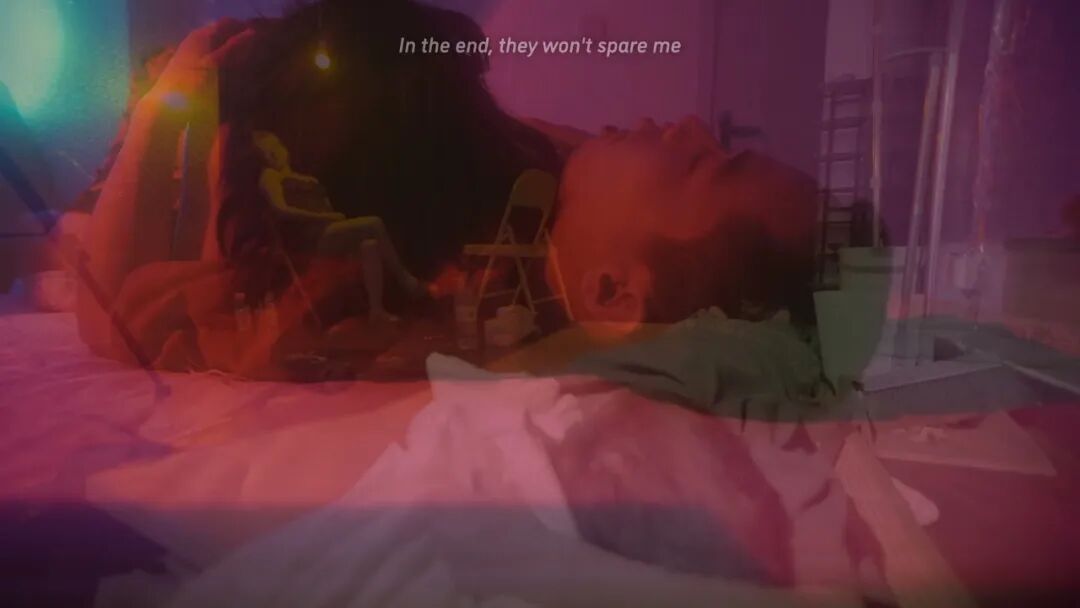
The so-called "Human Surrender" is not an aversion to life, but an end to false loyalty to integrity.
About the Author
Dramaturg and the author of visual culture. Long distances from the boundaries of contemporary theatres and independent images focus on space power, mass psychoanalysis and cross-cutting observations of modern human existence. She is not superstitious to any grand narrative of public order and is committed to dismantling the false performance of the present generation to maintain its "integrity" in the middle of the media. Words are cold, restrained, refusing to offer cheap comforts, and responsible only for leaving an honest slice in this era of excessive performance.