FIELD NOTE
The Aliens Never Appeared
What Human Surrender Truly Confronts Is Cinema Itself
CORE ARGUMENT / Conclusion
This essay and
Who Has the Right to Call a Stop?
form a pair.
The previous essay asked who can end the filming. This one asks: what exactly is the nonhuman eye that makes filming continue?
VISUAL FIELD / Nonhuman Map
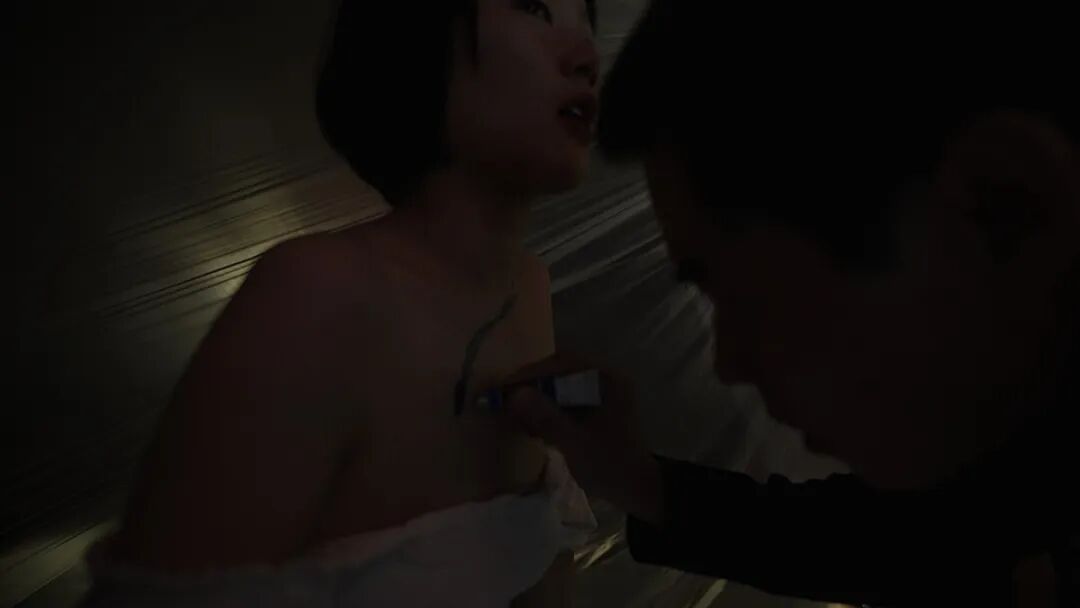
Film still, 00:24:10. Nonhuman looking begins with the most ordinary shot, then starts rewriting human action.
VISUAL FIELD / Nonhuman Map
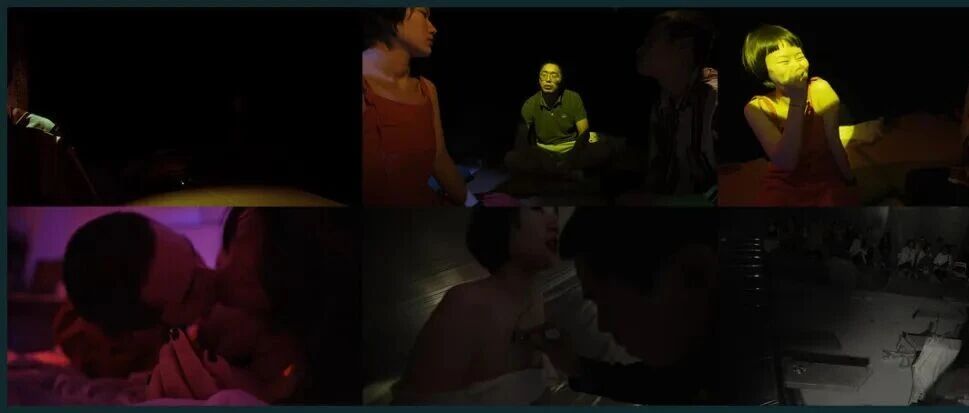
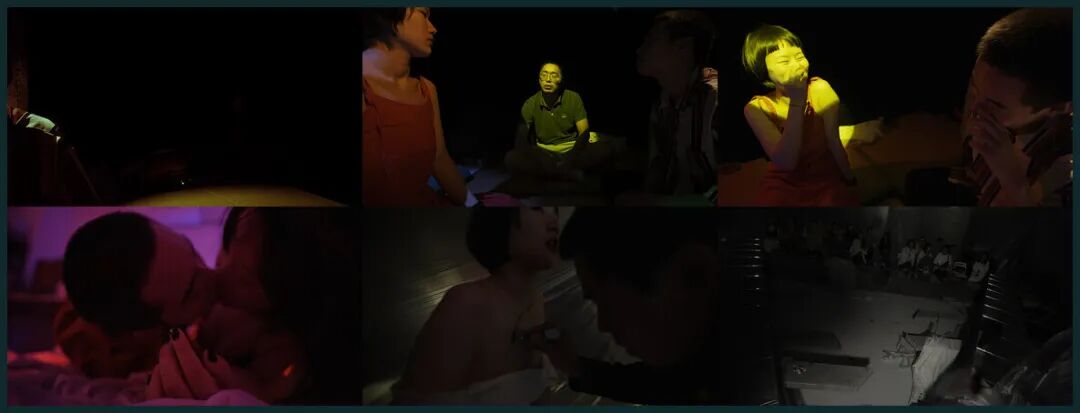
Collage of film stills. This essay does not ask "Where are the aliens?" It follows how looking occupies the live site, step by step.
The Last Rehearsal offers a science-fiction premise.
The war between humanity and an alien race is nearing its end. Humanity grows weaker as the aliens grow stronger. The two sides decide to hold one final negotiation-and, before it begins, one rehearsal.
Strangely, the aliens never actually appear.
No alien enters the black space. No voice arrives from another civilization. There is no clearly identifiable enemy.
Three people continue to argue, explain, rehearse, and fail.
Humanity appears to be preparing for an encounter that will never take place.
And yet the aliens may have been present all along.
It has no body. It neither comforts nor rages, and it need not explain itself. It simply watches, records, and waits, preserving every human voice, action, silence, and loss of control.
It is the camera.
On the surface, Human Surrender films the failure of communication between people. At a deeper level, it films humanity negotiating with a nonhuman apparatus
how people translate their lives into images
how they turn what cannot be explained into something that can be watched, and how, even as they hope to be preserved, they gradually lose control of their own image.
The
science fiction
this film describes is not in the future.
It is here, in the present, with the camera already running.
CUT
FIELD NOTE
I | Surrender Happens Before the War
In the original recruitment text, the creator said
that he wanted to entrust the writing of fate to cinema.
That sentence contains almost everything the work would later become.
We ordinarily treat cinema as a tool. People live first, then use film to record their lives; they think first, then use images to express their thoughts. But "entrusting the writing of fate to cinema" reverses this order.
Cinema is no longer only the recorder.
It begins to become the author.
The creator hopes the camera will record thought, ideas, and every "visible and invisible movement of matter"; that it will freeze the present and hand his own history to the eyes of the future.
The desire is moving, and dangerous.
A camera can certainly preserve actions, sounds, faces, and spaces. But it cannot directly preserve what is "invisible." Thought does not enter the image by itself; relations do not automatically become visible. To bring the invisible into a film, people must perform it.
You must say it.
Do it.
Repeat it once.
Come a little closer.
Let the emotion appear.
Give the relation a shape that can be watched.
From this moment on, the human being is already adapting to the language of the machine.
We imagine that we are confessing before the lens. In fact, we are learning what kind of confession is sufficient to become an image.
Surrender in Human Surrender is therefore not the result of defeat in war. It happens earlier, at the moment someone decides to let cinema write their fate.
Before the enemy appears, sovereignty has already changed hands.
VISUAL FIELD / Nonhuman Map
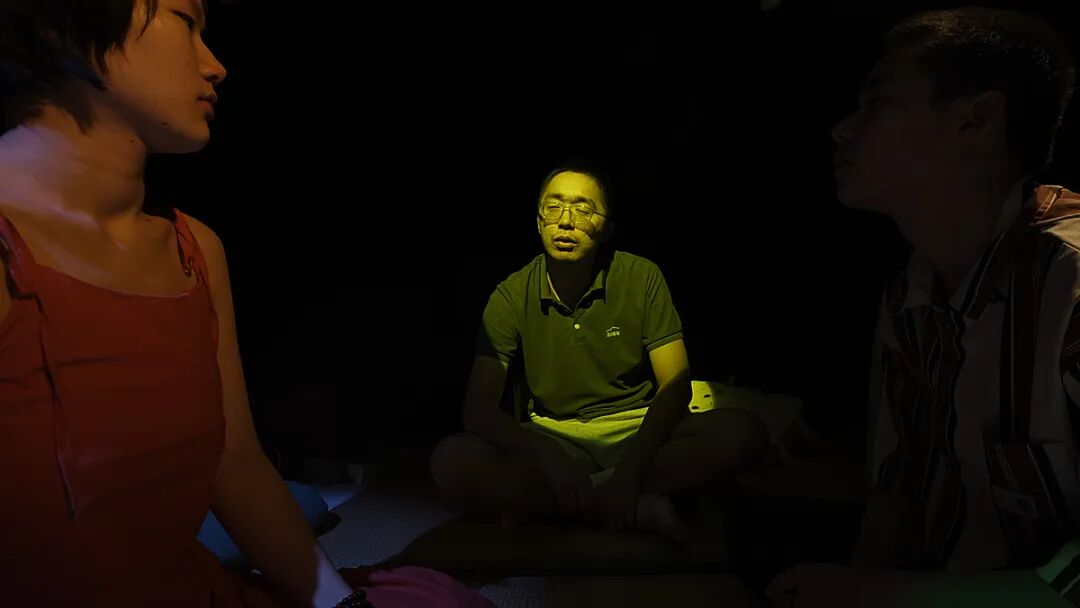
Film still, 00:07:50. Surrender is not kneeling down. It is beginning to organize oneself in a form the camera can receive.
CUT
FIELD NOTE
II | Three Parts, Three Deeper Occupations
The structure of Human Surrender appears to move toward ever greater openness.
Part One unfolds on an enclosed black stage. A director, a male lead, and a female lead enter prescribed roles and rehearse repeatedly within complex long takes. Rehearsal is conceived as a game: after every failure, they can begin again.
Part Two leaves the black box. The camera follows the actors into everyday life, filming ordinary routines, rest, and recreation, and collecting them into a "film database."
Part Three enters an actual theater. The actors face a live audience and design the performance themselves. Events are no longer merely simulated; they are meant truly to occur.
At first glance, this is a movement from control toward freedom.
The space grows larger, fewer elements are predetermined, and the actors appear to possess greater creative authority.
But
from the camera's point of view, the direction is precisely the reverse.
In Part One, cinema possesses the roles.
In Part Two, cinema possesses life.
In Part Three, cinema possesses the relation between people and the public.
The black stage at least has boundaries. Once Part Two begins, those boundaries start to disappear. Eating, chatting, walking, exhaustion, rest-anything may become material. The people leave the set, but the camera does not leave them.
By Part Three, the audience has also entered the apparatus. Private conflict acquires a public form; a person's condition begins to bear responsibility for the performance's success or failure. A sentence spoken out of control no longer belongs only to its speaker. It belongs simultaneously to the live site, the audience, the camera, and a future edit.
These three parts do not move from fiction toward reality.
They move from localized filming toward total requisition.
At first, cinema asks the actors to contribute a performance. Later, it asks them to contribute their lives.
Finally, it asks them to enter the work together with their relations to strangers.
The space opens.
Cinema becomes omnipresent.
VISUAL FIELD / Nonhuman Map
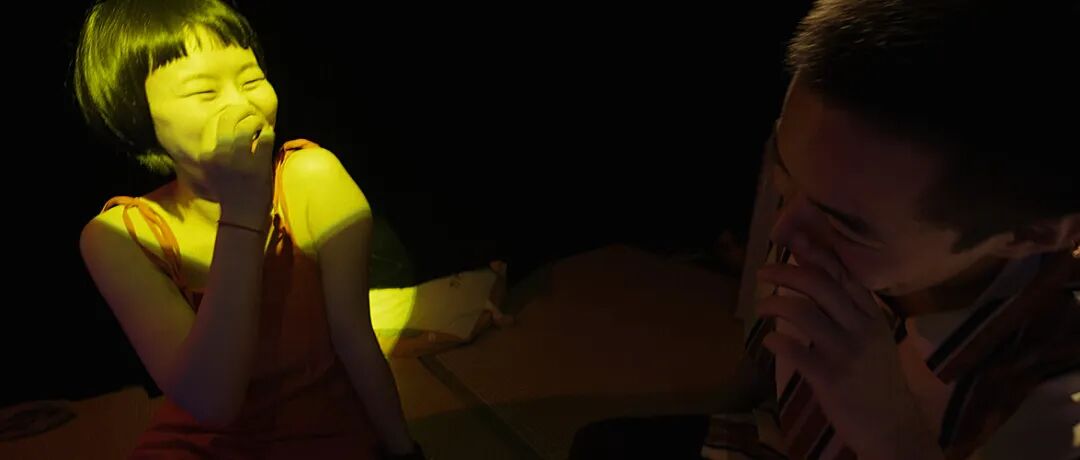
Film still, 00:01:55. The lens need not explain. It need only keep pointing.
CUT
FIELD NOTE
III | The Real Alien Has an Eye That Never Closes
Alien life need not be more brutal in order to frighten us.
The deeper fear is this
it may possess a mode of perception wholly unlike our own. It sees human beings without understanding them in human terms.
The camera is precisely such an eye.
It can preserve the tremor of a lip, a body's hesitation, the movement of a gaze. It may see more carefully than anyone present. But seeing is not understanding.
A person is silent; the camera can record only the silence.
A person suffers; the camera can record only the outward signs through which suffering appears.
A person says, "Kill me." The lens does not panic or reach out to intervene. It keeps running.
Someone else at the scene replies
"No one wants to kill you."
The reply tries to pull language back toward fact. Yet the first speaker may not be making a factual claim at all. They may be asking for the action to stop, destroying the rules of the conversation, or simply unable to find a more ordinary way to make others understand that they cannot continue.
The camera cannot distinguish among these possibilities.
It has obtained only a scene of extraordinary force.
This is the lens at its coldest: without harming anyone, it can obtain material from harm; without understanding a sentence, it can preserve that sentence as evidence.
One might even say that the characters' language becomes increasingly extreme partly because ordinary language cannot penetrate the apparatus.
"I'm exhausted" is not enough.
"I don't want to continue" may be understood as a passing emotion.
"I can't explain it" brings only more questions.
Language therefore escalates until a sentence finally acquires enough visual density to force the live site into a brief pause.
People speak to one another, but they also prove something to the lens: matters have become too serious to ignore.
Yet the moment this seriousness is proven, it has already become cinema.
VISUAL FIELD / Nonhuman Map
Film still, 00:31:28. Once the strongest expression is preserved, it passes from a private condition into visual evidence.
CUT
FIELD NOTE
IV | The Game Merely Makes the Rules Look Innocent
Part One is conceived as a game-like challenge.
This design is more than a formal diversion. It reveals how the entire film operates.
A game allows participants freedom of action, but does not allow them to alter at will the reason the game exists. Players may choose strategies, succeed or fail, or overturn the result of a round in anger. As long as another round begins, the game's authority remains unshaken.
Rehearsal works the same way.
The relation did not form this time. Try again.
The words did not sound real enough this time. Find another way.
This attempt failed. Failure itself can provide experience.
On the surface, everyone is searching for a new possibility.
At a deeper level, the loop has already taken possession of them.
At its strongest, a procedure requires no one truly to believe in it. It needs only for everyone to keep carrying out the next step.
The director continues to set tasks.
The actors continue to respond.
The camera continues to record.
Failure continues to be produced.
Here the roles are more than theatrical identities. They also resemble three preset interfaces: director, male lead, female lead. The actual people may grow tired, doubtful, and resistant, but the positions keep waiting for them to return.
Someone makes a demand.
Someone tries to fulfill it.
Someone observes whether the fulfillment counts.
The content keeps changing; the structure remains still.
This is what makes "procedural takeover" truly frightening.
It is not that some villain suddenly seizes total control. Everyone has already forgotten how to continue, yet all of them keep going in the established form. The relation has long since stopped; the process is still at work.
Humanity is not subdued by violence.
Humanity is subdued by "the next step."
VISUAL FIELD / Nonhuman Map
Film still, 00:24:10. The body continually seeks equilibrium between what the lens can and cannot see.
CUT
FIELD NOTE
V | Life Becomes a Database, and Everything Waits to Be Used
Part Two explicitly introduces the concept of a "film database."
The term is more honest than "documenting life."
Documentation still implies continuity: a person has a life of their own, and the camera observes from nearby. A database does not care whether life is continuous. It breaks what has happened into units that can be called up.
A meal.
A conversation.
A silence.
An argument.
The back of a person in a room.
They are preserved, numbered, and left waiting to be retrieved. In the future, they can be recombined into new orders and meanings.
A database has no true past.
It has only material that has not yet been used.
Once life enters this structure, who an event originally belonged to matters less. What matters is whether it can become evidence, whether it can support a particular interpretation of a person, whether an edit can connect it to another scene.
The person still lives in time.
Cinema begins to break that person into fragments.
This creates a strange paradox
the more completely someone is preserved, the more thoroughly they may be broken apart.
The camera records their work, rest, emotions, and relations, as though approaching a "whole person." Yet only selected parts will enter the final work. The so-called complete record is merely a larger inventory from which to make more precise selections.
Cinema promises to preserve a person's history.
What it actually preserves is an abundance of evidence through which that person can be reinterpreted.
This is very close to today's data world. We continually leave behind words, photographs, locations, searches, and viewing histories, as though these records could keep life from disappearing. Yet the more records there are, the power to describe us may belong not to us, but to those who possess the records and decide how to arrange them.
Human Surrender did not encounter this problem only later.
The moment it began
"entrusting the writing of fate to cinema,"
it had already entered this terrain.
VISUAL FIELD / Nonhuman Map
Film still, 00:57:10. A database need not understand life. It need only break life into retrievable fragments.
CUT
FIELD NOTE
VI | The Audience Is Not Humanity's Reinforcements
In Part Three, an actual audience enters the theater.
This is a significant change. The camera is no longer the only eye.
Looking is distributed among the many people present.
But the multiplication of human gazes does not make the
nonhuman eye
disappear.
It merely allows that eye to multiply.
The audience enters with human bodies, emotions, and judgments. They feel tension, sympathy, embarrassment, and the expectation that something will happen. Yet within the structure of the performance
the audience also performs a machine-like function: it confirms that an event has become a public fact.
If someone loses control in a rehearsal room, it may still be dismissed as an accident.
If someone loses control before an audience, the loss of control acquires witnesses.
It enters the history of the performance.
VISUAL FIELD / Nonhuman Map
Film still, 01:35:55. The public gaze turns "whether it happened" into a question that must be proved.
The audience's presence creates another pressure as well: the live site cannot easily be reset to zero. People have arrived; the performance has begun; all that waiting demands some kind of result.
The audience has not come to rescue the people in the performance.
It makes everything harder to retract.
This realizes the creator's original desire: to freeze the present and hand one's history to the eyes of the future.
Yet future eyes never receive a complete history.
They can receive only a history already selected, framed, edited, and named.
The future will not testify for a person.
It will see only the person who has already become an image.
CUT
FIELD NOTE
VII | To Become a "Sign" Is Another Kind of Surrender
The Last Rehearsal contains one strikingly abrupt line
"I am both signifier and signified; the subject lies within."
It sounds like a philosophical declaration, yet it precisely names the film's condition.
The person before the lens is both themselves and their image.
They live while watching themselves be converted into a sign.
Once filmed, a sentence is no longer only something said at a particular moment. It becomes evidence of a character, a relational condition, a creative theme. An action is named, a hesitation interpreted, and one instant begins to stand for the entire person.
The person in the image becomes increasingly clear.
The person in reality may find it increasingly difficult to recover themselves.
Naming brings order, but also closure.
Once someone is defined as "the person who collapses," "the person who cannot respond," "the person being watched," or "the person who surrenders," the film acquires a meaning it can organize. The person is pressed beneath those meanings.
This is also why "eyes, mirrors, disappearance" recur throughout the film.
Eyes see an image.
Mirrors return an image.
Cinema preserves an image.
But the more stable the image becomes, the more easily the person who cannot be fully represented disappears.
The true alien regime does not exterminate the human body.
It requires human beings to convert themselves into a form that can be read, preserved, and circulated.
The person still exists.
But only the sign receives permission to pass.
VISUAL FIELD / Nonhuman Map
Film still, 01:52:30. The person remains present, but the image has already begun to obtain passage on their behalf.
CUT
FIELD NOTE
VIII | Cinema Offers Not Immortality, but an Afterlife Beyond Our Control
Why would anyone willingly enter such an apparatus?
Because cinema makes an extraordinarily seductive promise
you will not disappear completely.
Bodies age, relations end, memories change. Images can remain. An action, a face, a voice can cross beyond a human lifespan and reach the future.
It is not strange that the creator wants to entrust his history to future eyes.
This is one of art's oldest desires.
Yet the image never preserves an entire person. It preserves a double that has passed beyond the person's control. This double does not age, regret, or actively revise itself.
The actual person keeps changing.
Their image remains where it was.
What cinema gives us, then, is not immortality but an uncontrollable afterlife. One version of you continues to be watched, judged, and interpreted after you have left.
You cannot guarantee how people in the future will understand it.
You cannot even guarantee that your future self will still recognize it.
Human Surrender is unsettling not only because it films vulnerability, but because it entrusts the moments most susceptible to change-and most in need of reinterpretation-to the medium least capable of changing.
To avoid disappearance, the human being agrees to be fixed.
That is the price of the exchange.
VISUAL FIELD / Nonhuman Map
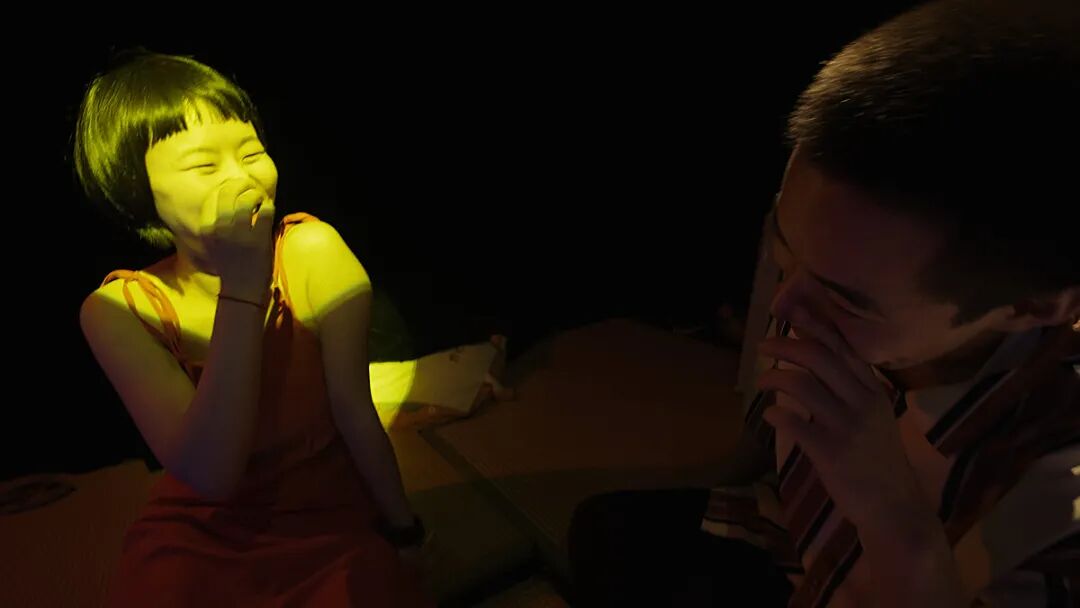
Film still, 02:31:48. The imaged persona's silence, too, becomes a choice watched without end.
CUT
FIELD NOTE
IX | The Alien Is Not the Camera, but Our Need for It
If we simply make the camera an enemy, the problem remains too easy.
The lens does not start itself.
A database does not build itself.
Nor do future audiences force people in the present to leave an image behind.
What truly drives all of this is the human desire to be seen, understood, and preserved.
The creator believes that film is "the last remaining path," because poetry, theater, photography, and contemporary art have all proved insufficient to express again and again the cry deep within the body. Cinema therefore acquires an almost final authority: if even film cannot preserve it, what could prove that it ever happened?
This desire is not false.
It is dangerous precisely because it is sincere.
Human beings are not suddenly invaded by an alien technology. We actively invite it into our lives, hoping that it will carry out the work of remembering, expressing, and proving on our behalf. We want the lens to see what the naked eye overlooks, want images to preserve relations that vanish in an instant, want the work to give form to pain that cannot be understood.
The alien does not come from the sky.
It grows out of humanity's fear of its own disappearance.
Human Surrender is therefore not a film simply opposed to the camera. It cannot oppose the camera, because its entire existence is founded upon trust in it.
The work doubts this eye even as it needs it.
It exposes the violence of the image even as it continues to seek proof within images.
This inescapable contradiction is the work's true force.
VISUAL FIELD / Nonhuman Map
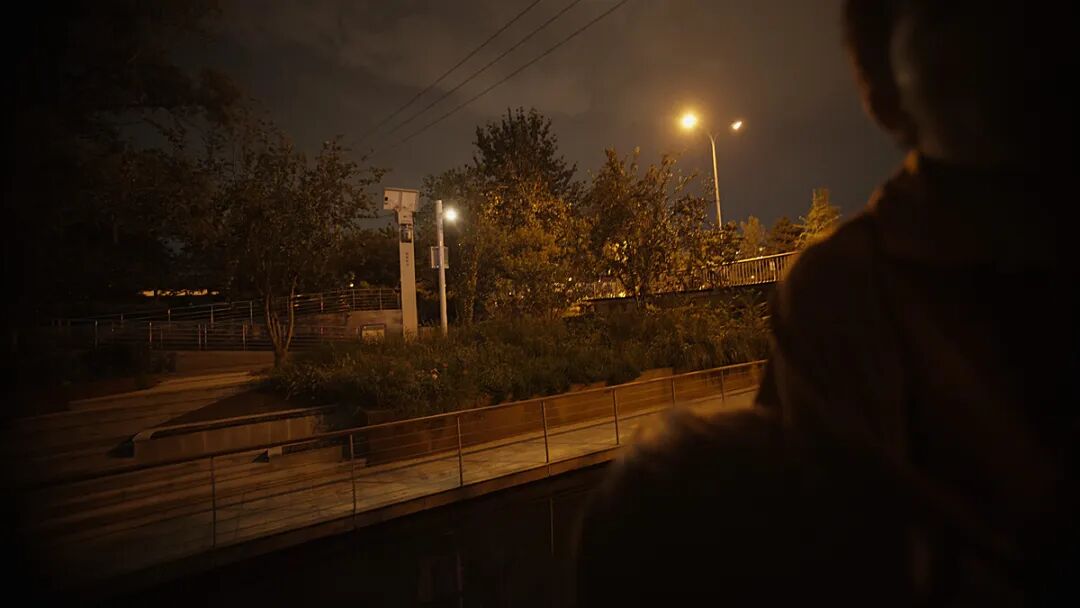
Collage of film stills. The violence belongs not to a single scene, but to an entire afterlife mechanism of preservation, naming, and circulation.
CUT
FIELD NOTE
X | What Humanity Surrenders To
Humanity does not surrender to an alien army.
No enemy spacecraft lands; no superhuman weapon forces anyone to kneel.
They surrender to something else
to the seduction of being recorded.
to the inertia of a procedure that keeps running.
to the audience's expectation that some result must become visible.
to the belief that "only what enters cinema has truly happened."
The moment a person begins to organize themselves in a form the lens can preserve, surrender has already occurred.
The moment life must become material in order to prove its value, surrender has already occurred.
The moment we believe that pain not filmed is insufficiently real, that a relation not made public is insufficiently important, that an experience that cannot be named scarcely exists, surrender has already occurred.
Cinema does not force humanity to kneel.
It merely promises to remember.
To escape being forgotten, humanity willingly translates itself into a shape cinema can preserve.
The Last Rehearsal is therefore not preparation for a final negotiation.
It is the negotiation itself.
Again and again, humanity proves to a nonhuman mode of looking: we can be understood; we can be preserved; we can arrange life into data that you can receive.
The alien never answers.
The camera keeps turning.
By the time the film is complete, humanity has given away everything it can give.
The aliens never appeared.
Because we had already built their entire world for them.
CUT
FIELD SIGNAL
Continue Reading
Who Has the Right to Call a Stop?
Brain Ashford
Film theorist and cultural critic. His work focuses on the intersection of cinema, philosophy, and late modernity.
Brain Ashford, a British scholar of film theory and cultural criticism, works at the intersection of cinema, philosophy, and late modernity.
P4 Theater Articles
Not a Tripartite Division, but a Three-Axis Coordinate System: The Media Ontologies, Epistemic Contracts, and Performance Politics of Film, Theater, and Documentary
What Remains of Psychoanalysis When Interpretation Cannot Reach Pain?
From a "Corpse" to a Spirit Tablet: How Did Early Chinese Ancestors Speak Through the Living?
The Aesthetics of the Event: On Erika Fischer-Lichte's The Transformative Power of Performance
Theater Is Written on Sand
P4 Theory | The Third Subject of Analysis: A Comprehensive Exploration of Thomas Ogden's Theory of "The Analytic Third"
Reconstructing Theatre and Psychoanalysis: Théâtre et Psychanalyse
Articles on the Making of Human Surrender and Written by Its Participants
A Recruitment Text for Human Surrender
The Last Rehearsal | Human Surrender
Art Performance | The Making of Human Surrender-Will the Aliens Return?
Human Surrender | This Is the Final Rehearsal! It Is Real! All of It Is Real!
Human Surrender | Let Me Become a Whale Fall-I Possess Too Little, Far Too Little
Human Surrender A | …And Then You Became a Little Girl Again…
Human Surrender R | "Beijing's First Experiment"
Human Surrender D | One More Time
Human Surrender K | Eardrum Ripper
Human Surrender S | Everything Is a New Dimension
P4 Finale | Public Performance of The Last Rehearsal | Love, Death, Human Surrender
Human Surrender | I Disappeared-After Performing The Last Rehearsal
Critical Essays on Human Surrender
No Longer Loyal to Wholeness: A Final Long-Form Review of Human Surrender
How Words Betray People: The Original Language Structure of Human Surrender
Human Surrender: An Oracular Work of Live-Site Divination
Why the Person Holding the Camera Must Surrender Too!
Intimacy Does Not Belong to Two People: Human Surrender
Imaging with You: The Unowned Second Person and Non-Sovereign Watching in Human Surrender / Shoot Self with You
Fiction | Shoot Me with You / SHOOT SELF WITH YOU
Do Not Complete Me Again: From Evangelion to Human Surrender
Anxiety and Mourning in Human Surrender
Becoming Human Surrender