"Human Surrender" and a rehearsal that never ends
Who has the right to stop?
This article is not discussing "why people surrender", but: when rehearsals, life and public performances are all included in the work, who can stop it?
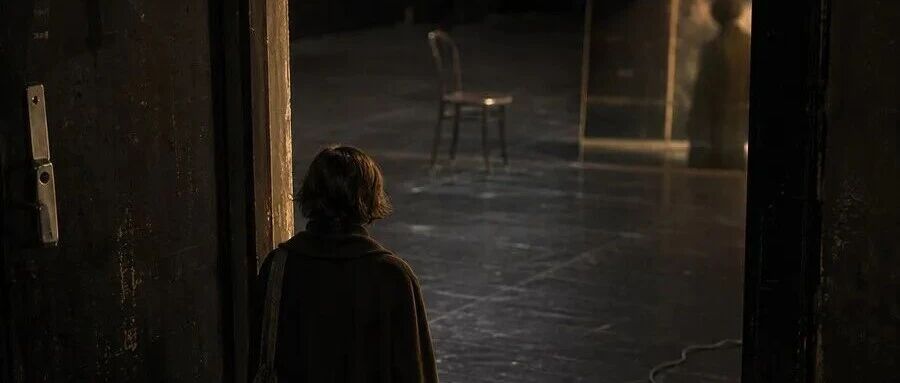
The rehearsal room is not just a scene, it is a machine that makes "continue" reasonable. The pictures in this article are concept pictures and are not used as film stills.
In the original structure of "Human Surrender"
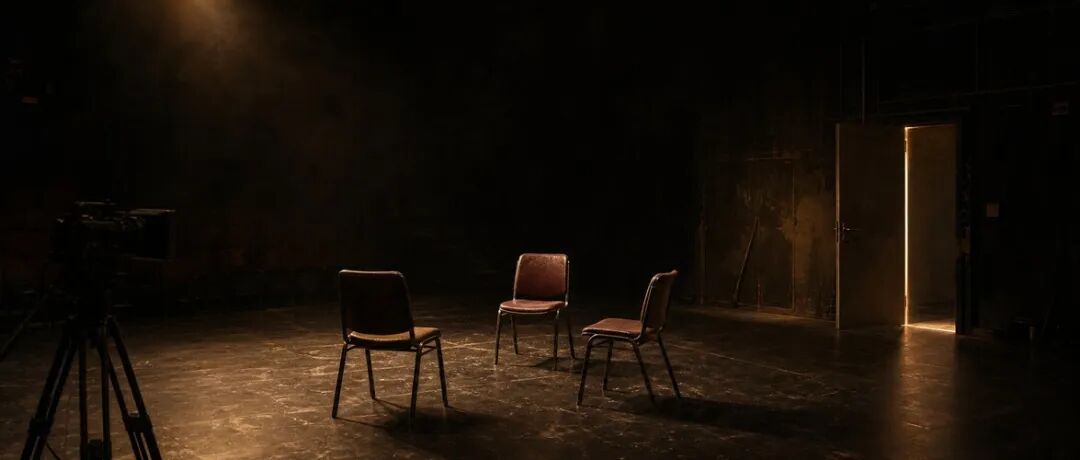
has buried all its subsequent dangers.
Three people enter a closed black space: the director, the actor, and the heroine. They have to go through failed conversations again and again.
The first part progresses with complex long shots and repeated rehearsals, which are designed as a game challenge
;
In the second part, the camera leaves the black box and follows the actors into life, rest and entertainment, collecting daily life into a "movie database"
;
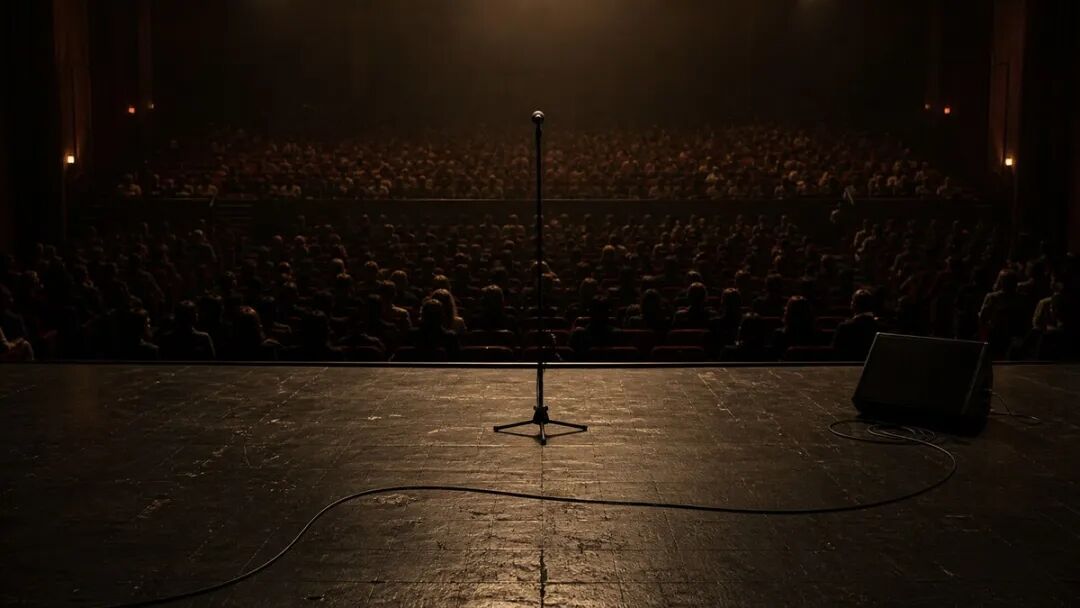
In the third part, the actor goes in front of a real audience and completes a public performance that no longer pretends.
The structure appears to be gradually releasing control.
First, there are strict indoor shootings, then loose and open life records, and finally the creative rights are given to the actors to let the real events happen in front of the audience. But if you connect these three parts, you will find that the direction of movement is exactly the opposite
It's not that movies gradually withdraw from life, but that movies gradually take over life.
Outside the black box is still the set. Rest can also be used as material.
Silence, hesitation, deterioration of relationships, temporary loss of control, may all be renamed as part of the work.
By the end, the audience has entered the scene and exiting becomes even more difficult.
What "Human Surrender" really captures is not just how three people lose their ability to communicate.
It captures how a rehearsal becomes bigger and bigger
It ended up being so big that there was no life left outside of rehearsals.
1|Rehearsal is not preparation, it is replacement
"The Last Rehearsal" originally came with a sci-fi shell.
Humans and aliens are about to enter into final negotiations that will determine their fate. In order to ensure smooth negotiations, both parties first held a rehearsal. Rehearsal ostensibly serves the future, but in fact it quickly replaces the future: the real negotiation has not yet taken place, and people are already trapped in the simulation of the negotiation.
The most powerful thing about this setting is not the alien race or the conspiracy.
It's "rehearsal."
Rehearsal meant that mistakes could be repeated. If you say something wrong, say it again; if the relationship is not established, try another method; if it fails this time, it may be better next time. But the rehearsal in "Human Surrender" does not lead to completion.
It keeps returning to the same difficulty without actually changing the conditions of the difficulty.
Every time you come back, it's like an opportunity.
Every time I come back, it pushes me deeper.
This is particularly true in the first section, which frames rehearsals as games. The game allows for failure, but does not allow players to question the rules. You can change the speed, tone, strategy, and re-choose where to start a sentence, but you can't ask: Why do I have to keep playing?
This is the most important power relationship in the film.
On the surface, participants have a high degree of freedom. They can improvise, they can clash, they can say strong words, and they can even attack the entire project. But these freedoms all occur under a predetermined premise
The site must continue to produce content.
Failure is therefore no longer an accident in filming.
Failure is what shooting requires.
The more difficult the communication, the closer the film comes to its subject; the more broken the relationship, the more intensity the work gains; the less able the person is to maintain character, the more the camera acquires a material that is difficult to fake.
Here comes a problem that cannot be easily bypassed
If a film anticipates failure, is the real failure of the participants a sabotage of the plan, or is the plan finally successful?
2|Communication failed, production successful
"Human Surrender" is often understood as a failed communication device.
This judgment is only half correct.
As a communication device, it really failed. The characters keep talking, but the words cannot reach each other. Questions have been answered, but people have not been answered; facts have been corrected, but pain has not been acknowledged; everyone is trying to explain himself, but the explanation continues to expand misunderstandings.
But as an image-producing device, it worked very successfully.
Communication fails, creating tension.
The tension persists, producing a performance.
Performance ruptures, producing reality.
Reality is out of control, resulting in movies.
The most poignant thing about this installation is that it transforms the failure of communication into the success of the work. People didn't get anything, but the movie got material.
The so-called "movie database" in the second part explains this relationship more clearly. The camera follows the actors into their daily lives, recording their rest, entertainment and interactions. The key here is not the boundary between documentary and drama, but that life begins to lose the unfilmed part.
When life is understood as a database, any moment is no longer just itself.
A walk may be material, a casual conversation may gain meaning in the future, an exhaustion may become evidence of a character's state. Even a refusal to be filmed might be understood by the film as a form of resistance worth documenting.
One doesn't really leave the character.
The character simply switches to a more subtle way and continues to follow him.
This is also a very familiar desire in contemporary art
The creator is tired of the falseness of the performance, so he reaches out to life; tired of the written lines, so he asks the participants to tell the truth; tired of the characters, so he asks people to "be themselves."
But "being oneself" may not be more free than playing a role.
The characters at least have boundaries. When the show is over, the actors can leave.
When creation requires a person to contribute his "real self", what he hands over is no longer just skills, time and body.
He begins to surrender relationships, memories, vulnerabilities, even parts of himself that he does not yet understand.
The movie says: Don't act.
But the cameras are still there.
At this time, "reality" does not appear naturally.
Reality is forced out by a constant expectation.
3|How to reasonably correct a dangerous statement
What is most worth returning to in the film is not the grandest declaration, but the extremely simple set of dialogues
"Kill me."
"No one is trying to kill you."
The second sentence may be entirely true on a factual level. No one prepared to commit murder, and no one admitted harboring such an intention. It might even be out of panic and protection: to bring a dangerous remark back to a manageable reality and stop the situation from slipping into something worse.
But it doesn't answer the first sentence.
The first sentence is not stating a fact about the other person's intentions. It's not a wrong version of "Someone is trying to kill me."
It is more like an impact on the scene: normal language can no longer stop anyone, and the speaker can only push the sentence to the extreme.
And the responders are still correcting.
This is where "Human Surrender" is even colder than "No One Responds."
The world is not silent.
The world answered, and the answer was reasonable, accurate and civilized. It eliminates incorrect understanding and restores order to language, but leaves the speaker outside the order.
Many words in the film undergo similar changes.
"Love" stops validating the relationship and starts demanding proof.
"Director" is no longer just a profession, it becomes a position of who has the power to dictate the meaning of the scene.
The "audience" is not just a viewer, but also a reason why the performance must continue.
"Game" no longer means easy, but means that rules can package harm into voluntary participation.
"Response" no longer leads to the other party, but becomes a way for the responder to maintain his normalcy.
Words do not simply lose their meaning. They can still be used, even more frequently than before.
The problem is, they changed sides.
They were originally supposed to connect people and later came to protect structures.
So the language in the film is not the ruins left after communication failure. It's part of the scene itself. People use words to prove that they are still rational, still caring, still dealing with problems. The more complete the language, the more it appears that one cannot enter it.
The world does not need to shut one's mouth.
Just translate everything he says into a version that the world can accept.
Four | Doorway, Mirror and Daze
What really makes this movie move away from concept first are the moments that are not sorted out.
Doorways, mirrors, eyes, pauses, mishearing, nonsense, and daze.
These things don't feel like manifestos. They are too small to immediately take on big words like "humanity," "modernity," or "surrender." But it is precisely these corners that retain the parts of the characters that have not completely turned into arguments for the work.
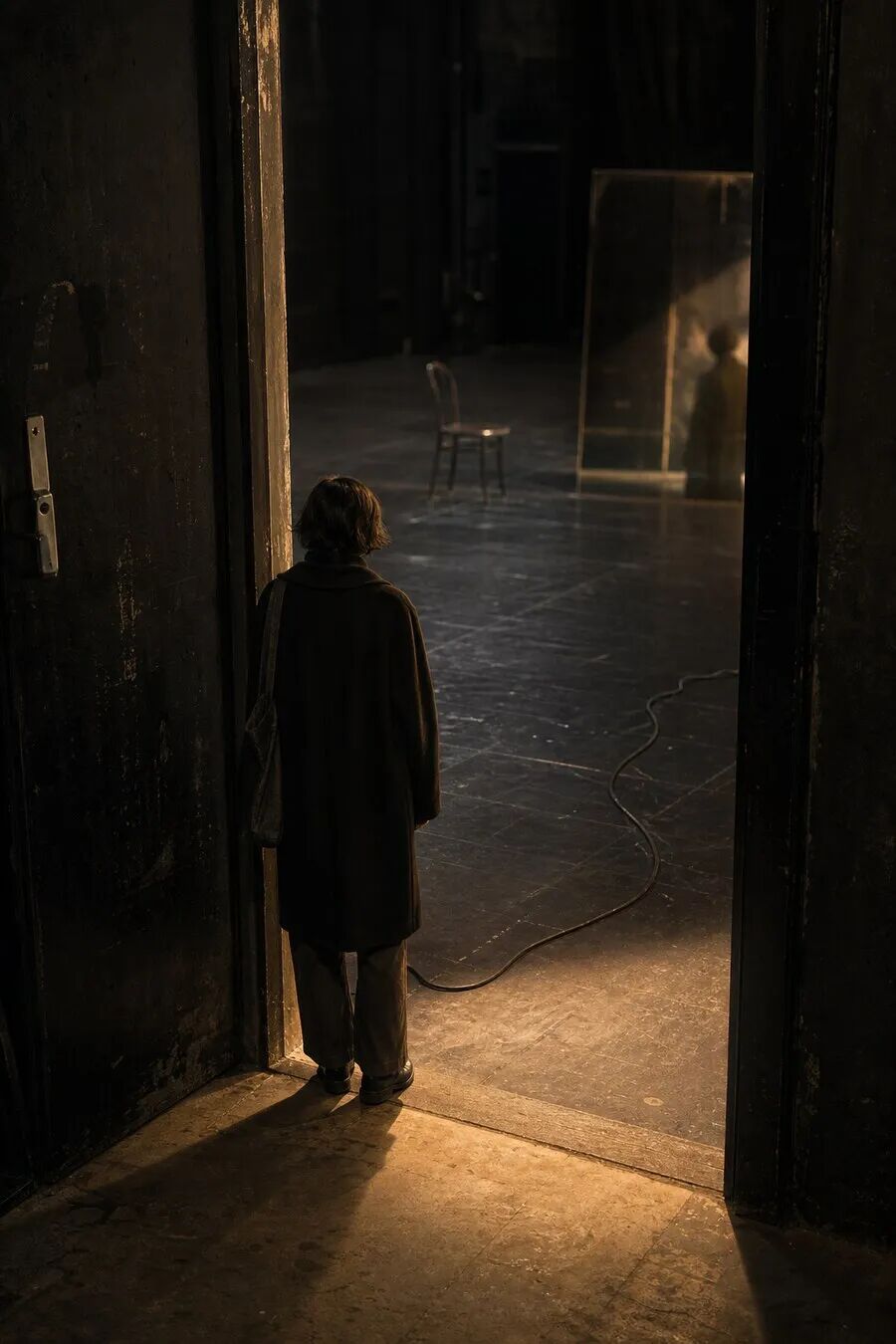
The door is one of the most accurate images in the film.
Doors mean that space can be divided and that people should be able to leave. But "stopping at the door" is neither entry nor exit. One comes to the border but fails to complete the action.
This is more disturbing than actually leaving.
Leaving is at least a decision. Staying means: exit exists, but exit is not possible.
He may not know what he will be after leaving, whether leaving the movie will mean leaving the relationship, and whether refusing to continue will be immediately interpreted as escape, failure or betrayal. The door is there
The rules have entered the body.
No one needed to stop him.
He stopped himself at the door.
Mirrors and eyes raise another question: Does being seen prove a person's existence?
The mirror returns image, but not understanding; the eye completes seeing, but cannot guarantee recognition. The same is true for cameras.
It can preserve a person's every action extremely clearly, and still not know what the person is going through.
"Human Surrender" makes the viewing more and more complete, but the confirmation becomes more and more rare.
The lightest form of resistance is to be in a daze.
Daze provides no information, no furthering of conflict, and no character fulfillment. One is still present but does not immediately organize oneself into answerable, interpretable, performable shapes.
This is not a heroic rejection.
It's not even firm enough to be easily called defiance. But it briefly interrupts the demands of the installation: you have to say something, you have to prove that you are still involved, you have to make the moment meaningful.
Dazed didn't give the movie an answer.
And because of that, it's probably one of the few moments in the film that doesn't quite feel like a movie yet.
But the camera can still capture the daze.
The most disgusting thing about the installation is that even gestures that do not produce meaning will be interpreted to have meaning after the fact.
There is no denying natural safety.
The door here is not a guarantee of exit, but a shape in which "exit exists but cannot be made possible."
5|The audience makes it harder to withdraw the performance
Part Three brings the actors in front of a real audience in what appears to be a power shift.
The content of the performance is designed by the actors themselves, and the events actually happen, rather than being fabricated in advance. The creators no longer seem to have full control over the outcome. Actors are not just people who are arranged, but also become the producers of the scene.
But the entrance of the audience does not automatically bring freedom.
The first thing the audience brings is pressure.
In a rehearsal room, a silence can be just a pause; in a public performance, silence can be awaited by dozens of pairs of eyes.
A relationship breakdown no longer belongs solely to a few people in the relationship, it begins to bear the weight of the success or failure of the show.
The actors are now dealing not just with each other, but with a collective deciding whether this is all worth watching.
A real audience doesn't make the performance disappear.
They will make the performance irrevocable.
This is also the most modern layer of the film. We live in an age that constantly demands people to make their private experiences public.
Trauma needs to be told, vulnerabilities need to be shown, relationships need to be explained.
Disclosure is often described as liberating: Just speak out, just be seen, and things will change.
But "Human Surrender" allows people to see another possibility.
Being seen may also make it harder to let go of your pain.
When a certain period of pain has been recognized by the audience, preserved by the camera, and named by the work, it is no longer just an experience. It begins to become the public face of the person. Others will know him, comment on him, and understand him from that moment.
And he himself may no longer be the person he was at that moment.
Movies can be played over and over again.
One cannot go back to that time repeatedly to add an explanation for oneself.
The so-called openness does not automatically mean that power is shared. Sometimes, it just makes the extraction more complete.
The audience is not an automatically liberating force. Many times, the audience simply makes a silence harder to withdraw.
6|The director can expose himself, but still holds the right to explain
The director's position in this film cannot simply be understood as a manipulator hiding behind the camera.
The "director" itself has entered the role system. The creator is not completely invisible, he also exposes his own failures, desires, and controls. This makes the work far more complex than a cold social experiment.
But complexity does not equal equality.
The director can expose himself and still have the final cut; he can admit that he created pressure and still has the right to name it; he can lose control on set and still reinterpret that loss after the work is completed.
Other players are easier to pin down.
Their hesitation will become hesitation, their silence will become silence, and a certain overly heavy word may forever replace all their subsequent corrections.
This is a time inequality.
Participants were left at the time of filming.
The director can continue to live after filming.
Therefore, self-criticism cannot be a way for creators to absolve themselves of guilt.
Just because a film admits to having violence, doesn't mean that violence has been addressed. Actively displaying one's own dubiousness sometimes even reinforces the authority of the work: See, I've even considered the accusations against myself.
The real question is not whether the director is sincere.
Sincerity too easily becomes the end point of judgment.
What should be asked is
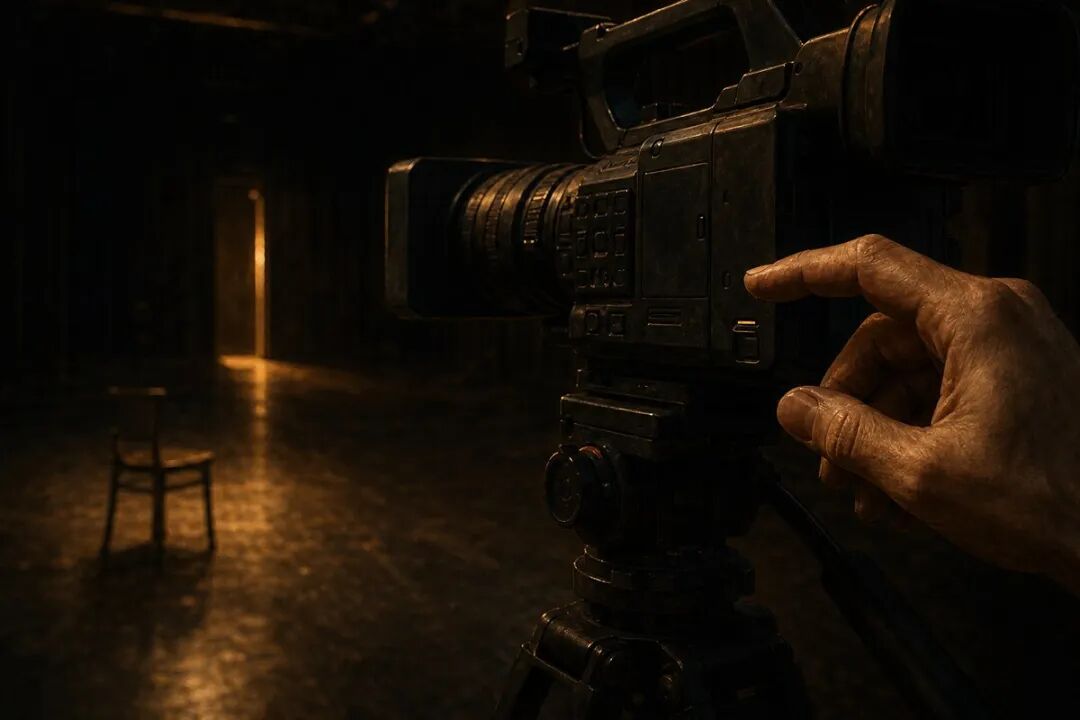
Who has the right to withdraw an image? Who can resist the final explanation? When participants feel that the work is not about them, does the film allow this negation to enter into itself?
If the final interpretation can still only be accomplished by the work, then there are still clear boundaries to "co-creation".
Others contribute irreversibly to their lives.
The director organizes how these lives are seen.
7|The word "human" will magnify and dilute the responsibility
"Human Surrender" is a powerful name and a dangerous amplification.
It exaggerates the relationship dilemma of a few people to the entire human race, turning a specific failure into a symptom of civilization. As a result, the work gains weight, but it may also dilute what needs to be investigated most.
When we say "modern responses fail," it's easy to forget who failed to catch whom at a certain moment.
When we say "people can no longer be placed", it is easy to forget who designed this site that must constantly find its place.
When we say "relationships, language, and cinema failed," specific choices can become lost in grand failures.
But despair does not come automatically.
It consists of a series of very small decisions
One more question.
Shoot for one more minute.
Don't interrupt now.
I believe next time it will be closer to reality.
Leave this paragraph alone.
Whether it should appear or not will be judged later.
None of these decisions felt like an atrocity. They can even be explained. Because of this, desperate situations can be formed.
What the work needs to be wary of most is that it prematurely elevates this specific responsibility to the "common destiny of mankind." The bigger the word "human," the easier it is for the people in the scene to become smaller.
Everyone has become a victim of the times, and the distinction between those who master the rules and those trapped by them has become blurred.
That doesn't mean "Human Surrender" can't talk about humans.
But it must first answer: What happened between these people before they became "human"?
Otherwise, "surrender" becomes a beautiful philosophy.
No one is responsible for the process of creating surrender.
Eight|Strong works will leave evidence against oneself
The valuable thing about "Human Surrender" is not that it proves its own concept.
It's because he didn't wash his hands cleanly.
The film allows us to see how care turns into questioning, how freedom gradually loses its meaning within fixed rules, how life is collected as material, and how reality becomes both the risk for participants and the capital of the work.
It also allows us to see: a film that criticizes control can continue to control; a film that questions performance can ask people to perform truthfully; a film that tries to expose the failure of a relationship can complete itself from the failure of the relationship.
These contradictions do not weaken the work.
They are the works.
Therefore, to simply praise "Human Surrender" as "bravely reaching the truth" is to belittle it. To simply accuse it of being an exploitation also minimizes the problem.
It's more like a film that can't be separated from itself.
The mechanism it exposes also operates within it; its critical power also gains form through it; the desperate situation it displays not only belongs to the characters in the picture, but also to the shooting itself.
This makes it dangerous.
It also makes it worth continuing the discussion.
9|Who has the right to turn off the camera?
Therefore, the deepest question of "Human Surrender" is not "Why do people surrender?"
Rather: Who has the authority to end a scene?
If an actor can say anything but can't stop the filming, that's not freedom.
If all of life can enter the movie, but no part of it can be clearly kept outside the movie, that is not open.
If the audience can see everything, but the person being seen cannot withdraw a moment of themselves, that is not equality.
If the director acknowledges his power but still monopolizes the final interpretation, that is not yet co-creation.
"Kill Me" may be showing up here.
It is not necessarily a plea for death. It is more like a sentence pushed to the end of language: if ordinary rejection cannot stop the scene, then there is only one sentence that can destroy the order of the entire scene.
And the scene still answered
"No one is trying to kill you."
It corrects the sentence.
The movie doesn't end there.
The question is not just how to make the film more realistic, but who has the right to stop the truth from being extracted.
This is the real wound left by "Human Surrender"
One person must speak so seriously that others briefly realize that the so-called conversation may have long since ceased
The so-called rehearsal is no longer about preparing for a certain future.
Rehearsals have become life itself.
Humanity was not defeated by some more powerful alien race.
What humans lost was a more familiar command
Continue.
Do it again.
Make it clear.
Let us see the real you.
And what the movie should ask most is not how to make all of this more realistic.
It's when someone finally can't go on
Who has the right to turn off the camera?
Brain Ashford
Film theorist and cultural critic. His work focuses on the intersection ofcinema, philosophy, and late modernity.
Brian Ashford is a British film theory and cultural critic scholar who focuses on the intersection of film, philosophy and late modernity.
P4 Theater Article
Not a rule of thirds, but a three-axis coordinate-the media ontology, epistemological contract, and performance politics of film, drama, and documentary
When explanation fails to reach the pain, what is left psychoanalysis?
From a "corpse" to a tablet: How did early Chinese ancestors speak through living people?
The Aesthetics of Events: An Analysis of Erika Fischer-Lichte's "The Transformative Power of Performance"
Drama is written in the sand.
p4 Theory | The Third Subject of Analysis: A Comprehensive Exploration of Thomas Ogden's "Third Presence" Theory
Reconstructing "Theatre and psychoanalysis" Théâtre et Psychanalyse
"Human Surrender" production process and articles written by participants
This is a recruitment copy about "Human Surrender"
Last Rehearsal | Human Surrender's "The Last Rehearsal"
Art Performance | The beginning and end of "Human Surrender" - Will aliens come again?
Human Surrender | This is the final rehearsal! It's true! It's all true!
Human Surrender | Let me be a whale, I have too little, too little
Human Surrender A | …and then you became a little girl again…
Human Surrender R | "Beijing No. 1 Experiment"
Human Surrender D | Do it again
Human Surrender K | People with torn eardrums
Human Surrender S | Everything is a new dimension
p4 Final Chapter | The Last Rehearsal Performance | Love, Death, Human Surrender
Human Surrender|I disappeared - after performing "The Last Rehearsal"
"Human Surrender" critical article
No longer loyal to integrity - long review of the final draft of "Human Surrender"
How words betray people - the original language structure of "Human Surrender"
"Human Surrender": a "masterpiece" of on-site divination
Why must the person holding the camera surrender?
Intimacy does not belong to two people | "Human Surrender"
Imaging with You | The ownerless second person and non-sovereign viewing in "Human Surrender"/Shoot Self with You

Novel | SHOOT SELF WITH YOU
Don't Complete Me: From EVA to "Human Surrender"
Anxiety and Mourning in "Human Surrender"
BecomeHuman Surrender