
In August, the P4 Theater completed the Fantasy show, and after the final blue-tooth break, the main conversation got out of hand and the presentation of the festival failed, He Fa, Sauhua and me, with the following dialogue
"What do you think of this performance?"
"It's not funny."
"But we were all involved."
"Yes, it's more interesting to change the protagonists, to be staged with a gunpowder-like question, to be created by a breakdown of emotions than the play itself, the people involved and the relationship between people."
"Well, P4 Theater certainly wants to do it better, but we have to do it more interestingly."
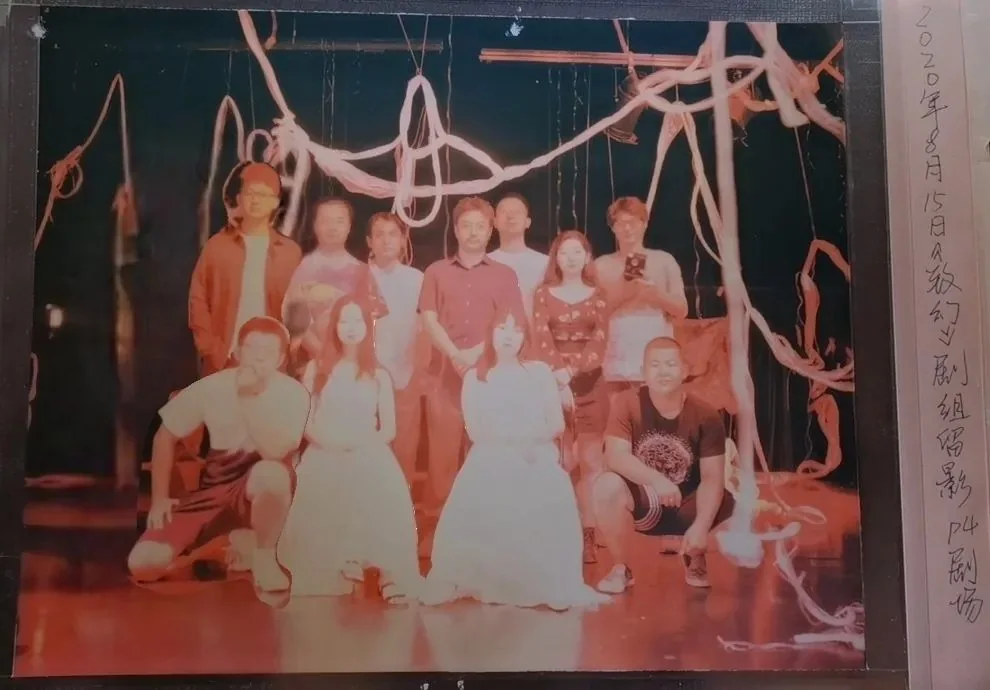
A later revised version of the Fantasia group, Polly, took a photo.
As a result, a new project prototype began to emerge following the practice of the Shadow-to-Site Act, PIXEL Echo XIII, Mirage and Cocoon House.
Plan p4U.
The name p4U is in the midst of an anxiety with the themes "We have to think fast" and "What do we have to do?" Two cans of beer, and it's crawling out in a spicy neighborhood. So from the very beginning, the p4U program was a direct action.
"The biggest problem facing the Direct Action movement is that we do not know how to deal with victory."
David Glaber, in The Impact of Victory, viewed the shortcomings of direct action as such and attributed them to the unwitting tendency to turn to action when victory came, ignoring what had been achieved and leading to an end. The rebuttal of the established language forms part of the original thrust of the p4U plan, but the victory itself has been driven by the desire for a perfect representation of the p4U theatre.
The complete p4U plan is therefore composed of two parts: P4 Theater and the 3P team. P4 Theater takes over the creators and the 3P team records the observations. P4 Theater screens, considers and supports the presentation of the creators from the perspective of theatre space, who are recruited into the p4U program, create the event itself and open the field. The 3P team is a group of observers who have also been recruited to constantly remind themselves of their presence by documenting and providing feedback on the events themselves over the duration of each project. Of course, there is no complete separation between the theatre team and the 3P team, and there is a cross-section between the two.

The full p4U project is actually an experiment at a time when groups that have come together in the short term because of the quest for consensus - not simply contractually - can reach consensus and endorse victory. Such moments may not be limited to a successful performance, but more from an individual point of view and within a short period of time, due to constant contact and collisions with strangers, ultimately reject certain prejudices and gain an unimaginable breakthrough in the established words that it knows and even desires. This process, which is like a chain reaction, can unleash incredible energy, and it appears to be shining and desperate.
The p4U plan is a serious exercise, and it is precisely because of the seriousness that we have given more thought to the action itself. When such thinking becomes action again, a more relaxed posture - play - begins.
*3P Team: Art Group sponsored by Huang Xiaoqiao, Zhang Shaohua, and He Fa, which, by documenting the daily scenes, looked at the non-routine nature of the daily behaviour, including but not limited to theatre space.