God says
There's light.
There's light.
Bible Genesis 1:3
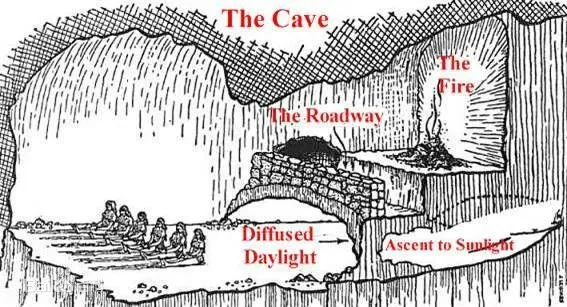
In volume VII of Ideal Nations, Plato tells the famous cave story. In a cave, there is only one narrow cave that leads to the outside world, and there is little light coming into the cave from the cave. There was a group of people living in a cave behind them a fire. The body of the group is bound and unable to move. In the world outside the caves, people of all kinds are moving, and people in the caves can only look at the shadows of the outsiders of the flames on the walls of the caves and think that the shadows are real.
"Breaks" map
Until a man was lifted, and he stood up out of the cave, and in the light of the outside, he realized with dismay that what he had seen was false.
This cave can be seen as a camera. You see shadows, but the desire to find true light. In the pursuit of light, photography tries to guide us to reality.
01
Capture the light.
If we are interested in looking at the origin of the concept of photography, it is not difficult to find that the combination of "photon n.the object" and "graphy n." in English is a campaign to capture light.
The Chinese translation of the photography into a "shadow", which is only a visible light. As the back of the light -- it confirms its existence. It can be said that the essence of the photo is "light."
Photo History.
In the 1931 Photo History, Benjamin refers to a portrait of Kafka's youth, stating that "the early image of the human being, aura, surrounds them, such as a psychic, penetrates their eyes and gives them a sense of enrichment and stability". This light is "a strange entanglement of time and space, the uniqueness of the distant, as close as it may be, always with the appearance or appearance of distance".
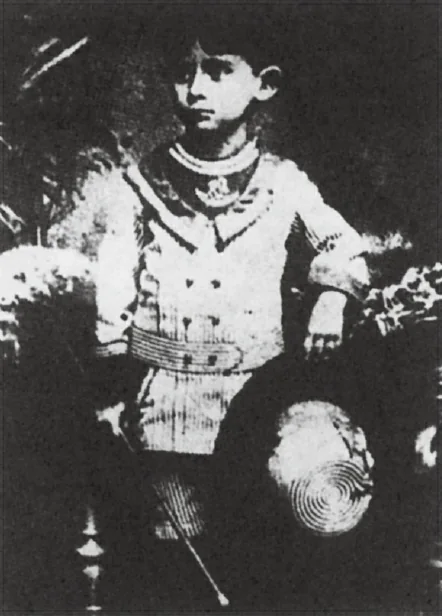
Carvka's childhood portrait.
Benjamin hid himself.
Not available.
The light is present in every living body that looks at the camera, nears a spiritual reality, a sacred gas field that gathers the will of life.
Benjamin has painted the light of the Spirit for the human experience - "The summer afternoon break, the arc of the mountains at the end of the day, or the paralyzing of a branch of the tree on the viewer, until this moment of convulsion is integrated with the image of the thing that is at stake - that is, the light of the breath mountain, the branch of the tree".
This fine example relates to two characteristics of the light: the light is in the distance, not in direct contact; the light is the interaction of "seeing", and the light of seeing a thing means giving it the ability to look back at us.
For Benjamin, photography, which is gradually becoming a reproduction technique, irreversibly leads human beings into the age of light. But where did the camera take the light? Can't we really see it today?
02
Know the light.
I knew him.
We're alone.
The history of exploring light is a history of human civilization. Our journey to light has not stopped since human consciousness. At the beginning of the Bible Genesis, when God created the heavens and the earth, the world was a darkness. The first thing God has shaped, named, designated is light. On the first day of creation, the light spreads the darkness and the world is visible.
♪ Quote the father every day ♪
Ming Dynasty.
Chiang Jinko drawing book
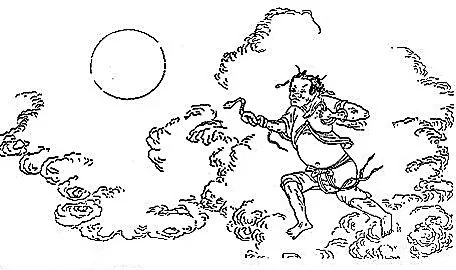
In mythical stories of the origins of civilizations, light also plays an important role. For example, in the Mountain and Sea scriptures, our well-known story of father-to-manism symbolizes humanity ' s quest for truth. At the same time, it shows the great significance of light for humanity: it gives human energy, it stimulates struggles and it leads us to the limits of our own self.
It led philosophers to the search for truth. From the famous "photos" in Plato's "Ideal Nations", to Heraclit's assertion that "the process of burning alone is not the burning thing", to Heidegger's "absolutely known light is the light that shines upon our truth itself", the natural light becomes the symbol of reason.
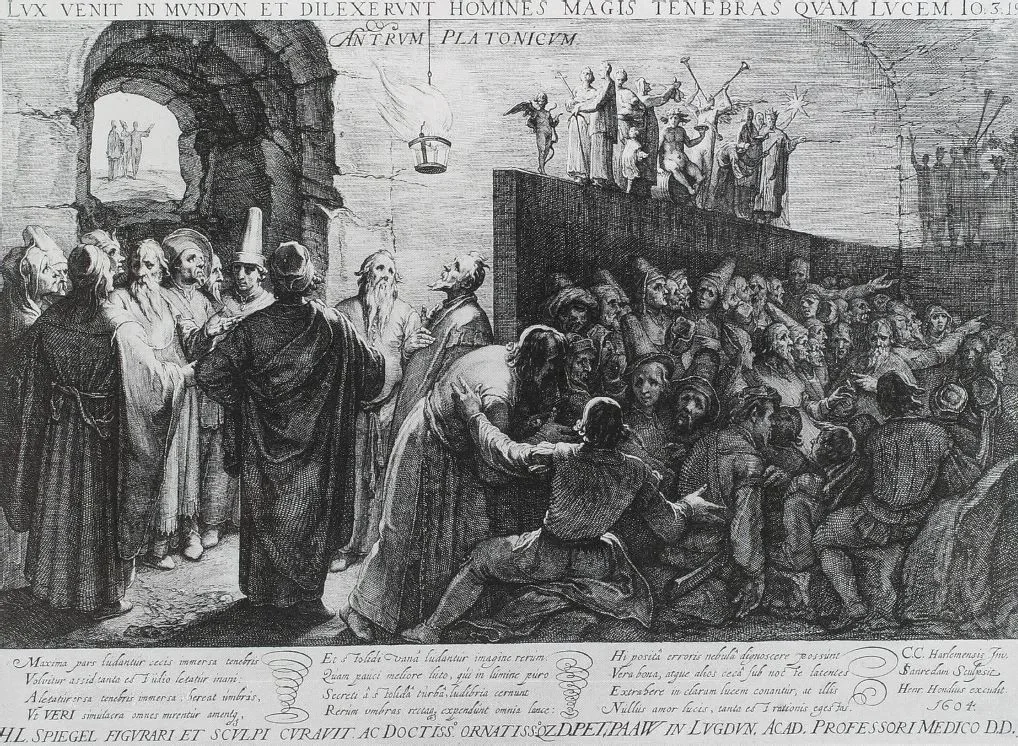
"Ideal Country" metaphor
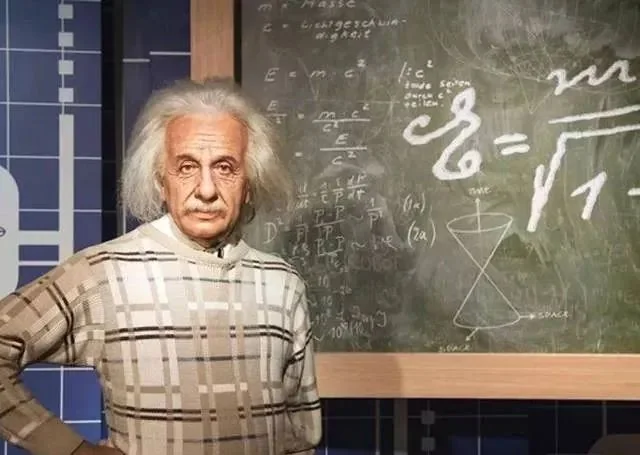
Thinking about light guides the scientific exploration of perception. As long ago as the war nations, the Ink documented the theory of pinhole imaging - "The scenery, the man of light, is so full of power. And those who are high, and those who are tall. And so the light is in the landscape." In the 17th century, Newton put forth the particles of light. In the 19th century, Hertz discovered photoelectric effects. In the 20th century, Einstein put forward the photometric hypothesis (E=hv), and Debreo suggested the wave pictography (λh/P)... As one step approaches the essence of light, the wisdom of humankind has also made a leap.
Einstein's done.
Paper on photoelectric effects, presented
It's a narrow relativity.
The knowledge of the universe.
Light also affects our lives. It is the source of life, giving natural energy and heat. In our sights, wonderful light is everywhere. The dawn of sunset, the moon of late night, the morning of light - the diversity of light that shapes the world in the eyes of each of us. Without light, there is no outline, no colour, nor can we sense what is around us.

Corbusière's legacy, "The Church of Stars."
I'm going to use the light to inject divine and spirituality into a simple space.
03
The light in the photo.
Take us to reality.
The invention of photography translates into reality the human desire to keep time. The halogenated silver particles with sensory properties are distributed evenly on the film base, and the principle of light following pinhole imaging is shown through the lens through a special and direct physical-chemical reaction.
As time passes, the film will be removed, and the encounter with light makes it a living object.
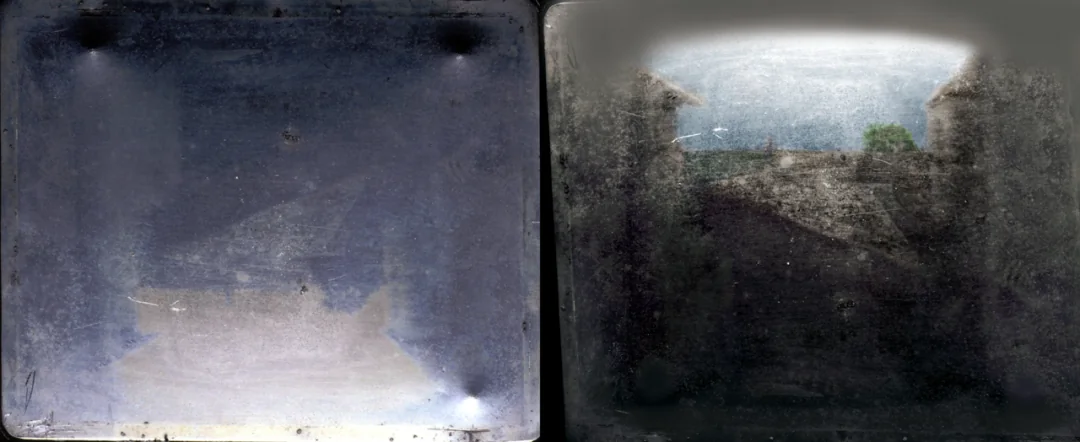
Le Gras, 1826 or 1827.
The view outside the window is considered the earliest camera photo available.

This record is enriched by the use of artificial light sources in photography. Flashes and stage lights in the photography theatre are two magic machines.
The flashlights have a very strong sense of surrealism at high-speed exposures. Tungsten lamps are activated from faint to bright moments and are a concentrated reaction of an energy explosion. This ejection, like electrocution, convulsed from a secure dark yellow light, struck by a super-real moment - an unconscious truth revealed immediately.
Early lights.

There is a sense of transparency with the continuous lights on the stage. When you enter the stage light, you enter the continued sight of the theatre space. And as the focus of the heat is on this moment, under the stage lights, "I" is transparent. This is the moment of personal light - the body is activated, and I can safely and loosely open my soul.
The spotlight on the stage.
The moment when the camera collides with the light is also the moment when the light shines, and the moment when the flashlight comes off, it retreats and offers itself in the warmth of the stage light. Through the baptism of the dark room, the light can also be repeated in the "Look Back". When the film was washed out, the person in the photograph looked back and recalled that moment. The light is also in this relationship, and when it is seen it is on the other side, it is called, it is confirmed and it exists.
The light that the camera is gathering leads us to our inner search and leads us to the light.
"There is a small mouth in the mountains, as if there was light."
Are you a glowing creature?
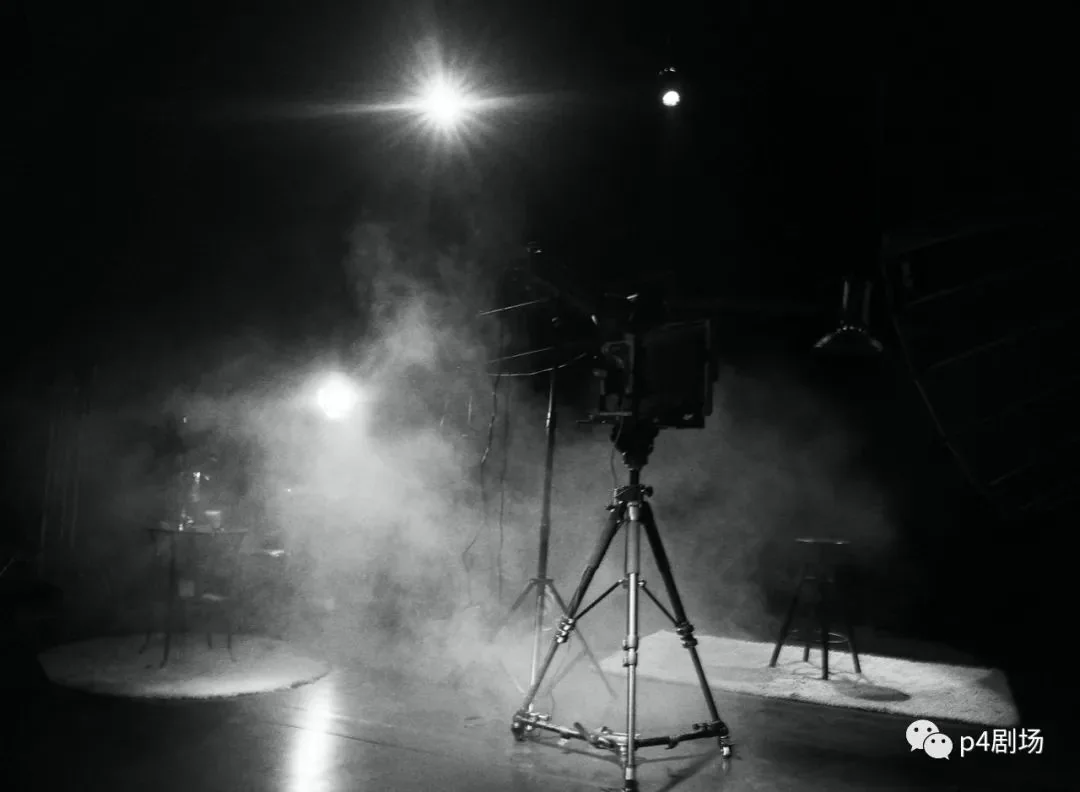
P4 Theater's stage
♪ And dream into reality ♪
Two men's play.
Goodbye.
The good people are watching.