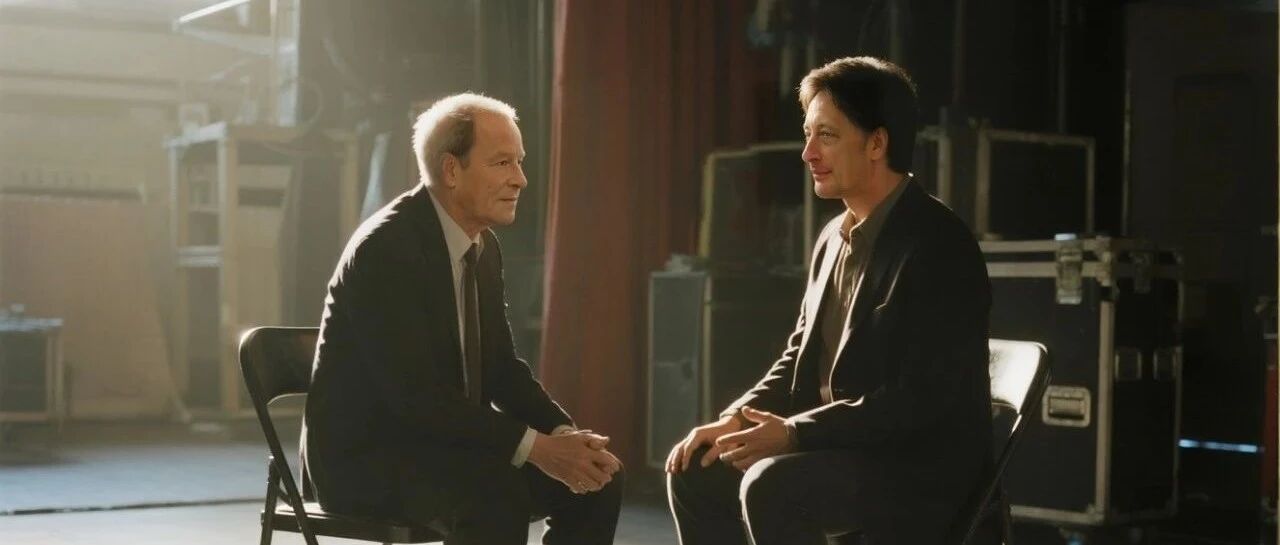
The singular value of François Regnault and Jean-Pierre Miquel's Theatre and Psychoanalysis (Théâtre et Psychanalyse, 2004) lies in both its form and its participants. It is not a one-sided academic monograph written by a theorist, but an extended dialogue: on one side, Regnault, a leading interpreter of Lacanian philosophy and psychoanalysis; on the other, Miquel, director of the Comédie-Française and a lifelong practitioner of stage, text, and actors.
The dialogue does not use psychoanalysis as an external tool to dissect theater. It tries to reveal a structural homology between the two. What it explores is this: the way theater operates is itself a kind of psychoanalytic practice.
I. Core Participants: Where Theory and Practice Confront and Resonate with Each Other
To understand this book, one must first understand the positions held by the two speakers.
François Regnault - the theoretical interpreter
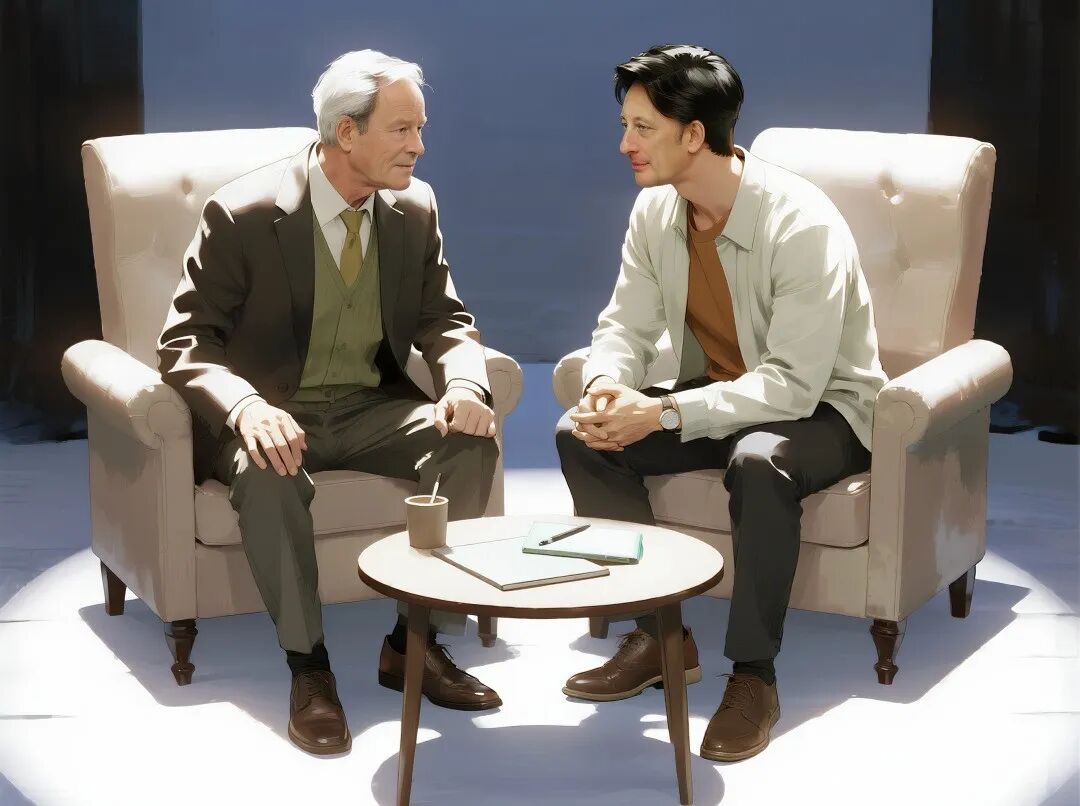
Identity: philosopher, playwright, follower of Lacan, and dramaturg for the renowned director Patrice Chéreau.
Perspective: radical Lacanianism. He brings not popular Freudian terms such as the Oedipus complex or the unconscious, but Lacan's more precise structural tools: desire (le désir), the Other (l'Autre), objet petit a (l'objet a), the gaze (le regard), and the subject supposed to know (le sujet supposé savoir).
Role in the dialogue: he is the one who proposes abstract frameworks, connecting concrete theatrical phenomena, such as the actor's charisma and the audience's fascination, to the deep structures of psychoanalysis.
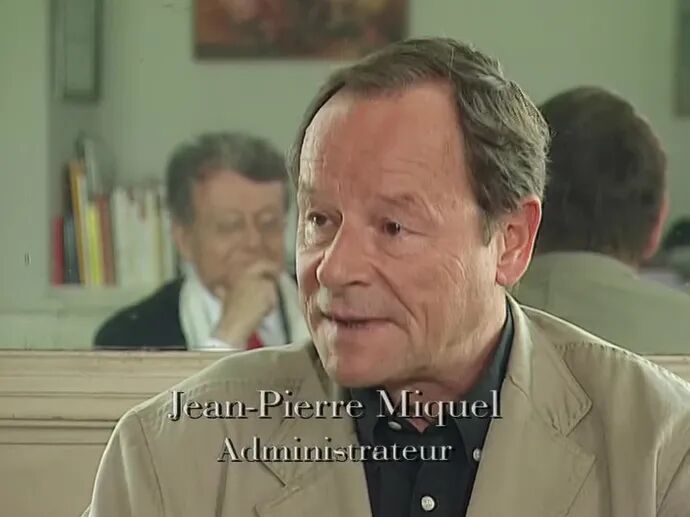
Jean-Pierre Miquel - the verifier of practice
Identity: distinguished theater director and director of the Comédie-Française from 1993 to 2001.
Perspective: an empirical point of view from the rehearsal room, the stage, and the auditorium. His questions are practical: how should actors be directed? How should classical texts be handled? What does an audience's reaction mean? What is stage reality?
Role in the dialogue: he is theory's touchstone. Through concrete and sensuous experience, he responds to, questions, or confirms Regnault's abstractions. When Regnault speaks of objet petit a, Miquel may speak of an actor's unsayable stage presence.
The charm of the dialogue lies in its continual movement between abstract theoretical construction and concrete theatrical practice. Lacan's difficult theory becomes sensible, and everyday theatrical experience gains a deeper theoretical dimension.
II. Core Themes in the Book
The book revolves around several central problems, which can be distilled into the following themes.
Theme One: Desire (Le Désir), the Only Engine of Theater
This is the absolute core of the book. Regnault begins from the claim that theater deals not with psychology, but with desire.
Regnault's Lacanian position
Desire is not need or demand. Desire is not the wish to obtain some concrete thing; it is an unsatisfied, structural lack (manque).
Desire is the desire of the Other (le désir de l'Autre). The actions of dramatic characters are not determined by their personality, but driven by a desire coming from the Other: social law, the order of language, the mother's desire, and so on. The tragedy of Phaedra is not that she falls in love with Hippolytus, but that she is occupied by a destructive desire she cannot control, a desire that seems to come from outside herself.
Miquel's practical response
From the director's point of view, he confirms that the greatest dramatic roles, such as Alceste, Hamlet, and Phaedra, all carry a kind of obsession or madness. They are driven by a force beyond themselves, which makes their actions both irrational and compelling.
The director's task is to present the trajectory of this pure, unreasonable desire onstage, not to invent a reasonable psychological motive for the character's behavior.
Value of the dialogue: together, they strip theater of its psychological coating and point directly to its existential core: the staging of desire itself. Theater thus becomes a trap for desire (un piège à désir).
Theme Two: The Director's Role, from Master to Subject Supposed to Know
What position does the director occupy in the theater?
Regnault's Lacanian position
The director occupies the position of the subject supposed to know (le sujet supposé savoir) in psychoanalysis. Actors and spectators believe that the director knows the final meaning of the play, just as the analysand believes the analyst knows the answer to the symptom.
But in fact the director does not know the ultimate truth. He is only an interpreter facing a text full of holes and symptoms. His task is to set up a frame in which desire can flow and appear. He is not the source of meaning, but the catalyst that lets meaning happen.
Miquel's practical response
He frankly acknowledges the not-knowing and uncertainty in the director's work. The director's authority is, to a large extent, a performance: a role that must be assumed so creation can continue.
He describes exploring the text with actors in rehearsal, which confirms that the director is not omniscient, but a partner who faces the text's unconscious together with the actors.
Value of the dialogue: this discussion overturns the myth of the genius director and relocates the director as a structural function. Like the analyst, the director guides rather than indoctrinates.
Theme Three: The Actor's Body and Voice as Incarnations of Objet Petit a
Why are some actors fascinating?
Regnault's Lacanian position
A great actor is not charismatic because he imitates well, but because his body and voice become incarnations of objet petit a onstage.
Objet petit a is the cause of desire in Lacanian theory: the unsayable something that ignites desire, such as voice, gaze, or a partial object of the body. It is a captivating remainder.
The actor's stage charisma, or présence, is the appearance of objet petit a. The spectator's desire is attracted and captured by this living, real body that cannot be fully seized by symbols.
Miquel's practical response
He offers many examples of actors with extraordinary charisma. He speaks of the texture of their voices, their silences, and their singular gestures, none of which can be reduced to good acting.
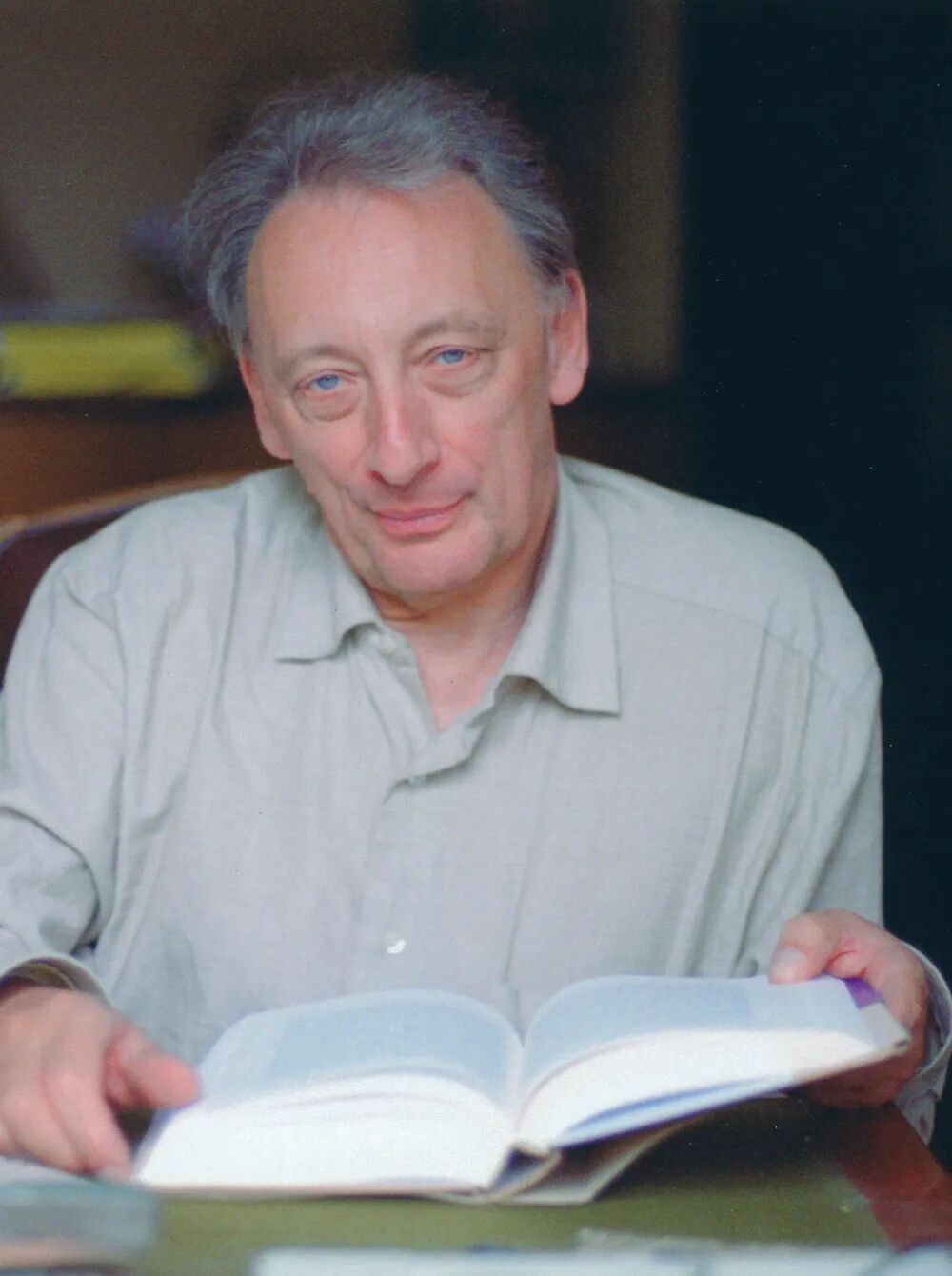
He also speaks of stage fright (le trac). Regnault would interpret it as the anxiety that arises when the actor confronts the Real (le Réel) onstage: the naked, meaningless moment of being gazed at.
Value of the dialogue: they give a profound theoretical account of actorly charisma, surpassing conventional acting analysis and reaching the root of the spectator's desire.
Theme Four: The Audience and the Gaze (L'Audience et le Regard)
What is the audience looking at?
Regnault's Lacanian position
He introduces Lacan's distinction between the eye and the gaze. The spectator looks at the stage with the eye (l'oeil), but an invisible gaze (le regard) is projected back from the stage and captures the spectator.
The spectator believes they are a safe voyeur in the dark, but in fact they feel looked at by the stage and drawn into an exchange of desire. You are not simply watching Phaedra; you feel that Phaedra's desire is looking back at you.
Miquel's practical response
From the director's position, he describes how to manipulate the spectator's attention and construct this gaze through lighting, set, and actor movement.
He also speaks of the strange collective experience of theater: shared breathing, silence, and sudden laughter. This shows that the audience is not a set of isolated individuals, but a temporary community formed under the gaze.
Value of the dialogue: it completely changes how we understand the relation between watching and performing. The spectator is transformed from an active consumer into a subject captured by a structure of desire.
III. The Meaning of the Dialogic Form and Its Conclusion
Avoiding theoretical rigidity: the dialogic form keeps Lacanian theory fluid and open. Miquel's practical experience continually questions theory, preventing it from becoming a closed dogma.
Theory and practice verifying each other: the book shows beautifully how theory illuminates practice, and how practice enriches theory. Regnault's analysis gives Miquel a deeper awareness of the meaning of his work, while Miquel's examples give Regnault's theory flesh and blood.
A mirrored psychoanalytic process: the dialogue itself resembles an analysis. Regnault plays the analyst, Miquel the analysand, and through speech they jointly reveal the unconscious structure of theater as patient.
Conclusion: beyond application, toward structural homology.
The book's final conclusion is revolutionary.
It does not say that we can analyze theater with psychoanalysis. It says that theater, in its most advanced forms, operates according to structures homologous with the discoveries of psychoanalysis.
Theater is not the object of psychoanalytic research, but another path, parallel to psychoanalysis, for exploring human desire, subjective division, and the relation to the Other. Director, actor, audience, and text together form a precise machine of desire, and the dialogue between Regnault and Miquel is its operating manual.
For any reader who wants to understand the relation between theater and psychoanalysis in depth, this book is indispensable and deeply generative. It moves readers beyond shallow psychological profiling of characters and toward a structural understanding of why theatrical events possess such force.
I will now begin a detailed text-by-text analysis in the most faithful way possible. This analysis will use an internal anatomy: we will follow each turn in the Regnault-Miquel dialogue, explain every concept raised, and reconstruct its argument, as if we were sitting beside them and listening.
Theatre and Psychoanalysis
Chapter I: The Actor's Paradox, from the Myth of Fusion to the Truth of Division
At the opening of Theatre and Psychoanalysis, the dialogue does not begin from the heights of theory, but from the oldest and most central riddle of theatrical practice: the actor. Jean-Pierre Miquel, an experienced director, raises a question that seems simple but is in fact fundamental. It becomes the cornerstone of this chapter and of the whole book.
Section I: The Practitioner's Perplexity, the Binary of Sincerity and Technique
Miquel begins from a long-standing actor's credo: the actor must be sincere and must emotionally fuse with the role.
Miquel's question, reconstructed: In rehearsal, we always tell actors, 'You have to believe it,' 'You have to feel it,' 'You have to become that person.' This pursuit of sincerity seems to be the holy grail of acting. Yet the paradox immediately appears. When I think of the greatest actors in the history of the Comédie-Française, such as Louis Jouvet, what I see is almost cold, absolutely precise technical control. Jouvet himself said that the actor thinks with his heart and feels with his mind. What does this contradictory sentence mean? How do we reconcile the demand for inner truth with the display of external technique?
Miquel's perplexity accurately summarizes the central problem that has haunted theater theory since Diderot's Paradox of the Actor. He presents a binary that practitioners cannot avoid in daily work: either emotional immersion, treated as true, or technical operation, treated as false. This gives François Regnault a perfect point of entry.
Section II: The Intervention of Psychoanalysis, Subjective Division as the Fundamental Answer
Regnault's response is subversive. He points out that the binary described by Miquel is itself a false problem based on a false premise: the belief that there exists a unified, complete acting subject capable of fusing with the role. Regnault introduces a foundational concept of Jacques Lacan's psychoanalysis, the divided subject (le sujet divisé, or le sujet barré, written $), in order to reconstruct the actor from the ground up.
Regnault's analysis, reconstructed: In Lacan's framework, what you call fusion belongs precisely to the imaginary (l'Imaginaire). It is a fantasy of wholeness, like the infant's joy at first recognizing its complete image in the mirror. But that unity is a misrecognition (méconnaissance). The fundamental discovery of psychoanalysis is that the subject is never unified. The I is divided from the beginning. The actor, onstage, does not overcome this division; rather, the actor stages this basic truth of human subjectivity in the most spectacular and public way.
Regnault further analyzes the concrete structure of this division.
The actor as individual: this is the actor with a biographical identity, for example Jean-Paul Belmondo. He has his own body, unconscious, desire, accent, and habits. He is the subject of enunciation (sujet de l'énonciation).
The actor as role: this is a symbolic position prescribed by the text, for example Cyrano. The role is a structure made of signifiers, belonging to the field of the big Other (le grand Autre), the symbolic order represented by language, culture, and the script. He is the subject of the statement (sujet de l'énoncé).
Regnault's argument, reconstructed: When an actor says onstage, 'I, Cyrano...', this I has already been emptied out. Between Belmondo, who says the sentence, and Cyrano, whom the sentence states, there is an uncrossable gap.
Jouvet's paradox is therefore answered: the actor's mind, meaning technique, control, and distance, is used to handle the prescriptive symbolic frame of the role; the actor's heart, meaning body, drive, and existence, provides energy for the real experience of subjective division. The two are not opposed. They are two sides of the same structure.
Section III: Reinterpreting the Mask, from Concealment to Establishment
To make the theory of the divided subject more concrete, the dialogue turns to the mask (le masque), an ancient theatrical tool. In the traditional view, the mask hides the actor's true face. Regnault gives the opposite explanation.
Miquel's prompt, reconstructed: In ancient Greek tragedy, the mask is indispensable. It seems to fix the role and deprive the actor of facial expression.
Regnault's reinterpretation, reconstructed: That is precisely the mask's key function. It does not hide the actor's real face. On the contrary, onstage, the mask is the actor's real face. It is an imposed, non-negotiable symbolic identity coming from the big Other. By putting on the mask, the actor's personal, imaginary expression, those subtle, psychological, sincere expressions, is abolished. This abolition is not a loss but a liberation. It forces the actor to stop relying on facial expression, the tool most likely to lead to the illusion of fusion, and to yield instead to a purer and more structured expression through voice (voix) and bodily gesture (geste). The mask establishes the unshakable symbolic position beneath which the actor's subject must speak.
The function of the mask therefore moves from the imaginary game of resemblance to the symbolic law of structure. It ensures that the division between actor and role is visible and structural, preventing performance from sliding into cheap psychologism.
Section IV: The Truth of Mistakes, Slips and Corpsing as Intrusions of the Real
If the mask actively constructs symbolic division, then the uncontrollable accidents of rehearsal passively reveal that division. From his practical experience, Miquel offers the material that most interests psychoanalysis: slips of the tongue (lapsus) and involuntary laughter (le fou rire).
Miquel's observation, reconstructed: One of the most frustrating moments is when, in a highly tense and emotionally charged rehearsal, an actor suddenly says a key line wrong, or worse, cannot stop laughing. The magic of the whole scene vanishes in an instant.
Regnault's analysis, reconstructed: From the director's point of view, this may be a failure. From the psychoanalyst's point of view, it is a successful revelation. It is exactly Freud's Psychopathology of Everyday Life appearing onstage. A slip of the tongue or an involuntary laugh is not a random mistake. It is an intrusion of the Real (le Réel).
Here Regnault introduces the third and most central register in Lacan's theory: the Real.
Regnault's explanation, reconstructed: The Real is the traumatic kernel that resists symbolization and exceeds the imaginary. In the context of the stage, the actor's own subjectivity, repressed unconscious thoughts, bodily limits, and real relation to the fellow actor, all the things that do not belong to the symbolic shell called the role, form the Real. When the actor misspeaks, their unconscious discourse pierces the script's discourse. When the actor laughs uncontrollably, the body's jouissance overwhelms the emotional prescription of the role. In these moments the theatrical illusion breaks, but the truth of subjective division appears in an embarrassing and utterly real way. What the audience sees at that moment is not Hamlet, but the divided, flesh-and-blood subject playing Hamlet.
This analysis lifts the actor's failure from a technical problem to an ontological one. It is no longer a lack of professional skill, but a symptom (symptôme) of the structural incompleteness of the human subject.
Chapter Summary: The Actor as Symptom
Through a layered analysis, this chapter thoroughly reshapes the actor. The actor is no longer a unified psychological entity trying to fuse with the role, but a structural symptom, manifesting the fundamental division between the subject and the discourse of the big Other. Performance unfolds simultaneously across the imaginary, the desire for fusion; the symbolic, submission to the law of the text; and the Real, the intrusion of the unconscious.
This new definition of the actor lays the foundation for the later discussion of text, desire, and spectator experience. If the actor is divided, then the entire theatrical event in which the actor participates must also be about the appearance of division, desire, and lack.
Chapter 2: From text to words - the "mise en volix" of desire
If the actor is the "subject" of division, then the text is the embodiment of the "Big Other". This chapter will focus on the transformation process from static text printed on paper to dynamic, energy-intensive performances on the stage. The central argument of Regnault is that this transformation is not a simple "repeal" or "repeat", but a key "acte de parole" that produces meaning and desire.
Section I: Director's core mission - transforming from "Langue" to "Parole"
The starting point for the dialogue remains the practical dimension raised by Miguel, which concerns the nature of the director ' s work.
Miguel (M) asked (reconstructed): "We got a classic play, like Molière's Hypocrites. Every word, every dot symbol is fixed there and has not changed for centuries. But every new production, we all feel like we're having a whole new creation. My job, or what is the nature of the director's job? How can we make these words, which are silent and belong to the past, sound on the stage today and have an impact on the audience today?"
In response, Regnault introduced and elaborated on a set of key concepts that Saussure reshaped through Lacan: language (Langue) and speech (Parole).
Regnault(R) analysis (reconstructed): "The script that you refer to on paper is the `le trésor des signifants' that Lacan describes. `Language' is a non-personal, structured, synchronized system. It is like a dictionary or a grammar book, and it contains all the combination rules between the finger and them. At this level, the text is " dead ", it belongs to " le grand auto " and it belongs to no one. It just exists.
"Regnault(R) continues to explain (reconstruct): "The word is the personalized and time-consuming expropriation of this `language' system by the subject. When an actor, a divided subject, speaks a line in the particular air of the stage, it becomes a word. `Saying' is physical, it is borne by a specific body (the body of an actor); it is pointed, it is directed towards another subject (actress or audience); and, above all, it carries the desire of the subject (désir). Thus, the central task of the director is to create all the necessary conditions for the transformation from `language' to `spoken'. Your job is not to "translate" the text, but to activate the text, from a static function to a dynamic, desireful event."
This distinction is essential because it shifts the focus of the theatre performance from "recurrence of meaning" to "production of desire". Actors are not "expressing the meaning" of the line, but are displaying the desires of their subjects by "speaking" the line.
Section II: "Spoken words" and "empty words"
In order to further refine the quality of "spoken", Regnault introduced another two important concepts as presented by Lacan in the Rome Report: full-fledged words and empty words.
The definition (reconstruction) of Regnault(R) reads: "`An empty speech' is a statement in which the subject does not participate. It's like a cold in our daily social life, or a student recites lessons. It delivers messages and follows grammar, but the speakers themselves hide behind this automated discourse. In the drama, an actor who just "repeated" the lines was saying "a hollow word." The audience can hear words, but it can't feel anything."
Regnault(R) Comparative Analysis (reconstructed): "And `full words' are the words in which the subject gambles its own existence. It is not a description of a reality that already exists, but rather the creation of reality in words about conduct itself. When Racine's Phaedra says "I love you" to Hippolytos, if it's a `full word', then this `love' is not a pre-existing emotional report, but an act of `love' itself, a devastating, taboo reality, into the stage world like a stone. It changes all the coordinates of Phaedra, Hippolytos and the entire theatre universe. It is an irreversible act."
Miguel provides a vivid example of this theory from the director's experience.
Miguel (M) responded (reconstructed): This is exactly what I'm looking for in my rehearsal. I used to say to actors, "Don't go to the show, just say the line." But you have to find the only absolutely necessary reason to say that line. 'We've spent weeks, probably just to find the correct "weight" of the line. This weight, I think, is what you said, makes it a full word."
Thus, the director's work has been redefined as a kind of "midwifery": helping actors find a place where their words become "full". This is no longer a psychological "play-in role", but a structural "take-in".
Section III: Silence, breathing and sound - vehicles of desire other than words
The logic of dialogue naturally extends to: if desire is reflected in words, then what happens where there is no words - for example, silence, pause and breathing?
Miguel (M)'s observation (reconstructed): "Harold Pinter is famous in the dramatic text for his threatening "pause" and "silence". In rehearsing the tragedy of Racine, we also found that the short breath between Alexander's poems was no less important than the words themselves."
Regnault sees these "non-linguistic" elements as a key place where desire operates, even more directly than language.
(R) Analysis (reconstruction): "In psychoanalysis, unconsciousness manifests itself in language cracks, cracks and mouth errors. The silence on the stage is not "free." It's a crack full of tension. It points to what cannot be said - trauma, death, taboo desires. The silence moves the audience's ears from listening to the meaning to feeling the presence. It forces us to face the limits of language."
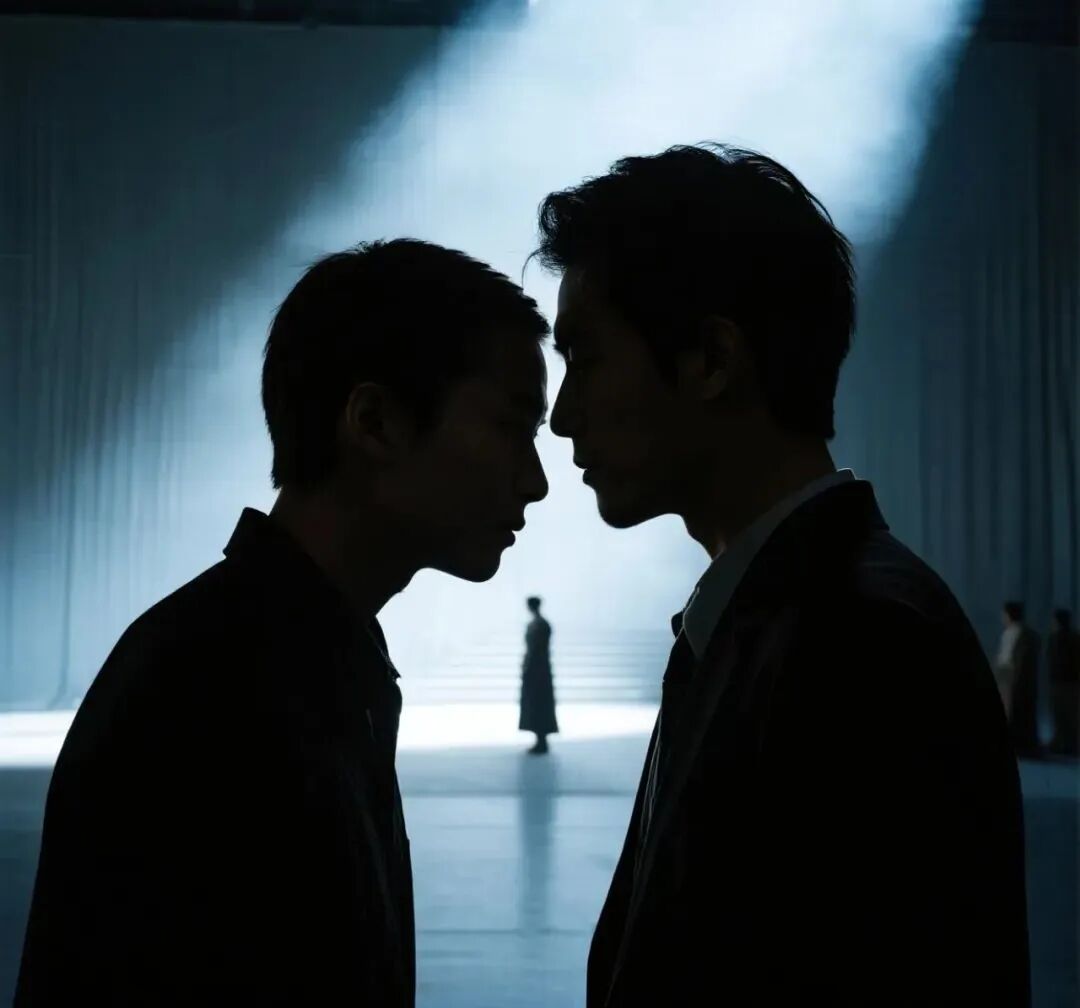
Here, Regnault leads the dialogue to a more refined concept of the Lacanian theory: the voice is a objet petit a (objet petit a).
"We have to distinguish between sound and words. Words are symbolic, they convey meaning. And the sound, it's symbolic, it's the appearance of pure drive. It is a material carrier out of meaning - the sound of sound, the sound, the rhythm, an aria, a scream, a breath. This "sound" is a form of what Lacan calls "objet petit a". It does not enter symbolic circles, but rather directly attacks the body of the audience and triggers a pre-reasonable, biological reaction. That is why an opera that doesn't understand the lyrics can still make us cry. We are touched not by its meaning, but by its "sound" object itself."
The Miguel (M) certificate (reconstructed) explains why the sound training of actors is so important. We're not training them to say "better" but training them to master "mass", "colour" and "energy." A great tragic actor, whose voice in itself carries the weight of destiny."
Summary of this chapter: from "text reproduction" to "production of desire"
This chapter completes a major paradigm shift in theatre theory. According to the Lacanian interpretation of Regnault, the core of the theatre is no longer a pre-existing text. Instead, the stage became a "production device".
The "raw material" of the device is the text (the repository of languages), its "workers" is the actor (the subject of division), its "products" is the sound, body and movement, and its "products" is the desire that is produced in the "full words" and silence cracks.
The director's job, therefore, is more like a sound engineer, who does not simply "mise en scène" but rather a more fundamental "mise en voix" - creating an area where desire can be engraved and mobile through voice and speech.
The analysis of this chapter paves the way for a comprehensive and systematic discussion in the next chapter of the mechanisms for the operation of desire itself in theatre.
Chapter III: Stage control of desire
The central task of this chapter is to answer the question: What is the theatre really showing? Regnault's answer is clear and categorical: drama, especially great drama, is not about emotion, not about moral conflict, not even about the story itself, but about the structure of desire and its functioning.
Section I: The essence of desire - it is not a "possession", but a "existence" problem
In the first instance, Regnault spent a considerable amount of space, clarifying the specific meaning of the concept of "desir" in the psychoanalysis, and making a strict distinction between it and the term "desir" or "need" in everyday languages.
"We have to start with a fundamental distinction. The first is demand, which stems from biologicality, such as the need for food. Needs can be met by a specific target and then disappear. Next is the requirement (demande), which is expressed through language, such as baby crying for milk. But the demand is never just about the specific thing, it's deeper about the "love" and the recognition of others. And desire comes from the surplus of "demand" over "demand." Desire is not a desire for any specific object, it is essentially unsatisfied and it points to a permanent `manque'."
After clarifying this set of concepts, Regnault has dropped the core formula of the Lacanian theory: human desire is the desire of the big Other. He explained in detail the dual meaning of the formula.
(reformed)
In the sense of the word: my desire is the desire of the big Other. This means that I want to be the object of the other. I want to be the perfect, complete and filled with his own. It's about "Who am I?", "Who should I be to please others?" 'The existential problem.
In the sense of "master": my desire is the desire of the big Other themselves. That means I don't know what I want, so I take the desire of the big Other as my own. I want what I think is valuable. My desire is alienated, it comes from outside.
(R) Regnault (R) summed up (reconstructed): "So the fundamental question of desire is not 'What do I want?', but the disturbing question Lacan asked: 'Che vuoi?' - 'What do I want from me? It's an eternal question about where I am in the other's desire system. The great drama is the presentation of this "Che vuoi"?
Section 2: The classic drama character as an example of the "subject of desire"
This abstract theory was immediately brought back by Miguel to concrete theatre practice. He referred to the most inexplicable and charming theatre figures.
"Why would Hamlet delay? If he really believes in his father's ghost, why not take revenge immediately? Similarly, the cynicist of Molière, who claims to hate the hypocrisy of human beings, prefers to fall in love with Serimana, who is the most flirting and unfaithful."
Regnault used the theoretical tool of "the desire of the big Other" to provide an excellent "clinical diagnosis" of these classic roles.
Regnault (R) Analysis of Hamlet (reconstructed): "The tragedy of Hamlet is not a weakness of willpower. His tragedy is that he was hit by an absolute order from the "Big Other" (the ghost of his father): "Venge for me!" but that order was traumatic and vague. The appearance of ghosts has torn the symbolic order of the Kingdom of Denmark. The question for Hamlet is "Che vuoi?" Father, what do you want me to do? As a result, his procrastination, his dementia, his director of the play, all of which was his futile attempt to explain, locate and locate the desire of the `big other' and find his position as his implementer. His desire is completely paralysed."
Regnault(R) Analysis of Alceste (restructuring): "Alceste is another excellent example. He claims that his desire is "absolutely sincere". But if that's the case, he should retire. But he stayed in the Paris salon and fell in love with Célimène. Why? Because Célimène is the incarnation of the "big Other" he claims to hate. The true desire of Alceste is not to achieve sincerity, but rather to be an exception that allows the hypocritical "Big Other" (Serimana) to acknowledge his sincerity and change it for him. He wants to get a proof of his own uniqueness from the big Other. This is precisely proof that his desire was built entirely around the desire of the big Other."
Through these analyses, the drama character is no longer a psychological individual with a fixed "temporal" character, but a "subject position" driven by the structure of desire. Their actions are their trajectory in the maze of desire.
Section III: "Object a" - the bait of desire on stage
If desire is a structural "deprivation", then there must be a specific, visible "something" on the stage to represent this deficit in order to trigger and capture audience desires. This "something" is the most central and elusive concept of Lacanian theory: objet petit a.
(R) The difficult definition of "objet petit a" (reconstructed): "`objet petit a' is not the object of our desire (l'objet du désir), but the cause of desire (la cause du désir). It's not what we eventually want, it's the spark that ignited our desire. It's a `remaining thing', the small `real boundary' where the body was removed and lost when the subject entered the symbolic boundary. It has no value per se, but it marks a gap around which desire revolves. It's like MacGuffin in the Hitchcock movie, where the characters fight, but it doesn't matter what it is."
Regnault and Miguel then began to look for the specific shape of "objet petit a" in the theatre. They noted that it was not an entity, but an effect, usually in several specific, non-material forms
The interpretation (reconstructed) of Le regard (R) "we must distinguish between `l' œil' and `le regard'. The eyes are the organs of the action, the actors. And "look" is the feeling that "I'm being watched" it doesn't belong to anyone, it's an anonymous, scattered force in space. In the theater, the audience looks at the stage with its eyes, but at the same time it seems to be " staring " at the audience. The feeling is that "observation" works as "objet petit a". It makes the audience feel that he is not a safe, knowledgeable observer, but rather involved in the scene of desire, and that he himself is the object of view. It creates a delicate sense of anxiety and pleasure."
Miguel (M) supplements (reconstructed): "A great actor whose eyes seem to penetrate the audience without looking at any specific person. He's projecting a kind of "observation." Or, a light on the stage suddenly lights up an empty chair, as if it were `observing' us, which marks an absence and triggers our doubts and desires."
La voix (R) reaffirms and deepens: "As we discussed in the previous chapter, the sound of the semantic content itself is another perfect incarnation of `objet petit a'. It's a pure drive vehicle beyond meaning. It works directly in a more efficient economy, bypassing our rational defence."
An example (reconstruction) of other forms of Regnault(R): "Anything that can mark `deficient' and trigger desire can be `objet petit a'. For example, the `cassette' in Tartuffe, hidden by Orgon; the blood-stained sword of Rodrigo in Le Cid; and a character repeatedly mentioned but never appeared, like Godot in " Waiting for Godot ". Godot is the ultimate `objet petit a', a pure void, and all the characters' desires are organized around him."
Summary of this chapter: Theatre as a machine of desire
The analysis of this chapter ultimately defines the theatre as a sophisticated "mechanism of desire". The machinery operates as follows
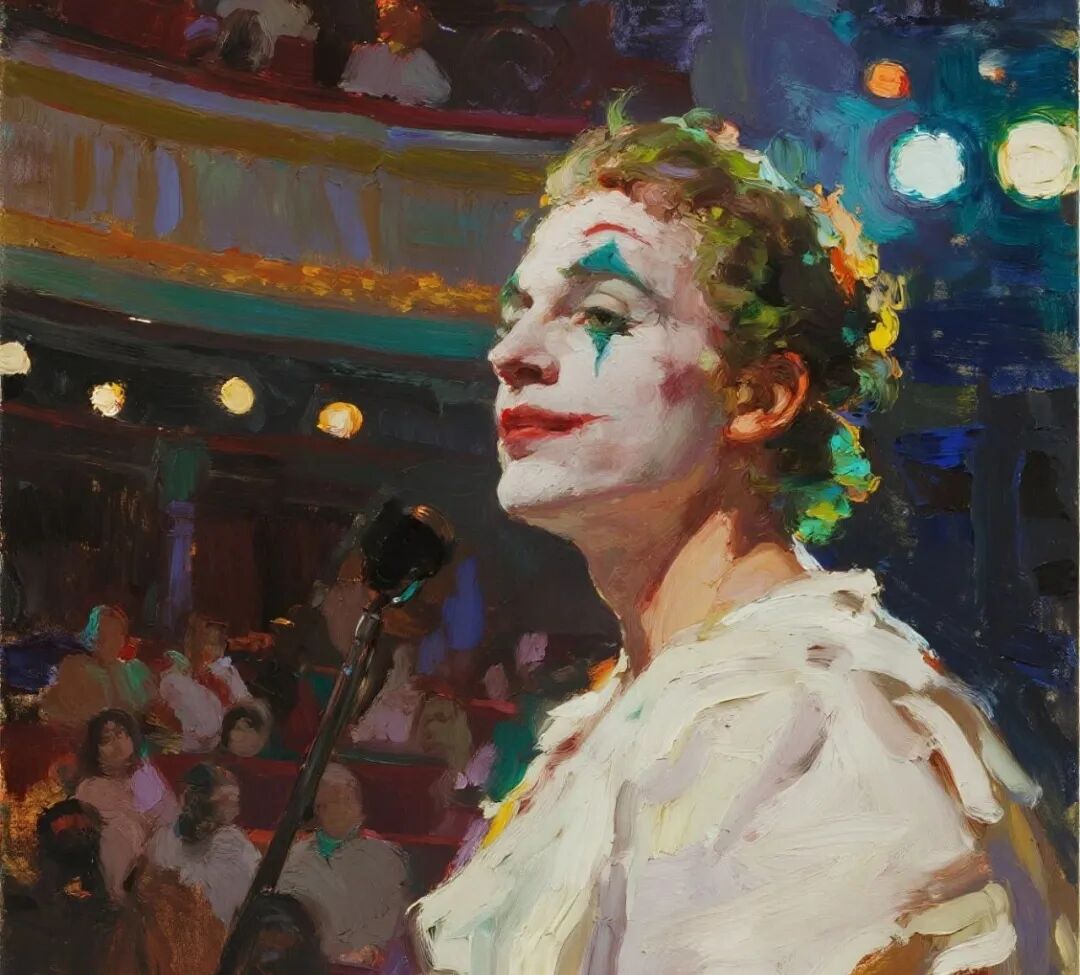
It uses a puzzle (Che vuoi?) about "the desire of the big Other" as an engine for the plot.
The person it created was the "subject" that sought its place in this lust labyrinth.
It captures the desires of viewers, turning them from safe bystanders to participants in desire, by crafting various forms of "objet petit a" on stage (observation, sound, mysterious objects).
The director's "mise en scène" is given a new meaning here. It is no longer as simple as putting actors away, setting the scenes, but rather as a profound "movement of desire". The director must be an engineer of desire, and he must accurately calculate and deploy every finger, every silence, every gaze and sound to ensure that the desire machine works efficiently and ultimately has a profound impact on the audience ' s substance.
And this shock, the so-called "purification", is the ultimate issue to be addressed in the next chapter.
Chapter 4: Audience experience - from "identity" to encounter with "real"
The purpose of this chapter is to analyze the complex psychological processes of the audience in the theatre. Regnault's reasoning path is, first, to deconstruct a single concept of "identification" in the traditional sense and to break it down into different levels of operation; then, on that basis, to redefine "purification" and transform it from an emotional revelation to a profound shock to the subject.
Section I: Three dimensions of identity - imagination, symbolism and reality
The dialogue began with a critical breakdown of the core concept of "identity" in audience psychology. Regnault notes that when we say "audience agrees with the role", we confuse at least two distinct psychological mechanisms.
Regnault(R) distinction (reconstruction): "We must precisely divide the two main forms of identification, which correspond to the imagination and symbolism of Lacan."
"It's the most direct, most superficial identity." It's based on "similarity." Audiences see a role on the stage that is similar to their own, emotional, and they create the idea of "he's like me" or "I understand how he feels". It's a mirror relationship, like a baby's image in a mirror. In this identity, the audience and the role form a dualist relationship, temporarily forgetting the distance between them. The vast majority of popular theatres, dramas and commercial films, whose main effects are based on the identity of this imagination, are designed to provide emotional resonance and satisfaction."
"It's deeper and more structured. Here, the audience no longer subscribes to the role's `images' or `emotionals', but rather to the role's `trait unire ' or `apparent positions'. For example, when I watched Sophocles' Antigone, I might not be able to identify with her at any level of imagination - neither am I a princess nor have I ever wanted to bury my brother, who was convicted of being a traitor. But, at the symbolic level, I can agree with what she stands for: the subject who stands for for something beyond the laws of the city. I agree with the intransigent `postures' she embodies. It's not about "I'm not like him," it's about "where I am in the whole legal, family, symbolism of death."
Miguel confirmed the importance of this distinction from a practical point of view.
Miguel (M)'s observation (reconstructed): "It is true that great dramatic works often block the simple imagination of the audience. Brecht's "distantization" is the best-known example, and he's trying to tell the audience, "It's not you on the stage, it's the structure that's presented. Think about it. 'But even in the classical tragedy of Racine, Phaedra, whose passion is so extreme and devastating that it is hard for the audience to say 'she is like me', we are still deeply attracted to her, and I think that is precisely what we are struck by the symbolic position that she occupied of the 'subject destroyed by taboo desires'."
Section II: Redefinition of "purification" - crossing illusions and encountering "real"
After clarifying the complexity of identity, Regnault pointed to Aristotle's theory of "purification". In his view, "purification" was understood to mean the "promising" of feelings by triggering compassion and fear, which was a vulgar psychological error.
Regnault(R) is critical (reconstructed): "See the theatre as an `emotional sewer', a kind of psychotherapy that allows us to cry at a safe distance and then feel better, which is a great disparaging force for tragedy. Within the framework of Lacan, the real drama, the so-called `purification', is not a release of emotion, but a far deeper thing: it is a meeting with the `le Réel'."
The "real world", the last and most central category of the Lacan three, is that traumatic kernel that cannot be symbolicized and imagined. It represents the collapse of meaning, the end of language and the naked truth of existence.
Regnault(R) explains the "purification" of the tragedy (reconstructed): "The whole course of the tragedy is to carefully guide the audience to the edge of the "real world". We take King Oedipus as an example. For most of the time in the play, we were in the symbolic realm: we tracked the clues, worked out the reasoning and tried to solve the puzzle of who did it. We also share the pain of Oedipus in the imagination. But when the last truth comes to light -- when "the killer is me," "I married my mother," "I gave birth to my brother and sister," When these terrible things come together - the whole symbolic order has collapsed. Words cannot bear the weight of the truth. Now, what did Oedipus do? He didn't speak again. He stabbed himself in the eye. This self-inflicted act is a pure outbreak of "realism." It's an unspoken act. What the audience has experienced at this moment is not simply `pity', but a major breakdown. Their own identity and the symbolic order on which they rely (father, mother, son, king, wise man) are being shaken at this moment. This sense of dizziness, fear and pain, Lacan calls it "jouissance". That's the "purification" of tragedy -- it doesn't make you feel better, but lets you leave the theatre with a traumatic problem that can't heal."
Section III: Different paths between tragedy and comedy
Regnault further noted that tragedies and comedy dealt differently with the relationship with the "real world", but ultimately pointed to the impact on the main illusion.
(reconstructed)
Tragedy Path: Tragic masters, such as Antigone or Oedipus, are the subjects of a "la trversée du fantasme" for their own desire (or for loyalty to an absolute finger). They want to reveal the truth at all costs, even if it destroys themselves. They confront and destroy the abyss of the "real border". Through them, the audience was able to see the horror of the abyss.
The path of comedy: comedy, especially the great comedy of Molière, reveals "the real world" in another way. At the heart of the comedy is the disclosure of "le disguise". Like Tartuffe or Harpagon, they hide their true, sick enjoyment behind them with a symbolic coat (pious, frugal). The pleasure of comedy is to see this symbolic disguise torn apart and the empty nature of the "big Other" that sustain it.
"Why are we laughing?" In Lacan's view, laughter tends to react to sudden lapses in meaning. We laughed when Tartuffe's deception was completely uncovered, and the entire symbolic building he built collapsed in an instant into a pile of meaningless rubble. It's not because we're having fun, but because we're seeing the funny, random, empty real world behind the symbolic order that sustains society. Smile is a little bit of anxiety in the face of this void."
Conclusion: Theatrical as a major "test"
The full book Theatre and Psychoanalysis has thus completed a complete closure of the case. It begins with the division of actors, through the production of words and desires, and finally reaches the reshaping of the audience.
Theatricals, in a dialogue between Regnault and Miguel, were eventually defined as a public space rare in a modern society. It is not a place for entertainment, but rather an "ethic test site". Audiences are invited to enter the field not to gain a cheap mutual or emotional outburst, but to undergo a journey of their own dominant "cross vision".
Whether through the devastating shock of tragedy or through the subversive mockery of comedy, the ultimate function of the theatre is to temporarily suspend the coordinates of the imagination and symbolism on which we depend for our survival, so that we can look at the "real" truth about the division, desire and limitation of our existence, which is overshadowed by everyday realities. When we leave the theatre, we may be troubled and confused, but it is precisely this kind of uncertainty and confusion that constitutes the most valuable gift that the theatre has given us - an opportunity to re-examine the location of our main subjects.
The dialogue document, which ultimately brings together psychoanalytic and theatre seemingly different practices under one and the same objective: To explore and reveal the subject of humanity that continues to speak in the labyrinth of languages, to desire, to build and to disintegrate.
Chapter 5: Theaters and clinics - two practices, one object
The value of Theatre and Psychoanalysis lies not only in the fact that it provides new analytical tools for theatrical theory, but also in the fact that it sheds profound light on the striking homogeneity between theatrical and psychoanalytic practices. The purpose of this chapter is to summarize and clarify this core argument: the theatre and the psychoanalytic clinic (le cabinnet de l'analyste), which are two different but similar-structured "champs", are dedicated to dealing with the same subject - the human subject struggling in the language and its desires.
Section I: Shared structures - "devices" (Le Dispositif)
Regnault's dialogue with Miguel repeatedly implied that the effectiveness of both theatrical and psychoanalysis depended on a well-designed "mechanism". Through specific spatial arrangements, rules and participant roles, this device creates a special field that is different from everyday life and that allows "truths" to emerge.
Psychoanalytic dispositif: description (reconstructed) of Regnault(R): "What is the mechanism for psychoanalytic analysis? It consists of several key elements: an analyst (l'analyste), an analyst (l'analysant), a recital (le divan), fixed time and payment rules. Analysts are asked to follow the fundamental rule of `l'assation libre', which is to say what appears in the brain, however illogical or immoral. Analysts maintain a `suspension' and a degree of silence. The purpose of this device is to temporarily suspend the daily rules of social interaction so that the analyst ' s unconscious words can appear in the cracks of the language. Core elements
Lie-in chairs: freer speech by removing analysts from direct eye contact with analysts (the mirror of imagination).
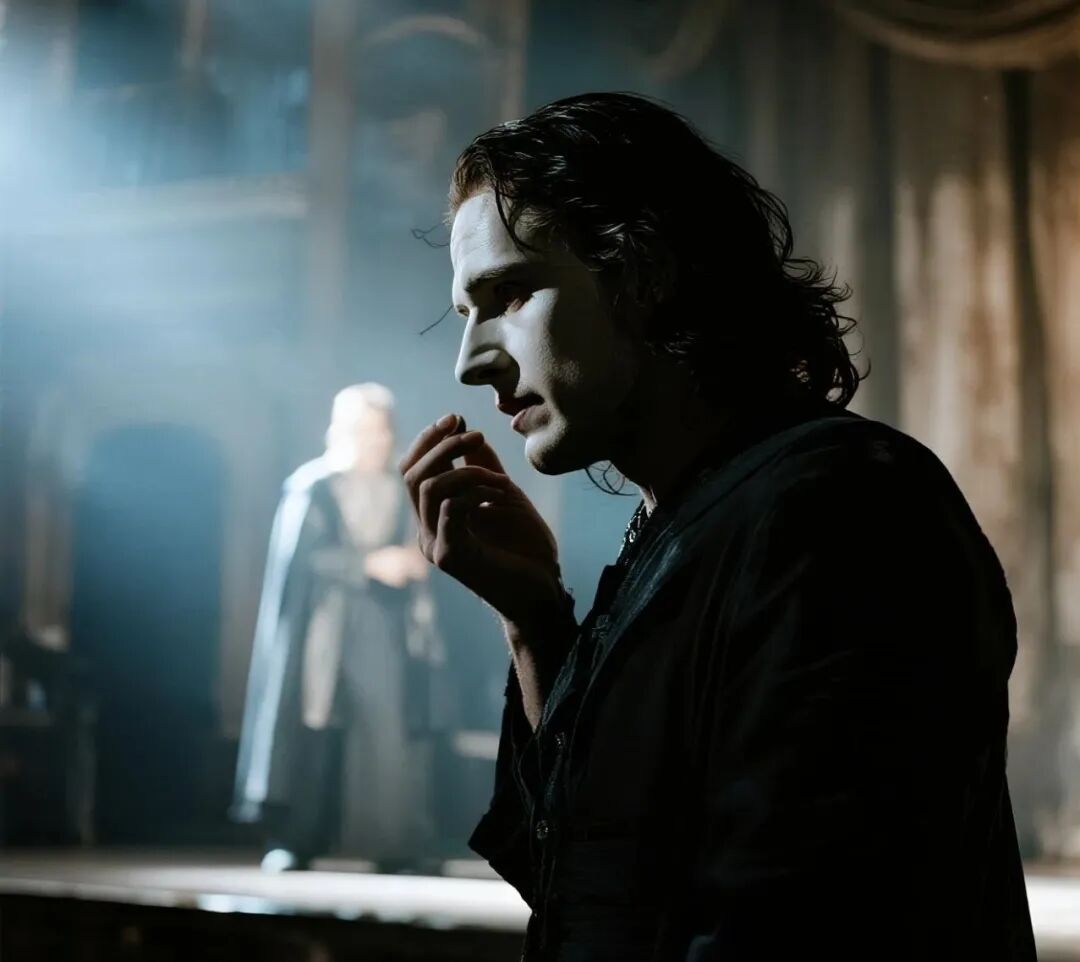
The silence of analysts: By refusing to act as a "big other" who provides answers and meets demands, analysts are forced to face the truth of their desires. Analysts occupy the position of "the desire to listen", not "the subject of knowledge".
(a) Payment rules: The stripping of analytical relationships from the realm of "love" or "friendship" becomes a symbolic contract, marking the limitation of time and the seriousness of the exchange.
Theatrical device: Miguel (M) responded with a theoretical (reconstructed) version of Regnault (R): "The theatre's device is as sophisticated. It includes the division of the stage from the audience (la scène et la salle), the setting of the `fourth wall', the ceremony of darkening the light, the distinction between actors and roles, and the observance of the script (the law of the big Other). Core elements
Stage/audience segmentation: This creates a clear line, similar to the setup of the clinic, which delineates a space for "play" or "experiment". The viewer's "seeing" and the actor's "seeing" form the basic path of desire.
Lights darken: this is a symbolic act that marks a shift from everyday reality to dramatic reality. It requires the audience to put aside its daily defence mechanisms and enter a special "suspension of trust".
Distinction of actors/roles: As detailed in chapter I, this division structure is at the heart of the dramatic device. It allows the central truth of the psychoanalysis of "substantiation" to be publicly displayed.
Regnault(R) summation (reconstructed): "So we can see that the theatre and the clinic are artificially constructed `espace vide'. Through a series of rules, they create an area that makes "spoken" essential. In both places, what matters is not what happens `real', but what is said and how is said."
Section II: Shared approaches - listening to "outside"
If the two practices share a similar structure, they share a similar methodological theory, that is, a special "hearing" approach.
Analyst listens: the interpretation (reconstructed) of Regnault (R): "The analyst listens, not the apparent meaning of the analyst's words. He listens to the cracks, contradictions, mistakes, repetitions and silence in his words. He's concerned about "le signifiant" rather than "le signifié". Because it's precisely in these `impairments' of the language that unconscious desires are revealed. The analyst's question is not "What do you mean by that?" It's "Why do you say that at this point?"
Director/audience's "Listening": Miguel (M) and Regnault (R) Consensus (reconstructed): "A good director does the same thing in rehearsal. He listens to the actors, but pays more attention to their rhythm, sound, pause and breathing. He's listening to actors' `full words' and to the flow of desires. Similarly, a profound audience, who watched the drama, did not follow only the story. He would feel the tension behind a line, notice a deep silence, and think about why a role used a word repeatedly. He is conscious of a `symptomal reading'."
Thus, both analysts and directors/audiences play a role as "explainers". But this interpretation is not to provide a final and correct meaning, but rather to mark the moment when the meaning breaks, so that the truth of the subject itself emerges in those cracks.
Section III: Shared ethics - loyalty to your desire (L'éthique du désir)
In the end, Regnault raised the commonality of theatre and psychoanalysis to the ethical level. He quotes Lacan ' s famous assertion in his seminar on the ethics of psychoanalysis.
Regnault(R) argues in ethics (reconstructed): "The only ethics of psychoanalytic analysis presented by Lacan is: `Don't give in to your desires'. This is not to say that it is to indulge all its willful impulses. Rather, it means that a subject should assume the uniqueness and impossibility of its desires and not betray it because of the pressure of society, the demands of others or the desire for peace."
Regnault believes that the great master of tragedy is the purest manifestation of that ethic.
"We look at Antigone." She faces the "le been" of the city law and public interest represented by Creon. But she insisted on burying her brother, which was her desire, linked to an older, family and sacred law. For that desire, she sacrificed her life and crossed the boundaries of the human world. Antigone is the ultimate subject of "not giving in to her desires." Her tragedy is a direct consequence of her ethical behaviour. She has shown us the terrible price of loyalty to her own desires, and some noble beauty inherent therein."
Miguel (M) supplements (reconstructed): "This may explain why these tragic figures, thousands of years ago, can still shake us. Because they played an absolute, uncompromising ethical choice on the stage for all of us who have made constant compromises and given in our daily lives. We are both afraid and obsessed with it."
Conclusion: Theatrical as "another psychoanalytic"
So, Theatre and Psychoanalysis accomplished its mission. It does not simplify psychoanalysis into an external tool for "coding" theatre, nor does it use drama as a simple illustration of psychoanalytic theory.
On the contrary, in this equal and in-depth dialogue between Regnault and Miguel, the theatre itself was revealed as an autonomous "analytical practice" parallel to psychoanalysis.
(a) If psychoanalysis is at the individual level, help subjects to face the truth of their unconsciousness and desire through "spoken words"
Theatricals are then presented collectively, through "mise en scène", to bring the audience of the whole community together to face the fundamental structures of the existence of human subjects - divisions, desires, encounters with the real world, and ethical dilemmas of loyalty to their own desires.
Theater has become a public "dialogue room". Here, each and every one of us is invited to watch the "analytical process" of "others" (roles) and, in the process, to look at our desires and existence. Regnault's dialogue with Miguel finally proved that both of the whispers on the couch and the shouts on the stage point to the same deep anthropological truth: we are made up of words, driven by desire, and fought and reconciled with this force that drives us all our lives.
Chapter VI: CONCLUDING COMPREHENSIONS - METHODOLOGY OF DIALOGUE AND THEOLOGICAL FACILITIES OF LONO
The purpose of this chapter is to put an end to our introspection of Theatre and Psychoanalysis. We will make a final synthesis from two levels: first, an analysis of how the form of "dialogue" itself becomes a unique method of producing knowledge; and, secondly, a systematic streamlining and integration of the coherent and sophisticated set of theoretical tools of psychoanalysis used by Regnault in responding to Miguel's practice.
Section I: Dialogue as a methodological approach to knowledge production
The most important feature of Theatre and Psychoanalysis is its "dialogues". This form is not an accident; it itself reflects a profound methodological theory that perfects the clinical context of psychoanalysis.
The role of Miguel: the "questioner" of practice and the "symptomatic" provider in this dialogue, Jean-Pierre Miquel played a role more than just a questioner. Structurally, he plays a role similar to that of "l'analysant" in psychoanalysis. He brings with him not theoretical questions, but non-theory "symptôme" from the dramatic practice of this "real world".
Miguel's typical question-and-answer mode (reconstructed): "At the rehearsal, I encountered an irresolvable contradiction: I asked the actor to be honest, but the greatest actor showed cold technology..." or, "What should we do? These problems, like the "symptoms" that analysts bring to their lives, are specific, confusing and seemingly inexplicable. Miguel's work is to faithfully present these "raw materials" from practice, thus providing a solid anchor for theoretical intervention. His presence ensures that the entire dialogue does not slide into empty, disconnected theoretical thinking.
The role of Regnault: "analyst" and "explainer" of the theory
"François Regnault has assumed the role of "l'analyste". In the face of Miguel's symptoms, he did not provide a simple "answer" or "solution". Instead, he provided a completely new "depreciation framework" (cadre d'interprétation), the psychoanalytic theory of Lacan.
Regnault's typical response model (reconstructed): "This `controversial' you call is precisely not a problem to be solved, but a truth to be recognized. That's exactly what Lacan said about the "substantiation" or "the seemingly ruinous `joke field', which is actually a `real world' piercing' of the `symbolism', which reveals a deeper truth than the dramatic illusions..." Regnault's job is to help Miguel (as well as his readers) read the familiar drama. He repositioned an issue that appeared to be "technical" or "psychological" as a "structural" problem concerning the existence of the subject. His interpretation is not intended to eliminate "symptoms", but to reveal the truth behind "symptoms".
Knowledge production: the gap between "practice" and "theory" Medium
Thus, the knowledge of the book is not exported unilaterally by Regnault, but is produced in the tense "l'intervalle" between Miguel's "question" and Regnault's "reconstruction". In Miguel's specific case, Regnault was forced to translate abstract Lacan concepts (e.g. "objet petit a", "big Other") into "physicalized" and "situational". In turn, the Réunion ' s theoretical framework has given Miguel an unprecedented depth and universality of daily experience. This sustained movement of the past constitutes the core of the book ' s charms and intellectual dynamism.
Section II: Complete doctrine (L'appareil théorique) deployed by Leno
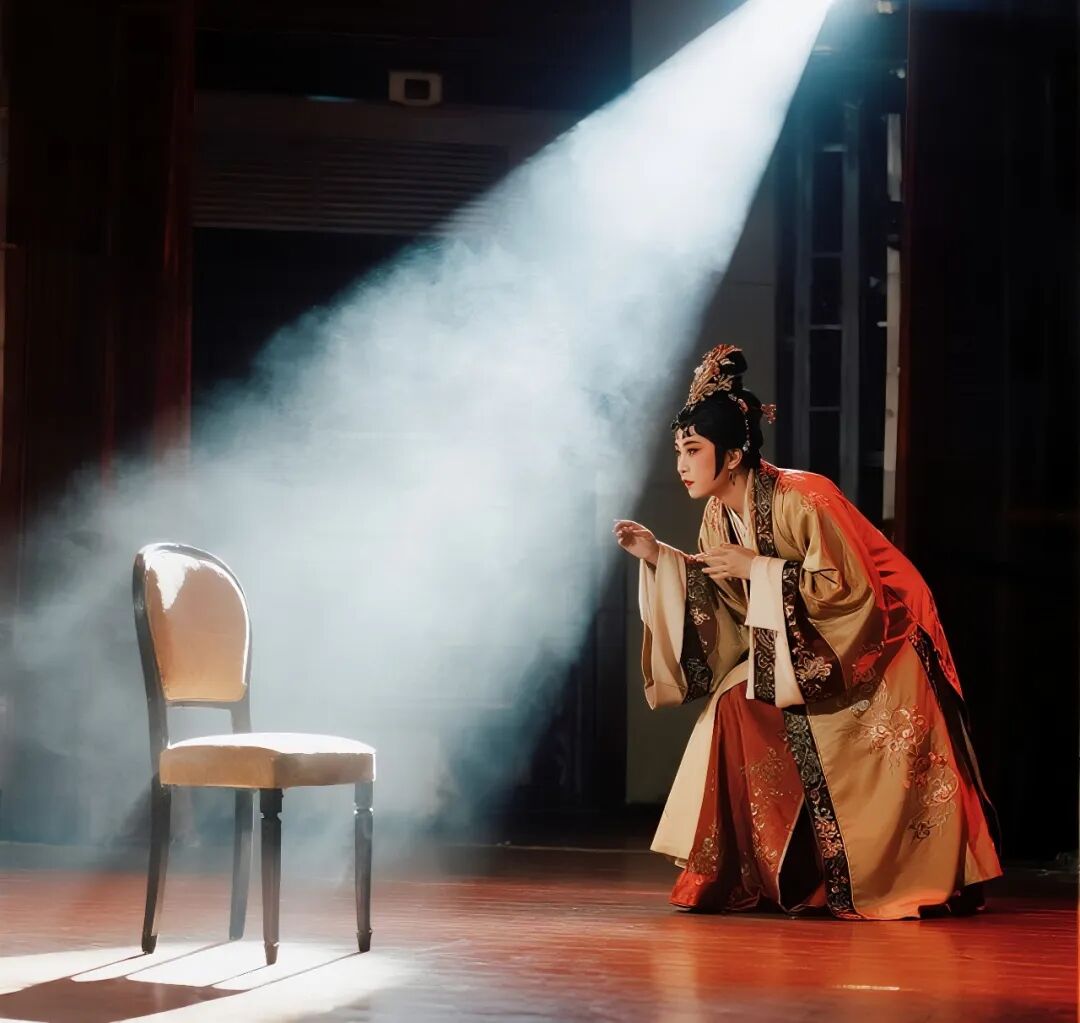
Now, let us systematically integrate the theoretical tools that Regnault has scattered throughout the dialogue into a coherent analytical device. The device could be considered as a complete set of "surgery devices" that he provided for the theatre study.
1. Core body theory: All phenomena in the theatre world of the three-tier framework (Le cadre des trois registes) are located in the three-tier system of Lacan.
Imaginaire: This is the realm of mirrors, integration, identity and misperception.
The drama is reflected in the most direct emotional resonance of the audience with the role; the myth that actors are trying to "get together" with the role; and the illusion of reality created on the stage. It's the most sensory surface of theatre.
Symbolic community (Le Symbolique): this is the domain of language, law, structure, social norms and the "big Other".
The drama is reflected in the text of the script itself (the law of the big Other); the programming and practice of the theatre; the tragic conflict between urban and family law; and the audience's endorsement of the role as "signal location". It's the skeleton of the drama and order.
The real world (Le Réel): This is an area of trauma, impossible, unsigned kernel, meaning collapse.
The drama is reflected in: the physical reaction of the actor, either by mistake or out of control; a scream that goes beyond words (the voice is objet petit a); the truth that cannot be sustained at the height of the tragedy (such as the discovery of Oedipus); and the absolute presence of death. It's the ultimate source of theatre power. It's the "empty hole" that shakes the subject.
2. Core actors: the divided body (Le sujet divisé, $) is the centre of the whole device. Both actors and viewers are understood to be fundamentally divided.
Actors: It's the division between the subjects of speech and the subjects of speech.
Audience: The divide between "I" who was caught up in the scene and "I" who maintained a real identity in the theatre.
Theatrical characters: the division between their conscious words and deeds and their unconscious desire to drive their actions.
Core dynamics: What drives this device?
Desire (Le Désir): defined as a permanent, structural deficiency, which is essentially the desire of the big Other.
In theatre: it constitutes the fundamental driving force of the plot. The man's actions are all his attempts to answer the question "Che vuoi?" (What does he want from me?
objet petit a (L'objet petit a): the cause of desire, not the target. It's the "remnant" that ignites desire and cannot be captured.
In theatre: it appears in non-material forms, such as le regard and la voix, as bait to capture the desires of the audience, directly affecting the audience more economically than economically.
La Jouissance: A painful pleasure beyond the "principle of happiness". It comes from the violation of taboos and contact with the "real world".
In theatre: it is the true effect of the tragic "purification". The dizziness and shock that the audience feels when it sees the symbolic breakdown of order is a kind of "happy".
4. Core media: How does La Parole work? By "speaks".
Full speech vs. empty speech: Distinguishing between a language that simply conveys information and a language that creates reality in which the subject gambles.
The essence of the dramatic performance is to transform the text, a static "Langue" system, into a dynamic, desire-bearing "parole" event.
Final summary: a profound drama.
Through this complete theoretical device, François Regnault, in his dialogue with Jean-Pierre Miquel, finally built a profound, structural and dramatic phenomenon. It is no longer concerned with what the theatre "simulates" or contented with psychoanalysis of people.
It asks
How does this "device" construct the subject matter?
How does desire be produced and moved in this device?
How was the audience captured by this device and, ultimately, in encounters with the "real world", to experience a major re-engineering of its own?
Read about
P4 Inputs to dental poetry: Preliminary interpretation of dark conceptual theory
Final Summary: A Profound Phenomenology of Theater
Through this complete theoretical apparatus, François Regnault, in dialogue with Jean-Pierre Miquel, finally constructs a profound structuralist phenomenology of theater. It no longer asks what theater imitates, nor is it satisfied with psychological analysis of characters.
It asks
How does this device called theater construct subjectivity?
How is desire produced and staged within this device?
How is the spectator captured by this device and finally, through an encounter with the Real, made to undergo a reconstruction of subjectivity?
Further Reading
P4 Submission | Fang Poetics: A Preliminary Interpretation of Dark Conceptual Theory
If you would like to submit work or exchange ideas, please add Jizhang on WeChat.