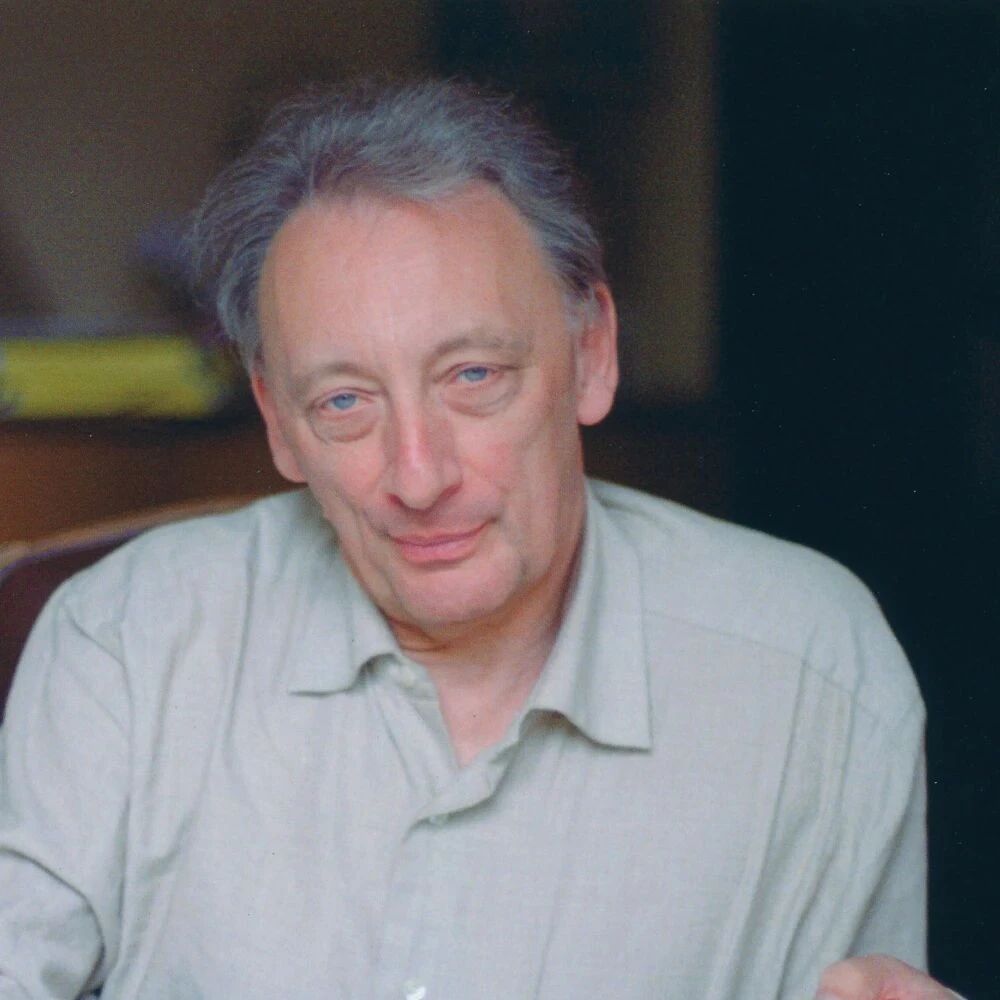
François Regnault occupies a singular place in contemporary French thought. He is a true passeur, a figure who ferries ideas across domains. His work moves through philosophy, psychoanalysis, theater theory, and art criticism; to understand him, one has to begin from all of these levels at once.
I. Core Identity and Background
François Regnault, born in 1938, belongs to the golden generation of French intellectual life and is one of its important witnesses. His identity is unusually composite.
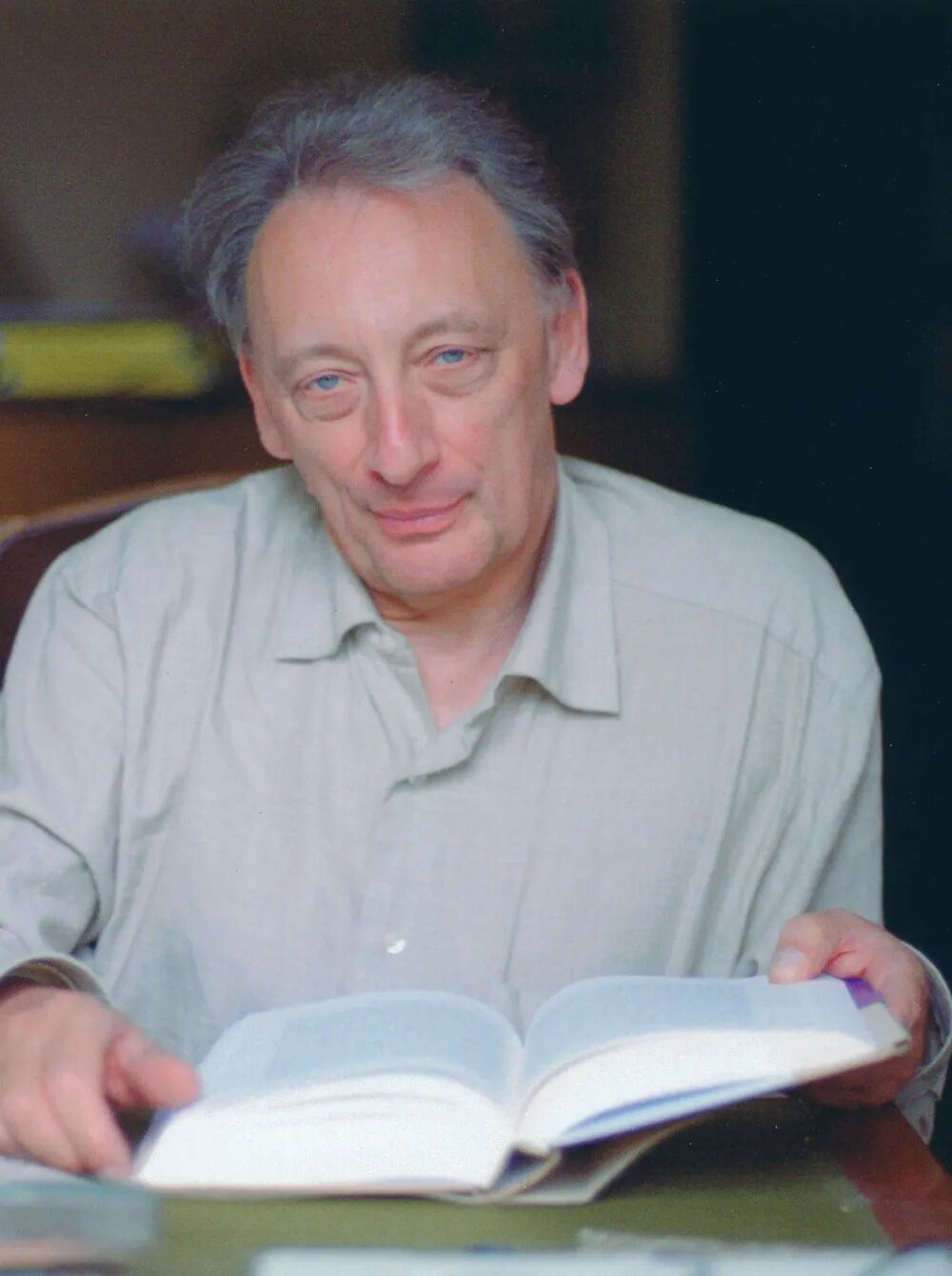
Philosopher: he graduated from the École normale supérieure in Paris, the cradle of many French thinkers, and studied with Louis Althusser. His classmates and contemporaries included Jacques-Alain Miller and Alain Badiou, which gave him a deep philosophical foundation.
Lacanian psychoanalyst: he was a direct student of Jacques Lacan and became one of the most important interpreters and transmitters of Lacan's thought. After Lacan's death, he co-founded the École de la Cause Freudienne with Jacques-Alain Miller and taught for many years there and in the Department of Psychoanalysis at the University of Paris VIII. He is a central figure in Lacanian psychoanalytic teaching.
Theater theorist and practitioner: this is what distinguishes him from many other Lacanian analysts. He did not only write theater theory; he also worked for a long time as a dramaturg and theater adviser at the Comédie-Française and the Théâtre National de Chaillot, collaborating closely with major directors such as Patrice Chéreau and Brigitte Jaques-Wajeman.
His entire intellectual career builds bridges between these three identities, using the tools of one field to illuminate the problems of another.
II. Major Works and Intellectual Dimensions
His writings and thought can be approached through three main fields.
A. Lacanian Psychoanalysis: Interpreter and Teacher
In psychoanalysis, Regnault is not primarily an original system-builder like Lacan. He is an exceptional interpreter, historian, and teacher. With a style that is clear, rigorous, and literary, he makes Lacan's difficult theory intelligible and connects it to broader cultural and philosophical contexts.
God Is Unconscious (Dieu est inconscient, 1986)
Core content: this is one of his best-known psychoanalytic works. The title itself is a provocative Lacanian proposition. In the book, Regnault explores the deep relation between theology and psychoanalysis. He argues that ancient theological questions, such as the existence of God, omniscience, and love, are in fact ways of dealing, at the level of the unconscious, with the human subject's relation to the big Other.
Close reading: he compares the God of philosophers such as Spinoza and Pascal with Lacan's concept of the big Other, showing how the signifier God functions as a tool through which the subject tries to fill the lack of the big Other. Belief in God is therefore structurally close to belief in the existence of the unconscious. The book shows how Regnault uses the history of philosophy to illuminate psychoanalytic concepts.
Notre objet a (2003)
Core content: this book gathers lectures on one of Lacan's most central and difficult concepts: objet petit a. Regnault does not proceed through pure abstraction. He shows how objet petit a works as the cause of desire (cause du désir) through clinical examples, literature such as Proust, art, and details of everyday life.
Close reading: he explains the forms of objet petit a, including the gaze, the voice, the breast, and feces, emphasizing that it is not the concrete thing we pursue, but the remainder that drives pursuit, the gap that can never be fully captured. This is an excellent entry point into objet petit a and shows Regnault's strength as a teacher.
Lacanian Aesthetics Lectures (Conférences d'esthétique lacanienne, 1997)
Core content: this book applies Lacanian theory directly to art analysis. Regnault systematically addresses the gaze, the voice, space, representation, and other aesthetic questions from a psychoanalytic perspective.
Close reading: he distinguishes seeing from the gaze. We look with our eyes, yet we are always captured by a gaze behind the image, and this gaze is one form of objet petit a. From Velázquez's Las Meninas to modern art, he analyzes how artists manipulate this gaze in order to establish a relation with the viewer. The book is a model of Lacanian art criticism.
B. Theater Theory and Practice: Theorist and Dramaturg
Regnault's theater studies are the most original part of his intellectual system. He uses psychoanalysis, especially the theories of desire, the subject, the gaze, and language, as a sharp instrument for anatomizing theatrical art.
Le Spectateur (1986)
Core content: this may be his most important work of theater theory. It overturns the author- or director-centered viewpoint of traditional theater theory and focuses instead on the spectator. Regnault asks: what does the spectator do in the theater? What does the spectator want?
Close reading: for Regnault, the spectator is not a passive receiver but the subject through whom the performance is completed. The spectator's desire, identification, and gaze constitute the essence of the theatrical event. The performance unfolds onstage, but the real drama happens in the spectator's unconscious. Using Lacan's theory of the subject, he analyzes how spectators construct subjectivity through identification with roles, and how they are captured by the spectacle onstage. This is where the gaze operates.
The Unheard-of Doctrine: Ten Lessons on Molière's Theater (La Doctrine inouïe. Dix leçons sur le théâtre de Molière, 2002)
Core content: this is Regnault's deep reading of the French classical comic master Molière. The title suggests that beneath Molière's laughter, mockery, and theatrical energy lies a doctrine of desire, law, social order, and the Name-of-the-Father.
Close reading: Regnault argues that Molière's comedies revolve around the challenge to, and reconstruction of, paternal authority. Tartuffe in Tartuffe and Harpagon in The Miser are variants of the father figure: either deceptive false fathers or failed fathers devoured by desire. The ending of comedy often restores order through the arrival of an external true father who represents royal power. This reveals how the symbolic order of classical society depends on the efficacy of the Name-of-the-Father.
Collaborations with Directors
His work as a dramaturg was the practical field of his theory. In rehearsals of Marivaux and Shakespeare with Patrice Chéreau, for example, he analyzed the characters' language, flows of desire, and relations of power from a psychoanalytic perspective, helping directors and actors find the deeper unconscious logic behind action. What mattered to him was the unsaid beneath the lines.
C. Philosophy and Political Thought: Between Althusser and Lacan
Regnault's early thought was deeply shaped by his teacher Althusser, especially by the analytic methods of structural Marxism. He was one of the core members of Cahiers pour l'Analyse, a major intellectual site of the 1960s that tried to bring together Lacanian psychoanalysis, Althusserian Marxism, and Foucauldian history.
Work in Cahiers pour l'Analyse
His essays there, including discussions of logic and dialectics, show his rigorous philosophical training. He tried to analyze conceptual structures in the history of thought through formal methods, echoing Lacan's attempt to mathematize Freud's theory through mathemes.
The Century of Psychoanalysis (Le Siècle de la psychanalyse, 2006, with Alain Badiou and Élisabeth Roudinesco)
Core content: in this famous debate, Regnault firmly defends the singularity and contemporary value of Lacanian psychoanalysis.
Close reading: facing Badiou's philosophical critique of psychoanalysis as anti-philosophy and Roudinesco's historical framing, Regnault emphasizes that psychoanalysis is not a worldview or a philosophy, but a unique practice (praxis). It deals with the traumatic kernel of the Real within language. Its vitality lies precisely in the fact that it does not provide universal answers, but makes each subject face the singularity of their own desire.
III. Intellectual Style and Core Features
Interdisciplinary synthesis: Regnault's greatest feature is his ability to move freely between philosophy, psychoanalysis, and art, building insightful connections among them. He can explain Lacan through Spinoza and analyze Molière through Lacan.
Clear and rigorous exposition: unlike many French poststructuralist thinkers known for opacity, Regnault is marked by logical clarity and precise language. He is an outstanding teacher who can patiently unfold complex concepts.
A close relation between theory and practice: especially in theater, he is not an armchair theorist. His long experience in rehearsal rooms gives his theory practical texture and life.
Sustained attention to the object: whether Lacan's objet petit a, a stage prop, or the artwork itself, Regnault remains interested in the object that triggers desire and captures the gaze.
Faithful to Lacan without blind repetition: all his work is rooted in Lacan's teaching and devoted to transmitting and extending Lacanian thought. Yet he does not simply repeat Lacan. With his own learning and especially his theater practice, he expands the field in which Lacanian thought can operate.
François Regnault is difficult to classify. He is both one of Lacan's most faithful messengers and one of theater's most penetrating readers. His legacy lies in showing, with great force, that Lacanian psychoanalysis is not a closed set of clinical techniques, but a powerful tool of cultural analysis, capable of illuminating fields from theology to aesthetics, from classical tragedy to modern life. For anyone who wants to understand Lacanian thought, especially its use in the humanities and the arts, Regnault's work is an indispensable treasure. He is a true passeur, linking the analyst's clinic, the philosopher's study, and the theatrical stage.