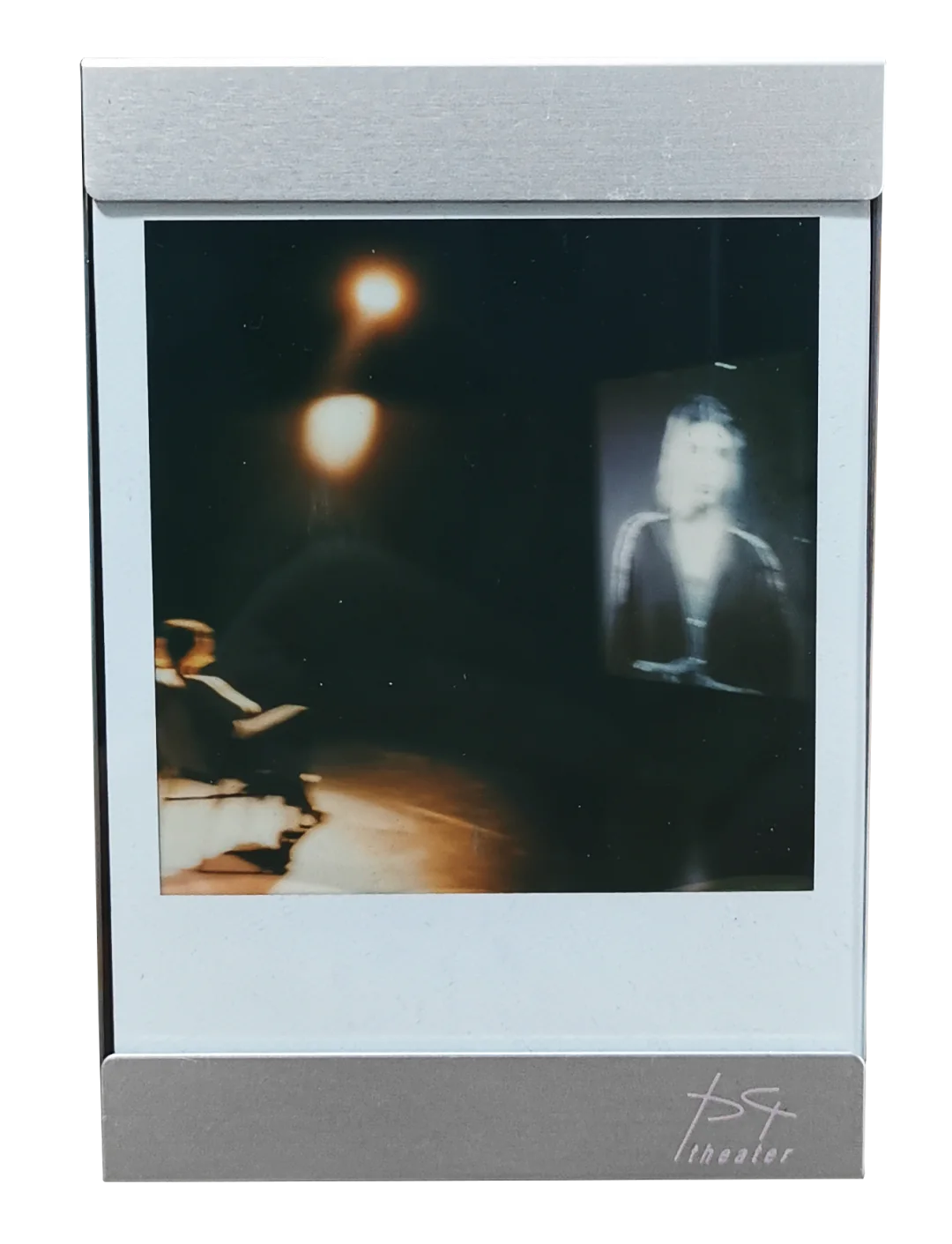
When we ask the question "Who am I" we will be aware of its complexity: it includes not only what we are today, what we are and what we are in the future, but also what others think and demand of us, and who I am (should) in the eyes of others. All of them impose uncertainty on "who I am". How can you get close to the most real yourself? Do we really know who we are? Are we willing to face our truth? P4 Theater "Real Image" allows me to think about these issues, not just by filming, but by re-perception. I, Evelyne, a Belgian student from the Theoretical Department of the Faculty of Fine Arts of the University of Tsinghua, participated in the P4 Theater "Real Image" project, which today shares my personal experience.
Before filming
I felt very nervous on that day, and I tried all my clothes on and looked for the way I thought I was dressed. In the course of this constant change of clothes, I suddenly felt that none of my clothes fit. While the filming had not yet started, the preparatory process was still important, and unconscious was actually in the project. I'm looking for a better look at myself when I pick out my clothes, and I'm avoiding showing the truest of myself. How can you show a better look through clothes? What kind of clothes would make others feel better about me? How do you cover up where my body isn't perfect? Self-made self-confidence, fear and pressure have a significant impact on the first steps of the project.
Step 1: How?
After walking into P4 Theater, the photographer poured me a glass of water and analyzed the first part of the project. When the project formally began, he asked me a few questions. I did not answer the questions he asked, and I wondered if my answer was interesting. What kind of person would he think I was? What's the most appropriate answer? The desire to show the best looks put a lot of pressure on me, and the answers to what the other person wanted were always in my head. He was also aware of my mentality, and under his guidance I began slowly to lay down my mask and begin this conversation with my truest feelings, beginning with the mood of the day, the fear, the desire and the expectation to film, and the slow sharing of memories and experiences that I had been afraid to face. By saying what has happened in the past, I realize that my past does not define what I look like today, but it still has a great impact on me today. When sharing these with another person, there is a very special experience in which trust between two individuals creates a different sense of security and freedom, leaving me free to disguise and protect myself. This space to explain and analyse my memories has made me aware that the pressure of normal times, restrictions and the sense of distance from others have disappeared. When your heart calms down, the first step ends. Walking into black space means the beginning of the second step.
Step 2: Collision and communication with subconsciousness
When I walked into the black camera, I saw the camera light in the middle of the stage, the roses on the small table on the left, and suddenly I felt like I could forget the outside world. After sitting down at the small table, we summarized how we felt about the first step and he gave me a few of the most impressive words. Next, the photographer made me stand in front of the camera. The moment I was looking at the camera, all my worries, the tension, the expectation of filming came back. My face, all the muscles in my body, was so tense, the only thought in my head was how to get the best results. This emotional change suggests that it is not so simple for the real person in front of the camera that it is easy to customarily return to normal tension. The photographer apparently discovered a change in my mind, so he began to ease my emotions in a number of ways: Guided me to close my eyes, let me begin to adjust my breathing, let me focus on my breathing and every part of my body, and play the easy recordings of nature. Shortly afterwards, the photographer began to describe some of the images, to guide me in my mind to imagine them, and to free me from the feelings and emotions behind them. And that's when I can feel myself colliding and communicating with my unconscious, and I feel like I'm living in my own world, even though there's a photographer guiding me, and I can really ask myself: Why am I so nervous? Where does the demanding of being too harsh come from? Did I shoot for myself or for the others? Why don't I face the most real myself? Can I face my imperfect self? In a moment, it suddenly felt free: although I had no answers to those questions, I found myself able to face all the emotions of this moment and to accept and understand them. At this moment, the photographer made me open my eyes and face the camera. I feel like the whole person and body are getting lighter. At this moment, the demands of others and of themselves have disappeared, and at this moment it is only me, the photographer and the camera.
When the photo is taken, the experience ends. I am no longer concerned about the effects of the photograph, because it is not a photograph, it is a record and proof of the process. In other words, it's a new perception of itself.
♪ And dream into reality ♪
Two men's play.
Goodbye.
"I'm watching."