The aesthetics of the event: a comprehensive analysis of Erica Fischer-Lisht ' s Power for Change in Performing '
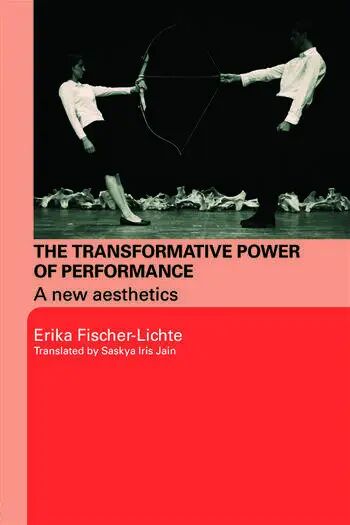
Erika Fischer-Lichte ' s book The Changing Power of Performance: A New Aesthetics is a landmark in contemporary theatre and performance research. The book was first published in 2004 in German, Ästhetik des Performativen, and was translated into English in 2008 by Saskya Iris Jain, published by Routledge. This book systematically introduces a new theoretical framework aimed at replacing the traditional aesthetic paradigm, centred on shifting the focus of analysis from stable, interpretable art "work" to mobile, co-generated and unpredictable "events". Through this theoretical shift, Fisher-Lisht has not only provided a powerful analytical tool for understanding the pro-theatre, behavioural arts and cultural performances of the 1960s, but has further reshaped the theoretical landscape of performing research. The purpose of the present report is to provide a comprehensive and in-depth analysis of the core arguments of the book, theoretical mechanisms, analysis of key cases and their academic impact.
Part I: Basis of performing aesthetics
The opening part of the present report will first establish the core paradigm shift proposed by Fischer Licht. From the point of view of giving "events" precedence over "works", it goes back to the historical and philosophical soil rooted in this new aesthetic institute, the "performative turn", thus building the very foundation of the entire theoretical edifice.
From work to events: proclaiming a new paradigm
Fisher-Lisht's theoretical revolution began with a fundamental assertion that performance should no longer be seen as a stable, interpretable work of art, but must be understood as an event that was fundamentally accidental, short-lived and co-created by the participants. This idea marks a break with the traditional aesthetic theory, which is deeply embedded in interpretation (reading the meaning) and symbolism (research of symbols), and is analytically premised on a static and re-examined object.
Fisher-Lishit raised behavioural art to the same level as traditional art, thus heralding the birth of a "new aesthetic". The focus of analysis is no longer what it means, but what it does to the participants. This new aesthetic paradigm emerges from the 19th century realism-psychological drama's attachment to "recurrence". The value of a performance is no longer derived solely from its reproduction of a script or fictional role, but rather from its own material and interactive nature.
The essence of the performance of "events" is that they are short-lived, interactive, and decomposition of a series of traditional dualist rivalries, such as the blurring of boundaries between artists and viewers, physical and mental, artistic and life. It is a process of "brings forth itself" whose trajectory cannot be fully predicted or controlled. This shift from a "work" to an "event" is not simply a terminological change, but a fundamental reshaping of the performance body. It shifts the performance from a "object" for retrospective analysis to a "experience" that requires an epidemiological understanding in its instantaneous development. Traditional aesthetic theories, whether derived from painting, sculpture or literature, require a stable "work" to be analysed. However, the nature of live performances is short and non-replicable. Therefore, applying analytical models based on work to performance is itself a fallacy of scope. The theoretical contribution of Fisher-Lisht lies in her attempt to construct an aesthetic theory - derived from the performance of herself - rather than applying it to other disciplines. By defining performances as "events", she has internalized the theoretical framework and the fundamental attributes of the media. The far-reaching effect of this shift is that, if performance is an event, the object of artistic criticism is no longer to judge a finished product, but to witness and analyse a dynamic process.
Positioning "activate shift"
Fisher-Lisht's theory does not emerge in a vacuum, but is rooted in a broad intellectual context - the "actural shift". This term describes a broad paradigm shift in intelligence that has taken place since the mid-twentieth century across the humanities, with the core shifting from a focus on "re-emergence" to a focus on actions, processes and events. It is this intellectual climate that makes it possible and necessary for Fisher-Lisht's "new aesthetics".
The spectrum of the theory can be traced back to J.L. Austin's speech-act theory, which considers language not only to describe the world, but also to do something. This concept was subsequently further developed in the gender study of Judith Butler, which defined gender as a series of programmed and repeated physical behaviours. Fisher-Lisht focused her analysis on the profound aesthetic changes that had taken place in the visual arts, music and theatre since the 1960s, which she saw as a key catalyst for her theory. During this period, the rise of "happenings", "fluxus" and behavioural arts directly challenged the status of traditional art as a static object, moving the body, action and live experience of artists to the front desk.
Fisher-Leisht's unique contribution to the "activity shift" is that she advocates performing aesthetics aimed at redefining traditional dualism (e.g., subject/observer, observer/observer) and treating drama performances as a "living event" rather than a symbol text awaiting decode. She even traced this shift back to the creation of ritual research and drama at the turn of the twentieth century, giving it a far-reaching historical spectrum. This series of discussions reflects the theoretical ambition of Fisher-Lisht: Rather than simply borrowing a popular term, she was strategically repositioning the concept of "performance". Although she acknowledges its roots in linguistic and cultural theory, she clearly advocates bringing back the discussion of "activism" to the artistic realm. She uses a broad cultural "diversion" to provide legitimacy for a particular "actural aesthetic". By the 1990s, the term "performing" had become pervasive in many disciplines, leading to some generalization and dilution of its meaning. Fisher-Lisht, by anchoring analysis firmly on specific artistic events, is actually taking back the interpretation of this core concept for performing research. She argued that theatre and behavioural art were not only cases of "activity", but also of privileged areas where the logic of practice was most fully demonstrated and understood. This theoretical intervention made her work the foundation for the revitalization of art-centred performing research.
Comparative framework: dramatic aesthetics vs. performing aesthetics
In order to shed more light on the revolutionary nature of Fisher-Lisht's theory, the following will be a comparative framework that will systematize the fundamental differences between traditional theatre aesthetics and the performing aesthetics that she advocates. This table is not only a summary of the content, but also an instructive analytical tool, which concretizes an abstract theoretical argument and makes its structural logic clear.
Features
Traditional theatrical aesthetics.
Fisher-Lishit performing aesthetics.
Core Object
Drama text; finished works of art.
Live, short performances.
Audience Role
Explainers; passive receivers of meaning.
Co-creaters; active participants in feedback cycles.
Meaning Generation
The interpretation of symbols and symbols.
"Emergence" through sensory experience and interaction.
Acturing-watching relationships
He was separated by a "fourth wall" (repeated).
Joint physical presence; direct, unpredictable interaction.
Timescale
Repetitible; pursuing consistency in different arenas.
It cannot be repeated; it is fundamentally dependent on "here and now".
Core focus
What does acting mean?
What did the show do to the participants?
Experience Mode
Aesthetic distance; wait.
Participation; threshold experience.
Physical status
It represents the ability of a role.
The physical presence of the phenomenon; the place of the incident.
The logic behind this form is that Fisher-Lisht's theory was established by "activating a series of false dualist rivalries". The tables are the most effective way to present this duality and show how the new paradigm systematically subverts the old paradigm. By combining the concepts of "passive receivers" with "active co-authors", "repeat" and "co-prevent", the form condensed the core of a 240-page complex writing into its essence. This provides a clear and memorable framework for readers to better understand the more detailed discussion of the follow-up to the report, as it provides a conceptual map for exploring the whole book.
Part II: Engines for performing: self-generated feedback loops
This section will explore in depth the core mechanisms of the Fisher-Lisht theory. It aims to explain how a performance event is generated and sustained through dynamic, self-regulating interactions between the performer and the audience. This mechanism has been named "Autopoietic feedback loop".
Shared body, shared space: the principle of common presence
The cornerstone of the Fisher-Lisht theoretical system is the basic fact that actors and viewers must be gathered together at the same time. This is not a irrelevant logistical detail, but rather a theoretical basis for the performance.
The performance took place in the "Bodily co-presentation" of actors and viewers. This shared "lifetime" constitutes the medium through which all interactions can take place. This principle fundamentally challenges the concept of the "fourth wall" in the traditional reproducing theatre. In the Fisher-Lisht model, a completely closed fictional world cannot exist, because the reality of the audience's presence has always been a decisive factor in the performance.
Citing the opinion of the dissemination theorist Paul Watzlawick, she argued that "one cannot not not react to the other". Every cough, sighs or diversion of attention from the audience is a perceived event, which is immediately fed back into the performance and affects it.
Deconstruct a self-generated feedback loop
The "self-generated feedback cycle" is the most widely known concept in Fischer-Lisht's work. The term "autopoisis" is borrowed from biology for the purpose of "self-creation" to describe the dynamic, self-generated, unpredictable process that constitutes the performance itself.
The cycle is a "self-indicating and changing" process. This is reflected in the fact that the performer's actions triggered perceived reactions (e.g. laughter, silence, commotion) that were in turn felt by the performer and other viewers, thus influencing their subsequent actions and reactions. Since the cycle is self-generated and immediate, performance events remain, to some extent, "unforeseeable and spontaneous". Its process is extremely unstable and cannot be fully planned or controlled by either party.
The performance is therefore not the implementation of a pre-existing script or plan; it "is produced only in its course". The feedback loop is the process of performing - producing itself. The "stailing on the ground" created by the artist sets the initial conditions for the start of the cycle, while the real "performe" is the unique, non-repeatable event that emerges after the cycle is activated.
Role breakdown: from audience to participant
The most radical consequence of the spontaneous feedback cycle is the breakdown of hierarchical relations between traditionally active artists and passive audiences.
Fisher-Lisht has clearly "activated a false binary between actors and viewers". Audiences are by no means passive receivers; their reactions are themselves part of the performance. All participants "shared responsibility for what is happening". In extreme cases, such feedback cycles can even lead to a complete role swap. The book's analysis of Marina Abramović's Lips of Thomas is the most typical example: the audience finally could not bear the self-inflicted behaviour of the performer and the performance was physically suspended. At this moment, they "returned themselves into actors."
The foreground and experimental theatre since the 1960s has often been consciously used and highlighted the operation of feedback cycles. They have made this mechanism visible through various strategies, such as changing roles, creating temporary communities at performance sites and facilitating physical contact between performers and viewers. Self-generated feedback cycles are not just a descriptive model but a theory of dynamicity. It redefines the dynamics of performance into a distributed, related, emerging force, rather than belonging solely to the author, director or performer. The traditional drama model assumes a clear dynamic level: author creates text, director explains, actor executes, audience receives. However, the theory of feedback loops reveals that each participant is jointly determining the course of events and that no one has absolute control. This means that mobility is no longer an individual attribute, but a product of interaction between individuals. In the performance, the individual "has experienced himself as a subject that is neither entirely autonomous nor entirely determined by others". This view has important political implications: If mobility is relevant and co-created in the performance space, the performance itself becomes a model of a different social and political process - a model based on interaction and shared responsibility rather than top-down control. Thus, the "force of change" in the title of this book is ultimately also a political force.
Part III: Experience of events: materiality and meaning
This section will analyse the focus from event mechanism to event experience phenomenon. It aims to explore how the perceived, material elements of the performance create unique experiences and how the meaning itself is generated in this new aesthetic framework.
Physical performance generation
According to Fisher-Lishit, feedback cycles operate through the production and perception of materiality. The performance experience is essentially physical, sensory, not intellectual, interpretive. She decomposes this materiality into several key components.
The materiality of the performance is represented mainly by three core elements: physicality, spatiality and tone.
• Physicality: the body of an actor's behavioral, physical body - its presence, its energy, its voice and even its scent - becomes the primary focus of audience attention, not just its function as a character symbol.
• Spatiality: the way space is organized and used directly affects relationships between participants and the flow of feedback cycles.
• Sound: This includes all hearing elements - human voice, sound, atmosphere, especially rhythm. The rhythm can "tune" the body of the participant and organise a feedback loop. Fisher-Lisht stressed in particular that rhythm, as an organizing principle, can effectively link materiality to the spontaneous process of circulation.
These material elements are not passive contexts, but "active forces" that can trigger "physical, emotional, energy and motion reactions" on participants. The material nature of the performance itself becomes "a dynamic in the process of the feedback cycle".
The meaning of symbolism has emerged.
This section will address one of the most complex issues in the doctrine: If performance is no longer a text to be read, how does it come about? Fisher-Lisht proposed a "emergence" model.
The meaning is no longer a steady message from the artist to the audience. Instead, it "emerges" in an unstable, dynamic manner during events. In many cases, "the understanding of the artist's conduct itself is far less important than the experience generated by it". The audience's perception is in a constant state of movement, namely, "the perception of multiple stability". Their attention shifts from one focus to another - for example, between the physical body of the actor and the role he plays. It is in this instability and swing that meaning arises.
It is worth noting that, despite the highly subversive nature of this theory, some critics have pointed out that, in its analysis, Fisher-Lisht, when deconstructing events into components such as physicality, spatiality and exploring their relationship, ultimately returned to some extent her theory "incorporated" into a "symmetrical framework in a broad sense". This critical perspective adds the necessary academic depth to the understanding of its theory. Fisher-Lisht's theory of meaning is inherently anti-gooscentric. It challenges the supremacy of the language and the text that have long dominated Western theatre theory, and instead places its meaning in physical, sensory, emotional experiences. Traditional dramas are text-driven and are mainly written by playwrights. The emphasis on materiality by Fisher-Lisht has consciously shifted the core of the experience to the non-linguistic level: to feel the energy that a choir conveys, to react instinctively to a painful body, or to a sense of unity brought by a common rhythm. She also pointed to the difficulty of translating these "speak images, fantasies, memories... feelings and emotions" into language after the fact. Her theory therefore promotes a physical, emotional knowledge and meaning that exists before or outside language. This brings her work into line with broader academic thinking, such as thesis, emotional theory, and poses a major challenge to purely interpretive or symbolic analysis.
Part IV: The power of change in practice: analysis of key cases
This section will place abstract theory in a specific analysis, focusing on the key cases in which Fisher-Leisht built and explained his arguments. These cases are not simple illustrations of the theory; they are the phenomena from which it is derived.
Abramović case: Thomas' Lips as a threshold crisis
This section will provide a multidimensional analysis of Marina Abramovich ' s 1975 behavioural works as a core example in the book. The show was the crucible of testing all the core concepts of Fischer Licht.
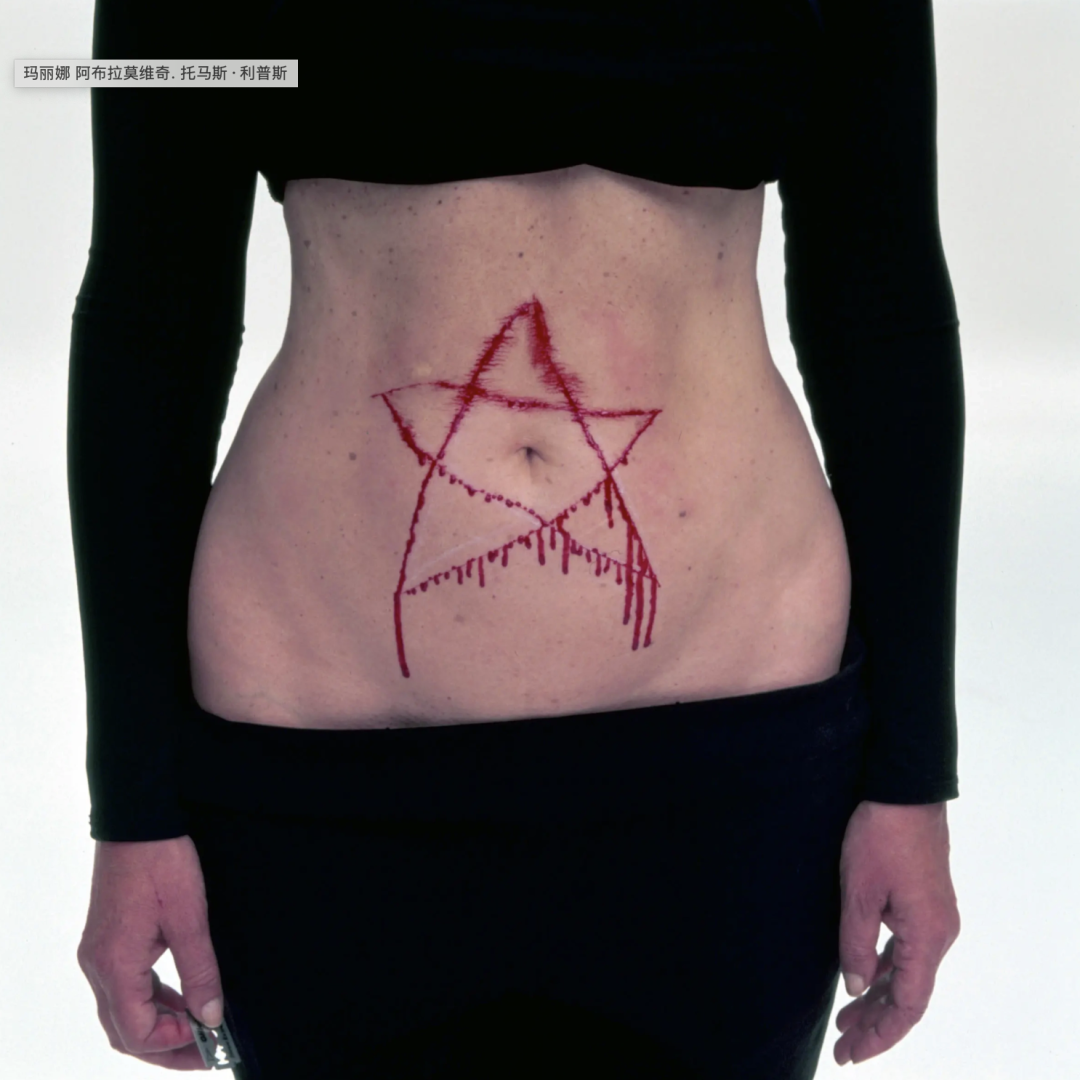
According to a vivid description in the book, the performance included: Abramovich eating a kilo of honey, drinking a liter of red wine, cutting a pentacle star out of his abdomen with a blade, whipping himself and finally lying naked. On an ice crucifix until the audience can't bear to intervene. The power of this performance stems from the fact that it creates a situation in which the audience "suspends between art and the norms and rules of daily life, between aesthetics and ethics". They are faced with an inescapable choice: to continue watching as an artistic audience or to intervene as a kind of frontal intervention?
Initially, the audience responded with a physical signal of shock and confusion. This feedback continues to exacerbate tensions on the ground until a critical point is reached. This crisis cannot be resolved through any conventional pattern of behaviour. In the end, the audience decided to lift Abramovich off the ice cross, which constituted the culmination of the entire event. At this point, they were no longer bystanders, but were actors who ended the performance through their own dynamics. This is a perfect interpretation of what the title refers to as the "force of change".
"Indians" in the cage of Coco Fosco and Guillermo Gómez-Pena
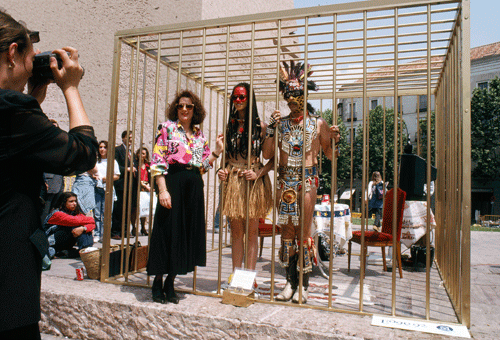
In order to demonstrate the political dimensions of its doctrine, Fischer-Lehit analysed another key case: Coco Fusco and Guillermo Gómez-Peña, " Two Undiscovered Amerindians Visit... ", created in 1992.
In this performance, two artists confined themselves in cages, playing "undiscovered" indigenous people for viewers. The performance was designed to induce the audience to engage in "reflection of colonialism". Many viewers saw them as wonders, fed them, photographed them, and fully embraced the role of "others".
In this case, Fisher-Lisht exemplifies one of her core points: "The perception that the behaviour of others is always a political act". The performance demonstrated "the power of change in the eyes of those who cast their eyes at others, which can recognize others as common subjects or demean them as objects". This makes acting-viewing itself an area of ethical and political tension. The selection of these cases is highly strategic and controversial. By focusing on radical, body-centred, and often painful, behavioural arts, Fisher-Lisht chose examples of traditional theatre theories that cannot be fully explained. A traditional aesthetic theory based on reproduction and interpretation would appear weak in the face of Thomas' lips. This performance is not about pain, it is about pain itself. It's not about a symbol, it's about the ethical crisis it creates in the audience. Similarly, the works of Fusco and Gómez-Pena are not "re-emerging" to colonialism, but rather use their own behaviour as the primary material for a "movement" of colonization in real time. Through these limited cases, Fisher-Lisht not only demonstrated the failure of the old paradigm, but also highlighted the interpretation of its new doctrine. Her theory was not applied in a rigid manner to these works, but emerged from these most challenging artistic practices of the late twentieth century.
Part V: Re-emergence of the world: meaning and criticism
The last part of the report will synthesize the points of the book and explore its claim to the ultimate purpose and strength of the performance, while placing the book in its critical context.
A performance as a threshold experience.
Fisher-Lisht defines the performance's "force of change" as its ability to guide participants into a "threshold" state - a "betwixt and between" threshold.
Drawing on the concept of anthropology, performance events can place participants in a state of temporary suspension of conventional social rules, roles and identities. Abramovich's performance is a typical example of the threshold crisis between the aesthetics and ethical norms that casts the audience. In this state of threshold, participants are able to experience themselves and their relationships with others in an entirely new way. They are open to the possibility of change - be it a change in perception, a change in self-consciousness, or a change in understanding of social realities.
The Remnant of the World
This section will explore the grand theme revealed by the title of the last chapter of the book: The Re-Enchantment of the World.
By focusing attention on the physical nature of the body, objects and space, performances can make ordinary things extraordinary. It transforms everyday mediocre and gives participants a sense of the world with a renewed intensity. In a world that is often perceived as a ghost, rational, mysterious and lost, performances provide a model of experience that can re-introduce surprise, presence and accident. It brings people back to a dynamic, dynamic and promising world.
Criticism and academic influence
Any professional academic report must include a balanced assessment of the impact of the literature analysed and responses to the criticisms faced by it.
The Power for Change in Performing is undoubtedly a "important reference" that profoundly shapes academic controversy in the field of theatre theory and performing research. Concepts such as "self-generated feedback loop" have become the core vocabulary of the discipline. However, the book has also generated a series of important academic criticisms
• It has been pointed out by scholars that, despite the radicalization of its premises, the doctrine has eventually returned to a symbolic framework by dividing events into analytical components.
• Some concepts, such as "energy", have been criticized as more assertions than adequate explanations.
• The view was also expressed that Fisher-Leisht's thinking was sometimes too dichotomy and that feedback loops themselves could be more nuanced and analysed.
Finally, as indicated in the introduction to the book by Marvin Carlson, an important contribution to this book is to bring a "new continental perspective" to this long-standing Anglo-Saxon academically dominated area. The book's final argument on "re-emergence" places performances not only as an art practice, but also as a cultural or quasi-psychological practice. It implies that in a secular world, performance can take on the role that was once played by rituals: to provide strong, transformative community experiences. The book often compares behavioural art with religious or ceremonial practice (e.g. comparing the self-inflicted injuries of Abramović with those of the monks). The concept of "threshold" is directly borrowed from ritual anthropology. The description of the performance experience is also filled with ceremonial language such as enhanced energy, change of consciousness and creation of temporary communities. Thus, the ultimate claim of the "re-emerge" combines all these clues. It shows that this "new aesthetic" is not only a new method of analysing art, but also a way of understanding how performance can provide a modern, secular form of "accursion" by making the material world again present and full of power. This has greatly enhanced the pattern of the Fisher-Lisht theory from a purely academic perspective to one of deep cultural care.
Read about
The drama is written on the sand.
Theatrical Lacanian theory in François Regnault's Audience
The Grammar of Events: Actor-Generated Topology (AGT) and the birth of a postmodern subject (up)
Theatre and Psychoanalysis
P4 Inputs to dental poetry: Preliminary interpretation of dark conceptual theory
P4 Theater, 10-year archive (partial)
The heterogeneity of Deleuze and contemporary art.
The politics of the screams of Deleuze and contemporary art.
Deleuze and Guattari and contemporary art
P4 Theater built a university, a crumbling maze, a hard drive engraving life.
Self-inflicted project "Tangshan Youth - The Artist's Final Book"

p4 Third subject of theoretical analysis: a comprehensive exploration of Thomas Ogden's "third presence" theory
If you want to make a contribution or get into a group exchange, put it on. Long
P4 Theater works to present everyone's dreams.