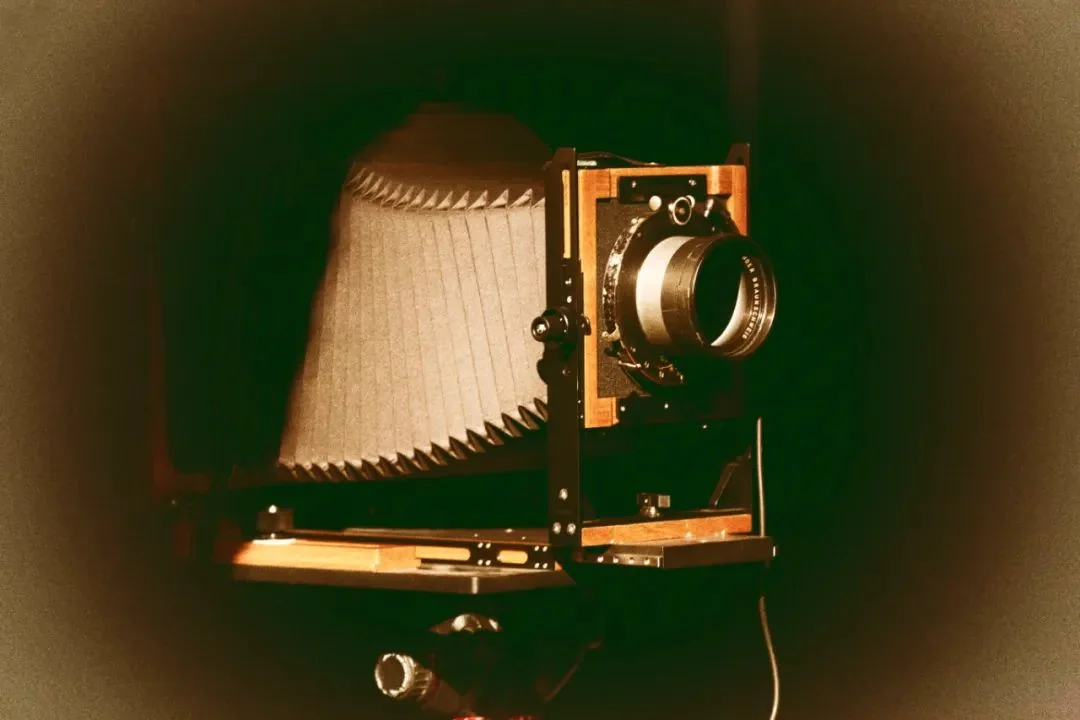
On 19 August 1839, a French painter, Louis Dagar, invented the world's first real camera - a portable wooden box camera. From this moment on, this box has completely changed the way people look at the world.
01
Camera
A magic box.
The camera frames a window between people and reality, and the image world of a viewer is born. People look at the world through viewers, see the light of reality in the lens, go into the dark room, fall into the negative image, and become visible after chemical reactions. For the first time in the history of mankind, images taken from real realities can be recorded and can be seen as evidence of the time that has passed.
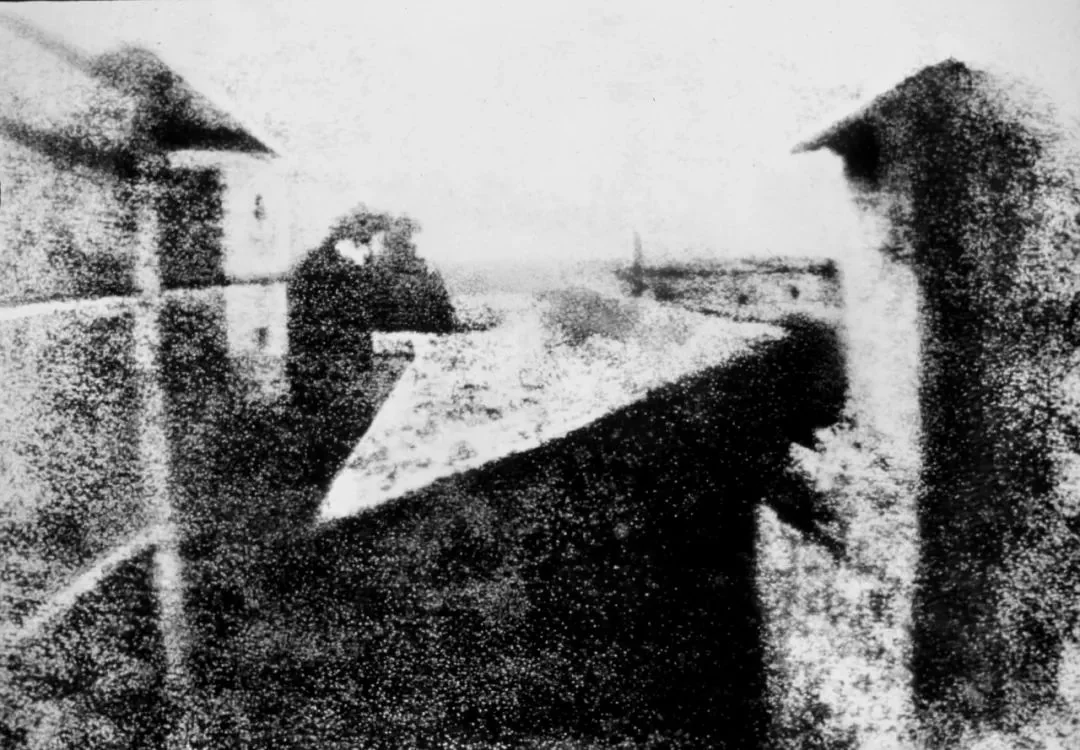
Nieps took pictures in a dark box for the present.
The earliest photo, 1826.
It took eight hours to expose.
"I am an eye, a mechanical eye. I - the machine - show you the world in the way I see it. From now on, I will be saved forever from human condensation. I'm constantly moving. I came close to objects, and then pulled them apart. I crawled under them. I drove with the horse's mouth. I rise and fall with people. This is me, a machine, deployed in a chaotic movement, recording one after another in the most complex combination.
I have freed myself from the shackles of time and space, and I have reconciled the single or all points of the universe, and I am in charge of their place. In this way, I have created new concepts that recognize the world. In this way, I will explain in a new way the world you don't know."
Ziga Virtov
An article in 1923.
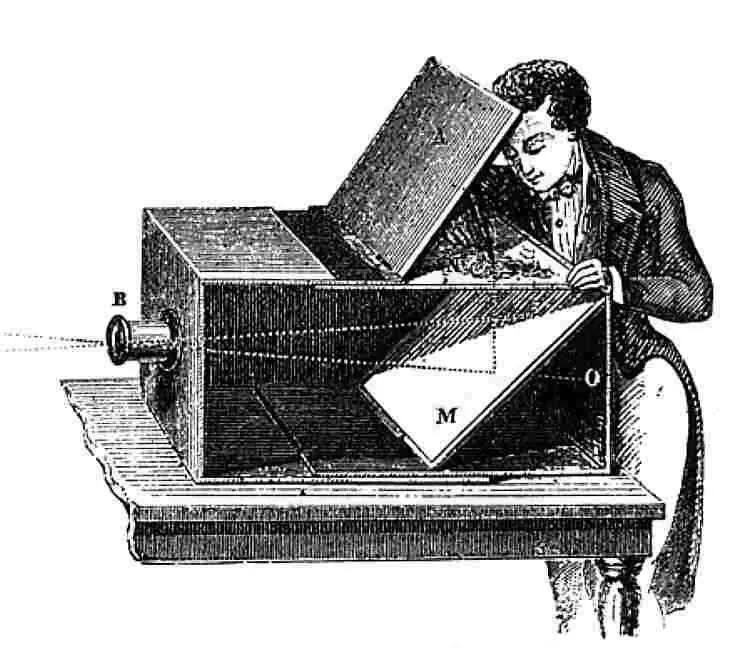
The work of the dark box.
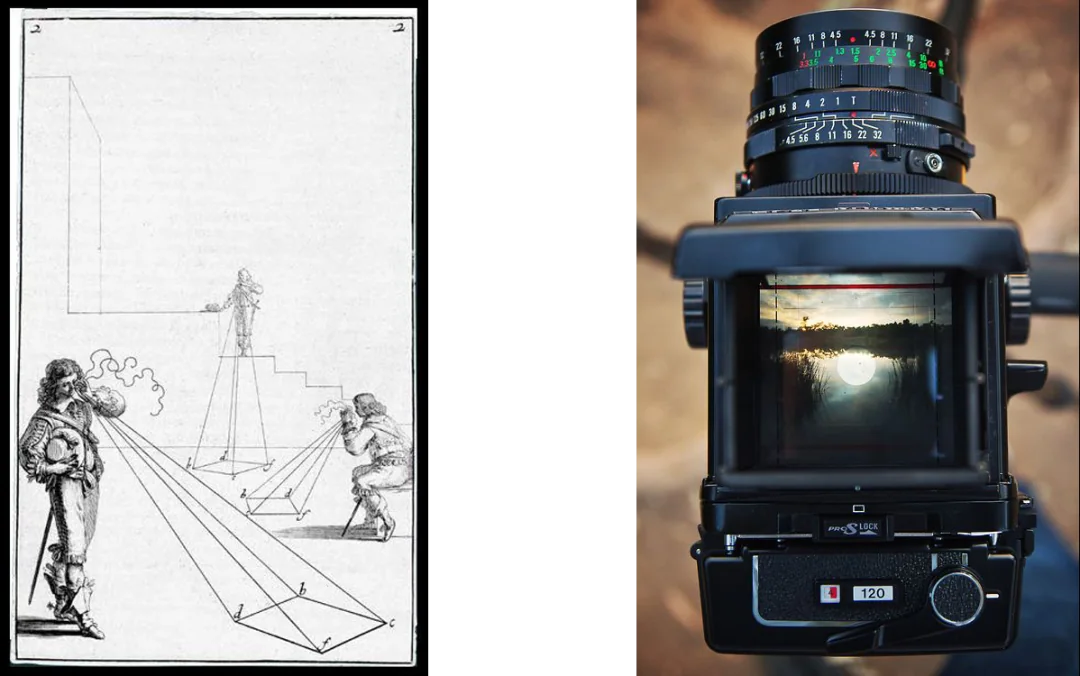
Light through the lens, through the reflection of the mirror.
Get to the sandglass and produce a image.
Before the camera was invented, European paintings since the Renaissance were generally based on the principle of opacity. The lens is centred on the viewer ' s eyes, and the scenes are ingested from within the perimeter into the retina. The eyes of man are the only centre of everything in the world. The invention of the camera suggests that the centre does not exist, and that the self-presentation of the object is not for human viewing. On the contrary, watching is a human initiative.
Left, visual.
Right.
The invention of the camera changed the way people see things. What they see in them has come to a new meaning.
02
Catch reality.
Tools
The camera is a witness of time, it can move time and space. When the camera captures time, it is capable of storing a particular historical space at a given moment into a physical entity - an image that can be held in hand and hung on a wall. When this image is seen a hundred years later, the information it carries becomes evidence of past history. At the same time, it is equally understood by the people of the future and can be moved. The space-time interval was thus broken and the camera took the bridge through.
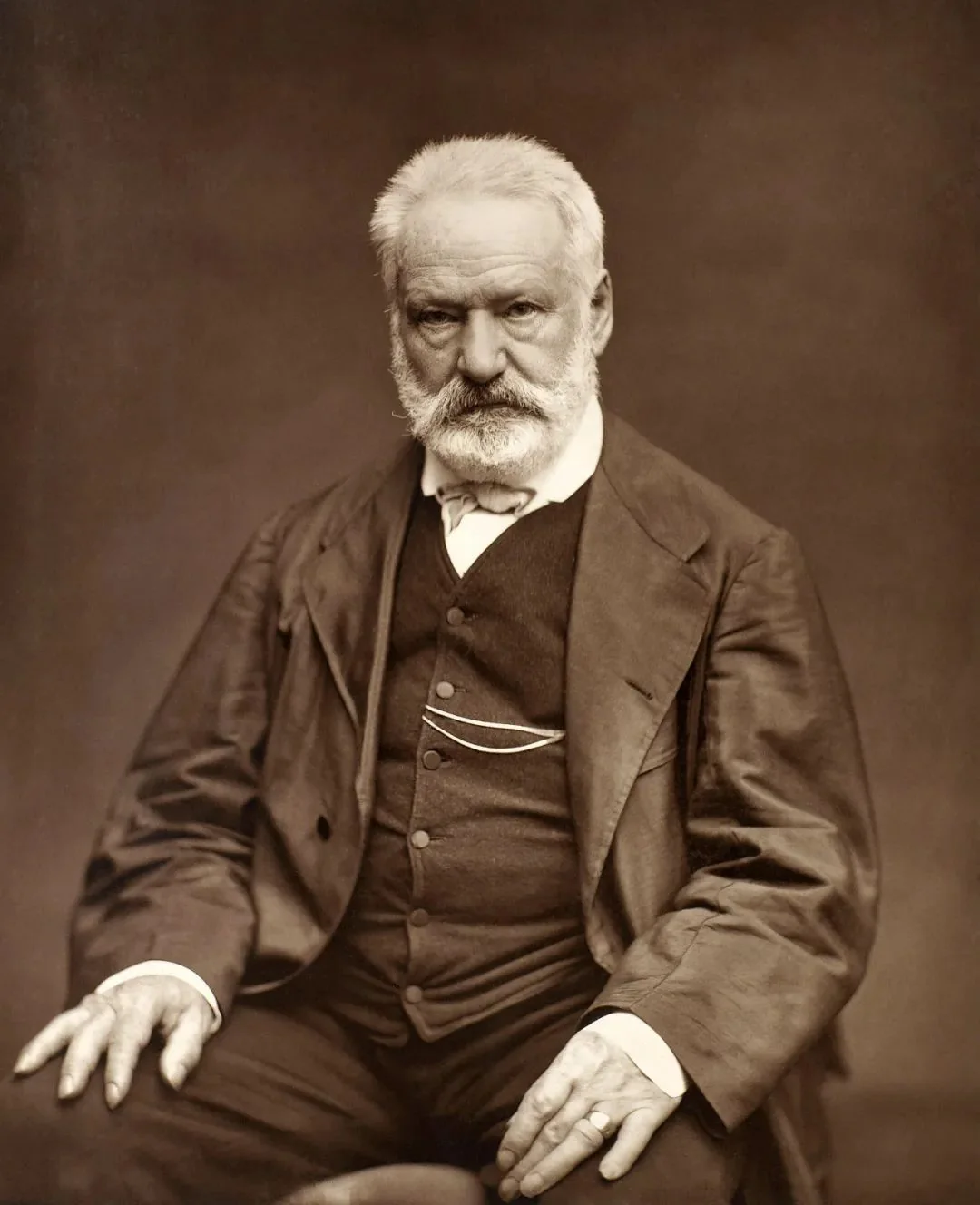
Victor Hugo.
"For with this fire, `real' is like burning through the eyes of a human being - a viewer eager to find a place that is not visible, a place that has long been `old' and is still `future', so moving that we can look back and see. Because the nature of talking to the camera is different from the nature of talking to the eye: the difference is that the space in the photo is not consciously woven (in contrast to the lens), but is woven unconsciously.... it is only through photography that we will be able to recognize unconscious images as if psychoanalysis had taught us unconscious impulses."
Benyamin, The Age of the Light of the Spirit.
The camera provides us with a shortcut to intervene and capture reality, a highly aggressive tool.
"Playing is taking possession of what was taken."
"The camera, as a penis, is nothing less than an inescapable little variant of the metaphor that everyone will not consciously use. No matter how ill-informed we are about this fantasy, whenever we talk about `loading' a film, holding a camera `targeting' a person or `making' a movie, we talk about it in its entirety."
Susan Santague, The Picture.
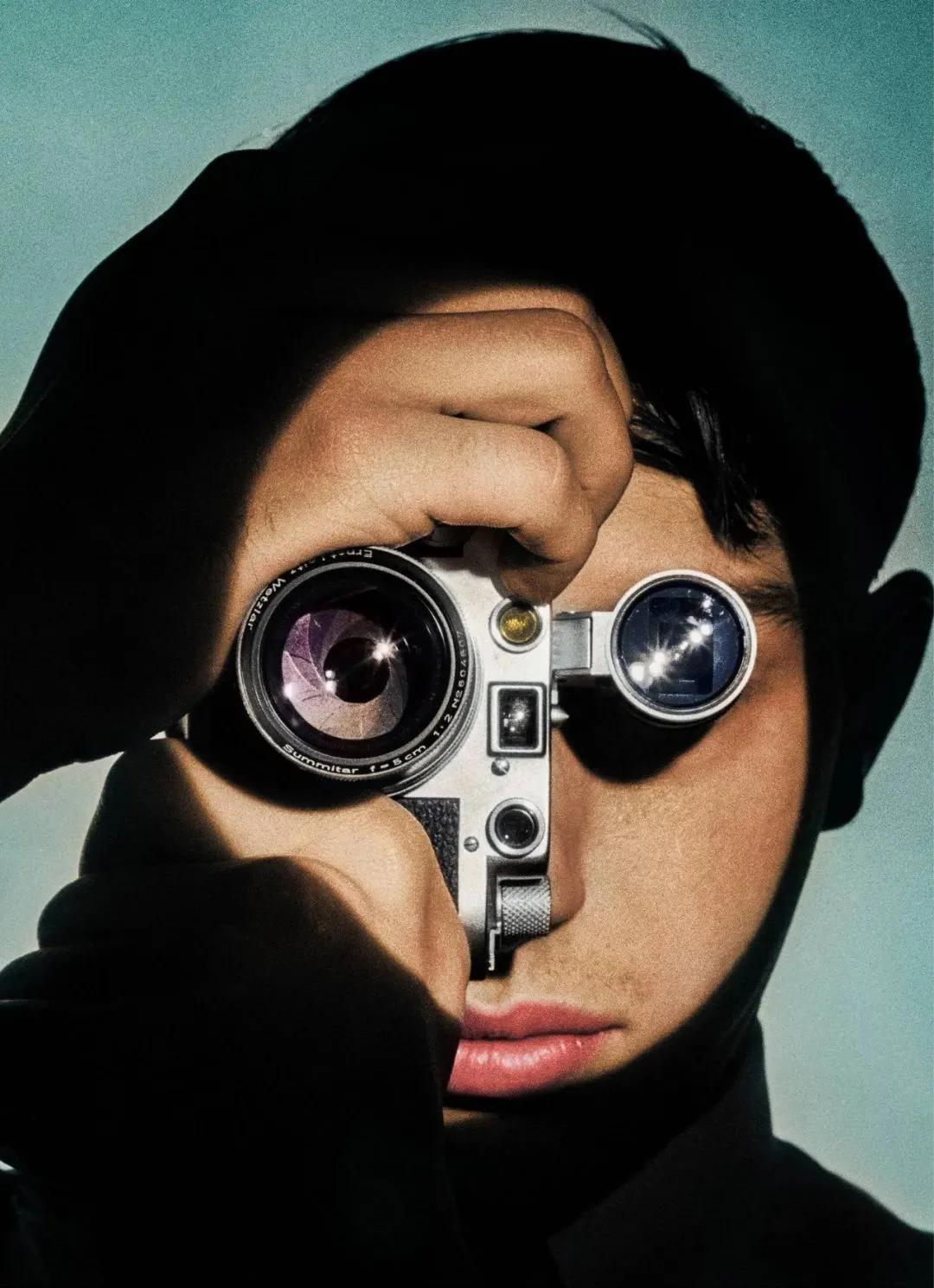
Photojournalist Andrés Fininger.
1951
It's the cover of The Picture.
As Santague said, the camera also "creates a theoretical relationship with the present, that is, reality is known through its traces. With far beyond the ability of human eyes to capture, the camera has been extensively researched and extracted from realistic images, edited and assembled by filming, in order to recreate a reality that belongs to the real reality of the camera, namely, superreality, which has become the basic syntax of photography. This super-realistic reality is a testimony to the past, as well as to future restructuring and re-creation, which breeds new life, provides new readings of the desires behind the lens and leads to a different life potential.
03
Exposure and Washing
Process for storage time
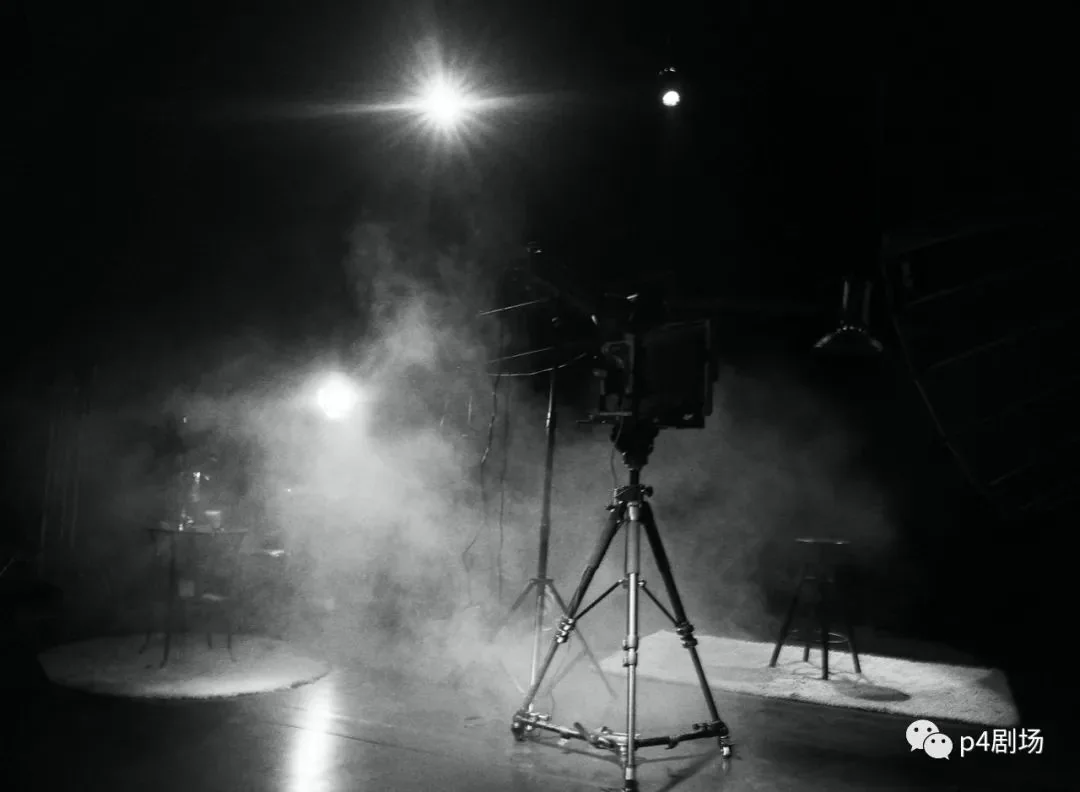
P4 Theater shoot settings
An instant chain reaction by pressing a fast door key, as a fertilization process. The exposure sets the time and space scenario in motion, creating a whole new picture
Within a period of 1/50 seconds, the express door release buttons trigger the device open by the lens, the quick mirror door, or lightning-like bursting, while the camera is connected with a flash-throwing device, the current triggers the first flashlight, the ignition of the light, other flashlights, such as soldiers on standby, receive signals, brush all of the energy saved collectively, air each, synchronize the flash, and as soon as 1/8000 seconds of light to the person being photographed, horse hoofs re-reflecting, re-reflecting, colliding with other objects in space, light-lighted objects, rolling into the lens, from the loop into the camera, a series of flashes, ejection, re-embracing, plating the film away from multiple jams, and finally flashing into the dark protection box, penetrating the film to the exposure.
Quick door bites, flashlights rest, and everything returns to quiet. This amazing moment of joy is like a dream. Cameras, stored at an incontrovertible speed.
Pressing the video camera's fast door opens an unknown new journey: we don't know what we got.
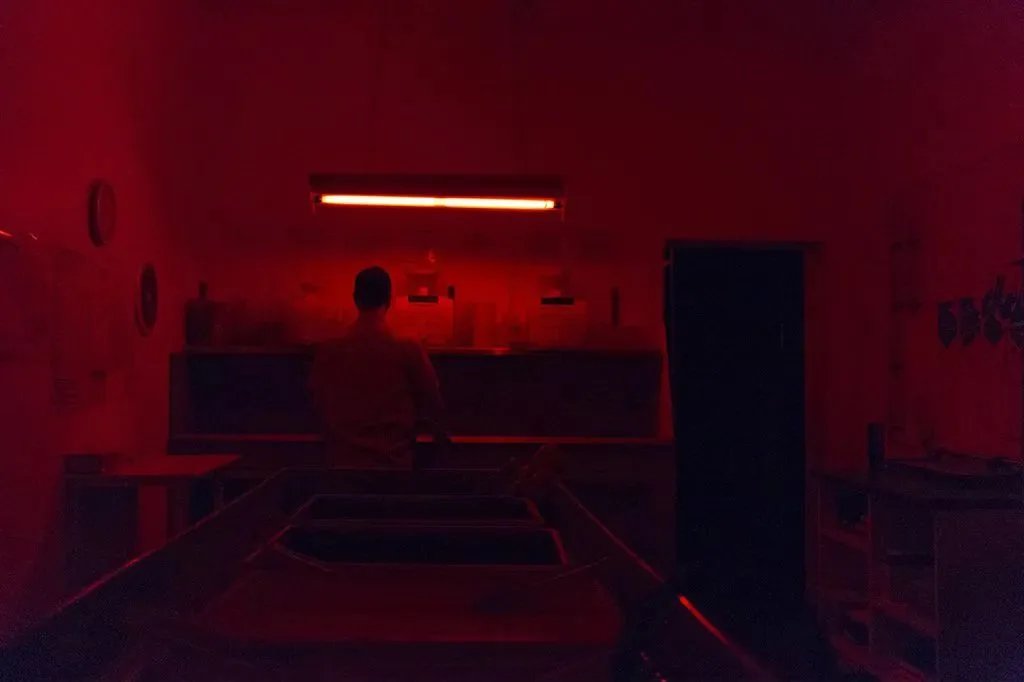
The dark room washes the film.
Different from digital cameras. Film, let time be something to wait for. It takes 7-8 hours to process the film. In the full manual dark room operation, a photograph is expected to baptize a dozen different types of liquid. Through a series of processes, such as visual, photo, shadow, bleaching, water removal, drying, scanning, etc., the real face of the moment is revealed.
A picture of a chemical bath.
The film after being washed has traces of artificial carving. The particles, impurities, scratches, fingerprints that are produced in the wash are the product of the film itself, and this uncontrollable accident is part of its beauty. As an important link in the production, the swirling, anticipation and surprise of the rinsing, even within the producers, are branded on film.
04
As
Witness of desire.
♪ And dream into reality ♪
Each photo was a performance of the will of life, and the camera witnessed the desire for it.
On the stage of P4 Theater, photographers - camera participants - form the established three-fold structure. The camera lured and witnessed close interaction between photographers and participants. We took the initiative to the camera, which inspired an interactive performance between the two - like a penis, which pierced the relationship. Cameras stir up and tempt our memories and imaginations, and at the same time they are the medium for the release of our desires.
P4 Theater stage camera
The camera was also the audience for the show. As a third eye independent of the eye view, the camera recorded and witnessed all traces of the performance. In two people's plays, cameras are vital. It witnessed an excellent meeting on the stage, under the light, and a secret conversation, and archived them as tangible images of historical memory.
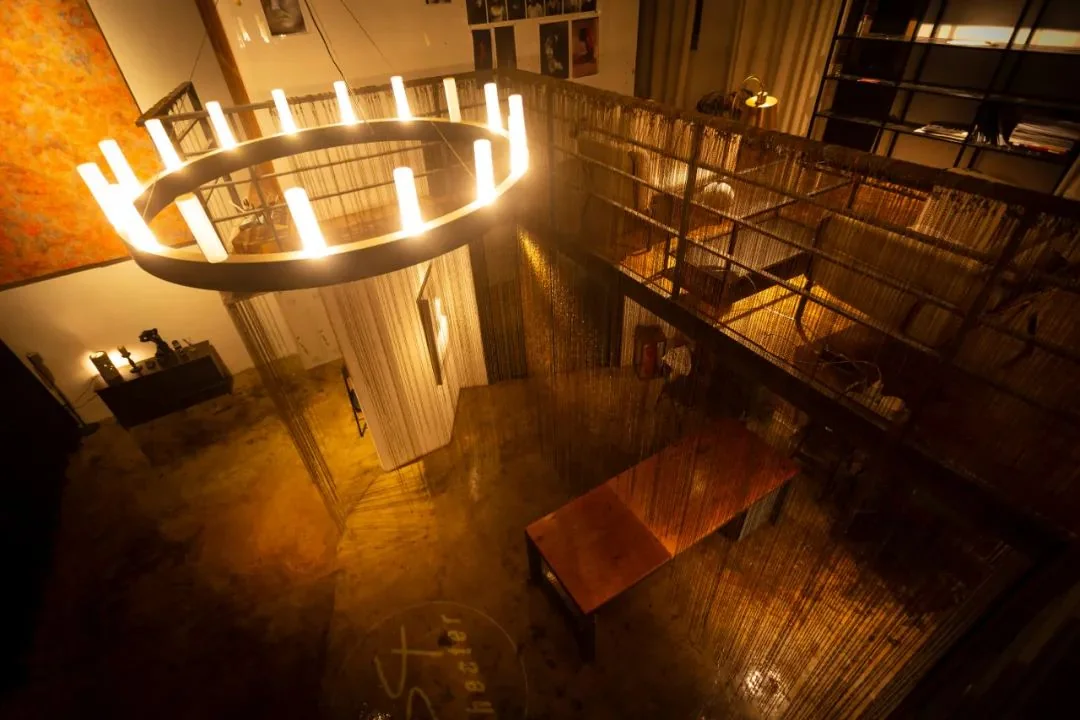
P4 Theater, which breeds Real Image, can also be understood as a camera device. The black stage connects to the white theatre, and P4 Theater is a camera space that penetrates the daily world. It stabs everyone who lives in discipline and habit and is open to all who need it. As a place where desires are cast, the camera device is watched in the depths of everyone ' s unconscious. It is a messenger who reveals the truth of desires and takes dreams into reality.
P4 Theater outside the stage
Photography is an absolute individual, an extreme coincidence... In short, it's LaTuche, it's opportunity, it's encounters, it's true in the full sense. Photographic... both confirm and excite; it brings people to the point of madness, where emotions (love, passion, sorrow, impulse, desire) are the basis of existence. At that point, the photography was really close to madness...
Roland Bart's room.
The good people are watching.