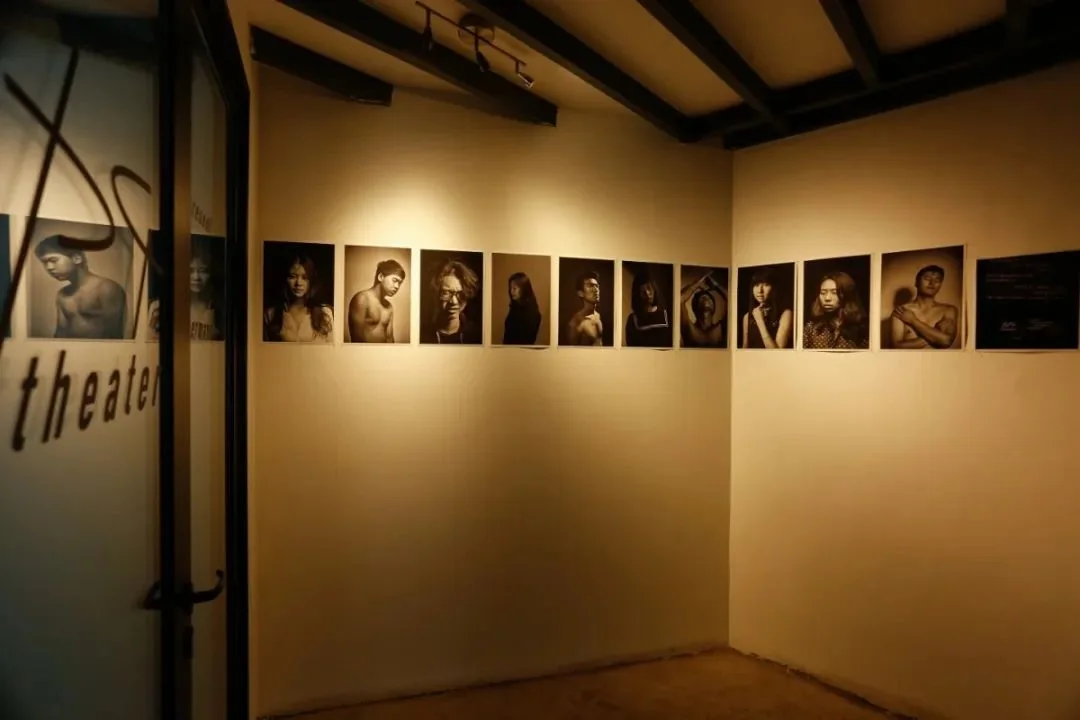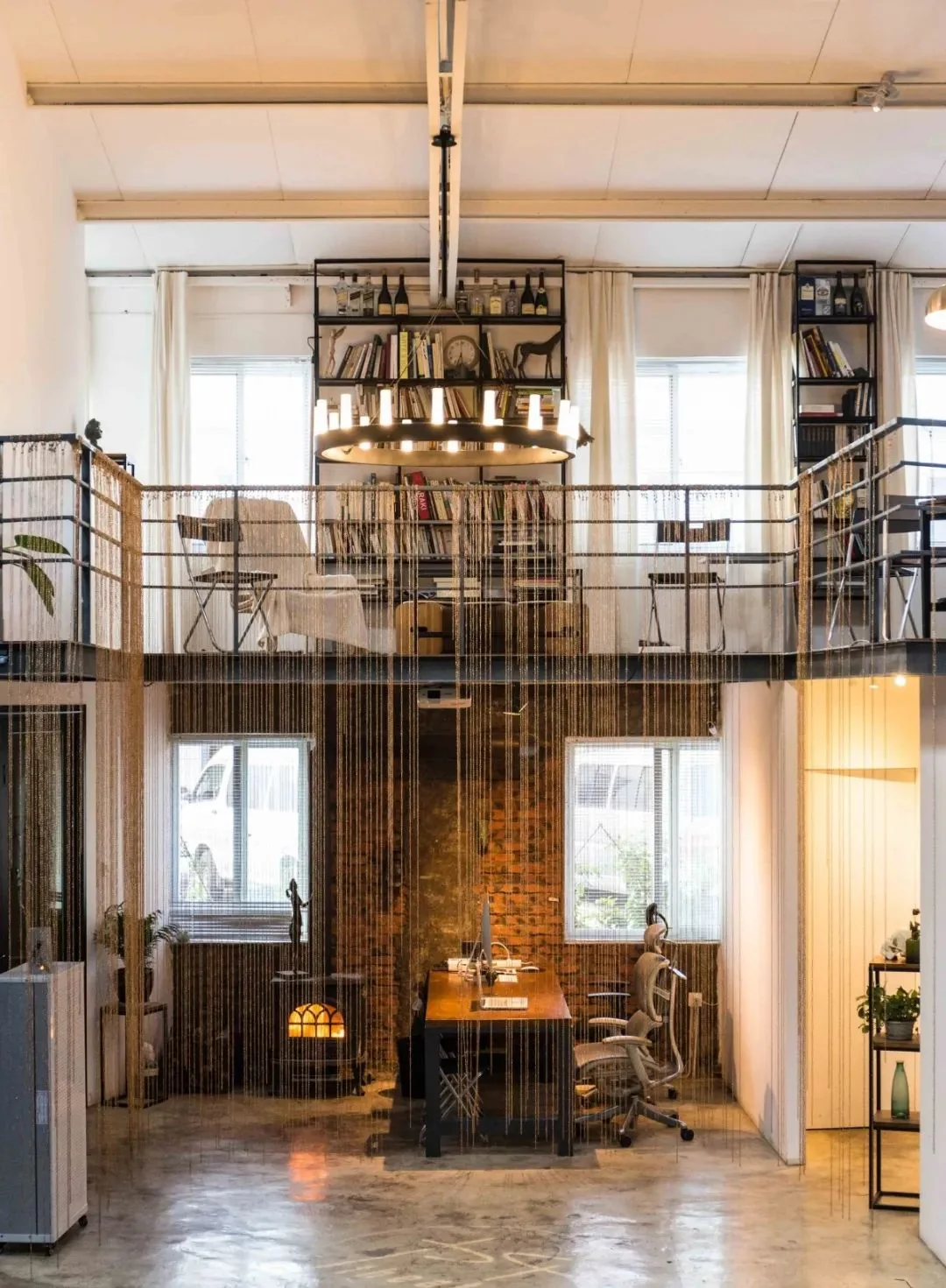
Zhang Shaohua and He Fa are still living in their P4 Theater area in Beijing during the sculptivation of the epidemic that sank throughout China. This is a paradise belonging to two dreamers, and in Beijing, which warmed up in April, it will rise again.
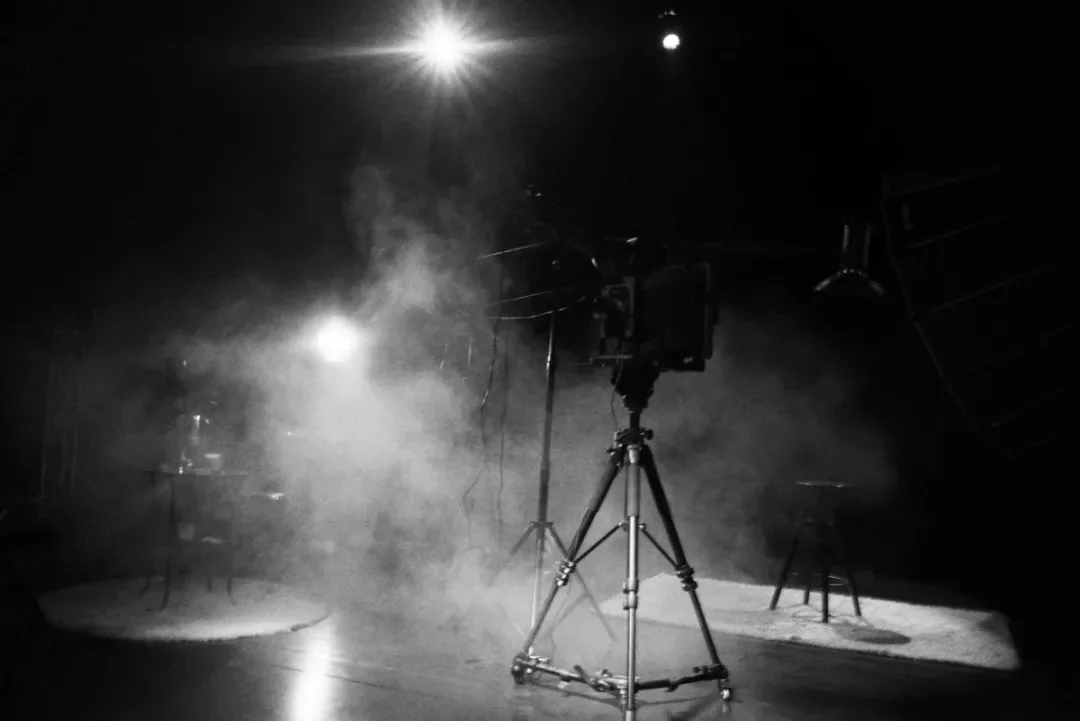
You can't find any stand-alone labs like it. There is no ticket hall, no auditorium, no exaggerating lines on stage, complex personality relations, and no false scenery. There's only an old camera here and a true story of people who are playing around it.
And the beginning of all this comes from a mystery that can't be solved.
1
Photography was a mess. It embarrassed me.
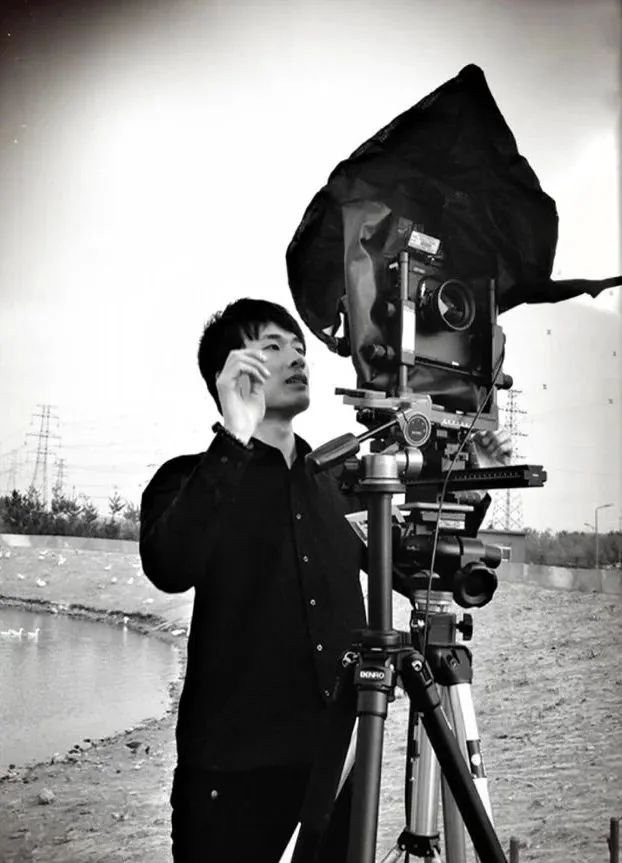
Zhang Sauhua and He Fa were classmates of the 2012 department of photography at the Central Academy of Fine Arts. In the second grade of the university, the two people chose photography differently. However, the day of entry into the Academy of Photography was the beginning of a difficult two-person relationship.
"The college education can't tell you what photography is. Teachers don't teach skills, undergraduates read them, they can't shine, they can't fix them. A lot, but I don't know what I'm doing. I'm just confused about photography. He Fa remembers.
At the College, photography instruction is divided into two main branches: commercial photography and art photography. The study of art photography is the work of the master and the analysis of appreciation; the study of commercial photography is the work of commercial photographers, sometimes older sisters, mostly seeking visual tension and performance, with a fixed aesthetic model.
Zhang Shaohua and He Fa spent their entire student years in photography.
You're a student.
"It was a state of chaos, and when I picked up the camera and faced a model, I was just very embarrassed. I don't understand what I'm doing or who I am with the camera. They looked at me like I was waiting to tell him what a man was like and what a pose he was. I have been very resistant to this state of affairs, as if I had been forced to become a photographer - a role I didn't want to be."
"Looking at the model, I just thought, "Why can't you be more natural?" But I understand that once a camera existed, he became a natural reaction. This reminds me of the discomfort of standing in front of the camera many times when I was a child and being directed by adults in all kinds of positions."
The question of how to deal with the target also happened to He Fa.
He Fa took more than a million photographs during the university, mostly of landscapes and poachers. It's because the cameras are on a low angle and they don't attract attention.
He Fa graduated
Tens of thousands of transparent photos of "Mountain Water"
"It was only later that I realized that I had been avoiding people. Because I don't know how I shoot a man when he's really standing in front of me." He Fa said.
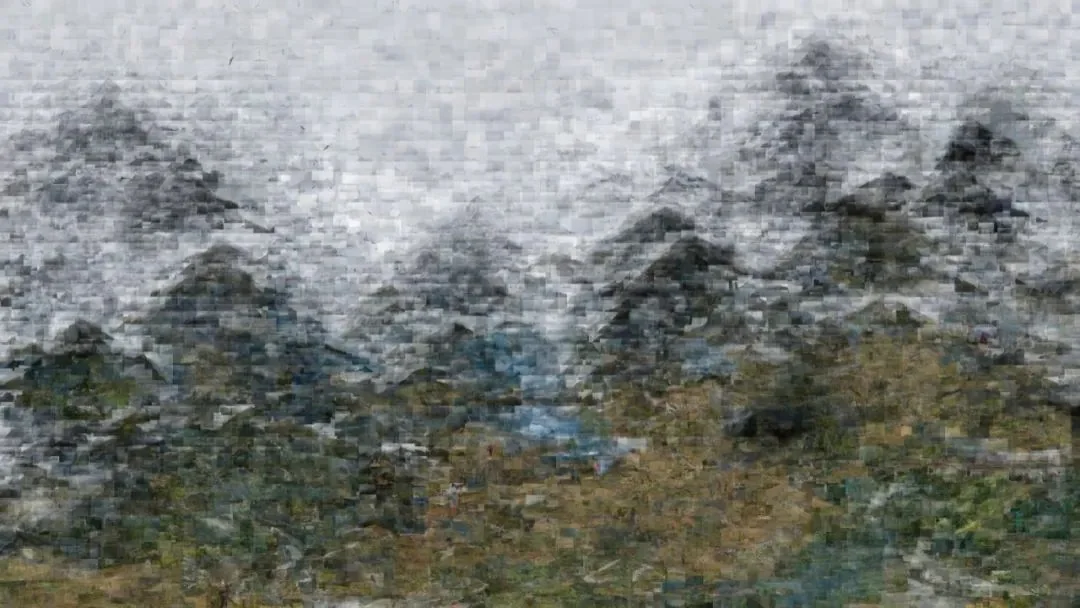
Zhang Shaohua wanted to shoot ghosts when he was a student: "The first thing I wanted to do was to shoot something different and to look at my fears. But the most impressive thing is that every time a teacher reports on this program asks me a specific question like "What the hell are you wearing", I have to be silent. Those years have seen a lot of weird books in history, and it was only during the years before and after World War I that a series of novels depicting people turning into animals or monsters made me realize that the ghosts that I wanted to shoot were actually humans - ghosts in the hearts of human beings, the inner core of human beings, not externalized images".
It is only when Zhang Shaohua realizes that he was concerned most about the image - the one who was most disturbed by it - that he wanted to film. It is like being hit early by the proposition of life, but it takes me no time to find the answer.
2
A good picture: a no-show.
After graduation, Zhang Shaohua self-reliantly made commercial photography, while He Fa chose to start a business. After their own social strangulations, the two men came together again in 2013 to try to face the confusion of photography again.
A video from Nobuyoshi Araki, who danced while a model was taking pictures, gave them enlightenment. "I've never seen any photographer look at himself as a focal point in his interactions, in a passionate state of heat and modeling in the same field. He's not an outsider, but he's fully integrated into that space, falling into a world of models. They're like tangled particles. They're glowing."
The Japanese photographer's Wood Book.
He Fa thought that at that moment he might have understood something, "The photo is not just a simple move to hold the camera down the door, it is pointing to some kind of noble and eternality."
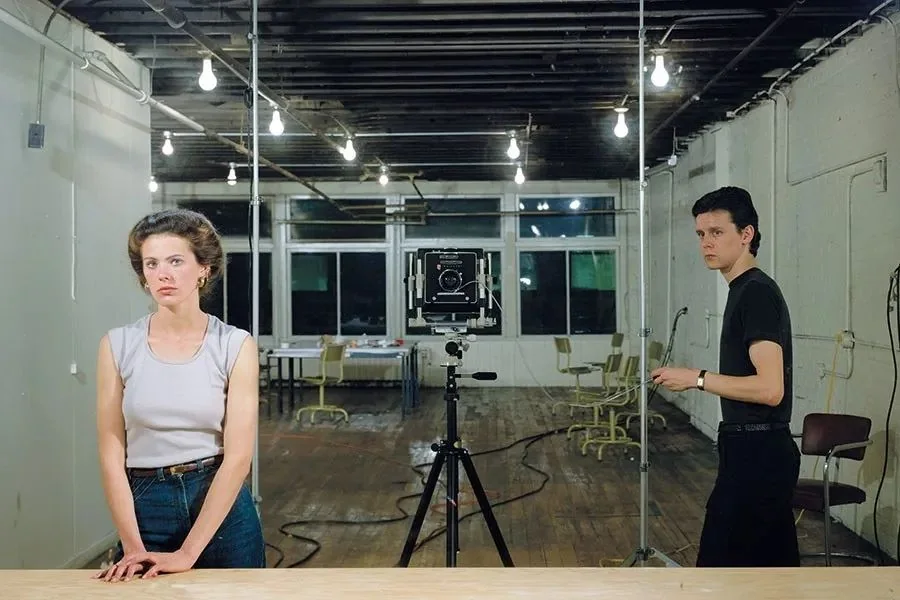
Jeff Wall, a Canadian photographer, was also an important mentor. This master of art and history will be doing a very rational in-depth analysis of each piece. "His work is set, and every detail on the image is carefully designed." Every piece of Jeff Vole's work is accompanied by a critical statement: "The particular angle he chose when he asked about the nature of the image, and the spirit of this exploration, made me feel quite ground-breaking", said Sauhua.
Jeff Vole, The Woman
The concept of the Manai as "the bar of the goddess's playground"
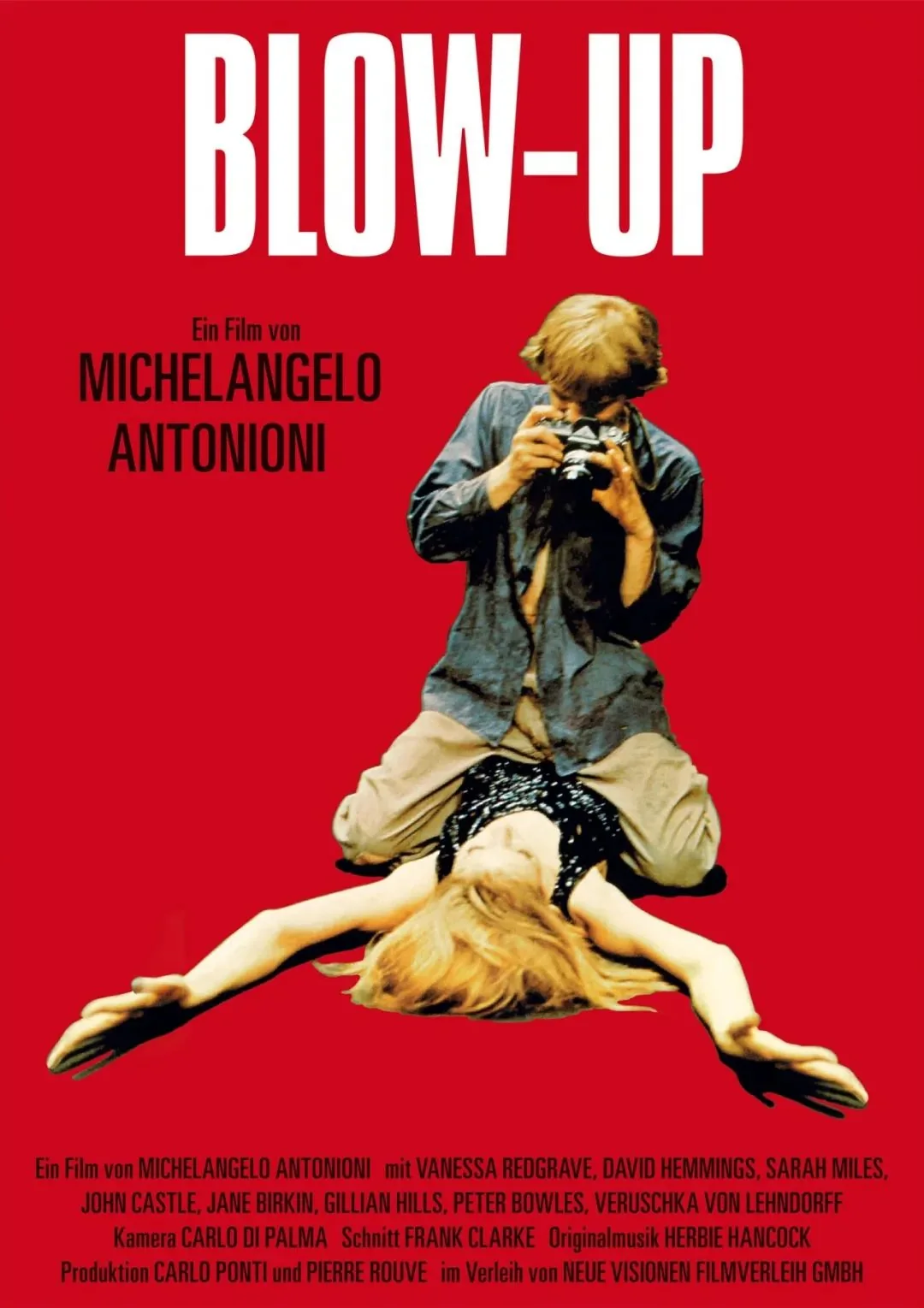
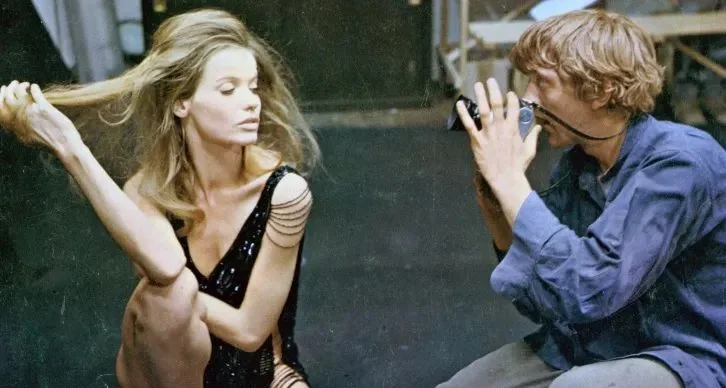
On the question of what photography is, the film "Blow Up" by Italian director Michelangelo Antonioni provides a good illustration for Sauhua and He Fa.
Photographer Thomas caught pictures of young couples dating in the park. Later, the woman in the photograph tried so hard to get the negatives, causing Thomas to be suspicious. Thomas zoomed in on the photographs and finally believed that he saw evidence of a murder on the photographs.
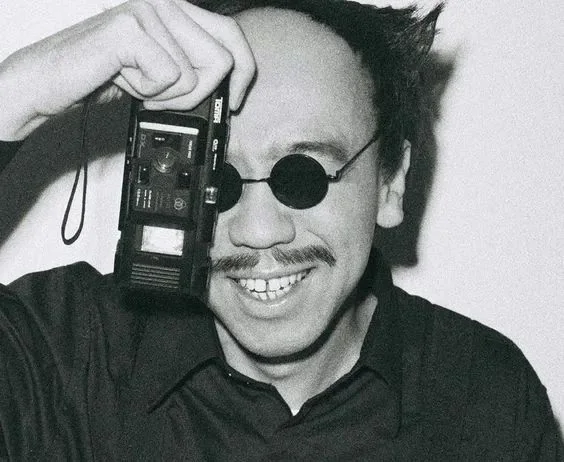
Zoom in.
"The cameraman and the person he photographed were all inhaled into an incident, and the cameraman was no longer an active person and he was passive. He was bound by this photograph, captured, and made a slave to it."
The true nature of the photography began to emerge in the minds of Sauhua and He Fa. It is a combination of interactions, involving photographers, target audiences, and the interaction between the two, and also an organic collaboration of all elements in the entire photographic field.
Zoom in.
Then they went into the practice of exploring "what is a good photo". Sauhua and He Fa felt that most of the photographs on the market were false: different genders, different age patterns, some positional resonance with a certain meaning, subtle emotional reactions could be regulated, and "beauties" were designed by quantifiable tactics.
"What eyes are empty, don't look at the camera, smile in open teeth, mouth-sniffing, silly smiles, think about what state it is, what look it is to be drunk, it's like a photo PUA, He Fa says.
They want to film people's most real state. What do we do?
There is always a visual relationship between the photographer and the target, and the camera's intervention gives a natural performing character to all actions in front of the camera. How do we get rid of the uncomfortable "fake" in the picture?
Sauhua and He Fa came up with their point of view: it's a good picture to make "act a non-act." To put it bluntly, when the camera is present, the target is able to release himself in a relaxed state and interact with the cameraman, the best moment of interaction being precisely captured by the cameraman. This "no show" has to be profoundly intertwined with reality, while at the same time integrating into the deep thinking of photographers, as if it were a vortex of naked fanaticism with Jeff Vole's insight and insight, and as in the Magnification, it was necessary to create a vortex on the spot with models.
They're in the emotional photography lab at the Central American.
In order to get close to "acting a non-activation", with the help of fellow students, Sauhua and He Fa carried out a series of photographic attempts to release emotions in a small classroom in the complex in 2014.
In one space, how to shape a scenario where models remove the burden and awareness of "acting" in their situation is the focus of their experiments. After more than a year of filming, they have achieved a natural emotional supercomposition in the photographs: models are not in a general state, but there are multiple levels of emotion that can be identified. Such a vague, complex combination is closer to the true human state - "real" is inexhaustible and difficult to explain than any clear and easy-to-understand code formula.
It can be said that six years ago the little classroom in the beauty complex was the prototype of today's P4 Theater: a small table with a hypnotic tone before the shoot, a small table of black velvet, carpets, slippers... without realizing it, Shawa and He Fa are drawing a photo map of the real thing.
3
P4 Theater: The photo came back to me.
The call of destiny has come again.
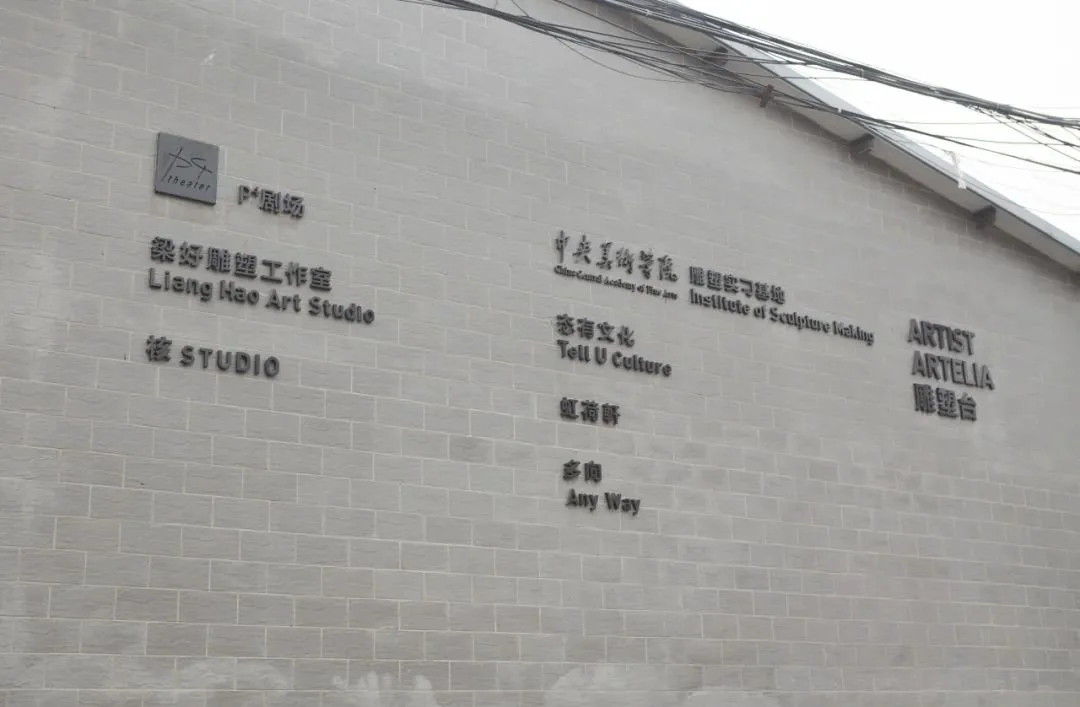
In the spring of 2015, following a friend ' s introduction, Zhang Shaohua rented a workshop in the sculpture arts area near the Changping district of Beijing. This space began to shake into a theatre in the hands of Sauhua and He Fa.
Beijing Sculptural Academy
And the two of you hit it off -- "This is it! This is it! This is it!
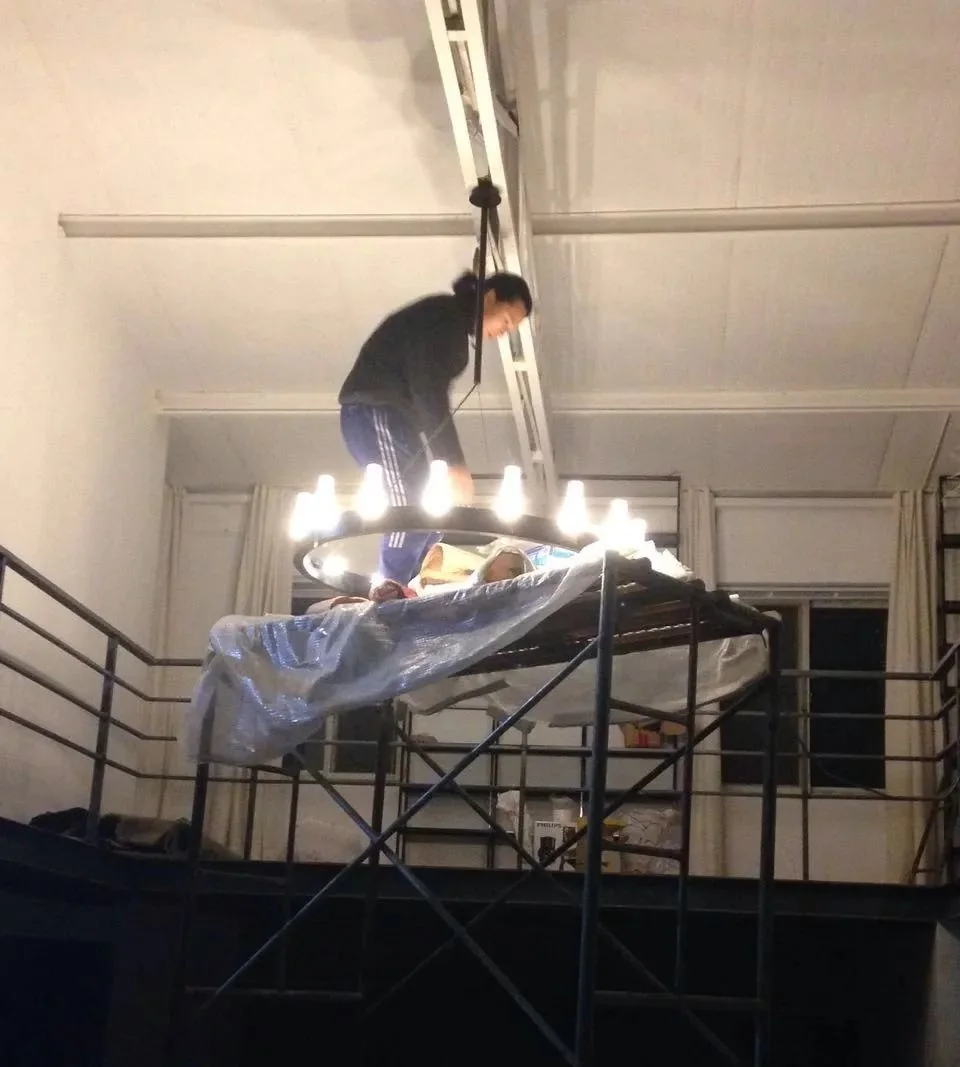
From August 2015 to March 2016, for more than half a year, Sauhua, He Fa and a friend of an architect from the middle-class choreography, together, completed a space retrofit.
From the conceptual design to the drawings and the actual construction work, it was done by several individuals. How large-to-stage spaces are divided between audience areas, how small are the cranes, lamps, silicon boxes, and the spots in the theatre are all condensed in their careful design and consideration.
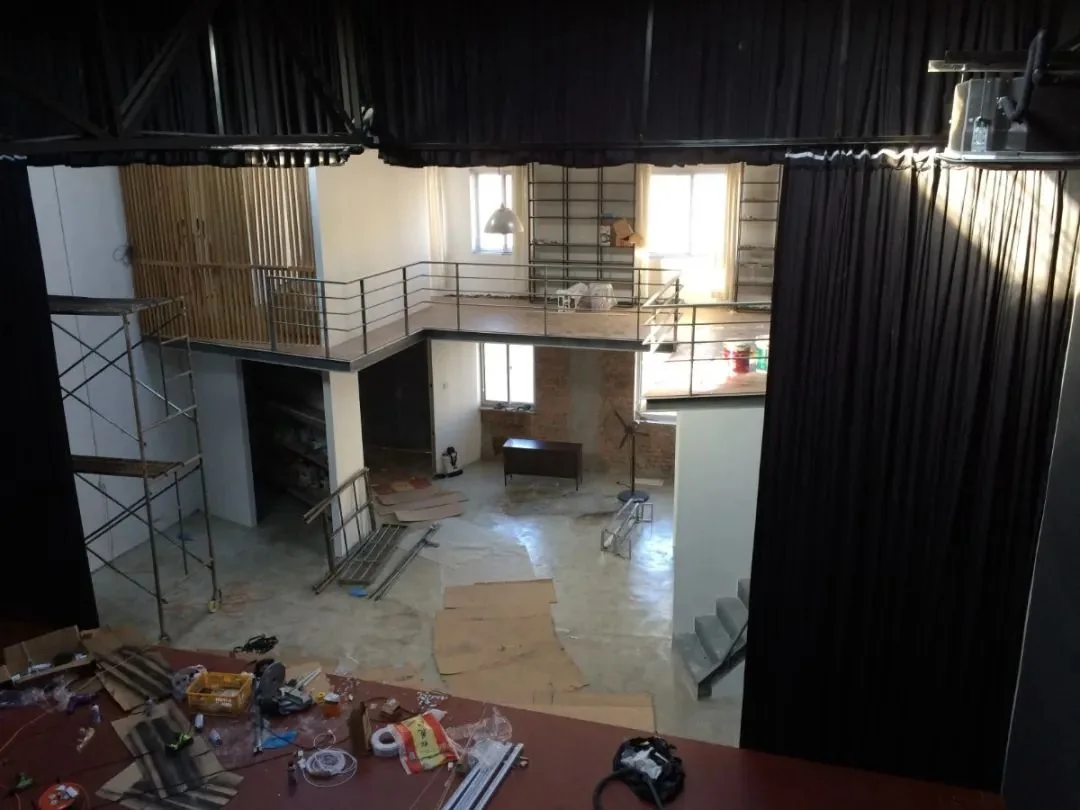
P4 Theater under renovation
"This space is a work in itself", says Sauhua.
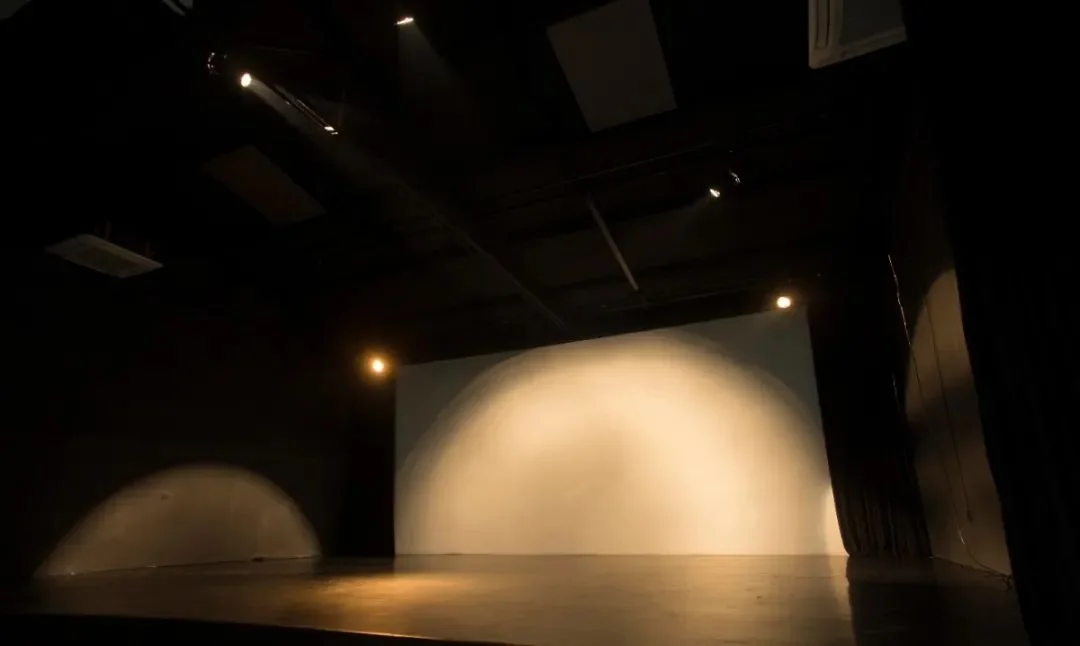
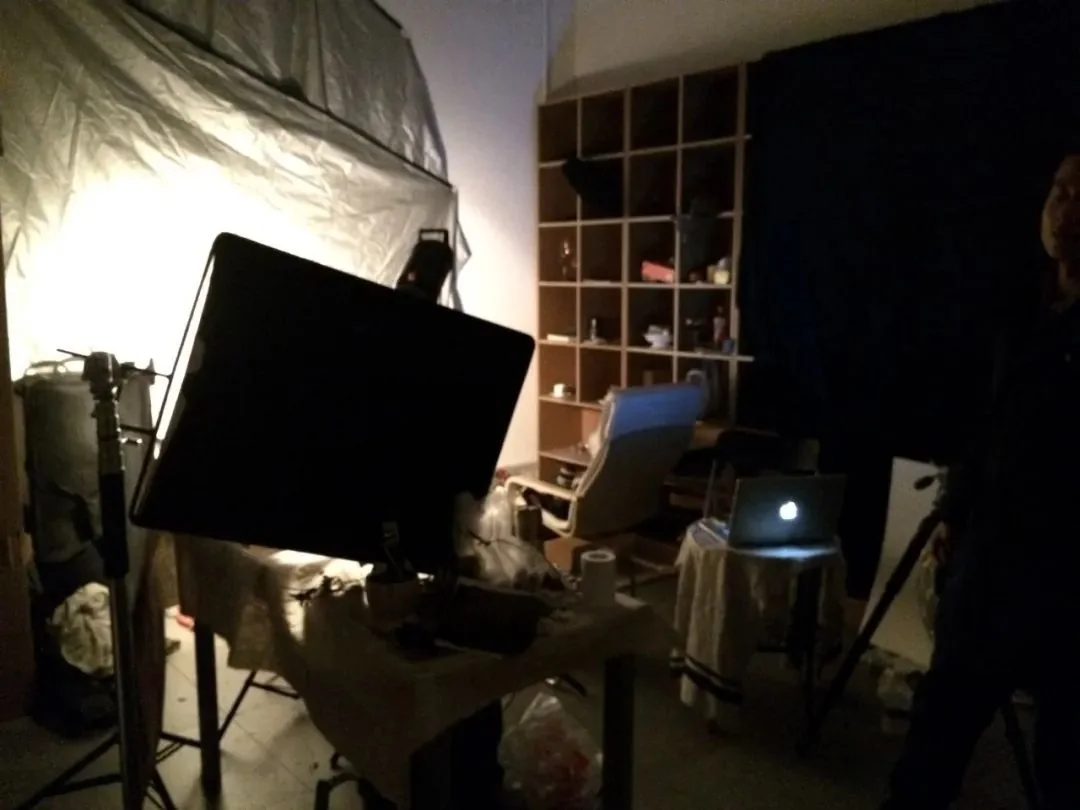
Indeed, P4 Theater is very different from the theatre we usually see. Its internal composition consists of two areas of identical size, black and white. The black velvet curtain is a black-coloured stage photography area with a camera lamp, a stage lamp and a series of live filming devices. Downstage, white observation, communication, makeup. Black is a performance area, a white viewing area, which intersects with each other and interacts with each other, and becomes a spatial metaphor for the position behind and behind the camera.
P4 Theater Internal Landscape
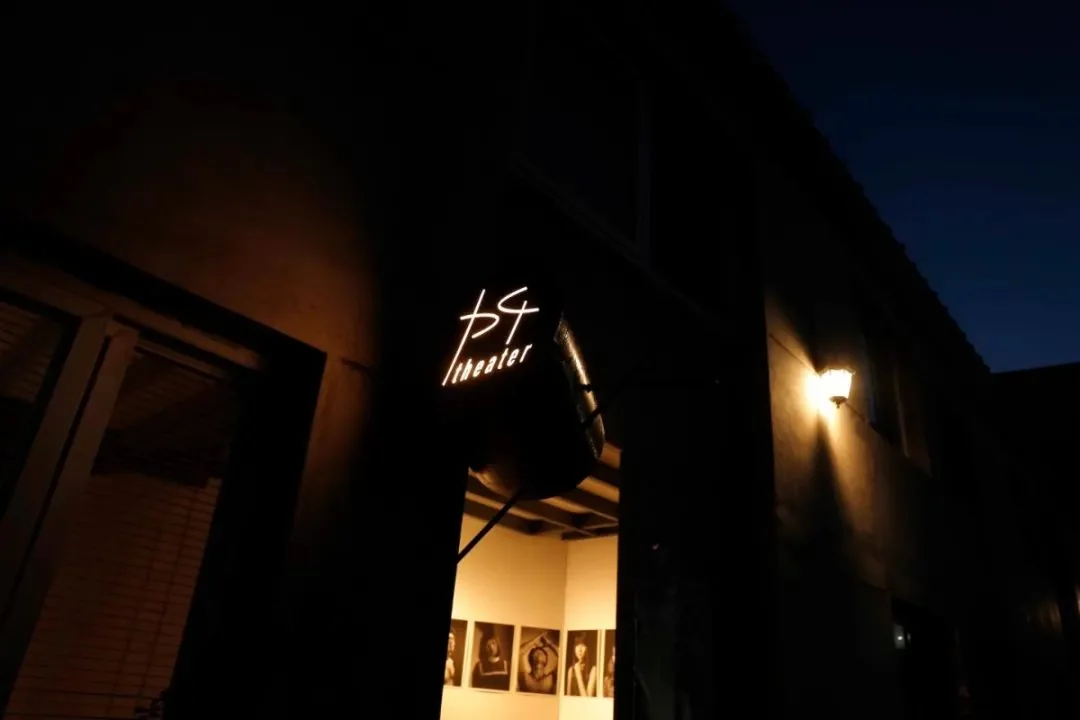
The name "p4" was born with the theater. The tune of "Photo for you" is the cornerstone of this space. This 'you' is not the person standing in front of the camera, but the real state of the body.
P4 Theater logo
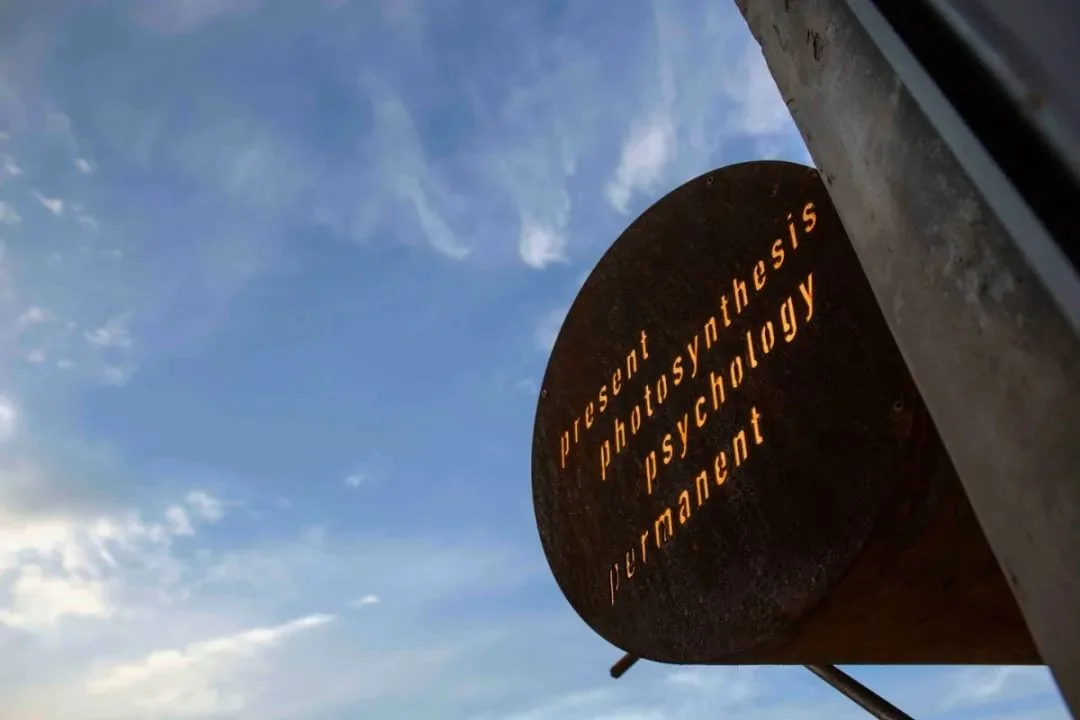
The two rotating dancers in Logo were two actors who interacted with each other before and after the camera; the four Ps were "Precent" (at this point), "Photosynthesis" (for photosynthesis), "Psychology" and "Permanent" (for eternity).
All of this points to the photographic purpose of P4: in theatre space, two people who are the object of each other ' s performances, set up with psychology as a structure, react chemically, like photosynthesis, and in the presence of a camera, make it permanent.
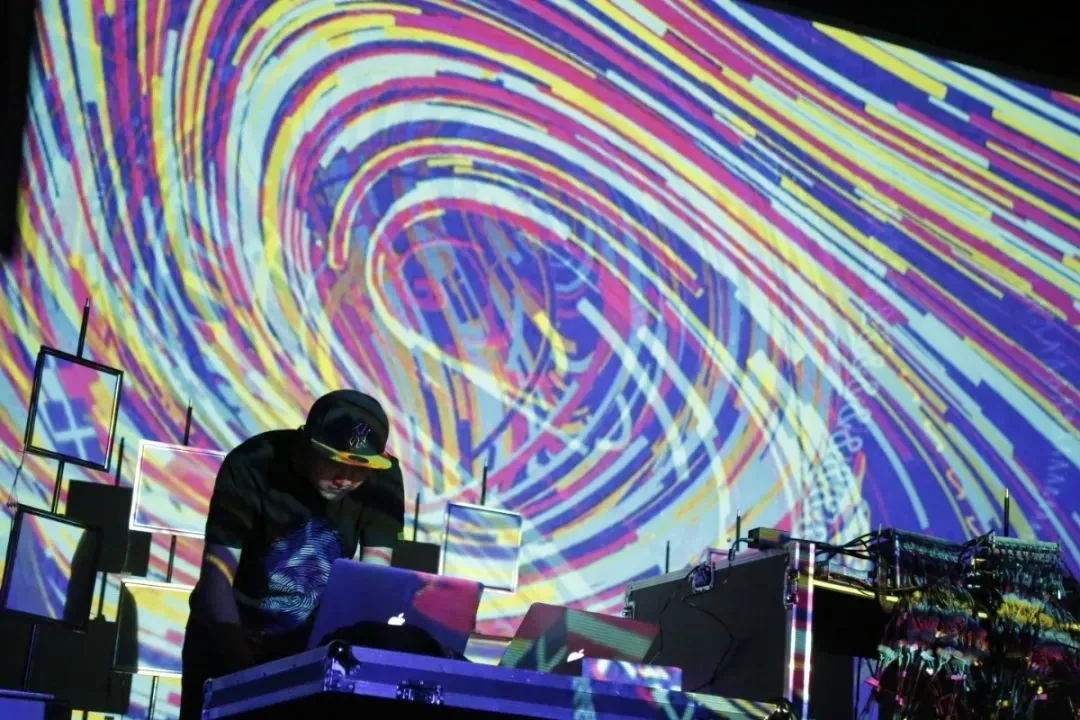
When the theatre was built, Sauhua and He Fa were here to catalyse a series of experiments in the field of theatre, audio, video, etc. But the real photography program in their hearts never started.
P4 Theater Electron Party
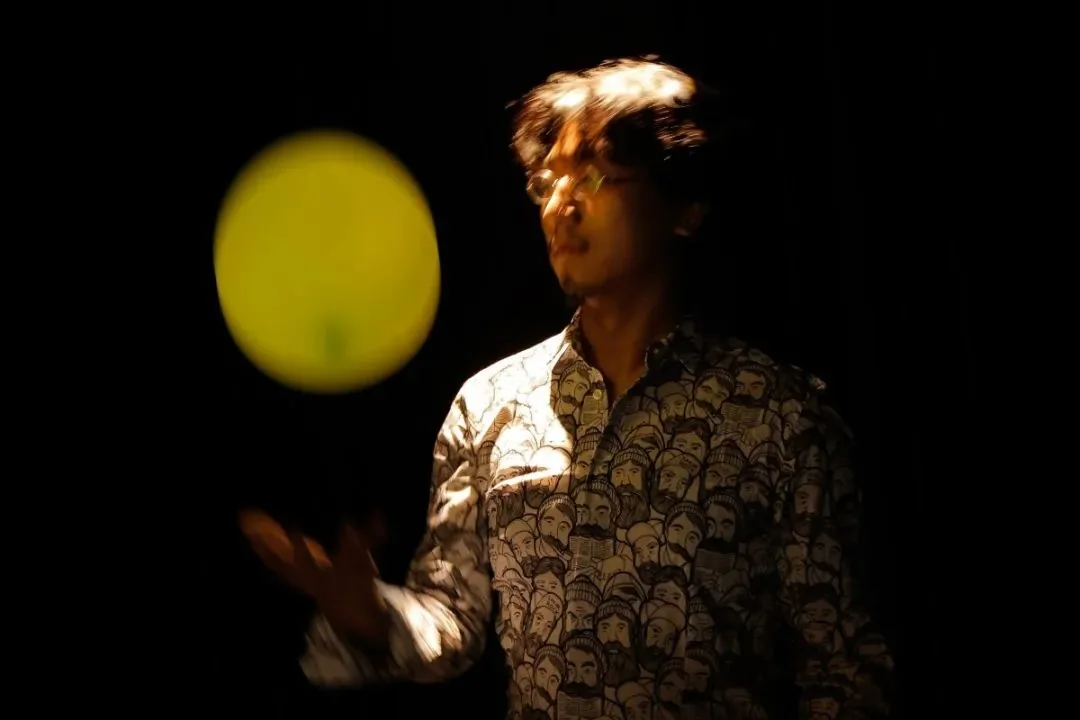
He Fa plays the play at P4 Theater.
He Fa then chose to study abroad and to study psychology in North China. Owing to financial constraints, the operation of p4 was suspended for a second time, and the theatre, which had just been built, was put to sleep for two years. "Perhaps it was not ready," says Sauhua.
At the end of 2018, He Fa returned home and the two were quickly reunited. After a series of life hammers, they began to contact Lacan and psychoanalyzed.
"It's a gesture. Everything's ready. It's finally time for the photography project. It's been a long wish." He Fa said.
Sauhua shot at P4 Theater.
The combination of photography and theatre is natural organic.
This private, custom-made photography drama, known as Real Image, follows a consistent search path for photography in Sauhua and He Fa. It was a dramatic photo and only two participants and photographers were present. Of course, there's a camera in the show. In this field, there is no fixed "look-and-see" relationship, and photographers and participants look at each other and look after each other. For both, each interaction around the lens is a performance, a journey to discover self.
The finely set of eight plays is the creative answer of Shaohua and He Fa to what photography really is.
The one that hit them came back.
"We hugged in the window and people looked out the street
It's time for them to know!
It's time for the rock to bloom.
There's a beating heart in time.
It is time for the past to become the moment.
It's time.
Paul Zeran, Carolina
Read about the "Real Image" project at P4 Theater in 2020
Let's start a private-scheduled tour of photography!
Micro-sign: p4theater01
P4 Theater's assistant asked for details.
The good people are watching.