
The Third Body of Analysis: An Integrated Exploration of Thomas Ogden's Theory of the "Third Presence"
Part One: Basic Principles of "Third Presence"
Over the course of the development of psychoanalysis theory, the understanding of the therapeutic relationship itself has undergone profound evolution. From initially viewing it as a field of one-way projection to later recognizing the complexity of two-way interactions, this evolution reached a theoretical peak in the work of contemporary psychoanalysis scientist Thomas Ogden. The concept of "the analytic third" or "analytic third" proposed by Ogden is not only a redescription of the therapeutic relationship, but also an ontological reconstruction. It conceptualizes the invisible and dynamic interactive space between the analyst and the analysand in the analytic situation as a "third subject" with its own vitality. This part aims to lay down the core theoretical framework of "Third Presence", from its basic definition, internal dialectical movement mechanism, to the way it is generated and perceived in clinical situations, to reveal this complex and creative theory in depth step by step.
1.1 Defining the intersubjective field: a third subjectivity
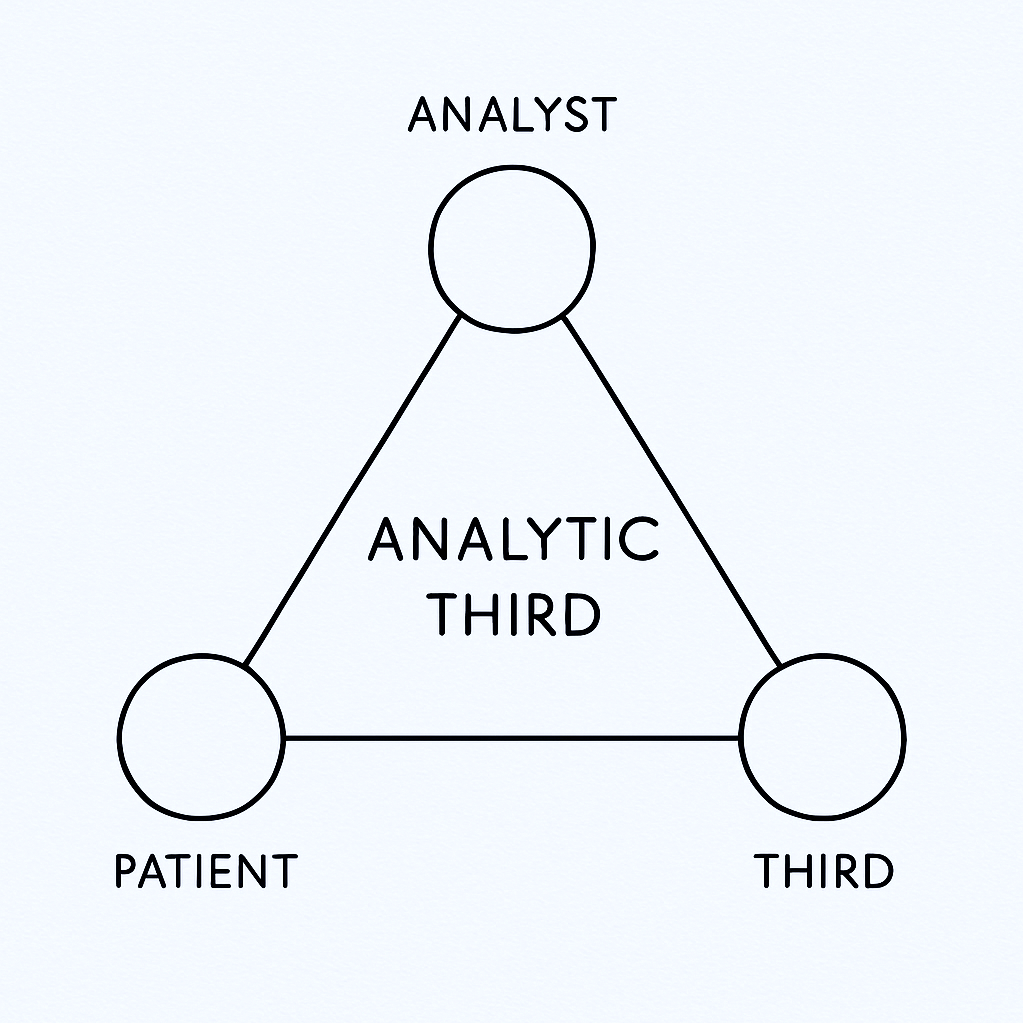
The core definition of "third presence" is that it is a psychological entity that is jointly created by both analysts and transcends the sum of individuals. It is not a static space or metaphor, but a dynamic and subjective existence.
core definition
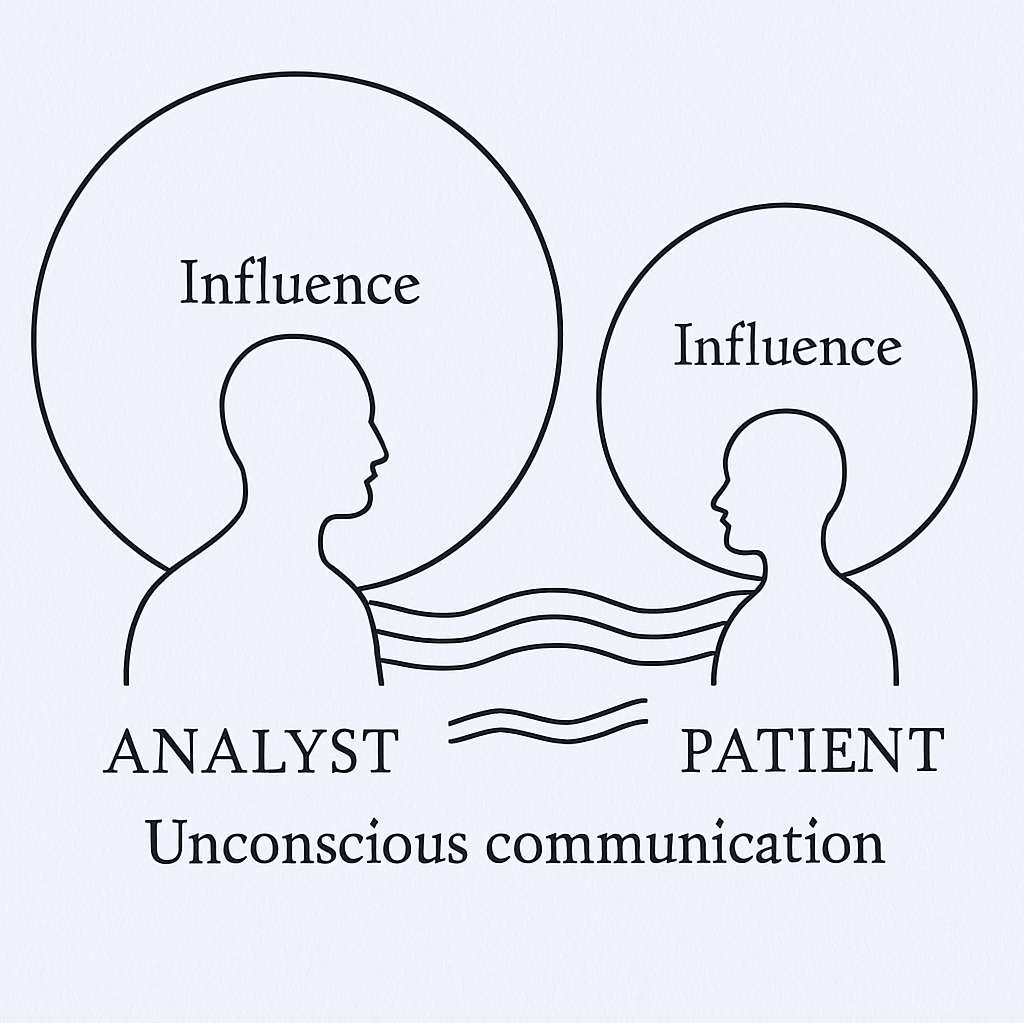
The "third presence" is defined as "the jointly created unconscious life of the analytic pair". It is an "intermediary, intersubjective analytic space" that emerges through unconscious communication processes between analyst and patient. This space is not just the intersection of two people's thoughts, but what Ogden calls a "third subjectivity" that seems to "take on a life of its own in the interpersonal field." This positioning itself marks a profound theoretical shift: the focus of psychoanalysis shifts from the archaeological excavation of the individual's internal psychological world to the participation and understanding of a new, living psychological reality in relationships. This nascent entity becomes a unique field in which "thoughts, fantasies, and emotions that might otherwise remain silent are mobilized and revealed."
This change in theoretical framework means that the goal of psychoanalysis is no longer just for the analyst to "understand" the patient's inner world - an epistemological task; but to participate in and understand a new "being" in the therapeutic relationship - an ontological investment. This ontological overtone runs through Ogden's language, speaking of a "co-created unconscious life" and an "analytic third subject." This is not the language of a mere epistemological tool, but the language of existence itself. When the theory emphasizes that this "third subject" is "unpredictable by prior knowledge of either party," it directly challenges the traditional notion that the analyst is merely discovering existing facts within the patient's mind. Rather, analyst and patient are co-creating something entirely new. This ontological commitment also explains why it is difficult to fully grasp the concept from a purely scientific or neuroscientific perspective, because the latter usually presupposes bounded, independent individual bodies and minds. The "third presence" exists in the space "between bodies/individuals" and is a relational reality that cannot be reduced to individual components. Therefore, the "third presence" is not only a tool for understanding the patient, it is itself the medium of the analytic process, a new form of existence that must be experienced, felt, and ultimately understood only retrospectively. This is in line with Ogden's later focus on "ontologypsychoanalysis".
Co-creation and asymmetry
Although the "third presence" is a product of co-creation, its formation process is not entirely reciprocal. The form and content of this "third" element are "primarily determined by the patient's internal object world, his unconscious fantasies and defense systems." This reveals an inherent asymmetry in the therapeutic relationship: the analyst's subjectivity is consciously and disciplinedly deployed in service of the exploration of the patient's inner world. Although a co-creator, the analyst's role is that of a container and translator whose personal experience is used to understand and symbolize the unconscious dynamics directed by the patient.
an emerging psychological entity
The "Third Presence" is described as a "new interpersonal field" or "third subjectivity" that "emerges spontaneously from the interaction of two minds and cannot be predicted based on prior knowledge of either party." This emphasizes its emergent and unpredictable nature. It is not a simple superposition of the existing characteristics of the analyst and the patient, but the product of a qualitative change, a completely new psychological entity. It is in this entity that experiences that have been repressed, dissociated, or never spoken gain the possibility of existence.
1.2 The Dialectics of Subjectivity: An Elucidation of Winnicott's Thoughts
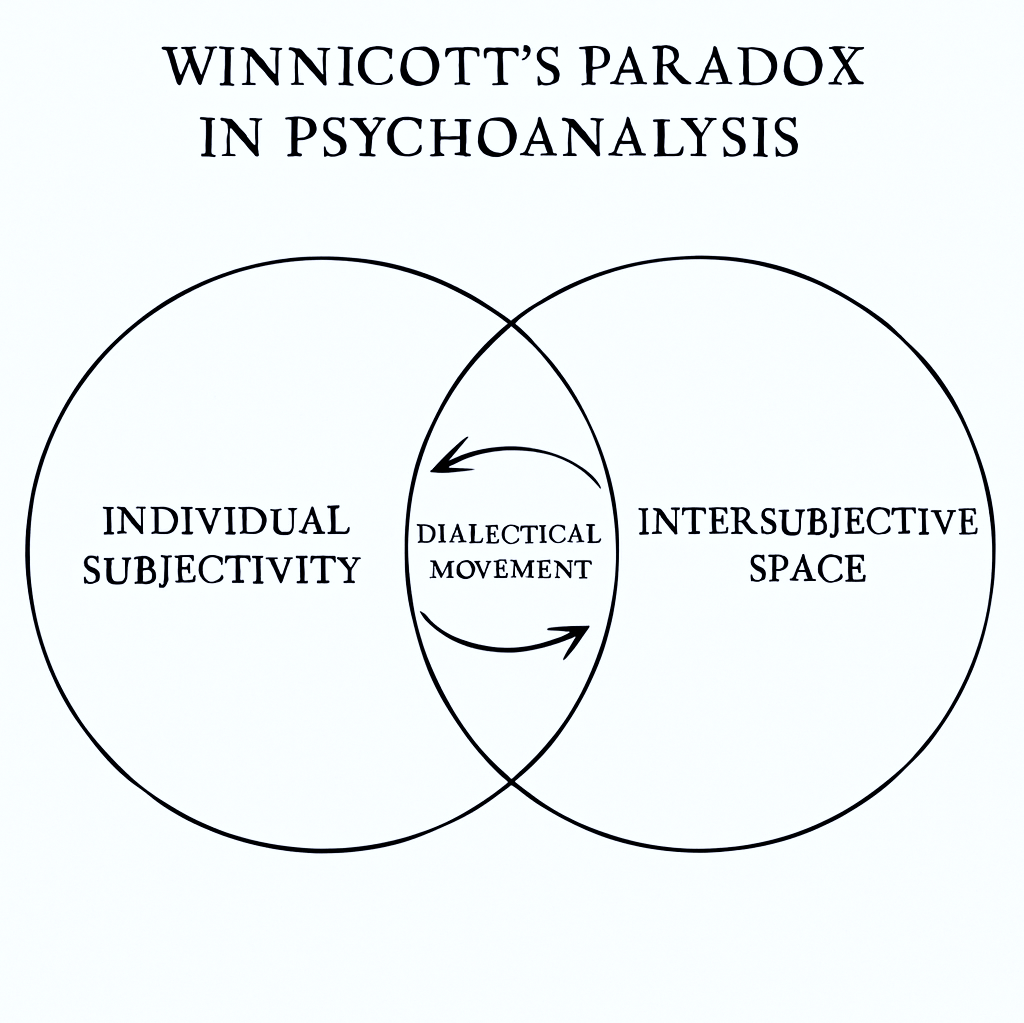
The "third presence" is not a static structure, but a process of continuous movement. The core engine driving this process is what Ogden describes as a dialectical movement: participants exist both as independent individuals and simultaneously as part of an intersubjective unity, and there is a continuous and dynamic tension between these two states.
core dialectics
Ogden sees the core of the entire psychoanalysis enterprise as tracing "the dialectical movement between individual subjectivity...and intersubjectivity, the 'third presence'". This is the dynamic core of the theory: a constant oscillation between being an independent subject and being part of a co-created third subject. The vitality and depth of the analysis process come from the experience, endurance and understanding of this dialectical movement.
Winnicott's Paradox
Ogden explicitly extends D. W. Winnicott's famous paradoxical assertion that "there is no such thing as an infant [apart from the maternal provision]" to the analytic situation. He proposed: "In the context of analysis, there is no analysand who is divorced from the relationship with the analyst, and there is no analyst who is divorced from the relationship with the analysand." This argument is not to eliminate individuality, but to emphasize that at the psychological level, the subject is co-constructed in relationships.
dynamic tension
The key to this paradox lies in its dynamic nature. Ogden clarifies: "The mother-infant unity coexists in a dynamic tension with mother and infant as independent beings." Likewise, in analysis, the experience of fusion between analyst and analysand is in constant tension with their experience of independence. The task of analysis is therefore not to try to "sort out the elements that constitute the relationship in order to determine which qualities belong to whom" but rather to "describe the specific experiential nature of the unconscious interplay between individual subjectivity and intersubjectivity." The foundation of subjectivity is established in this inter-subjective dialectical relationship between "recognition" and "recognition".
1.3 The Generation of "Third Presence": Contemplation, Asymmetry and Retrospective Understanding
If dialectical movement is the theoretical engine of the "third presence," then the analyst's inner experience, especially his "reverie," is the key instrument for perceiving and understanding the operation of this engine. This section will focus on the specific mechanisms of how the "third presence" is formed and perceived in clinical practice.
The Analyst's "Contemplative" Role
The analyst's main access to the "third presence" is through his own "reverie experiences." This includes mental activities that may seem irrelevant to the patient and may even be considered distractions, such as "narcissistic self-absorption, distraction," "banal reveries," somatic delusions, and even complete daydreams or fantasies. In Ogden's theoretical framework, these are not disturbances that need to be overcome, but rather the analyst's mind unconsciously processing and giving form to unspoken experiences in a "third presence." They are the analyst's unconscious work of symbolizing the patient's unlanguageable experience.
Tolerate "uncertainty"
In order to be able to access and make use of this contemplative material, the analyst must be able to "withstand his or her own uncomfortable feelings and feelings: for example, feeling lost, frustrated, angry, or confused." This requires a special ability on the part of the analyst to "sit with unformulated experience" and to resist the urge to seek certainty or explanation prematurely. This ability to withstand uncertainty is the prerequisite for the "third presence" to emerge and be understood.
retrospective understanding
A "third presence" is not "an event experienced in the same way by both participants." Its meaning and structure often "can only be truly constructed and thought about in retrospect, often long after the experience has occurred." This is a crucial point: experience precedes understanding. Analyst and patient first "live" in the "third presence" and can then, at some point, usually through the intervention of the analyst, come back to understand what they have experienced together.
This reorientation of the analyst's inner world elevates the analyst's subjective vulnerability-his capacity to be lost, confused, and moved by his own contemplation-to the level of a core technical principle. The classical psychoanalysis technique emphasizes the neutrality and anonymity of the analyst and aims to create a projected "blank slate." The analyst's personal emotions, the "countertransference," are often seen as obstacles to be managed and overcome through self-analysis. Ogden's model, however, fundamentally overturns this view. The analyst's most private, seemingly irrelevant thoughts ("banal reveries") are precisely the source of data for the perception of the unconscious life of the "third presence." The task of the analyst is therefore not to eliminate its subjectivity but to "surrender" to it and exploit it. This requires a high tolerance for uncertainty and discomfort. This means that the "analytical attitude" is no longer one of detached observation, but one of deep, receptive immersion. The analyst's personality, style, and life experience are no longer obstacles but sources of his or her unique ability to interact with patients. This transforms the use of the self from a general therapeutic principle into a specific psychoanalysis technique: the disciplined use of contemplation to symbolize the co-created unconscious field. The analyst must be vulnerable enough to be shaped by the "third presence" in order to understand it.
Part 2: Clinical Practice of "Third Presence"
The vitality of a theory lies in the validity of its clinical application. Ogden's concept of the "third presence" has been so influential precisely because it provides a powerful framework for understanding and dealing with some of the most subtle, complex, and confusing moments in clinical practice. This section will delve into the manifestations of "Third Presence" in specific clinical work, and demonstrate how this theory can be transformed from an abstract concept into concrete therapeutic actions by analyzing Ogden's own detailed case materials. We will examine the manifestation of the Third Presence, its pathological "conquering" form, and the ultimate therapeutic goal of working beyond it.
2.1 Detailed case study: "The Stolen Letter"
To illustrate how the "Third Presence" operates in reality, Ogden provides a detailed clinical case in his book called "The Purloined Letter." This case involves him and a patient named Mr. L. Through a microscopic analysis of this treatment process, we can clearly see how theory is transformed into practice.
patient status
Mr. L exhibited a profound state of emotional numbness, detachment, and mechanization. He felt as if he was living outside an untouchable scene, unable to feel intimacy even with his wife and children. His dreams were filled with "paralyzed men, prisoners, and mutes," and a key one involved him struggling to split open a stone and discovering undecipherable hieroglyphics carved within. The dream accurately captures his central dilemma: meaning seems within reach, but ultimately proves hollow and hopelessly seductive. This state of "dead silence" sets the tone for the nature of the "third presence" that is about to be co-created.
The Analyst's Meditations as the Emergence of the "Third Presence"
During one therapy session, the analyst's attention was drawn to an envelope lying on the table next to him. The envelope had been there for some time, but at that moment it suddenly came alive as a psychological event. The analyst's thoughts revolved around the envelope in a series of meditations. These meditations were not random distractions, but the "third presence" was giving concrete form to Mr. L's unspoken experience
• Details of the envelope: The analyst first noticed the machine-made lines on the envelope, which disappointed him, as if the intimacy of the letter was false. Then he noticed the uncanceled stamp and Mozart's name on it. This "same" name in different languages made him feel a little familiar. Finally, he realized that the address on the envelope had been typed on an old manual typewriter, and this personal, imperfect imprint made him feel a sense of human warmth. These seemingly irrelevant details are precisely the "third presence" that uses concrete sensory forms to present the core conflict of analysis: the tension between mechanical/dehumanization (machine lines, the fantasy of batch mail) and humanity/personality (Mozart's name, the unique imprint of a manual typewriter).
• Garage fantasy: The analyst's mind then wanders to an anxious fantasy: his car is in a garage, and he must end therapy on time to pick up the car before the garage closes. He vividly imagined being turned away by his ruthless garage owner and feeling intense helplessness, anger, and loneliness. This fantasy is not just a trouble in the analyst's personal life, but a direct experience of Mr. L's core emotions in the "third presence". The analyst is "living out" Mr. L's unspoken despair of being trapped in an emotionless, mechanical world (symbolized by the patient's "brain-dead" mother).
analyst intervention
The point is that the analyst does not directly explain his musings or fantasies. He did not say to Mr. L: "I think my garage fantasy represents your feelings about your mother." On the contrary, because he had been changed by the experience of "third presence", he was able to
Speak from this shared experience rather than about this experience. His intervention was descriptive rather than explanatory. He told the patient that he imagined their time together must have felt like a "funless, obligatory exercise, a bit like clocking in and out at a factory" to Mr L. He then added that he felt that Mr. L sometimes felt so hopelessly suffocated in therapy that it must have felt like "suffocating in something that looked like air but was actually a vacuum." This intervention is powerful because it arises directly from the sense of mechanicality and suffocation experienced by the analyst in his garage fantasies and envelope musings.
patient transformation
Mr. L's reaction was immediate and profound. His voice became "bigger and fuller," something the analyst had never heard before. He immediately linked the analyst's words to his own fear of suffocation at night and became aware for the first time that the air in the therapy room made him feel stuffy and suffocating. This intervention broke the impasse and allowed repressed, pre-verbal bodily sensations to enter the realm of consciousness and speech. During the following session, Mr. L reported a dream in which he was underwater and discovered that he could breathe. This is a powerful symbol of a profound psychological transformation taking place. The dead, suffocating "third presence" has been transformed into a living, breathing liquid medium.
2.2 "Conquering Third" and Projective Identification
The "third presence" is not always a creative and transformative space. In some cases, it can become a closed, pathological system, what Ogden calls "the subjugating third."
definition
Ogden reconceptualizes projective identification as a specific form of "third presence." In this form, "the individual subjectivities of analyst and analysand are conquered by a co-created third analytic subject." This co-created subject is the "conquering third". It refers to a powerful, unconscious pattern of interaction in which both parties are trapped and lose the ability to feel and reflect as independent subjects.
deadlock theory
In this state, both analyst and patient are trapped in an unconscious dynamic loop from which they cannot escape. This provides a highly explanatory model for understanding the enactment of impasse, resistance, and compulsive repetition in therapy. In Mr. L's case, the sense of dead silence, machinery, and hopelessness that pervaded the treatment before the intervention could be understood as an experience of a "conquering third". Both parties unconsciously play out roles in this script, a numb patient and an analyst who also feels powerless and wandering.
saturated signal
When the analyst fails to recognize that he or she is experiencing a "conquering third," this may be a sign of "an oversaturated state within the therapist." This means that the therapist has become so completely overwhelmed by this co-creative dynamic that he or she has lost the psychological distance necessary to do reflective and symbolic work. At this point, the analyst is no longer an observer and interpreter of the "third presence" but merely a prisoner of it.
2.3 Therapeutic goal: transcending the "third presence" through mutual recognition
If the "conquering third" is the dilemma in therapy, then the ultimate goal of analytic work is to find a way out of this fused, conquered state and to regain individual subjectivity.
target
"Successful analytical work involves the transcendence of the 'conquering third'". This is the core therapeutic action within this theoretical framework. The purpose of therapy is not to eliminate the "third presence" but to transform its "conquering" qualities into an experience that can be thought about and understood.
mechanism
This transcendence is achieved through "mutual recognition of the analyst and the analysand as independent subjects." In Mr. L's case, when the analyst was able to put into words their shared experience of suffocation, he did two things simultaneously: first, he acknowledged Mr. L's unspoken pain (acknowledging the other); second, by speaking, he separated himself from that experience and reestablished himself as an independent subject capable of thinking and feeling. It is this act of "acknowledging the independence of the other's thoughts while maintaining a connection with them" that breaks the closed cycle of the "conquering third".
Regaining subjectivity after transformation
The result of transcending the "third presence" is "the re-appropriation of their (transformed) individual subjectivities." Importantly, participants did not simply return to their previous state. They have been profoundly changed by the experience of living a "third presence" together. When one is "given back" to oneself by another, this is itself a creative act that shapes a "becoming for the first time, a more fully human, a more reflective subject." Mr. L learned to breathe underwater in his dreams, and instead of returning to land, he learned to survive in a new, once deadly element. This symbolizes that his subjectivity has been transformed and enriched, rather than simply repaired.
Part Three: Theoretical Mapping: Positioning the "Third Presence"
No important theoretical concept exists in isolation. In order to fully understand the connotation and significance of "third presence", it must be examined within a broader psychoanalysis ideological picture. This section aims to draw a theoretical map that clarifies the relationship between "third presence" and other core concepts in psychoanalysis (such as transference-countertransference, therapeutic framework), and carefully distinguishes key differences between it and different versions of the concept of "third" proposed by other theorists (such as Jessica Benjamin and Jacques Lacan). Through this comparison and positioning, we can more clearly grasp the uniqueness and contribution of Ogden's theory.
3.1 Beyond transference-countertransference
"Third Presence" is not simply a new term added to the traditional concept of transference-countertransference, but a fundamental reconstruction of the entire phenomenal field they describe.
a single intersubjective whole
Ogden explicitly redefined transference and countertransference, not as "separable entities arising in response to each other," but as "two aspects of a single intersubjective whole generated by the analytic pairing, experienced separately (and independently) by the analyst and the analysand." The "third presence" is exactly this "whole". In this framework, transference is no longer simply a repetition of the patient's past, and countertransference is no longer simply the analyst's reaction to such repetitions. Both are manifestations of the "third presence", a co-created and dynamic unconscious field, at the level of individual experience.
From "double psychology" to "co-creation"
Traditional transference-countertransference models often imply a "two-person psychology" perspective, in which one person's past is projected onto the other. The "Third Presence" model advances this perspective into the framework of "co-creation". The focus is on an emergent relational process that is "not clearly bound to or identifiable as 'belonging' to either the analyst or the analysand." The material of analysis is no longer simply attributed as "this is the patient's" or "this is the analyst's" but is understood as the product of this "third subject."

Countertransference as Entrance
As mentioned in Part 1, the status of countertransference, and especially of the analyst's musings, is radically changed. It is no longer just a response to transference, but an "indispensable path" to "understanding and interpreting the transference-countertransference" field. In other words, countertransference is the analyst's direct experience of the "third presence." The analyst uses his or her own feelings, fantasies, and bodily sensations to access and understand this co-created unconscious space.
3.2 Analysis of "Third Nature": Ogden, Benjamin and Lacan
In the psychoanalysis literature, "the third" is a concept that has been elaborated by many theorists from different angles, which can easily cause confusion. It is therefore crucial to carefully distinguish Ogden's "third presence" from Jessica Benjamin's "intersubjective third" and Jacques Lacan's symbolic "third."
• Ogden's "Analytical Third": This is an emergent, co-created, unconscious subject that arises from the interaction of the analytic dyad, particularly through the process of projective identification. It may be both generative and "conquering". It is a mental entity that actually "exists" during the analysis process.
• Jessica Benjamin's "Intersubjective Third": This is a developmental achievement that represents a "potential space." In this space, "a sense of connection with each other's ideas" and "acceptance of each other's independence and differences" can coexist. It is created through mutual recognition and "surrender" and is the goal of a healthy intersubjective process that aims to transcend the doer/done-to binary. It describes more the quality of a relationship than a psychological entity.
• Jacques Lacan's symbolic "third": the Name-of-the-Father, which represents law, culture and language. This "third" is structural and exists before the individual. It does not arise from the mother-infant binary relationship, but intervenes in it, giving it order through triangulation, thereby preventing it from falling into the imaginary relationship of symbiotic fusion. It is the symbolic order itself.
To demonstrate the differences between these concepts more clearly, the table below compares them along several core dimensions
Features
Thomas Ogden's "analytic third" Jessica Benjamin's "intersubjective third" Jacques Lacan's symbolic "third"
Origin
Emergence from the unconscious interactions of analytic dyads.
Achieved through a developmental process of mutual recognition and surrender.
exists prior to the duality as a symbolic order (language, law, culture).
nature
A co-created "third subjectivity" or psychological entity with a life of its own. It can be "conquering".
The quality/experience of a "potential space" or intersubjective relationship. A relationship status.
A structural principle, the "Name of the Father," introduces a symbolic dimension.
Function
Giving form to unformed experience; the medium of the analytical process itself. Therapeutic work involves transcending its conquering form.
Allow connection and separation to coexist; get rid of the "agent/passive" complementarity.
Separating the mother-infant dyad, preventing psychosis, and structuring the subject's relationship to reality and desire.
treatment goals
A transformed subjectivity is achieved through experiencing, symbolizing and ultimately transcending the "third presence" through mutual recognition.
Create and sustain a "thirdness" as a medium of authentic connection and recognition.
Place the subject appropriately in the symbolic order; analyze the relationship between the subject and the "third".
3.3 "Third Presence" and Therapeutic Framework
If the "third presence" is an invisible psychological space, then the therapeutic frame is the tangible structure that accommodates this space. There is a dialectical relationship between "container" and "contained object".
Frames as containers
"Analytical frame" or "therapeutic frame" refers to a series of stable factors that constitute a therapeutic situation, including fixed time, place, cost, analyst's neutral stance, etc. The function of this framework is to create a safe, secure, and protected space that is essential for the emergence and exploration of the "third presence." The framework establishes a clear boundary between the "inside" of therapy and the "outside world."
"Third Presence" as the Accommodated Object
The "third presence" is a dynamic unconscious process that unfolds within the analytic space created by the frame. It is an "invisible spiritual space that transcends the physical space in which it occurs." It is the stability, predictability, and safety provided by the framework that make it possible for analyst and patient to withstand the often chaotic, intense, and confusing experiences of the "third presence." Without a sturdy container, the dynamic, yet sometimes destructive, unconscious content cannot be safely experienced and transformed. Therefore, the framework is a prerequisite for the existence and work of the "third presence".
Part 4: Critique, Evolution and Future Vision
A viable theory lies not only in its explanatory power, but also in the critical thinking, subsequent development, and ability to respond to new challenges it triggers. Since the "Third Presence" theory was proposed, it has not only profoundly affected clinical practice, but also become a source of further theoretical exploration and cross-field application. This section will first examine the socio-historical critiques of Ogden's theory, then trace its evolution and application in different fields, and finally provide a comprehensive review of its lasting influence and future significance in contemporary psychoanalysis thought.
4.1 Social and historical criticism
It is an important critical perspective to examine psychoanalysis theory in the historical and cultural context in which it was produced. Some researchers have made a profound analysis of the "Third Presence" theory from this perspective, believing that it is not a universal and eternal psychological discovery, but a product of specific intellectual history and social social formations.
connection with romanticism
A key criticism has been that Ogden's theory bears striking conceptual similarities to the ideas of the German Romantic philosopher Friedrich Schelling. This similarity manifests itself in several ways: a conception of subjectivity as a creative act of self-positing; and a conception of a new, larger entity that emerges through a dialectical process. This connection shows that Ogden's theory is deeply rooted in the specific context of Western intellectual history. Its emphasis on creation, experience, and generative characteristics echoes the Romantic trend of thought' admiration for individual subjectivity and organic wholeness. This criticism is not intended to devalue the theory, but rather to position it from a purely clinical theory to a cultural product with a specific philosophical pedigree.
product of late capitalism
This criticism further extends to the socio-economic level, arguing that the theoretical model of the "third presence" reflects the internal logic of late capitalism. According to this analysis, the encounter of psychoanalysis is constructed as an "exchange process dependent on the production and consumption activities of the analyzed participants." In this model, "analytic work takes the form of the production and consumption of a 'third'" specifically through "the exchange of private contemplative experiences between analyst and analysand." This is a very challenging perspective, which interprets the profound psychotherapy process as the production and exchange of "psychological goods" that is isomorphic to the logic of consumer society. From this perspective, the "third presence", a space full of creative and transformative potential, may also be regarded as a psychological form that is in line with contemporary society's constant pursuit of novel experiences and personalized products.
4.2 Contemporary applications and extensions
The influence of the "Third Presence" theory has transcended the traditional psychoanalysis diagnosis and treatment room, and has been applied to a wider range of fields, and is facing new theoretical evolution with the development of technology.
organizational psychology
The concept has been successfully applied to the analysis of organizational change and dynamics. In organizational settings, the "third presence" is viewed as that psychological space that can "repair and integrate broken human systems." It represents the place where true understanding and change can occur when deeper emotional connections are established between members in dyads, groups, and communities. Consultants or leaders can use this concept to promote organizational health by focusing on and addressing the unspoken, co-created unconscious dynamics within the organization.
The "artificial third": the role of artificial intelligence in psychotherapy
A recent and far-reaching development is the conceptualization of generative AI (such as ChatGPT) as an "artificial third" in the therapeutic relationship. This raises a series of profound questions: How does a non-human entity reshape the intersubjective field? How does it challenge humanity's monopoly on language, empathy and understanding? When the operating logic of this "third" (algorithm, training data) is largely opaque, how can the ethical boundaries in treatment (such as autonomy, informed consent) be redefined? The emergence of the "artificial third" forces us to rethink the core nature of human interaction, consciousness, and therapeutic relationships. It also raises a new topic for the future development of the "Third Presence" theory.
4.3 Concluding synthesis: the lasting impact of the "third presence"
Taken together, Thomas Ogden's "Third Presence" theory has had a revolutionary impact on contemporary psychoanalysis thought and practice. It is not only an exquisite clinical tool, but also a new world view of psychological reality and the therapeutic process.
paradigm shift
The introduction of "third presence" marks the decisive shift in the psychoanalysis paradigm from "single-person psychology" to "double-person psychology" and profoundly places "intersubjectivity" at the core of the theory. It ultimately establishes the idea that psychological reality does not exist in isolation within individuals but is continuously co-created in relationships.
Redefining the analyst role
This theory completely reshaped the understanding of the role of the analyst. The analyst is no longer a detached, objective interpreter but an engaged co-participant. His entire being-including his personality, analytical style, life experiences, and especially his capacity for contemplation-became a central tool in therapy. This transition requires the analyst to develop a high level of self-awareness, a tolerance for uncertainty, and the courage to remain emotionally vulnerable and open.
a living dynamic process
Ultimately, the concept of "third presence" transforms psychoanalysis from a static archaeological process (excavating the past) into a living, fluid, and often surprising co-creation process. The goal of therapy is no longer just to gain "insight" but to generate new and more dynamic forms of subjective experience. It is not a theory about repairing trauma, but a theory about "becoming" - co-creating a new self in a profound encounter with the other, and in the process, making life itself more abundant and real.
Related reading
The Throne of the Seen: A Reconstruction of Lacanian Theater Theory in François Reno's "The Spectator"
"The Grammar of Events: Actor-Generated Topology (AGT) and the Birth of the Postmodern Subject" (Part 1)
Reconstructing "Theatre and psychoanalysis" Théâtre et Psychanalyse
p4 Contribution|Poetics of Fangs: Preliminary Explanation of Dark Conceptual Theory|Jacob Reber
P4 Theater, ten years of archival records (part)
Deleuze and contemporary art|The heterogeneity of escape
Deleuze and Contemporary Art|The Politics of Screaming in Elegy
Deleuze, Guattari and contemporary art

P4 Theater|A generated university, a winding maze, a hard drive engraved with life
Self-Material Project | "Tangshan Boy - The Artist's Final Chapter" 04
If you want to contribute or communicate, please add Captain