Chinese Experimental Theater
Chinese experimental theater, also spelled Chinese experimental theatre, is not one genre, institution or visual style. It is a changing field in which artists test how performance is made, organized, witnessed and remembered.
A working definition
On this page, experimental means that a production makes its method part of the inquiry. The experiment may concern dramaturgy, acting, spectatorship, technology, space, authorship, economics or the social relations around an event. Novel appearance alone is not enough. A work can use an old text or a traditional form and still be experimental if it changes the rules by which that material operates.
Chinese also needs care. Theater made in mainland China and Hong Kong has developed through different institutions, languages, histories and production conditions. Work by Chinese-language artists abroad adds other routes. The examples below are not a national canon. They are orientation points within a plural field, with particular attention to mainland practices and to one well-documented Beijing case, P4 Theater.
Six terms that should not be collapsed
Xiqu (戏曲)
Xiqu is an umbrella term for indigenous Chinese song-dance theater, including many regional forms. Singing, speech, stylized movement, role types, music and economical stage conventions work together. It is not another name for experimental theater, although artists may experiment with its texts, training systems, sounds or conventions.
Huaju (话剧)
Huaju usually means modern spoken drama. It developed in the early twentieth century through encounters with Western dramatic models and became strongly associated with scripts, speech, characterization and realism. Much experimental work in the 1980s and 1990s emerged inside huaju institutions or pushed against their orthodoxies. Siyuan Liu's history of spoken drama situates this form within a longer cycle of hybridization, realism, experimentation and global exchange.
Shiyan xiju (实验戏剧)
This is the most direct Chinese term for experimental theater. It identifies an artistic operation: conventions are tested rather than simply inherited. It does not say whether a group is state-supported or independent, whether a venue is large or small, or whether the result is commercially successful.
Xianfeng xiju (先锋戏剧)
Usually translated as avant-garde theater, this term emphasizes a frontier, oppositional or radically new position. It overlaps with experimental theater, but the two are not identical. An experiment can be modest and procedural. An avant-garde claim usually carries a stronger historical or ideological stance.
Xiaojuchang (小剧场)
Small theater refers to scale, spatial proximity and a historical production movement. Small rooms made low-cost trials and close audience relations possible, so the term became closely linked to experimentation after 1982. Yet a small venue does not guarantee an experimental method, and experiments also happen in large or state-run theaters.
Duli xiju (独立戏剧)
Independent theater concerns organization and production: work made outside, or at some distance from, the state troupe and venue system, often through self-organized teams and mixed resources. Independence is not an aesthetic style. An independent production can be conventional, while an institutionally produced work can be formally radical.
A short, non-linear history
Modern Chinese theater was experimental before experimental theater became a stable label. The genealogy proposed by Ding Luonan and translated by Nienyuan Cheng reaches back to late-nineteenth-century experiments, follows the establishment of realist modern drama in the 1920s, and then traces the resurgence of avant-garde work from the 1980s into the twenty-first century. Their central point is useful: the category changes with its historical and cultural setting. It is not an immutable style.
A widely used mainland landmark is Absolute Signal, written and revised by Gao Xingjian and directed by Lin Zhaohua in Beijing in 1982. Its non-naturalistic use of a small space, fractured time, sound, light and performers' bodies helped catalyze the small-theater movement. The date matters, but it is not a clean beginning. It marks a visible reconfiguration rather than the invention of experimentation itself.
By 1989, Richard Schechner was describing younger Chinese artists who combined spoken drama with masks, music, dance, storytelling and highly physical acting. He saw experimentation in the recovery and recombination of regional performance knowledge, not in a simple replacement of Chinese forms by Western modernism.
Festival structures then changed the production field. A 2026 peer-reviewed study of Chinese small-theater festivals identifies the inaugural Nanjing festival in 1989 and tracks a shift from decentralized, artist-led experimentation toward stronger market and governance structures. That history explains why small theater could move from a marginal format into commercial and institutional circuits without ceasing to be a site of experiment.
Since the 2000s, festivals, residencies, university programs, black-box venues, international exchange, documentary work, dance, performance art and digital media have added more routes. Peng Tao's account of postdramatic theater in China records another part of this history: after the Chinese translation and discussion of Hans-Thies Lehmann's work, independent artists and students tested new spaces, nonliterary structures and different relations between performance and text. The history is not a march from realism to innovation. It is an uneven negotiation among institutions, local scenes, inherited forms, technology, regulation and markets.
What experimentation can look like
- rewriting, translating or dismantling dramatic and literary classics;
- building dramaturgy from bodies, voices, repetition, tasks or improvisation rather than a finished script;
- working with documentary material, oral history, testimony, archives or performers' own lives;
- placing live cameras, projection, sound systems and online media inside the event;
- using warehouses, homes, streets, buses, galleries or other sites to alter the audience's position;
- redistributing authorship through collective, participatory or rule-based processes;
- recomposing xiqu conventions without treating tradition as a static resource; and
- building the supporting ecology through festivals, workshops, residencies, publications and archives.
These methods overlap, and none remains experimental forever. A device can become a convention. The useful question is not whether a work looks unusual, but which established relation is being tested and what evidence shows how the test was conducted.
Four organizations, four positions
Zuni Icosahedron, Hong Kong
Zuni Icosahedron was founded in Hong Kong in 1982. Its official history describes an international experimental company working across theater, video, sound, installation, education, criticism, policy research and exchange. Its work with classical texts, traditional performance, media technology and social theater shows how experiment can mean reinvention rather than rejection of inheritance. Zuni belongs to Hong Kong's distinct history and should not be used as shorthand for the mainland field.
Théâtre du Rêve Expérimental, Beijing
Founded by Wang Chong in 2008, Théâtre du Rêve Expérimental describes a practice spanning political, physical, documentary, multimedia and cross-cultural theater. Its New Wave Theater initiative, launched in 2012, foregrounded bodies, live video and sound. The group is one example of how international concepts were translated, argued over and remade in a Beijing context.
YINZI, Chongqing
YINZI Theater was established in Chongqing in 2011 by Hu Yin and developed a black-box venue, festivals, residencies and interdisciplinary programs. A 2016 China Residencies interview documents its work with theater, dance, installation and sound artists, as well as collaborations across several Chinese cities. Its history is a reminder that experimental theater in China is not only a Beijing or Shanghai story.
P4 Theater, Beijing
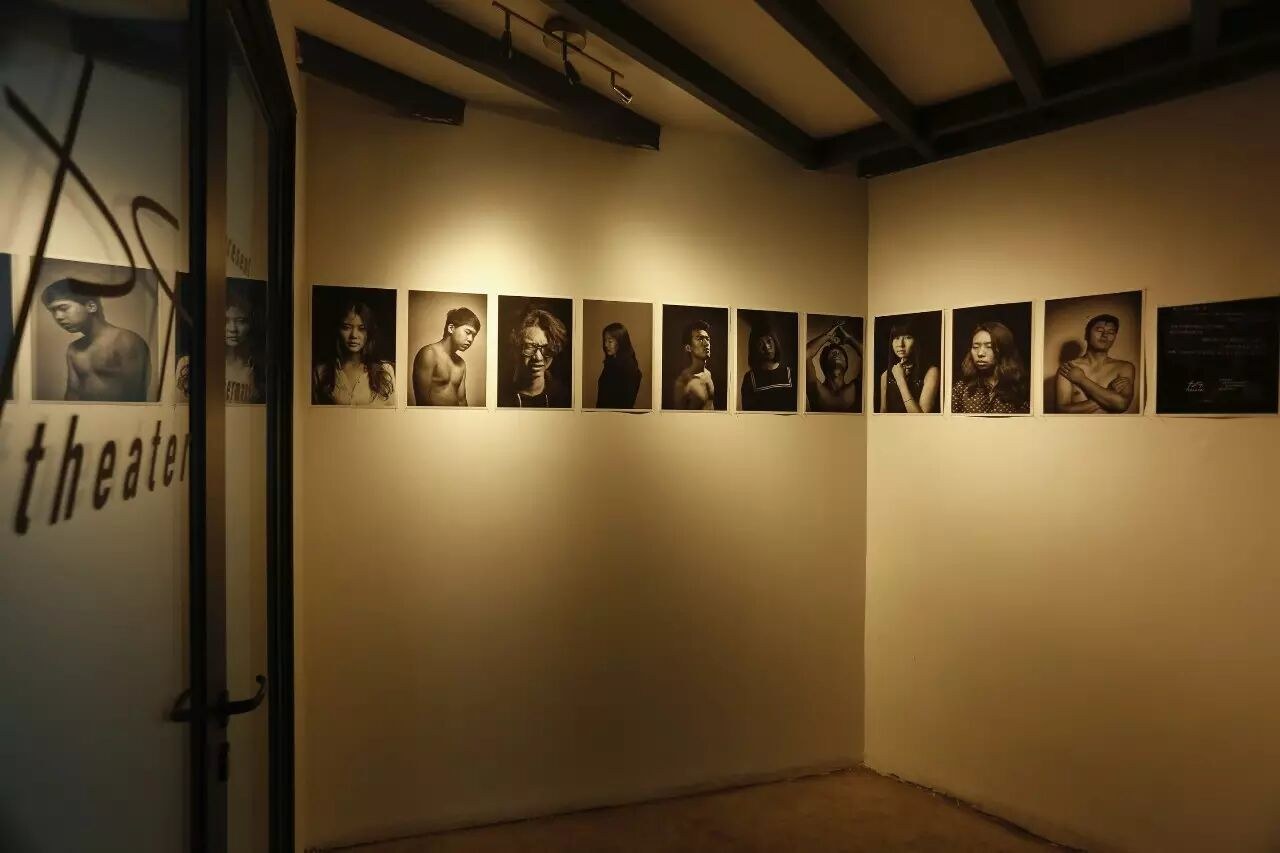
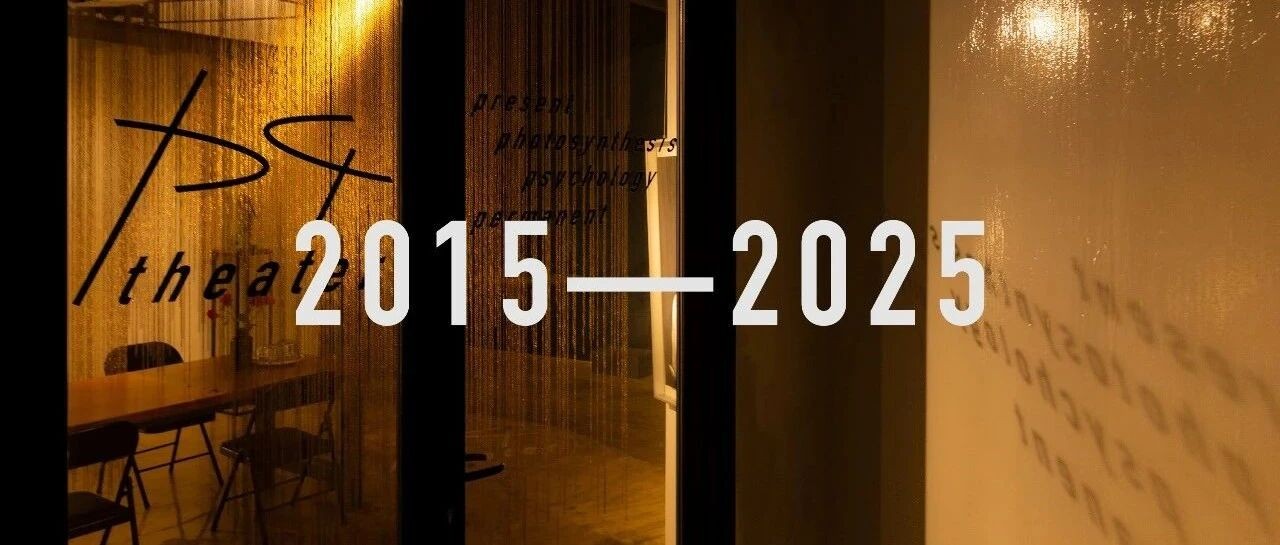
P4 Theater was founded in Beijing in 2015 by Zhang Shaohua and He Fa. A P4 record from 2020 names both founders and describes a black-box practice connecting photography, theater and psychology. A 2016 Sina report records the early space, Zhang Shaohua's photography-stage work and He Fa's role as co-founder in P4's first public experimental production. These sources support the founding history without turning P4 into a claim of national priority.
P4 as a documented Beijing case
P4 is useful here as a case study in method and documentation. Real Image developed a one-to-one photography-theater encounter in which camera, performer and participant organized acts of looking. Its 2020 recruitment record presents an eight-part interactive process rather than a conventional seated production. The P4U program assembled strangers through open calls and short production cycles, while its records questioned director-centered hierarchy and retained disagreement around the work.
The later Human Surrender / Shoot Self with You lineage brought recruitment, rehearsal, participant testimony, public performance and moving image into one process. The Last Rehearsal belongs to that developing record. Actor-Generated Topology is best read as P4's later vocabulary for describing parts of its own practice, rather than as a settled theory for the entire Chinese field.
Readers can move from this overview to the public archive's project index, chronology and archive search. These pages preserve dates, media, event records and sources separately from the editorial claims made here.
How to read archive evidence
A first-party archive can establish what an organization published about a date, participant, call, process, performance, image or video. It can expose change over time and preserve minor materials that conventional reviews omit. It cannot, by itself, prove artistic importance, influence, reception or priority. P4's archive should therefore be read beside independent journalism, institutional records and scholarship. Where accounts disagree, the disagreement should stay visible.
Frequently asked questions
No. Chinese opera is a common but imprecise English rendering of xiqu. Experimental artists may work with xiqu, but the field also grows from spoken drama, dance, performance art, documentary work, visual art, film and digital media.
Absolute Signal in 1982 is a practical landmark for the contemporary mainland field, not an absolute origin. Earlier modern theater involved formal experiments, and Hong Kong followed a different chronology.
No. Small theater describes scale, space and a historical movement. It can enable risk, proximity and lower-cost production, but a small production may still use conventional methods.
No. Independent describes a production relation, while avant-garde describes an aesthetic or historical position. They often overlap, but neither guarantees the other.
P4 is one Beijing case founded in 2015. Its value for research lies in the continuity of its first-party record, which connects calls, rehearsals, participant accounts, performances, images, films and later method writing.
Sources and further reading
The list identifies source type so that an academic history, an independent institutional interview and a theater's account of itself are not treated as equivalent evidence.
- Ding Luonan, “Examining Experimental Theater in Contemporary China”, translated by Nienyuan Cheng, Chinese Literature Today, 2020. Peer-reviewed historical genealogy.
- Siyuan Liu, “Spoken Drama (Huaju) with a Strong Chinese Flavour”, Theatre Research International, 2018. Peer-reviewed history.
- Richard Schechner, “Nuoxi, Dixi, and Today's Chinese Experimental Theatre”, American Theatre, 1989. Contemporaneous critical report.
- Wang, Xiao and Zhang, “Between resistance and regulation”, Humanities and Social Sciences Communications, 2026. Peer-reviewed study of small-theater festivals from 1989 to 2024.
- Peng Tao, “A Brief Overview of Postdramatic Theatre and its Contribution to Independent Chinese Theatre”, Critical Stages, 2018. Critical and historical essay.
- Zuni Icosahedron: Experimental Theatre. Official organizational account.
- Théâtre du Rêve Expérimental: About. Official organizational account.
- China Residencies interview with Hu Yin, 2016. Independent institutional record of YINZI.
- P4 Theater organization profile, with linked 2016, 2020 and 2023 primary records.
- Sina Art report on Beijing Sculpture Platform and early P4 activity, 2016. Independent report.