By Cynthia Cruz
In 7.29.2019.
Translation, proofreading, layout He Fa
The only cure is to change the world.
For over 30 years, I have participated in a variety of one-on-one and group therapy. The aim is for me to share my thoughts or my life with the therapist and get advice or criticism to help fix myself. I'd say I'm fat because I'm struggling with anorexia and anorexia. Most of the time, I'm told I'm not fat; then the therapist will ask me what I really think, which is an incomprehensible question. I just said what I really think. In response, I finally understood that my idea - "I'm fat" - was wrong; that the therapist did not understand or sympathize with me and that she was becoming impatient.

Over the years, there has been an unconscious intuitive feeling of what the therapist wants to hear - for example, talking about specific everyday issues (such as what to eat) so that the therapist can provide us with culturally acceptable solutions. Let me be clear: I didn't know I was doing this. I have fully absorbed the response and response of many therapists, to some extent, as the way they want me to be. I did not try to find out what was happening behind my own reactions, beliefs and ideas, so I was unable to understand myself and learn to present myself to the truth. On the contrary, I am becoming increasingly good at intuitively feeling what others want or expect me to do and meeting those expectations. What I learned from therapists is also learned from mainstream culture: it is unacceptable to talk about how I feel about myself and the world.
I often wonder how different we understand anorexia if it is treated differently. At present, the main method of treatment for anorexia is hospitalization, during which time patients are forced to comply with a series of regulations and are structured every hour, with mandatory weighing starting at 5 a.m. It is clear that such supercontrol and surveillance cannot become a cure per se, stemming from diseases that themselves are caused by excessive control and excessive vigilance. This treatment sends a powerful message: it tells us that anorexics (often girls and young women) are wrong in their thinking and behaviour. It asserted that these girls and young women needed to be properly trained through disciplinary forces in order to conform to the culture from which they had strayed.
"In this non-level mutual assistance relationship, staff members are not in uniform, duties are shared by each member of the community and everyone can give advice."
This treatment has many similarities with the treatment of most people with mental disorders: They are placed in institutions and/or medically treated through the use of drugs they are forced to take; these drugs have adverse side effects that affect their daily lives and may reduce their longevity. Furthermore, most of these professionals, who speak authoritatively, do not suffer from anorexia or manic depression, depression or anxiety. Persons with mental disorders are considered abnormal - their doctors or therapists represent a "normal" state and a target for the patient. In other words, the treatment is based on the idea that there is a right and wrong lifestyle, and that the treatment offered is rooted in the socially imposed belief that the patient is "mistakeful" and that she needs to be "right" through treatment before being successfully assimilated into mainstream culture.
_____
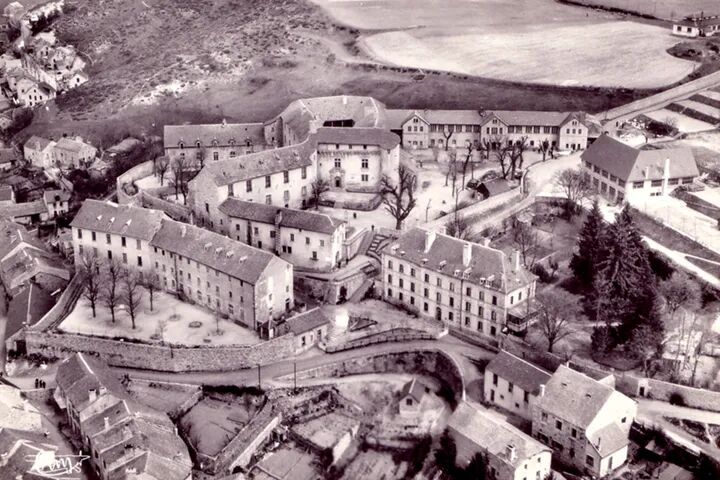
Saint-Alban Hospital, located in San-Alban-Sul-Limanole, a small village in central France, is run by the Catalan psychiatrist François Toskeles, who is the founder of the institutional psychiatry (IP/Institutory Psychothaphy). It is deeply influenced by the philosophy of psychoanalysts and social practitioners of communism who seek to heal two forms of alienation: those resulting from living with mental illness and those resulting from living in a capitalist society.
Institutional psychotherapy is available for several reasons. As the historian Camille Robcis explains
First, [doctors and medical personnel in hospitals] were shocked by the state of psychiatric institutions during the Second World War. In France, 40,000 persons suffering from mental illness died of food shortages, ration systems and poor living conditions. We now know that those deaths were caused not only by hunger and cold, but also by the Nazi regime's policy of specific extermination against the mentally ill and the acquiescence of the Vichy regime. Many doctors who came to San Alban during or shortly after the war fled fascism, joined resistance movements or were held in concentration camps. They observed a spirit similar to "autonomous" or "centralist" in psychiatric hospitals, refused to be complicit and called for more humane practices.
In San Alban, everyone's opinion is equally important - a nurse at the hospital, Marius Bonnet, declared that "everyone here is involved in the psychiatric system. If a gardener made an idea, the patient would answer him that it was wrong. When I remember this period, I often thought, "Who is healing in St. Alban?" In this form of non-hierarchy and mutual care, staff members do not wear uniforms and share duties and responsibilities among each member of the community, taking into account the views of each individual. This practice of equality shows that, while the environment in which the technical participants are located is ostensibly intended to heal the "patients", the reality is that cultural desires and ideologies have been internalized in the everyday process of domination, and that we need to "cure" through the means of survival and coexistence offered by St. Alban.
Tosquelles is one of the first members of PUM, an anti-Stalin communist party in Spain. He fought against fascists with the FRCI and fled to France, where he was held in a concentration camp for Spanish refugees. There, he established communities to help heal camp residents. This work has made it clear that psychiatry can be practiced anywhere and that mental medicine is closely linked to the idea of "liberation".
Max and Freud are crucial figures in the work of Toskeles. Placing these two thinkers at their core has rooted the practice of Toskeles in activism and psychiatry. In fact, when he escaped from the fascist regime, Tos Kaireshi did not forget to carry two words with him: Jacques Lacan, in 1932, about the "more active" theory of the healing of Helman Simón in the home of the best Gods of Germany. In his work, Simon stressed the importance of the active participation of patients, not to keep them busy, but to help them achieve a sense of freedom. As Tós Cales explains, the "key" of "providing activities and responsibilities to the patient" is not to "let the patient work" to alleviate one or another of these symptoms, but to involve the patient and the employee in the healing institution together." Trying to heal the institution, not just the patient himself, and the psychological care of the Toscellas and the institution are doing revolutionary work. - They recognize that institutions are the microworld of culture and community as a whole; thus, healing the microworld of culture must begin "liberate" and restore health from capitalism and the penetration of power.
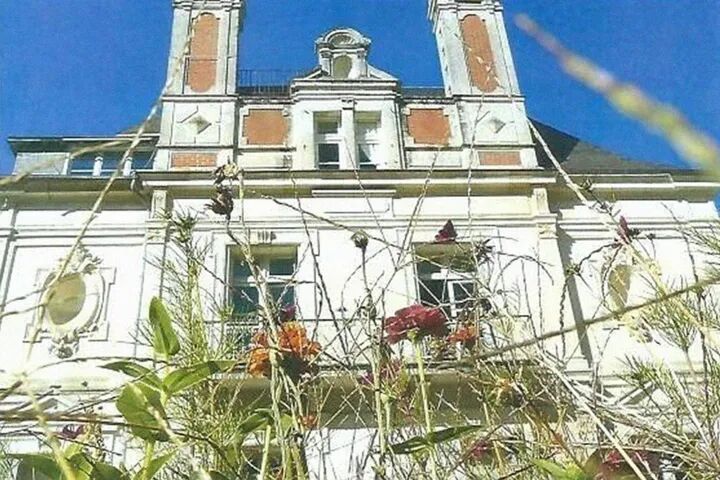
During the Second World War, there were many artists, thinkers and activists who found their homes at St. Alban ' s Hospital, including Jean Oury, a psychiatrist and psychoanalyst, who had a great deal of influence on the work of Gilles de la Reez and Felix Guattari, and Frantz Fanon, who applied many of the hospital ' s principles in the latter stages of his psychiatric work in Algeria. The community of activists, thinkers and artists is an integral part of the collective multidisciplinary San Alban experiment. This convergence is accidental rather than planned. During the war, hospitals became a haven for displaced, refugee or exiled artists, writers and thinkers. The St. Alban Hospital evolved with the development of the visiting community of creators and thinkers, setting the tone for future work: the creation and maintenance of a community, collaborative, multidisciplinary, cross-cutting, non-hierarchical haven. This pattern of survival continues in the work of those who have undergone a hospital transition, and many aspects of St. Alban ' s Hospital can be seen in subsequent similar projects.
Jean Oury was an intern in St. Alban in 1947 and later founded the Laborde Clinic. Uri was born in 1924 and raised in a working family on the outskirts of Paris. In 1953, he purchased Chateau La Borde, an hour from Paris. Uri planned to open a psychiatric hospital in the hope that the term would truly reflect its meaning. The shelter originated in Latin, asylum, "Standard", and in Greek, asylon, "Shelter". Asylum-seeking implies fleeing persecution and seeking safety. Notably, Uri purchased a castle rather than a building such as a hospital, prison, school or apartment building. The French word chateau refers to "large French farmhouse or castle". The word Castle, on the other hand, originated in the ancient English language of Castel, meaning "village", and later evolved into "modular medieval buildings with thick walls, estuaries, towers and, in many cases, moats". The concept of a shelter as a village as well as a fortress is particularly applicable to the San Alban and Labod projects, as it symbolizes both a shelter and a home.
_____
I think mental analysis is fundamental in St. Alban and Labode, but it is often excluded from contemporary psychiatric and psychological discussions, which is strange to me. Certain aspects of psychoanalysis, such as the work of Lacan, are still available in academia and Freud's teachings are still reflected in literary research. Although psychoanalytic treatment is still practised, it is time-consuming, slow and has no immediate effect, in stark contrast to the efficient models offered by cognitive and pharmaceutical companies. For example, during my access to cognitive behaviour therapy (CBT), I immediately felt reduced in mind. But the intervention was very simple - the treatment concerned only my symptoms at the surface and not why I had them. The use of depression for several years to deal with my anxiety does help, but it only eases my anxiety and does not solve it fundamentally. It is particularly noteworthy that I still have repeated and serious anxiety when it is necessary to teach in the classroom. This anxiety is manifested in a clear self-consciousness: As I stood in front of the class, I realized that I was at the podium; I took note of every move and word I had and felt my fear very clearly at the same time. It is true that my anxiety has decreased somewhat during the time of taking the medication, but with the passage of time and the gradual adaptation of the body, doctors have to increase the dose to control the symptoms to maximize them. Like cognitive behavior therapists, doctors and I never solved my anxiety problems.
In the treatment of mental illness and neurosis, results-oriented psychotherapy and drug therapy with emphasis on immediate effects dominate, separating and labelling patients - goals are achieved through direct simplification. They share the basic premise that patients have problems requiring rapid rehabilitation. These simplified and dominant treatments are one of the results of the decline in the internal state/capitalist thinking process, as Herbert Marcuse describes it, as absorbed by desire. In One-Dimensional Man, Markuse describes this shift in language
"Defence laboratories and administrative offices, Governments and machines, timers and managers, efficiency specialists and political beauty salons (with appropriate makeup for leaders) use different languages and now appear to have final voice. This is a word for command and organization that prompts people to do things, buy things and accept."
The language identified by Markusse is juridical, imitating the way capitalism commodifies, devours, assimilates and reduces everything to basic values. In other words, Markusse describes the language of calculating and (assessing) the value - He asserted that language was used to define and fix the value of human beings and their lives. For example, when I was asked about my work or what I had published, what was actually asked about my total cultural and financial income? In the culture identified by Markusse, the problem is not out of curiosity, but rather an inverted statement.
The language of this culture is externalized into a way of thinking that emerges in a "comprehensively managed language": a means of condensing thinking simply into measuring value. "People depend on their bosses, politicians, jobs and neighbours to make them speak and to be as profound as they are; social necessity forces them to combine `something' (including their own personal, spiritual and emotional) with their functions."
This "overall managed" language has been created and maintained by the culture, and it has been accepted internally by everyone and has become obsessed with comparing its value to that of other children from the start. Self-comparison becomes an inherent - albeit learning - self-improvement habits as a means of commodifying you in all aspects of life. This consumer language lacks resonance, remnant and resists metaphors or symbolism. It assesses, marks or conveys facts that culture considers easy to digest. The result is an empty language in which things that cannot be explained with a single sentence or two words are discarded and forgotten. Thus, those who are not easy to consume and concepts remain outside of culture.
When I showed my students a poem depicting details of poverty or depicting working-class families, they saw nothing. Or, in instinctively, they see an insignificant family because they have never seen and seem unable to see the poor or the working class. They have not seen, heard or read images, stories or narratives about the working class or poor groups that are culturally recognized, marked but blind in life. The main concept of poverty that may be familiar to middle- and upper-class societies stems from media coverage and projection, which means that unless these people appear to play a role in these stories, there will be no real awareness of the working class and the poor. This raises the question of linear economic progress, the capitalism fantasy. To turn a blind eye to contemporary poverty is not to be isolated - normally, those who have materially secure lifestyles in the overall management culture do not really know them when they encounter members of the working class or those living in poverty. And We were surprised to find many of the middle classes whom I knew, saying that they had never met a wage earner. However, they must meet frequently with taxi drivers, subway and train workers, mailmen, waitresses, nurses and nannies. This strange lack of visibility is due to the fact that the lives and experiences of wage earners and poor groups are not one of the languages or images that are perceived as accepted in cultures where the absence of these cultures conveniently erases both wage earners and the poor, where they exist and are ignored.
Another option that corresponds to the overall management of the language and has a fracture and effacement feature is one that can be inhabited or experienced. It is a language of complex intersection lines and grey spaces, a movement of different speeds and rhythms, hesitation and silence, reconciling very broad thinking and speaking. This is the language of La Borde and Saint-Alban, which encompasses everyone and everything and listens to everyone and gives equal weight to the information they provide.
Tosquelles
_____
In Laborde, patients are free to walk in castles and courtyards; they can explore anywhere they want. This freedom of movement is very important - psychiatric hospitals are usually institutionalized and have more in common with prisons and closed psychiatric facilities than communities, as is the case in Saint-Alban and Laboud. As in Saint-Alban, in Labod, patients share responsibilities with staff and participate in group meetings. Felix Guattari, who was invited to serve as co-head, created the so-called "grid" system ("the grid"), which allows for random shifts in the duties and responsibilities of each individual. Patients are involved in the operation of Laborde, staff take blood and perform other tasks normally carried out by doctors and nurses, and doctors and nurses are also involved in dishwashing. The aim of the clinic is not to "cure" patients, but to encourage everyone to invest in their own creation, like an artist.
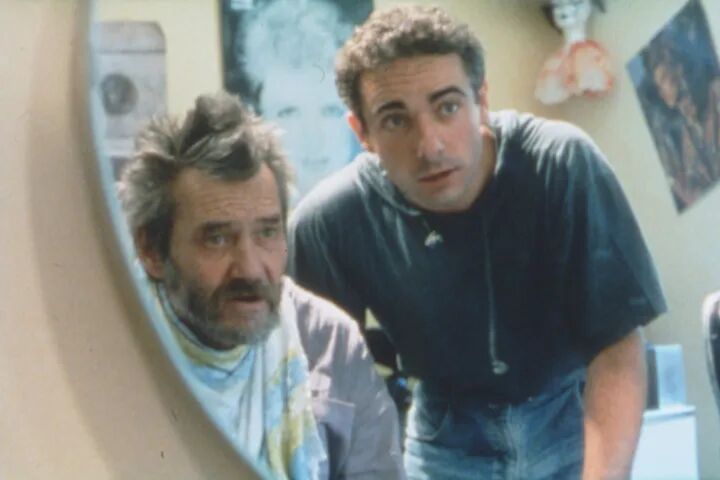
In 1996, Nicholas Philbert, a filmmaker, made a beautiful documentary called "Every Little Thing" to record Rabod. Most striking to me is the inability to distinguish between patients and staff. In fact, like all staff, Guattari lives in Labode with his wife, daughter and two sons. It is also the space available to doctors, nurses and other staff to give patients the space to move freely - to go wherever they want and to take on a wide range of jobs of varying value. When I watched people pass through Labode and his courtyard, I realized that mobility, thinking and fundamental healing were space to carry. In our world today, space is a luxury that is not enjoyed by poverty, migration, prisoners, the elderly and the sick.
Rabod has been based on the principle that a mentally ill person cannot be treated until the whole psychiatric system is completely changed. In the case of Guattari, the objective of institutional psychotherapy (IP) is to work with patients to learn new ways of living with the world. In essence, Laborde is a common thinker, a learning community. La Borde: A Clinic Unlike Any Other writes
I then learned about mental illness and the possible impact of institutionalization on it. These two aspects are deeply interrelated, as the characteristics of mental illness are heavily distorted in the context of the traditional prison system. Only when it develops around the right institutionalized life will mental illness show its true face, which is clearly not a strange or violent face, as is often seen, but rather a relationship with the world.
Guattari's ideas are both new and profound. In his view, when a person experiences a mental illness, her mental illness will change according to the circumstances surrounding her, and therefore she will be treated with fear - locking her up, restraining her, overdoing her medications and subjecting her to other methods of repression - only turns her mental illness into a psychosis of fear and bigotry. In the same context, would those with or without mental illness feel afraid and paranoid? Indeed, delusions and fears can be justified in such circumstances. Moreover, the traumatic experience of being inhumanely treated, the sense of rejection and betrayal and, above all, the awareness that humanity can and does treat other human beings in this way is in itself enough to shock and traumatize. This is an approach that can change the individual ' s psychological state and affect the outcome of his or her personality. On the contrary, Guattari saw that giving the patient space (including psychological, mental and physical) and refusing to oppress her through traditional psychiatric treatment would change her psychosis again. Guattari recognizes that people with mental illness are treated as one person ' s approval of another, and not as an authoritative image that exerts power on patients. Through this recognition, Guattari shows the patient how he senses that she experiences and goes through the world in a way different from his or her or her dominant culture, and does not imply that she is inferior to the way he or his dominant culture experiences and experiences the world.
Guattari identified the links between the label patients and the different labels based on these labels and their segregation in a hierarchy. He writes
Unfortunately, in France and in many other countries, the official orientation is to strengthen segregation: the placement of chronic patients in "long-term" institutions actually means that they are alone and inactive; acute cases receive special services, as do alcohol addicts, drug addicts, Alzheimer's patients, etc. Our experience in La Borde shows that mixing between different diagnostic categories and regular exchanges between different age groups can constitute very important means of treatment. These divisive attitudes form the whole: those who always encounter mental illness; those who isolate the mentally ill from the "normal" world; those who always find "problem children"; and those who turn older persons directly into some sort of old age isolation zone, who participate in the same continuum (continuum), which includes racism, xenophobia and the exclusion of cultures and differences.
Guattari did not regard mental illness as a lie, as some in the anti-psychiatry campaign he joined; rather, he considered that the power structure inherent in Western psychiatric practice was problematic, as it tended to be oppressive and that this form of oppression was detrimental to patients. In Guattari, repressive treatment included electroshock treatment, insulin coma treatment and cerebral foeticide. Current repressive treatments include overdose, the use of medication to silence patients, restrictions on liberty, solitary confinement and compulsory hospitalization. In addition, adults are given "time breaks" and are punished by withdrawing their "privileges". The power structure associated with the treatment of mental patients is childish and disadvantageous.
____
Laborde remains open today. Its history and continuing work make me ask questions about the one-on-one group therapy I've received: what if I was only listened to? What if I can speak freely and speak my mind without fear of offending or shocking my audience? What if I were encouraged to develop my own language for my experience in the world? If, rather than being paid to "repair" me, it is given to a witness and to a place where I can say anything I want to say and where listeners will comment when I express in my own language something particularly strange, surprising, contradictory or seemingly novel (which is not the same as my cultural language) - such comments will not drown me or make me feel disappear? What if this personality was not erased but clarified?
Over the past two years, I have been conducting psychoanalytic therapy, the most basic of which has been adopted in both St. Alban and Labode. This experience has led me to develop a way of thinking against "overall management of languages". As Toskeles saw in his psychoanalysis, this resistance is its strength: It provides a means of eliminating the mental and psychological damage that we have suffered as a result of living in the post-war era, which rapidly transformed into a capitalist culture. It is difficult, if not impossible, to distinguish between your own desires and those that are internalized by your culture when living in such a culture, as Markusse pointed out. We are structured by "overall management of the language" and by allowing us to express and meet our aspirations.
Starting with psychoanalysis, Freud's main focus was on repressing the concept - psychoanalysis provided a way to access what had been suppressed, both at the individual and cultural levels. In other words, psychoanalysis provides a means of eliminating the unconscious existence of cultural ideologies and desires (or what Marcuse calls "false needs"). Markusse writes
We can distinguish between real and false needs. "False" needs are imposed on individuals by the suppression of particular social interests: they perpetuate labour, aggression, suffering and injustice. Their satisfaction may best satisfy individuals, but it creates a sense of unhappiness when it prevents themselves and others from recognizing the overall problem and seizing the conditions that must be preserved and protected in order to heal. Most popular relaxed, recreational, advertising-driven consumption and behaviour, and those who love, hate and converge with the general public, are such false demands.
Interestingly, false demands include the need for "relax, entertaining" and "hate" what others hate. What bothers me is that we think according to rules and structures. However, these values and ideologies are not "natural" or inherent, but are created and then internalized into us. It is very disturbing that these guiding principles have never been visible to us - we have not been able to discern which desires or beliefs belong to ourselves and which belong to others or institutions.
Markuse believes that the antidote is twofold: first, we must be aware of the internalization and repression of these "false" demands; and secondly, we must replace them with "real" needs
All liberation depended on the awareness of slavery, which was always hampered by factors that had largely become the individual ' s own needs and means of satisfaction. The process always replaces one system of constraint with another; the best objective is to replace false demand with real demand and to give up repressive satisfaction.
In particular, the Lacan psychoanalysis provides a way out of the desire and ideology that are being imported from our minds. First, in The Capitalist Unconscious, Samo Tomšič asserted that "Lacan believes that he plays an analytical role in dealing with his listener and analyst community". In psychoanalysts, the term "analyst" refers to the patient, who is in the process of being treated, and the term "analyst" refers to the therapist, who assists the analyst in completing the process. While the two terms sound and appear to be similar, they are by no means a mistake. The work of analysts and analysts is collaborative - they are a team. This position is distinct from the authoritative role usually played by therapists, who provide patients with their own views on their clinical interpretation. The psychiatrist in the non-psychiatric school diagnoses the patient and cures her through prescription therapy determined by the doctor. Such power dynamics may also occur in the context of psychoanalysis, but awareness of its potential occurrence and the adoption of corrective measures are part of the psychoanalysis process.
In the relationship of psychoanalysis in Lacan, the person who was analyzed spoke about anything that appeared in her mind, while the analyst made signs or minor disturbances, similar to gaps or cracks, in response to her speech. Lacan considered that analysts could not translate the words of the person being analysed and that any marker from the analyst could only be "cut" - questions or minor comments, where analysts noticed tensions or possible errors in the narrative of the person being analysed.
In my personal analysis, "cutting" took place only a few times during the 45-minute session and prompted me to participate in what I call the "turn". For example, when I say a word wrong (and I think I want to express a completely different meaning), my analyst may repeat the word to "emphasize" it or otherwise mark it. I can see through this marker that there's a fissure in a small but common part of a story, and I'm used to it so much that I can't get rid of it. This small gap is my unconscious trying to send me a message. Through Punctuating, my analysts helped me to recognize them when they happened at a time when my words and thinking were going wrong.
These mistakes often occur, not only in my analysis. About a week ago, I arrived at the psychoanalytic appointment, so I chose to go around a block to pass the time. When I came to the street where my analyst's office was located, I was surprised to find that construction was under way in places that had not been built a few days earlier. When I arrived in the building and saw the door plate number "9", I was puzzled that it was the correct number, but that the building before me was not his office. I was afraid: if this is not his office, where is he? And then he was confused: if it was not his office, where was it? I stood in front of the building for one or two minutes until I realized I was on the wrong street - I should have looked for his office on Fifth and not Third. As time is running out, it follows his instincts - that he must be on Fifth Avenue and eventually successfully located at 9 Fifth Avenue.
At the next meeting, when I came out from the subway, I noticed that I had received voice mail from my analyst. After listening, I heard him ask me if everything was all right. He explained that he had waited in his office and that it was now 6:38 p.m. I immediately realized my mistakes: Although I'm sure my appointment is at 7 p.m. a week, it is not. It never has. It's always 6:00. In the next session, when I was thinking out loud about these lost moments, my analyst said, "Do you feel wrong?" When he said "dislodged", the word was apt to describe my situation. However, "misplacement" can only point to the fading characteristics that occur and continue to unfold. "Do you feel misplaced?" does not attempt to provide solutions or label answers; rather, "misplacement" becomes a new direction, a transfer calculus of playing with language, and arouses my resonance and desire to explore.
The closest I can think of is writing. When I wrote, I struck out what I was thinking. In this way, I found out what I meant. In my view, finding the location of the analyst's office was a part of my mind injured or malfunctioned: Some parts that I cannot reach are sending me messages. This news is related to nomadic and homelessness - about feeling "lost" in the world. The confusion I have experienced may be interpreted as a commentary on my overall analysis (i.e. my entire life): I feel lost and trying to find a home.
As a mute child and an adult who has internalized cultural instructions to remain silent and silent, mental analysis and thinking regularly and with maximum intensity over the past two years have changed my mental state in a way that only now begins to be recognized. Thinking and intelligence are introduced into the body by translating the ideas that emerge from the mind into words immediately. In an environment where nothing is judged or responded to and where I can freely express what I want to say, speeches enable me to shape myself in words.
One concrete result of this is that I am now better able to speak in everyday life. When I was silent in the second grade, the teacher spoke out against me, I could not speak because I was full of fear. In psychoanalysis, my words are usually encouraged and accepted. However, my expression is acceptable. I tend to think in complex sentences, and that is how I speak. The statements made in the analysis made me realize that, outside the context of the analysis, there is a general fear of collapse when speaking and when speaking, fearing that I will make mistakes, be observed. My grammar will collapse. By contrast, my language is substantial in psychoanalysis, so I'm gradually finding the best words to describe experiences that were previously unspoken. It is chaotic, fascinating and living. Speaking in a psychoanalytic is like my mind is working: without judgment and fear of being corrected, amended or improved. Over time, this taught me: my mind, my own. I can shape it, use it and protect it.
Jean Oury
_____
"Think out loud", which is a prerequisite for psychoanalysis, is indeed necessary for critical thinking and even thinking about itself. In The Life of the Mind, Hanna Arendt argues that "the positive way of life is `difficult', while the quiet way of life is pure peace; the active act in public and the silent in the desert". These meditations stem from Arendt's testimony to the Adolf Eichmann trial (the trial in Jerusalem of a former Nazi responsible for mass expulsion of Jews from all over Europe to concentration camps), which concluded: "There is no firm ideological belief or specific evil motive, as he has shown in the past during interrogations and during police pre-trial proceedings. The only thing that can be found in his past behaviour is purely negative: it is not stupidity but lack of thought". Through this experience and its reflection, Arendt has come to the question of "thinking" itself: What is "thinking"? When do we participate in "thinking" practice? What happens when we don't think about it, and we don't go for it?
The experience of Toskeles in the concentration camps had revealed the link between fascism, totalitarianism and the mind, affecting his work in Saint Alban. He described the situation at St. Alban Hospital during the war
Staff, nuns and doctors at St. Alban ' s Hospital tried to sustain themselves and their patients by working with local residents to store additional food. In addition to efforts to ensure nutrition, San Alban doctors have begun to question and rethink the practical and theoretical foundations of psychiatric care. Just as war and fascism are particularly clear, occupation is not just a physical state: it is also a mentality.
The results achieved by St. Alban - turning the hospital into a healing laboratory and abandoning the hierarchy and preconceived beliefs - Revolutionary ideas have been implanted among those involved and the need to segregate those who are unable or unwilling to follow cultural norms has been proven wrong. Breaking down barriers, whether symbolic or genuine, is self-evident in terms of the importance of removing physical and mental "occupation".
Originally published in Unsettled: A Paper on Silence (Book*hug, 2019).

Click on original link to jump directly to original
Editor
How do we look at our "problems" when this article, written in terms that are simple and profound, when the author cuts his own personal experience to the heart of the article with the first person's perspective? This is an introductory article on "psychoanalysis" that explains, in an extremely rich case, how to see yourself again, to embrace yourself and to use the practice of previous generations, and how "shelters" are able to liberate those who suffer from mental suffering.
I also have many friends around me who are rushing to wave when they hear psychoanalyses, who are deeply opposed to this approach and are more reluctant to admit that they are so-called "patients". In my view, this is indeed the result of a mix and confusion of too many terms and concepts with the development of fish dragons in China.
As stated in the article, there are too many diagnostic criteria to pin people in the cell of that symbol, and under the taxonomy system of capitalism, people are always labelled and sequenced too much. Repression is everywhere, and knowledge of oneself is always masked by systematic discipline and it is difficult to escape the chain of symbols.
The study of institutional therapy (IP) is still in a vacuum in the country, with few translated articles, and in the future I will find more information in this area, learn more about advanced Western theory and practice. We welcome the attention paid to the public, the credit added or the participation of our own cartel groups, so that we can play together and find our own place and place.
Translator's Personal Wire
If institutional therapy (IP)
Interested and willing to participate and practice
Translation, discussion.
Cartel group

Psychoanalyst lovers
Welcome to Division, which belongs to you.
Activities, groups, learning