Introduction
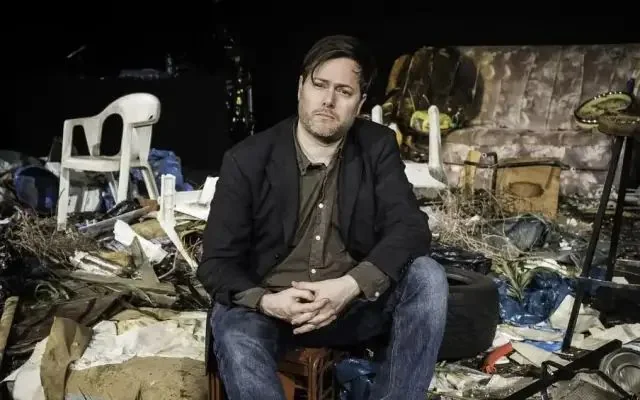
A representative of Milo Rao, director of art at the Ghent Theatre in Belgium, by the International Institute of Political Murder, his troupe, which began with the Avinion Theatre Festival in 2018.
This work is based on a real murder in Liège, Belgium: In April 2012, the Muslim comrade Ihsane Jarfi, in front of a gay bar in Belgium, entered a grey car with four strange men, and two weeks later his body was found naked in the wilderness...
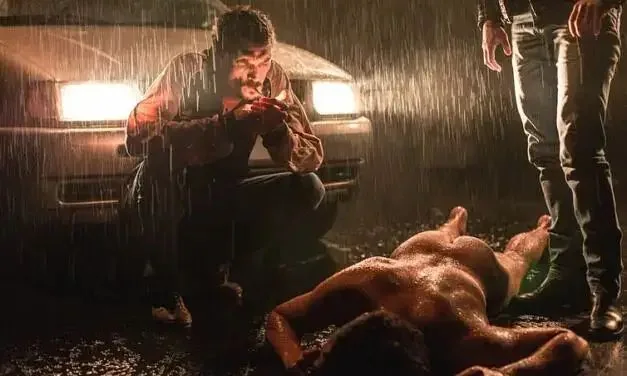
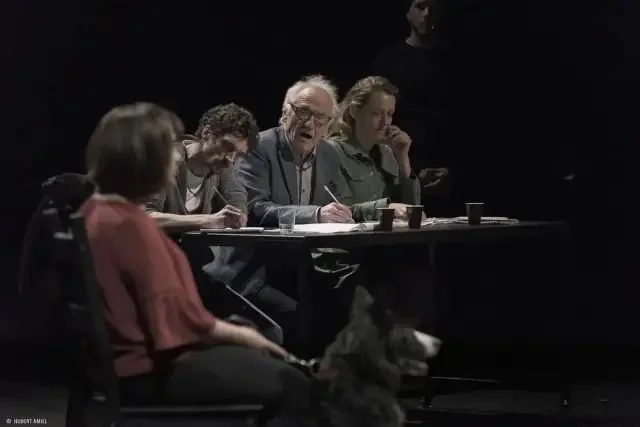
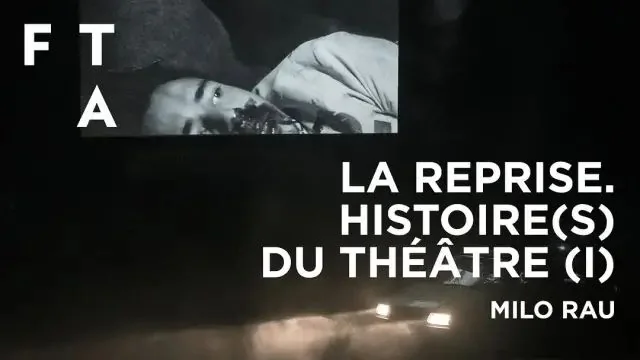
It was the first creation of the Ghent Declaration by Milo Rao. The performance team consists of professional actors and vegetarians. The Recapitulation shows a play in the shape of a panorama: a theatre creative team is going to rerun the case on stage. In a series of auditions, field investigations, rehearsing, presentation and reflections, the theatre has explored the truth of the case and the social problems underlying it.
Discussion time: 2020.5.11
Location: @P4 Theater
White bear
The work presents an entirely real event, not at the symbolic level, but directly related to social realities.
It further raises questions about what is real. Throughout the show, they constantly reminded the audience that what happened on the stage was an act of this, that the violence they committed on the stage was a performance, not a reality.
What I think is the need for such a reminder. Why keep acting to remind people that what happened on stage is fake? What is the relationship between real events, stage shows and truth?
This emphasis on "acting" pulls the audience out of a fictional situation created by the theatre. It parallels the real space, but is more abstract than real life, bringing real extraction into another dimension.
The most impressive was the rainy night of the crime, which was a very incipient scene, where everyone's face was so fresh in the car, especially the one of the murderers, the fat one, who had the most memorable face: a very cold, insensitive face. It reminds me of many moments of life that seem to have known each other, as if I had seen the same expression on many faces. It's not very rare in ordinary people's lives.
fafalish:
I was particularly shocked by the fact that the real feeling of re-emerging a real murder was never seen in other plays. "The real scene of a murder" is usually in movies, like The Unrevocable. I'm feeling very, very scary.
This violence is even more horrific when it recurs at the theatre. I see the previous auditions as a means of defusing the feeling of violence in the later performance. Without such relief, real performances on the ground may be unacceptable. In addition to the performance itself, the use of the camera also played a second role in the vulcanization of violence: the actor's expression was magnified, the movement was intercepted and the feeling of violence was created. This creates "realism", and it keeps telling people that it's fake, that we're acting and that the violence on the ground is being balanced.
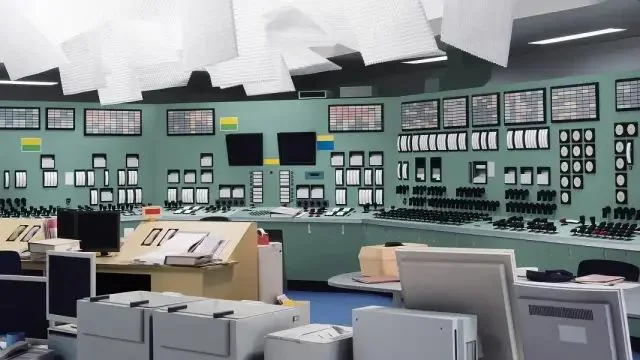
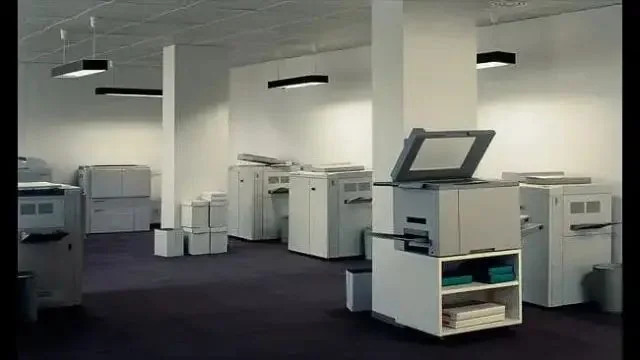
It also reminds me of Thomas Demand's photography. He often draws material from events in real life and history, recreates the real scene of his choice with hard cardboard, then filmes the reality of paper, then destroys his fictional cardboard landscape and retains only the images he takes. Thomas Demand has dissolved the boundaries between real and virtual through a series of reality-derived interception, reconstruction, documentation and destruction activities. What's real? How can you touch reality? Can realism be discussed in purely non-fictional dimensions?
Thomas Demand Photography
The answer is no. The real sense of presence in the Restatement has always been in the theatre, but it has been able to strike the pulse of a real event as if the clock were in.
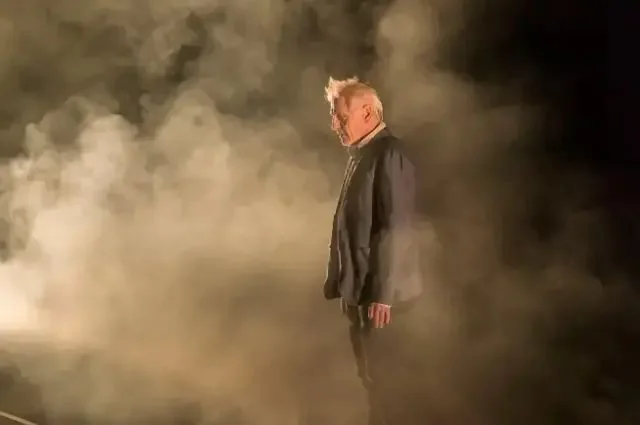
The other thing I want to talk about is the theme of the work: death. The monologue of the dead king in Hamlet, an old actor who opened the show, called death to the scene, and suggested that the drama could "let the dead speak". Linked to its title, "Restatement: Rewinding the drama". Although it doesn't exactly coincide with the director's original intent, it reminds me of the repetitive nature of the drama. Unlike film shows that are locked in film, the theatre survives on a repeat live move. The repetition of this place has the power to bring back to life what has been suppressed and buried, and to bring back the dead and the dead. Finally, the male actor who played the dead sings in love, echoing the opening phantom so that the theme of the resurrection can surface again. "Performing Death" became a stretch of life, allowing me to see the theatre art itself.
Fafalish: Did the play discuss why he died?
Soft Dog: Yes, the debate in court focused on his death. The judge's guess was that the young homosexuals died because of his words (Did you not give sex to the male population?) that provoked several killers in the car.
White Bear: Yes.
Fafalish: When I was thinking of auditioning, was it not relevant for a man of colour to be dead when he said he had the ability to pretend to speak another language and that he sang later?
White Bear: Yeah, it's also implying that the dead speak.
Soft Dog: The lead man has been silent. He was a member of a coloured minority with a complex nationality, and the play also played as a victim of Muslim homosexuality, a symbol of oppression in one person, representing the oppressed in society, whose silence stemmed from his inability to speak.
Fafalish: So the whole show is making the dead sound. It started with Hamlet and ended with the lead man singing.
White Bear: I think the director is trying to prove the role of drama. Theatricals can work with society, and with specific people and things.
Fafalish: Yes, it is the political nature of the theatre, not just the identity politics that is focused on it.
Soft Dogs: That's the biggest politics the drama can do.
White Bear: He re-activated the play, not in a little self-inflicted, self-expressed plot. In particular, in the context of his Ghent Declaration and his other works (the Congolese ruling, and the end of the Siosescu, which triggered a real-life response), he is really linking theatre and real-life society.
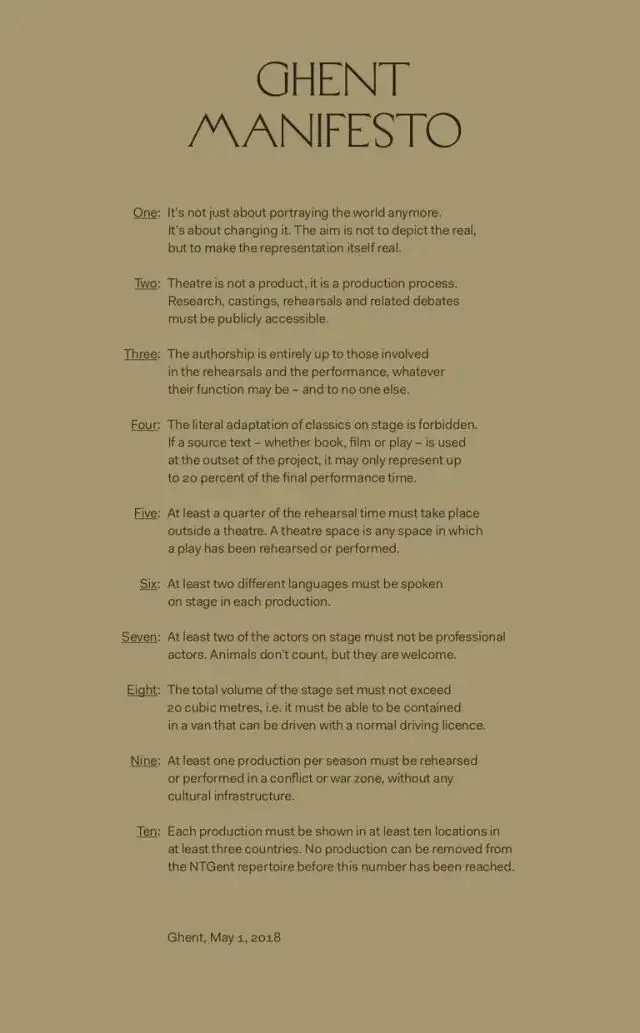
I really admire the Ghent Declaration, especially the reference to "at least two amateur actors in the show". Animal actors are excluded from this range and do not exclude their performances; "Whatever the extent of the local cultural infrastructure, at least one recital and performance is required each season to be able to travel to war zones and wars; and "Every production must be performed in 10 regions in three different countries. The production of performances that do not meet this limit cannot be classified as the production of performances in the Ghent Declaration." For him, theatre is really connected to the whole real world. He's using his work to bring her focus to the world where it should be. Very good.
This reminds me that P4 Theater has also developed a number of Declaration-type provisions that can be further clarified in the future, which is the position and posture of a creative subject.
Soft dog
Milo Rau's creation may represent one of the perfect types of theatre production in my mind. His ongoing exploration of authenticity, theatre mechanisms and the relationship between contemporary society was very encouraging. In short, Milo Rau's creation gives hope, and he tells the audience that today the theatre is useful and that it has the power to shape reality. The theatre is worth doing. It's worth our energy to create. It's worth watching. After all, what else can the drama do? But how many more plays did it?
This direct impact on the human heart is due to the precise structure of the drama, which is like a theatre text.
The Restatement is similar to the structure of the Easy Five and is very rigorous and effective. In short, the structure speaks of "a drama about events XX". That is to say, what a group of people did in the theatre, why, how, why and why.
There are a number of points, first, to make it clear that this is a play, which is to show the theatre, to discuss the meta-dramatics, to show the theatre mechanism. In particular, performance/recurrence/real issues are discussed in both the Five Chapters and the Restatement. Tell the audience we're playing. It's a fake. It's the rules of all the drama. Even if we want to discuss reality, it can only be discussed in "acts", and it can be developed in reality.
To get to the point, the Restatement begins with an old senior actor who talks about "When does the play start," "how is the real performance," and a paragraph from "Hamrett," where the idea of "theatricality" is put to the audience, laying out the tone of the work "a theatre-based theatre." This is deeply embedded in every part of the play.
Then, how did the material events that were created be introduced? It's still the theatre way - the play, the audition. And at the same time, it's a real event at the creative level of reality. Okay, here's two things we know about this: We also know how the inspiration for this creation was born. Five chapters are similar structures.
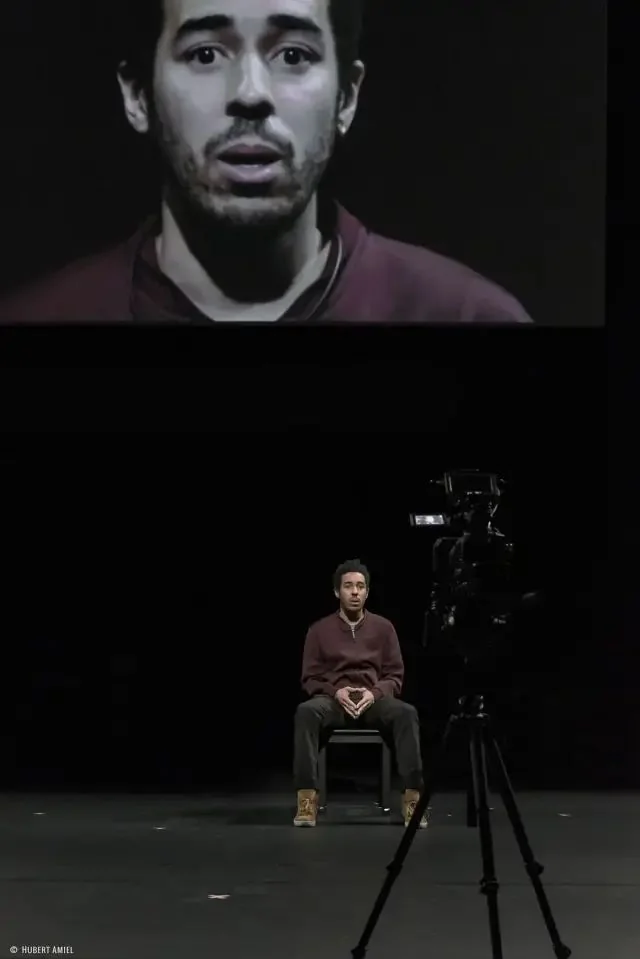
Next, rehearsing logic and event logic are intertwined. In a demonstration of the theatre creative process/mechanism, the real logic of the case has been expanded. It's a very economical way to get people to play the performance mechanism while mobilizing reason and feeling the narrative of their work. In this structure, the performance of the case has come to a climax, and we have seen how "a play" is produced.
And then, the most powerful play is over. The re-emergence of the case is complete and we can return to the theatre mechanism. A number of follow-up activities were shown, such as "the side of the field survey", "the sociological analysis behind the case", the work of the creators and the reflection of reality.
Finally, the theatre is once again open to reality in the return to reality - that is, it is not a homicide, it is a play of thinking. Tell us that the show is over, and the show is what it's going to be.