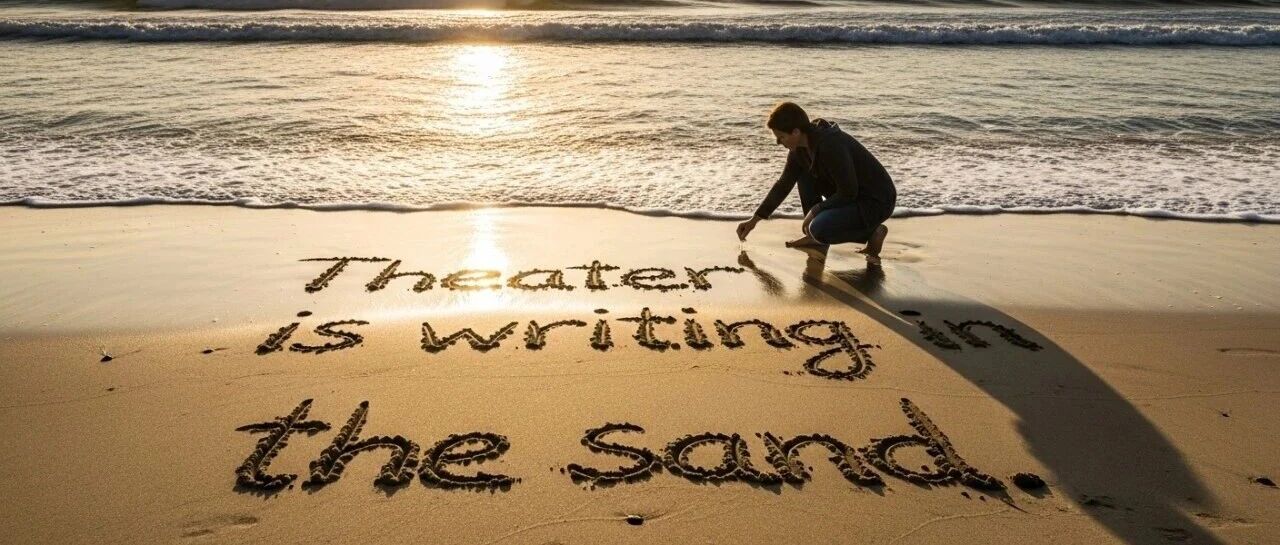
戏剧是在沙上书写。——卢克·帕西瓦尔
这是我15岁时,第一次从一位年迈的戏剧老师口中听到的话语,而在我的职业生涯中,它对我变得愈发重要,愈发迷人。它为我揭示了戏剧所给予的精神向度。
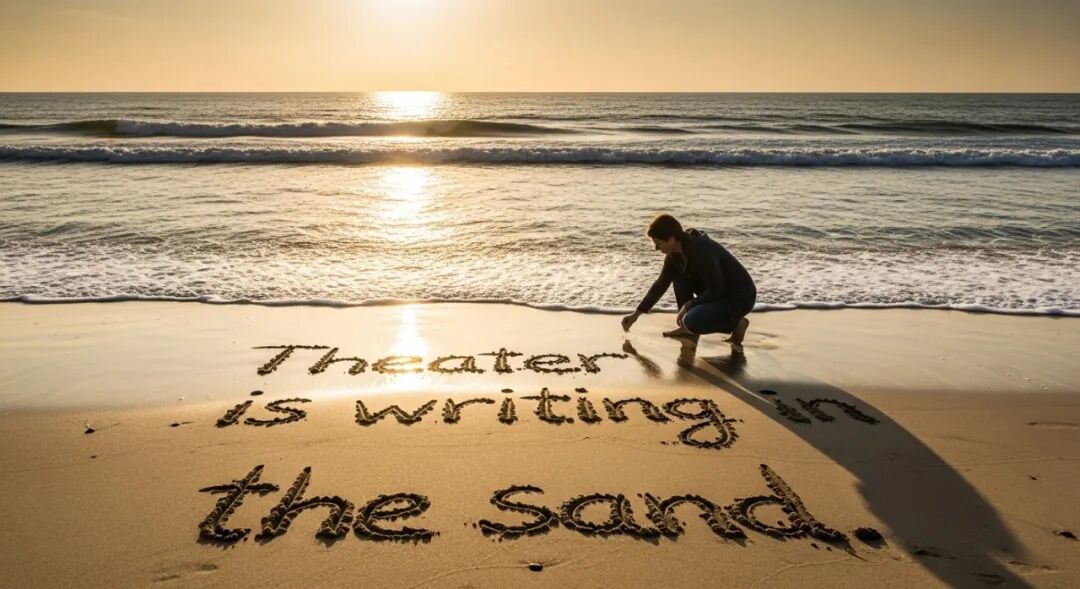
从纯粹事实的角度来看,戏剧确实无异于在沙上书写。你在戏剧中能赚到的微薄薪水很快就会花光;许多人最初渴求的名望也转瞬即逝,轻易便被遗忘。至于戏剧本身及其探讨的主题,它们也同样无法改变世界或人性。事实上,你甚至可以说,戏剧是一项全然无意义的活动。但恰恰在这种体悟之中,引出了一个问题:这2500年无意义的戏剧,其意义究竟何在?
随着我作为演员,后来又作为戏剧创作者的年岁渐长,我对戏剧的所有幻想和可悲的梦想都烟消云散。我开始意识到,不仅戏剧是无意义的,就连我自身的存在,我那所谓的身份认同,也建立在一个意义的建构之上,而这个建构最终导向一个巨大且无解的问号。“从虚无中来,到虚无中去”,李尔王如是说。表演的冲动与天主教教养在我内心根植的自我憎恨,在1990年代早期将我推向了巨大的绝望。我的人生毫无意义,一文不值,而我曾如此激情地选择的戏剧,也未能为我自己或任何他人创造幸福。我的抑郁深不见底。
但寻找答案的渴望甚至更为强烈。不知不觉中,我被迫更专注地去搜寻,更精确地去构筑我的问题。戏剧在物质层面可衡量之效用的丧失,以及对创造效用的强迫性欲望的放下,实际上是一种相当大的解放。诚然,若以产出衡量,戏剧可谓毫无意义。然而,人类始终在戏剧中将他赋予意义的需求仪式化;那些探讨生命意义与人类苦难的普世文本,那些提出着同样问题的经典,持续地吸引着我们,尽管从未有任何作家或剧作家成功地给出一个完满的答案。既然答案超乎人类的理解,它就不太可能被找到。那么继续寻找还有意义吗?难道正是这“对意义的探寻”本身,才让我们得以存活?正是它,为戏剧创作者提供了肾上腺素与创造力?正是它,驱使着观众走进剧场?没有这份探问的好奇,便不会有艺术,不会有宗教,不会有戏剧……或许,也不会有美。戏剧的意义,不就是探寻本身吗?是那想要知晓的“不知”,它引导我们认识到,许多你曾信以为真的东西,“并非如此”。而它究竟为何,你又无法言明。这种对真理的渴望,无法被证实,无法被触摸,也无法诉诸言语。我们唯一确知的是,它显现于“探寻”本身。戏剧无法提供任何形式的答案,它迫使艺术家与观众接纳沉默与空无,将他们抛回毫无解释、了无逻辑的生活,并教导他们赤手空拳地去信赖这探寻——这个事实本身,似乎就是那无意义之事的唯一意义所在。这恰恰是戏剧所遵循的精神路径——通往对任何概念、答案或评判的拒斥,通往对沉默的接纳。一条通往无有之境的道路。这常常是莎士比亚戏剧的中心主题;一条以失落和放手铺就的道路,终结于一种净化后的洞见,或者,如果你愿意,称之为自我实现。
这条道路的解放性或自我实现之处何在?
意识到没有“答案”,将你从那种总要准备好一个答案,或者说至少亏欠一个答案的义务中解放出来。它让你作为一个戏剧创作者,得以从“不知”的位置上进行创作,去信赖你的直觉、你的能量,以及——最重要的是——信赖当下所能给予的一切,信赖你周围的人。它给予你和你周围的人去“探寻”的自由,而答案就藏在探寻本身之中。这是一场并非由个人责任驱动,而是由集体进程驱动的探寻,它从那些貌似的确定性和先入之见中解放出来,以敞开的胸怀和惊奇的眼光进行。它创造了空间,让我们去看待“是什么”,并以一个无知孩童的自由去处理它。它给予演员自由,让他能够与“是什么”一同行动并作出反应,而不是“应该是什么”,这是一种源于对他人尊重与关注的表演风格,源于对相互依存的自觉,以及全然投身其中的勇气,而非将自己囚禁于唯我独尊的狂热之中。这种方法,这种表演方式,带来了自由、空气和灵感,它在戏剧舞台上创造了表演的愉悦,甚至可以说是生命的愉悦。这是抑郁的另一面,是那对效果与成功的渴望所导致的恶果的反面。正是在这种愉悦和集体性中,诞生了因其非凡的能量特质而“独一无二”的演出;这些演出描绘了一个只能由这个特定群体共同创造的世界,而非来自某个备受折磨的个体的观念头脑。这些演出,诞生于对他人身上正在发生的一切的尊重与专注,一种观众与演员共同拥有的专注。在这个喧嚣的世界里,这是一种非凡的虔诚,它在观众与演员探寻“无意义的意义”之时,创造出一种仪式的共通感,一种非孤独感;一个慰藉的瞬间,一个在认识到对于如此多无意义的苦难与暴力并无答案,而唯有理解,或许还有片刻慈悲之时的共同承受或放声大笑。
这“沙上书写”并非成功的公式。它如同一句咒语(mantra),是对同样问题的不断重复,而对这些问题,那同样的沉默便是最终的答案。尽管,这是一种蕴含巨大力量的沉默:那是净化的力量(catharsis),一个对人类苦难共同体悟与理解的瞬间。只要人类还未能将这份慈悲付诸于日常生活的实践,戏剧就将继续把它的咒语书写进沙地里。而日复一日地重复那些咒语,服从于这个仪式,便是戏剧创作者的唯一任务。其余皆是妄念。喜悦,或称之为解放,不在于戏剧或人生为你提供了什么,而在于你一次又一次地献出了什么,且不留下一丝痕迹。这便是“沙上书写”所创造的洞见。
卢克·帕西瓦尔 2003年9月4日
Theater is writing in the sand.
– Luk Perceval
These are the words which I first heard spoken by an old drama teacher when I was 15, and which would become increasingly significant and fascinating to me during my career. They opened my eyes for the spiritual direction that theatre gives.
From a purely factual perspective, theatre is indeed no more than writing in the sand. The little money you can earn in theatre is quickly spent. The fame that many initially aspire to soon disappears and is easily forgotten. As for the plays and the themes they deal with, these are not capable of changing the world or humanity either. In fact, you could argue that theatre is an en entirely meaningless activity. But precisely in this realisation lies the question about the meaning of 2500 years of meaningless theatre.
As I grew older as an actor and subsequently as a theatre-maker, all my illusions and pathetic dreams about theatre dissipated. I came to realise not only that theatre was meaningless, but also that my own existence, my so-called identity, had been founded on a construct of meaning that ultimately leads to a huge unanswerable question mark. “From nothing to nothing”, says Lear. The urge to perform and the self-hatred instilled in me by my Catholic upbringing drove me to great despair in the early 1990s. My life was meaningless, worthless, and theatre –for which I had chosen so passionately- had not been capable of creating happiness for either myself or any one else. The depth of my depression was great.
But the hunger to find an answer was even greater. Without my realising it, I was being forced to search more attentively, to formulate my questions more accurately. The loss of a materially measurable effect of theatre, as well as the letting go of the compulsive desire to create an effect, was actually quite a liberation. Indeed, in terms of yield, you could argue that theatre is utterly meaningless. And yet, man has always ritualised his need to give meaning in theatre; the same universal texts asking the same questions about the meaning of life and human suffering continue to fascinate us, even though no author or playwright has ever succeeded in formulating an adequate answer. As this answer lies beyond human comprehension, it is unlikely ever to be found. So does it make sense to continue looking for it? Is this “search for meaning” what keeps us alive in the first place? Is it what provides the theatre-maker with adrenaline, with creative power? Is it what drives spectators to the theatre? Without this inquisitiveness there would be no art, no religion, no theatre… and probably no beauty either. Is the meaning of theatre not the search itself? The “not knowing” that wants to know, which leads to the realisation that much of what you believed to be it “is not it”. And whatever it is instead, you are unable to designate. The reason for this hunger for truth is not demonstrable, not tangible, impossible to put into words. All that we know for certain is that it manifests itself in “the search” itself. The mere fact that theatre is unable to provide any form of answer, that it forces the artist and spectator to accept the silence and emptiness, and throws them back into life without explanation, void of any logic, and teaches them to trust empty-handedly in the search – this would appear to be the only meaning of the meaningless. Precisely this is the spiritual path that theatre follows towards the rejection of any concept, answer or judgement, and the acceptance of silence. A road to nowhere. This is so often the central theme in Shakespeare’s plays; a road that is paved with loss and letting go, and that ends in a chastening insight or, if you will, self-realisation.
What is so liberating or self-realising about this road?
The awareness that there is no “answer” releases you from the obligation always to have an answer ready or at least to owe an answer. It gives you the freedom as a theatre-maker to create from a position of “not knowing”, to trust on you intuition, on your energy and -most importantly of all- on what the moment has to offer, on the people around you. It gives you and those around you the freedom to “search”, whereby the answer lies hidden in the search itself. It is a search that is driven not by an individual responsibility but by a collective process, liberated from quasi certainties and preconceptions, with open visor and wonder. It creates space to look at what there is and to handle it with the freedom of an unwitting child. It offers the actor the freedom to act with and react to what there is rather than what there ought to be, a style of acting that originates in respect and attention for the other, in the awareness of dependency and the courage to give in to it completely, not to lock yourself up in egomania. This approach, this manner of acting offers freedom, air and inspiration, and it creates pleasure in preforming on the theatre stage, pleasure in life, if you will. It is the flip side of depression, a consequence of hunger for effect and success. Out of this pleasure and collectiveness are born performances that are “unique” precisely because of this extraordinary energetic quality; performances that depict a world that can only be created by this particular group of people, not the conceptual mind of a single tormented individual. These performances are borne by respect and concentration on whatever is happening to the other, a focus that spectators and actors share. It is an extraordinary form of devotion in this bigmouth world that creates a ritual solidarity, a non-loneliness, between spectators and actors in their search for the “meaning of the meaningless”; a moment of solace, of common suffering or laughter at the realisation that there are no answers for so much meaningless suffering and violence, but only understanding, and perhaps a moment of compassion.
This “writing in the sand” is not a formula for success. Like a mantra, it is the continuous repetition of exactly the same questions to which exactly the same silence is the ultimate answer. Albeit a silence with enormous power: the power of catharsis, a moment of shared awareness of and understanding for the suffering of man. As long as humanity is not able implement this compassion in the practice of daily existence, theatre will continue to write its mantras into the sand. And to repeat those mantras up until that day, to be subservient to this ritual, that is the only task of the theatre-maker. All the rest is idle hope. The joy, call it liberation, lies not in what theatre and/or life offers to you, but in what you yourself offer, time and again, without leaving any trace. That is the insight this “writing in the sand” creates.
Luk Perceval
4 September 2003
相关阅读:
被观看的王座:弗朗索瓦·雷诺《观众》中的拉康式戏剧理论重构
《事件的语法:行动者生成拓扑学(AGT)与后现代主体的诞生》(上)
重构《戏剧与精神分析》Théâtre et Psychanalyse
p4 投稿|獠牙诗学 :黑暗概念论的初步阐释|Jacob Reber
p4剧场,十年档案记录(部分)
德勒兹与当代艺术|逃逸的异质性
德勒兹与当代艺术|哀歌中的尖叫政治
德勒兹、加塔利与当代艺术
p4剧场|一所生成的大学,一条蜿蜒的迷宫,一块铭刻生命的硬盘
自我素材计划|《唐山少年—— 艺术家终章》04

p4 理论|分析的第三主体:对托马斯·奥格登“第三在场”理论的综合探索
想要投稿或是进群交流请加机长
p4剧场致力于将每一个人的梦去呈现